
Erik Satie Sheet Music
- Violin and Piano
- Sheet Music
- Eric Vireton
- Flex Editions
-
-
 in stock
ships within 1-2 working days
in stock
| ships within 1-2 working days
This collection of the most beautiful songs by Erik Satie is part of 'Musique vocale française', a series designed for students, teachers and professional singers which includes the best French vocal...
This collection of the most beautiful songs by Erik Satie is part of 'Musique vocale française', a series designed for students, teachers and professional singers which includes the best French vocal...
- High Voice and Piano
- Piano Score
- Editions Salabert
-
-
in stock
ships within 1-2 working days
in stock
| ships within 1-2 working days
Ausgabe für Gesang und Klavier von Erik Satie.
Ausgabe für Gesang und Klavier von Erik Satie.
- Piano and Voice
- Piano Reduction
- Roger Desormiere
- Universal Edition
-
in stock
ships within 1-2 working days
in stock
| ships within 1-2 working days
- Piano
- Piano Reduction
- Universal Edition
-
-
in stock
ships within 1-2 working days
in stock
| ships within 1-2 working days
 in stock
| ships within 1-2 working days
in stock
| ships within 1-2 working days
Between 1889 and 1897, Satie composed a series of piano pieces which he gave the erratic title 'Gnossiennes' and provided with deliberately ironic performance instructions in which he satirizes the ex...
Between 1889 and 1897, Satie composed a series of piano pieces which he gave the erratic title 'Gnossiennes' and provided with deliberately ironic performance instructions in which he satirizes the ex...
- Piano
- Sheet Music (Urtext)
- Bärenreiter Verlag
-
-
in stock
ships within 1-2 working days - Also available for download!
in stock
| ships within 1-2 working days

In 1903, Satie composed his famous four-hand piano cycle with the provocative and ambiguous title "3 Morceaux en forme de Poire" ("poire" can mean "pear" in French, but also "fool"), a distanced and i...
In 1903, Satie composed his famous four-hand piano cycle with the provocative and ambiguous title "3 Morceaux en forme de Poire" ("poire" can mean "pear" in French, but also "fool"), a distanced and i...
- Piano 4 Hands
- Sheet Music Download (Urtext)
- Bärenreiter Verlag
-
-
immediately available
Download immediately after ordering - Instant download
immediately available
| Download immediately after ordering
- Piano 4 Hands
- Sheet Music
- Makoto Goto
- Zen-On Music
-
in stock
ships within 1-2 working days
in stock
| ships within 1-2 working days
Für die vorliegende Klavierausgabe wurde aus dem hochinteressanten Klavierwerk des Komponisten Erik Satie eine Auswahl leichterer Stücke getroffen und nach Schwierigkeitsgraden geordnet. Die Texte, di...
Für die vorliegende Klavierausgabe wurde aus dem hochinteressanten Klavierwerk des Komponisten Erik Satie eine Auswahl leichterer Stücke getroffen und nach Schwierigkeitsgraden geordnet. Die Texte, di...
- Piano
- Sheet Music
- Peter Roggenkamp
- Universal Edition
-
-
in stock
ships within 1-2 working days
in stock
| ships within 1-2 working days
- Piano
- Sheet Music
- Darius Milhaud
- Universal Edition
-
-
in stock
ships within 1-2 working days
in stock
| ships within 1-2 working days
Very playable! An introduction to the 'modern sound' of Erik Satie, arranged perfectly for young players. The simple melody and orchestration allow for instruction in the harmonic structure of this en...
Very playable! An introduction to the 'modern sound' of Erik Satie, arranged perfectly for young players. The simple melody and orchestration allow for instruction in the harmonic structure of this en...
- String Orchestra
- Score and Parts Download
- Jack Bullock
- Belwin Music
-
-
immediately available
Download immediately after ordering - Instant download
immediately available
| Download immediately after ordering
- Piano
- Sheet Music
- Editions Max Eschig
-
-
in stock
ships within 1-2 working days
in stock
| ships within 1-2 working days
- Piano
- Sheet Music
- Editions Max Eschig
-
in stock
ships within 1-2 working days
in stock
| ships within 1-2 working days
- Piano
- Sheet Music
- Editions Max Eschig
-
in stock
ships within 1-2 working days
in stock
| ships within 1-2 working days
- Piano
- Sheet Music
- Editions Max Eschig
-
in stock
ships within 1-2 working days
in stock
| ships within 1-2 working days
- Piano
- Sheet Music
- Editions Max Eschig
-
in stock
ships within 1-2 working days
in stock
| ships within 1-2 working days
- Piano
- Sheet Music
- Zen-On Music
-
in stock
ships within 1-2 working days
in stock
| ships within 1-2 working days
Carl Fischer introduces this exciting new series of performance pieces designed to help all levels of instrumentalists by making their practice time more productive. This innovative series offers the...
Carl Fischer introduces this exciting new series of performance pieces designed to help all levels of instrumentalists by making their practice time more productive. This innovative series offers the...
- Ensemble
- Sheet Music
- Donald Peck
- Carl Fischer
-
in stock
ships within 1-2 working days
in stock
| ships within 1-2 working days
- Sheet Music
- Larry Clark
- Carl Fischer
-
in stock
ships within 1-2 working days
in stock
| ships within 1-2 working days
Trois Melodies by Erik Satie is made up of 3 beautiful movements; La statue de bronze, Daphénéo and Le chapelier. Scored for SATB choir with accompanying Oboe.
Trois Melodies by Erik Satie is made up of 3 beautiful movements; La statue de bronze, Daphénéo and Le chapelier. Scored for SATB choir with accompanying Oboe.
- Mixed Choir (SATB) and Oboe
- Sheet Music
- Jørgen Jersild
- Edition Wilhelm Hansen
-
-
in stock
ships within 1-2 working days
in stock
| ships within 1-2 working days



- Piano
- Sheet Music Download
- Schott Musik
-
immediately available
Download immediately after ordering - Instant download
immediately available
| Download immediately after ordering
Gnossienne No.1, composed by Erik Satie, as used in the film 'Chocolat'. Arranged for piano solo in digital sheet music format.
Gnossienne No.1, composed by Erik Satie, as used in the film 'Chocolat'. Arranged for piano solo in digital sheet music format.
- Piano
- Sheet Music Download
- Faber Music
-
-
immediately available
Download immediately after ordering - Instant download
immediately available
| Download immediately after ordering
Gnossienne No.3, composed by Erik Satie, as used in 'Killing Eve'. Arranged for piano solo in digital sheet music format.
Gnossienne No.3, composed by Erik Satie, as used in 'Killing Eve'. Arranged for piano solo in digital sheet music format.
- Piano
- Sheet Music Download
- Faber Music
-
-
immediately available
Download immediately after ordering - Instant download
immediately available
| Download immediately after ordering
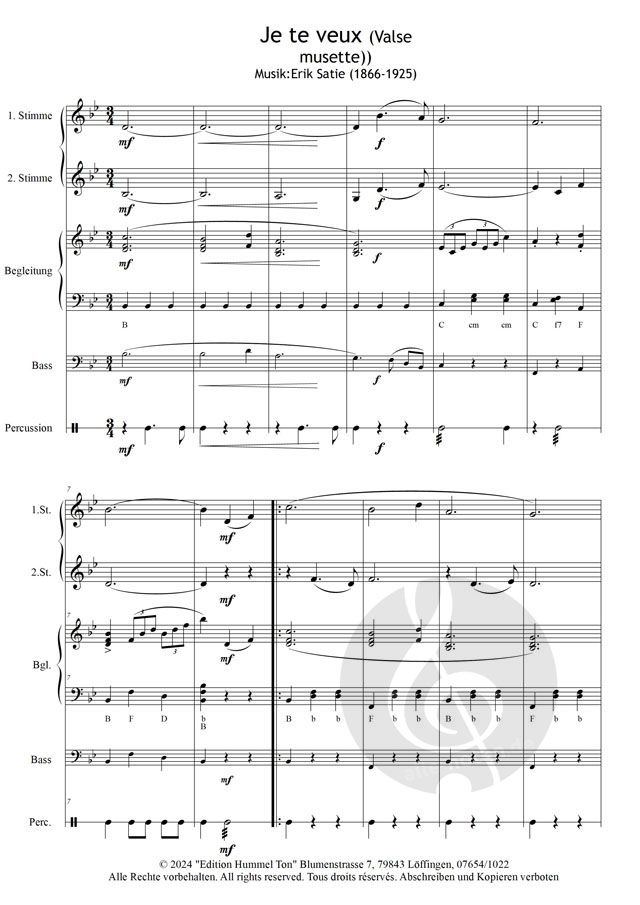
Vive la valse! Musette waltzes are as much a part of Paris and France as the Eiffel Tower or the Champs Elysee. Erik Satie, the great French composer, wrote a waltz that transforms the relaxed atmosph...
Vive la valse! Musette waltzes are as much a part of Paris and France as the Eiffel Tower or the Champs Elysee. Erik Satie, the great French composer, wrote a waltz that transforms the relaxed atmosph...
- Combo (2 Instruments and Rhythm Section)
- Sheet Music
- Edition Hummel Ton
-
ships within 1-2 weeks
- Also available for download!
ships within 1-2 weeks
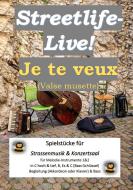
Vive la valse! Musette waltzes are as much a part of Paris and France as the Eiffel Tower or the Champs-Élysées. Erik Satie, the great French composer, wrote a waltz that transforms the relaxed atmosp...
Vive la valse! Musette waltzes are as much a part of Paris and France as the Eiffel Tower or the Champs-Élysées. Erik Satie, the great French composer, wrote a waltz that transforms the relaxed atmosp...
- Combo (2 Instruments and Rhythm Section)
- Sheet Music Download
- Edition Hummel Ton
-
immediately available
Download immediately after ordering - Instant download
immediately available
| Download immediately after ordering
Erik Satie
Éric Alfred Leslie Satie (b. May 17, 1866 in Honfleur, † July 1, 1925 in Paris), or Erik Satie for short, was a French composer who – in the wake of late Romanticism, the Impressionism that surrounded him, and the flare-up of Expressionism – knew how to remain true to himself and his view of music, creating and maintaining his own unique style.
Erik Satie could be called the satirist among turn-of-the-century composers. His pieces are short, straightforward, and downright minimalist, only to have playing instructions and headings that are all the longer and veer into the Dadaist. Here Satie is possibly satirizing the fashion, burgeoning at the time, of giving performers, instead of conventional instructions such as "Adagio" or "Allegro moderato," more detailed instructions such as "Andante très expressif" and "morendo jusq'à la fin" ("Very expressive andante" and "Morendo to the end", from Clair de lune by C. Debussy) or "Mouvement de Valse très modéré" ("Very moderate waltz movement" from Ma mère l'oye No. IV by M. Ravel) to hand. In Satie's case, playing instructions then sound like this: "Conseillez-vous soigneusement" ("Consult carefully"), "De manière à obtenir un creux" ("To obtain a hollow") or "Dans une saine supériorité" ("In healthy superiority", all from Gnossienne). Satie's 7th dance from Danses Gothique is headed: "Par pitié pour les ivrognes, honteux, débauchés, imparfaits, désagréables et faussaires en tous genres", which can be translated, mutatis mutandis, as "Out of pity for the drunkards, ashamed, dissolute, imperfect, disagreeable and fakers of all kinds".
But there are also non-ironic compositions in Satie's oeuvre. In addition to his piano works, Satie produced three ballet scores and the symphonic drama Socrate, as well as the mass Messe des pauvres ("Poor People's Mass"), furthermore a piece for violin and piano entitled Choses vues à Droite et à Gauche - sans lunettes ("Seen right and left - without glasses"), furthermore some vocal works/songs.
You can search specifically for titles by Erik Satie in our online store. For example, if you are interested in an unedited version of his Gymnopédies, please search for it in the spelling satie gymnopedies urtext. If, on the other hand, you would like to see all the arrangements of this composition, please search only for satie gymnopedies and please filter the list of results according to your needs.