
Erik Satie Sheet Music
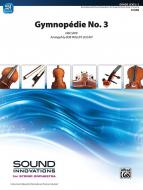
This stunning, minimalist piece is extremely playable with the melody in all sections. With an emphasis on slow bows, the easy rhythms and notes are very true to the original. The first violins play F...
This stunning, minimalist piece is extremely playable with the melody in all sections. With an emphasis on slow bows, the easy rhythms and notes are very true to the original. The first violins play F...
- String Orchestra
- Score for Strings
- Bob Phillips
- Alfred Publishing
-
-
 ships within 2-4 weeks
- Also available for download!
ships within 2-4 weeks
- Piano
- Sheet Music
- B-Note Musikverlag
-
ships within 4-8 working days
ships within 4-8 working days
- Piano
- Sheet Music
- B-Note Musikverlag
-
ships within 4-8 working days
ships within 4-8 working days
Discover a charming gem for the piano with the “Petite Ouverture à danser,” published by the renowned B-Note Musikverlag. This delicate piece blends dance-like elegance with an enchanting, ethereal at...
Discover a charming gem for the piano with the “Petite Ouverture à danser,” published by the renowned B-Note Musikverlag. This delicate piece blends dance-like elegance with an enchanting, ethereal at...
- Piano
- Sheet Music
- B-Note Musikverlag
-
ships within 4-8 working days
ships within 4-8 working days

Je te veux (I Want You) is a waltz composed by Satie and dedicated to vocalist Paulette Darty. The song, utilizing erotic text by Henry Pacory, was first performed at La Scala cabaret in Paris. Versio...
Je te veux (I Want You) is a waltz composed by Satie and dedicated to vocalist Paulette Darty. The song, utilizing erotic text by Henry Pacory, was first performed at La Scala cabaret in Paris. Versio...
- Piano
- Sheet Music
- Ludwig Music Publishing Company
-
ships within 2-4 weeks
ships within 2-4 weeks
- Piano
- Sheet Music
- Editions Max Eschig
-
ships within 3-6 working days
ships within 3-6 working days
- Piano
- Sheet Music
- Editions Max Eschig
-
-
ships within 2-4 weeks
ships within 2-4 weeks
- Piano
- Sheet Music
- Editions Max Eschig
-
ships within 3-6 working days
ships within 3-6 working days

- Piano
- Sheet Music
- Editions Max Eschig
-
ships within 3-6 working days
ships within 3-6 working days

- Piano
- Sheet Music
- Editions Max Eschig
-
ships within 3-6 working days
ships within 3-6 working days

- Piano
- Sheet Music
- Editions Max Eschig
-
ships within 3-6 working days
ships within 3-6 working days
 ships within 3-6 working days
- Piano
- Sheet Music
- Editions Max Eschig
-
ships within 3-6 working days
ships within 3-6 working days
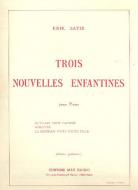
Immerse yourself in the enchanting world of piano music with the "3 Nouvelles Enfantines," published by the prestigious Editions Max Eschig. This charming sheet music edition masterfully captures the...
Immerse yourself in the enchanting world of piano music with the "3 Nouvelles Enfantines," published by the prestigious Editions Max Eschig. This charming sheet music edition masterfully captures the...
- Piano
- Sheet Music
- Editions Max Eschig
-
ships within 3-6 working days
ships within 3-6 working days
- Piano
- Sheet Music
- Editions Max Eschig
-
ships within 3-6 working days
ships within 3-6 working days
 ships within 2-4 weeks
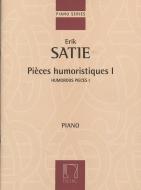
Satie's wit and sometimes macabre humor come through in these whimsical pieces. The composer's original instructions are kept intact above the piano line in each piece, for instance, take your hand aw...
Satie's wit and sometimes macabre humor come through in these whimsical pieces. The composer's original instructions are kept intact above the piano line in each piece, for instance, take your hand aw...
- Piano
- Score
- Editions Max Eschig
-
ships within 3-6 working days
ships within 3-6 working days
 ships within 3-6 working days
A set of Piano duets by Erik Satie.
- Piano
- Score
- Editions Max Eschig
-
ships within 3-6 working days
ships within 3-6 working days
Immerse yourself in one of the most intriguing and enigmatic works in piano literature: "Vexations", presented in a high-quality sheet music edition by the renowned publisher Editions Max Eschig. This...
Immerse yourself in one of the most intriguing and enigmatic works in piano literature: "Vexations", presented in a high-quality sheet music edition by the renowned publisher Editions Max Eschig. This...
- Piano
- Sheet Music
- Editions Max Eschig
-
ships within 3-6 working days
ships within 3-6 working days
- Piano
- Sheet Music
- Editions Salabert
-
ships within 3-6 working days
ships within 3-6 working days
- Piano
- Sheet Music
- Editions Salabert
-
ships within 3-6 working days
ships within 3-6 working days

Immerse yourself in fascinating soundscapes with "Ogives" for piano, published by the renowned Sikorski Musikverlag. This extraordinary piece unfolds a meditative, almost sacred atmosphere at the pian...
Immerse yourself in fascinating soundscapes with "Ogives" for piano, published by the renowned Sikorski Musikverlag. This extraordinary piece unfolds a meditative, almost sacred atmosphere at the pian...
- Piano
- Sheet Music
- Sikorski Musikverlag
-
ships within 2-4 working days
ships within 2-4 working days
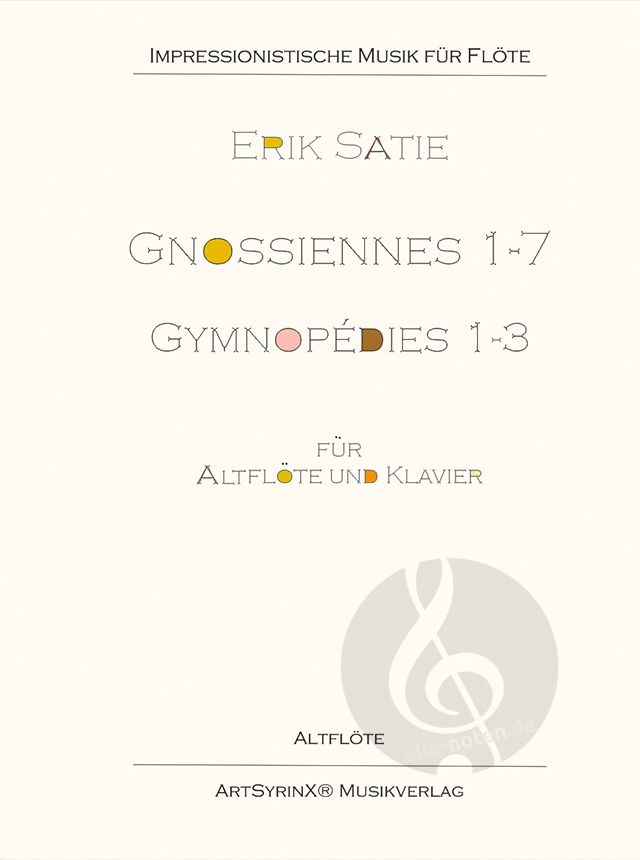
Erik Satie (1866-1925) Gnossiennes 1-7 Gymnopédies 1-3 Schwierigkeitsgrad : 3 Mittelschwer Klavierpartitur
Erik Satie (1866-1925) Gnossiennes 1-7 Gymnopédies 1-3 Schwierigkeitsgrad : 3 Mittelschwer Klavierpartitur
- Piano Score
- Artsyrinx Verlag
-
ships within 1-2 weeks
ships within 1-2 weeks
Erik Satie (1866-1925) Gnossiennes 1-7 Gymnopédies 1-3 Schwierigkeitsgrad : 3 Mittelschwer Set aus Altflötenstimme mit Klavierpartitur
Erik Satie (1866-1925) Gnossiennes 1-7 Gymnopédies 1-3 Schwierigkeitsgrad : 3 Mittelschwer Set aus Altflötenstimme mit Klavierpartitur
- Piano Score and Part(s)
- Artsyrinx Verlag
-
ships within 1-2 weeks
ships within 1-2 weeks
Erik Satie
Éric Alfred Leslie Satie (b. May 17, 1866 in Honfleur, † July 1, 1925 in Paris), or Erik Satie for short, was a French composer who – in the wake of late Romanticism, the Impressionism that surrounded him, and the flare-up of Expressionism – knew how to remain true to himself and his view of music, creating and maintaining his own unique style.
Erik Satie could be called the satirist among turn-of-the-century composers. His pieces are short, straightforward, and downright minimalist, only to have playing instructions and headings that are all the longer and veer into the Dadaist. Here Satie is possibly satirizing the fashion, burgeoning at the time, of giving performers, instead of conventional instructions such as "Adagio" or "Allegro moderato," more detailed instructions such as "Andante très expressif" and "morendo jusq'à la fin" ("Very expressive andante" and "Morendo to the end", from Clair de lune by C. Debussy) or "Mouvement de Valse très modéré" ("Very moderate waltz movement" from Ma mère l'oye No. IV by M. Ravel) to hand. In Satie's case, playing instructions then sound like this: "Conseillez-vous soigneusement" ("Consult carefully"), "De manière à obtenir un creux" ("To obtain a hollow") or "Dans une saine supériorité" ("In healthy superiority", all from Gnossienne). Satie's 7th dance from Danses Gothique is headed: "Par pitié pour les ivrognes, honteux, débauchés, imparfaits, désagréables et faussaires en tous genres", which can be translated, mutatis mutandis, as "Out of pity for the drunkards, ashamed, dissolute, imperfect, disagreeable and fakers of all kinds".
But there are also non-ironic compositions in Satie's oeuvre. In addition to his piano works, Satie produced three ballet scores and the symphonic drama Socrate, as well as the mass Messe des pauvres ("Poor People's Mass"), furthermore a piece for violin and piano entitled Choses vues à Droite et à Gauche - sans lunettes ("Seen right and left - without glasses"), furthermore some vocal works/songs.
You can search specifically for titles by Erik Satie in our online store. For example, if you are interested in an unedited version of his Gymnopédies, please search for it in the spelling satie gymnopedies urtext. If, on the other hand, you would like to see all the arrangements of this composition, please search only for satie gymnopedies and please filter the list of results according to your needs.