
Erik Satie Sheet Music

LOUNGE PIANO - Chill & Classics ist die digitale Klavierausgabe, die du immer gesucht hast: fünf zeitlose Meisterwerke in klaren, spielfertigen Fassungen, die sich auf jeweils zwei Seiten entfalten un...
LOUNGE PIANO - Chill & Classics ist die digitale Klavierausgabe, die du immer gesucht hast: fünf zeitlose Meisterwerke in klaren, spielfertigen Fassungen, die sich auf jeweils zwei Seiten entfalten un...
- Piano
- Sheet Music Download
- Soundnotation
-
-
 immediately available
Download immediately after ordering - Instant download
immediately available
| Download immediately after ordering

Fünf absolute Klassiker der Ruhe, komprimiert auf die Essenz und wunderbar überschaubar: Gymnopédie Nr. 1 und Gnossienne Nr. 1 von Erik Satie, Träumerei von Robert Schumann, Nocturne Op. 9 Nr. 2 von F...
Fünf absolute Klassiker der Ruhe, komprimiert auf die Essenz und wunderbar überschaubar: Gymnopédie Nr. 1 und Gnossienne Nr. 1 von Erik Satie, Träumerei von Robert Schumann, Nocturne Op. 9 Nr. 2 von F...
- Piano
- Sheet Music Download
- Soundnotation
-
-
immediately available
Download immediately after ordering - Instant download
immediately available
| Download immediately after ordering
Diese Ausgabe bietet eine vereinfachte Version der berühmten "Gnossienne Nr. 1" von Erik Satie, speziell angepasst für Klavieranfänger. Mit einem leichten Schwierigkeitsgrad ermöglicht diese Notenausg...
Diese Ausgabe bietet eine vereinfachte Version der berühmten "Gnossienne Nr. 1" von Erik Satie, speziell angepasst für Klavieranfänger. Mit einem leichten Schwierigkeitsgrad ermöglicht diese Notenausg...
- Piano
- Sheet Music Download
- Martin Malto
- Soundnotation
-
-
immediately available
Download immediately after ordering - Instant download
immediately available
| Download immediately after ordering

An regnerischen Tagen braucht es keine großen Virtuosenstücke, sondern Musik, die tröstet und wie ein warmer Tee wirkt. Diese Sammlung schenkt genau das: fünf der schönsten "Regen-Stimmungen" der Klav...
An regnerischen Tagen braucht es keine großen Virtuosenstücke, sondern Musik, die tröstet und wie ein warmer Tee wirkt. Diese Sammlung schenkt genau das: fünf der schönsten "Regen-Stimmungen" der Klav...
- Piano
- Sheet Music Download
- Petro Petrivik Martin Malto
- Soundnotation
-
-
immediately available
Download immediately after ordering - Instant download
immediately available
| Download immediately after ordering
- Piano
- Sheet Music
- Jean-François Pailler
- Editions Bourgès R.
-
ships within 2-4 weeks
ships within 2-4 weeks

Immerse yourself in the enchanting world of charming sounds with the 'Petite Ouverture a Danser'. From the very first measure, this delightful work for piano solo unfolds a dance-like lightness and su...
Immerse yourself in the enchanting world of charming sounds with the 'Petite Ouverture a Danser'. From the very first measure, this delightful work for piano solo unfolds a dance-like lightness and su...
- Piano
- Sheet Music
- Broekmans & Van Poppel
-
ships within 3-6 working days
ships within 3-6 working days
Piano Solo
- Piano
- Sheet Music
- Broekmans & Van Poppel
-
ships within 2-4 weeks
ships within 2-4 weeks
La Belle Excentrique is a suite of three dances (Marche franco-lunaire, Valse du mystérieux baiser dans l'œil, Cancan grand-mondain) and an instrumental ritornello (Grande Ritournelle), composed by Sa...
La Belle Excentrique is a suite of three dances (Marche franco-lunaire, Valse du mystérieux baiser dans l'œil, Cancan grand-mondain) and an instrumental ritornello (Grande Ritournelle), composed by Sa...
- Piano 4 Hands
- Sheet Music
- Editions Max Eschig
-
-
ships within 3-6 working days
ships within 3-6 working days
This short melodious piece by the French composer Eric Satie will bring delight to both performers and audiences.
This short melodious piece by the French composer Eric Satie will bring delight to both performers and audiences.
- Piano
- Sheet Music
- Jane Biggs
- The Walsh Collection
-
-
ships within 3-6 working days
ships within 3-6 working days
ships within 2-4 weeks

Headstrong and eccentric, Satie consciously distanced himself from the Romantic traditions of the nineteenth century. His three miniatures for piano 'Gymnopédies' are the first testimony to his idea o...
Headstrong and eccentric, Satie consciously distanced himself from the Romantic traditions of the nineteenth century. His three miniatures for piano 'Gymnopédies' are the first testimony to his idea o...
- Piano
- Sheet Music (Urtext)
- G. Henle Verlag
-
-
in stock
ships within 1-2 working days
in stock
| ships within 1-2 working days
Although Satie took the classical form as a model for his 'Sonatine', it is quintessentially an ironic work. The composer, who later in life liked to be seen walking through the streets wearing a stif...
Although Satie took the classical form as a model for his 'Sonatine', it is quintessentially an ironic work. The composer, who later in life liked to be seen walking through the streets wearing a stif...
- Piano
- Sheet Music (Urtext)
- Pascal Rogé
- G. Henle Verlag
-
-
in stock
ships within 1-2 working days
in stock
| ships within 1-2 working days
In a typically humorous manner Satie countered the myth of the great master's 'last thought' with his 'Next-to-last thoughts' (Avant-dernières Pensées). As was usual with his piano works from 1912 onw...
In a typically humorous manner Satie countered the myth of the great master's 'last thought' with his 'Next-to-last thoughts' (Avant-dernières Pensées). As was usual with his piano works from 1912 onw...
- Piano
- Sheet Music (Urtext)
- Pascal Rogé
- G. Henle Verlag
-
-
in stock
ships within 1-2 working days
in stock
| ships within 1-2 working days
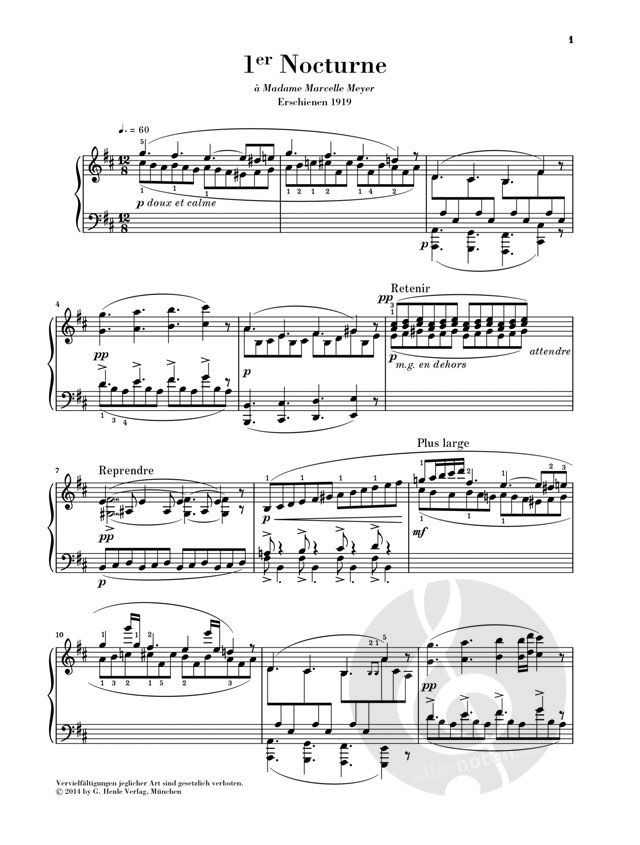
With the five Nocturnes, composed in 1919, Satie concluded the series of cyclically conceived piano works that form the backbone of his oeuvre, so to speak. The pieces of the same name by John Field a...
With the five Nocturnes, composed in 1919, Satie concluded the series of cyclically conceived piano works that form the backbone of his oeuvre, so to speak. The pieces of the same name by John Field a...
- Piano
- Sheet Music (Urtext)
- Pascal Rogé
- G. Henle Verlag
-
-
in stock
ships within 1-2 working days
in stock
| ships within 1-2 working days
- Piano
- Sheet Music
- Editions Max Eschig
-
ships within 3-6 working days
ships within 3-6 working days



 ships within 3-6 working days
- Piano
- Sheet Music
- Editions Salabert
-
ships within 3-6 working days
ships within 3-6 working days
ships within 3-6 working days
- Piano
- Sheet Music
- Editions Salabert
-
ships within 3-6 working days
ships within 3-6 working days
ships within 3-6 working days
ships within 3-6 working days
ships within 3-6 working days
ships within 3-6 working days
ships within 3-6 working days
- Piano
- Sheet Music
- Editions Salabert
-
ships within 3-6 working days
ships within 3-6 working days
Erik Satie
Éric Alfred Leslie Satie (b. May 17, 1866 in Honfleur, † July 1, 1925 in Paris), or Erik Satie for short, was a French composer who – in the wake of late Romanticism, the Impressionism that surrounded him, and the flare-up of Expressionism – knew how to remain true to himself and his view of music, creating and maintaining his own unique style.
Erik Satie could be called the satirist among turn-of-the-century composers. His pieces are short, straightforward, and downright minimalist, only to have playing instructions and headings that are all the longer and veer into the Dadaist. Here Satie is possibly satirizing the fashion, burgeoning at the time, of giving performers, instead of conventional instructions such as "Adagio" or "Allegro moderato," more detailed instructions such as "Andante très expressif" and "morendo jusq'à la fin" ("Very expressive andante" and "Morendo to the end", from Clair de lune by C. Debussy) or "Mouvement de Valse très modéré" ("Very moderate waltz movement" from Ma mère l'oye No. IV by M. Ravel) to hand. In Satie's case, playing instructions then sound like this: "Conseillez-vous soigneusement" ("Consult carefully"), "De manière à obtenir un creux" ("To obtain a hollow") or "Dans une saine supériorité" ("In healthy superiority", all from Gnossienne). Satie's 7th dance from Danses Gothique is headed: "Par pitié pour les ivrognes, honteux, débauchés, imparfaits, désagréables et faussaires en tous genres", which can be translated, mutatis mutandis, as "Out of pity for the drunkards, ashamed, dissolute, imperfect, disagreeable and fakers of all kinds".
But there are also non-ironic compositions in Satie's oeuvre. In addition to his piano works, Satie produced three ballet scores and the symphonic drama Socrate, as well as the mass Messe des pauvres ("Poor People's Mass"), furthermore a piece for violin and piano entitled Choses vues à Droite et à Gauche - sans lunettes ("Seen right and left - without glasses"), furthermore some vocal works/songs.
You can search specifically for titles by Erik Satie in our online store. For example, if you are interested in an unedited version of his Gymnopédies, please search for it in the spelling satie gymnopedies urtext. If, on the other hand, you would like to see all the arrangements of this composition, please search only for satie gymnopedies and please filter the list of results according to your needs.