
Für Andacht und Gottesdienst 2010
Eine Arbeitshilfe für Posaunenchöre
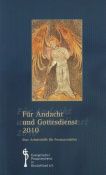
Für Andacht und Gottesdienst 2010
Eine Arbeitshilfe für Posaunenchöre
- Instrumentation Literature
- Editor Posaunendienst EPiD
- Edition Book
- Publisher Strube Verlag
- Order no. STRUBE9087
 ships within 4-8 working days
incl. tax,
excl. shipping costs
Not available in all countries. Learn more

Description:
A working aid for trombone choirs, published by the Evangelical Trombone Service in Germany.
Dear readers, a devotional book based on musical terms is somewhat unusual. But music education shows us the close relationship between music-making and social behavior. In music we learn to respond to each other, to listen to others, to take a step back but also to test and show our worth in solo playing. I learn to concentrate, to take breaks and to expand my heart through the different styles of music. If you think about musical terms, you realize how much wisdom about life and faith is hidden in them. They are not just the composer's instructions for playing a piece of music, but can also question and shape our behavior and our understanding of life. This also becomes clear in the proposed church service and the sermon. Music is more than just a leisure activity. It underlines biblical statements and relates life experiences to the Christian faith. The terms open up a new perspective on old truths of faith that may have become self-evident and therefore meaningless for some. Devotions during rehearsals are not only intended to give our lips a little rest, but also to point to the center of our music-making: We don't just want to use our instruments to create a good atmosphere, we want to consciously praise God and infect people to joyfully join in this praise. Many thanks to all the authors who have embarked on this path, namely to establish a relationship between musical concepts, faith and life in just a few words.Werner Jung, Chairman of the Theological Committee of the EPiD
Dear readers, a devotional book based on musical terms is somewhat unusual. But music education shows us the close relationship between music-making and social behavior. In music we learn to respond to each other, to listen to others, to take a step back but also to test and show our worth in solo playing. I learn to concentrate, to take breaks and to expand my heart through the different styles of music. If you think about musical terms, you realize how much wisdom about life and faith is hidden in them. They are not just the composer's instructions for playing a piece of music, but can also question and shape our behavior and our understanding of life. This also becomes clear in the proposed church service and the sermon. Music is more than just a leisure activity. It underlines biblical statements and relates life experiences to the Christian faith. The terms open up a new perspective on old truths of faith that may have become self-evident and therefore meaningless for some. Devotions during rehearsals are not only intended to give our lips a little rest, but also to point to the center of our music-making: We don't just want to use our instruments to create a good atmosphere, we want to consciously praise God and infect people to joyfully join in this praise. Many thanks to all the authors who have embarked on this path, namely to establish a relationship between musical concepts, faith and life in just a few words.Werner Jung, Chairman of the Theological Committee of the EPiD