
András Schiff, Martin Meyer
Musik kommt aus der Stille
Gespräche mit Martin Meyer. Essays
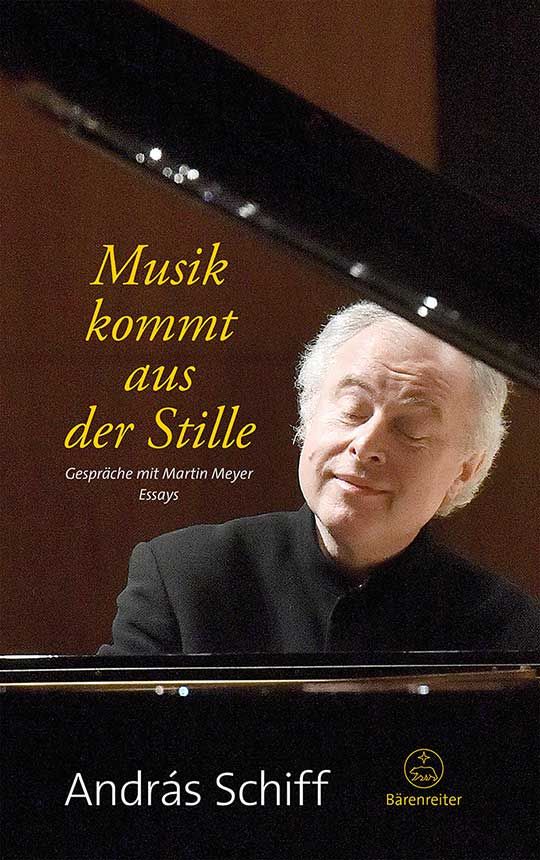
András Schiff, Martin Meyer
Musik kommt aus der Stille
Gespräche mit Martin Meyer. Essays
- Instrumentation Literature
- Composer András Schiff Martin Meyer
- Edition Book
- Publisher Bärenreiter Verlag
- Order no. BVK4040
 in stock
ships within 1-2 working days
incl. tax,
excl. shipping costs
Not available in all countries. Learn more

Description:
András Schiff is one of the most important pianists of our time. Nevertheless, he moves beyond the mainstream: in his way of talking about music and in his inimitable art of making music sound out of silence.
He has also attracted international attention by taking a loud and clear public stand against nationalist and racist attitudes.
In the first part of his book, András Schiff talks to the prominent feature writer Martin Meyer about his basic artistic views, his playing techniques and methods of interpretation and his professional experience as a pianist and conductor.
In the second part, he tells as a contemporary witness about his Jewish family and his biography, which moves between the Holocaust and contemporary political engagement, between communism and global capitalism, between Budapest, London and Florence, between Bach and Kurtág.
The essays offer personal portraits of great artists, cheerful texts, political contributions and those on the interpretation of central piano works.
He has also attracted international attention by taking a loud and clear public stand against nationalist and racist attitudes.
In the first part of his book, András Schiff talks to the prominent feature writer Martin Meyer about his basic artistic views, his playing techniques and methods of interpretation and his professional experience as a pianist and conductor.
In the second part, he tells as a contemporary witness about his Jewish family and his biography, which moves between the Holocaust and contemporary political engagement, between communism and global capitalism, between Budapest, London and Florence, between Bach and Kurtág.
The essays offer personal portraits of great artists, cheerful texts, political contributions and those on the interpretation of central piano works.