
Roxanna Panufnik
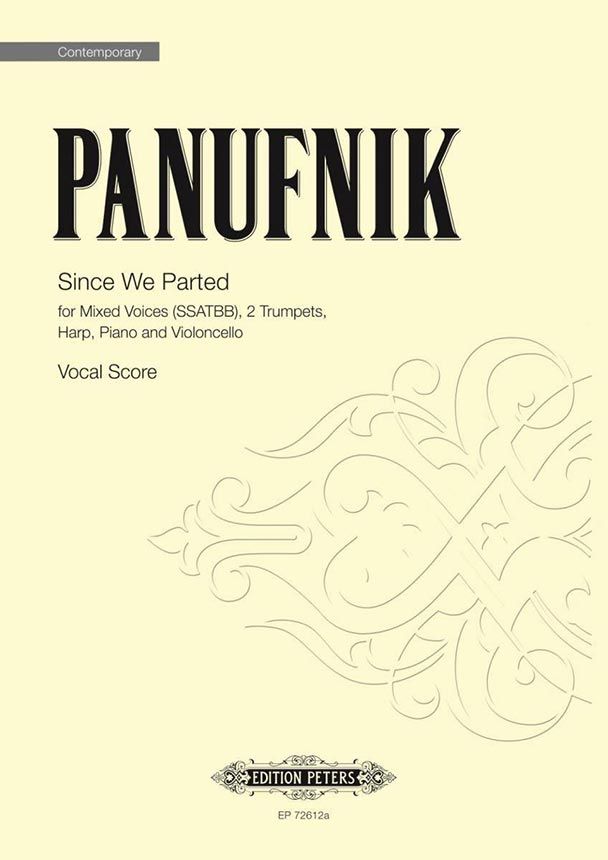
Since We Parted
for Mixed Voices (SSATBB), 2 Trumpets, Harp, Piano and Violoncello
Roxanna Panufnik
Since We Parted
for Mixed Voices (SSATBB), 2 Trumpets, Harp, Piano and Violoncello
- Instrumentation Mixed Choir (SSATBB), 2 Trumpets, Harp, Piano and Cello
- Composer Roxanna Panufnik
- Edition Score
- Publisher Edition Peters
- Order no. EP72612A
 ships within 3-6 working days
incl. tax,
excl. shipping costs
Not available in all countries. Learn more

Description:
When Jeffrey Skidmore of Ex Cathedra approached me to write this piece, he specified that it should be remembering the first World War and, if at all possible, the words should be by or about a woman.
A friend steered me towards Vera Brittain's Testament of Youth and, spookily, the book fell open on page 163 where appeared Kathleen Coates' s poem A Year and a Day. This was written between 1910 and 1913 but is, I think, prophetic of the impending war in its depiction of a woman and man in love, reluctantly separated and missing each other.
Around the same time, my mother sent me the poem Since we parted, yestereve by Victorian statesman and poet Robert Bulwer-Lytton (1831-1891) - it seemed to fit beautifully as a refrain to A Year and a Day.
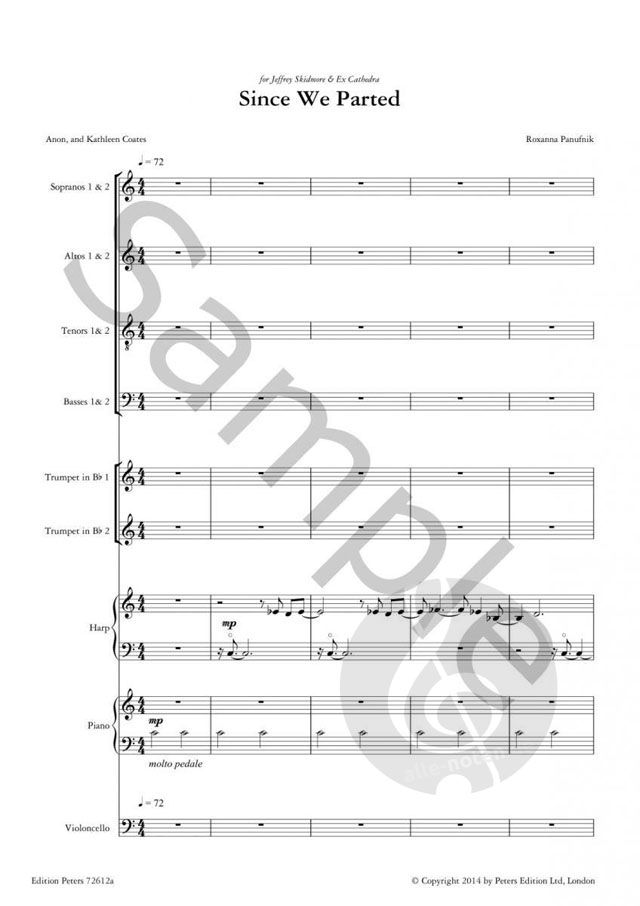
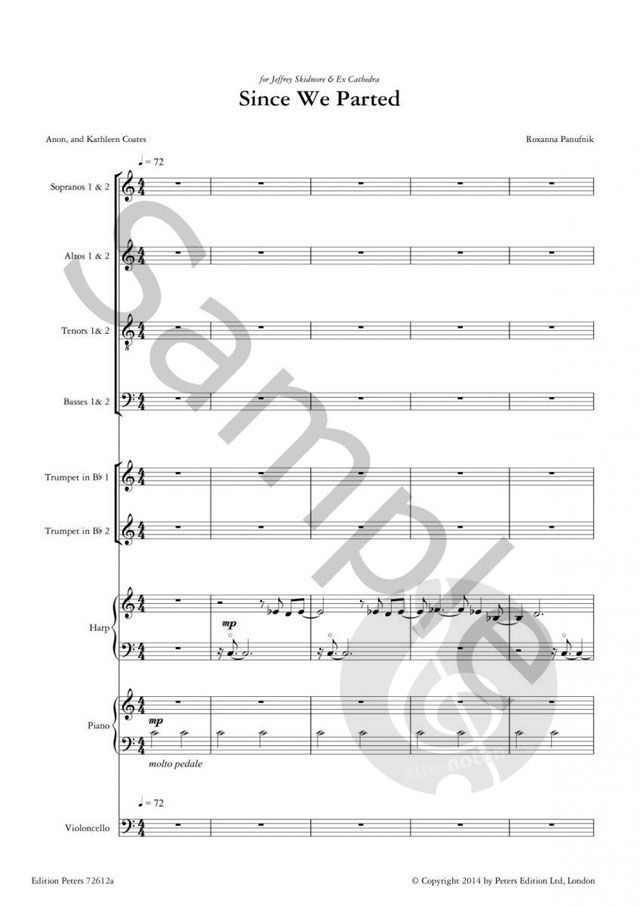
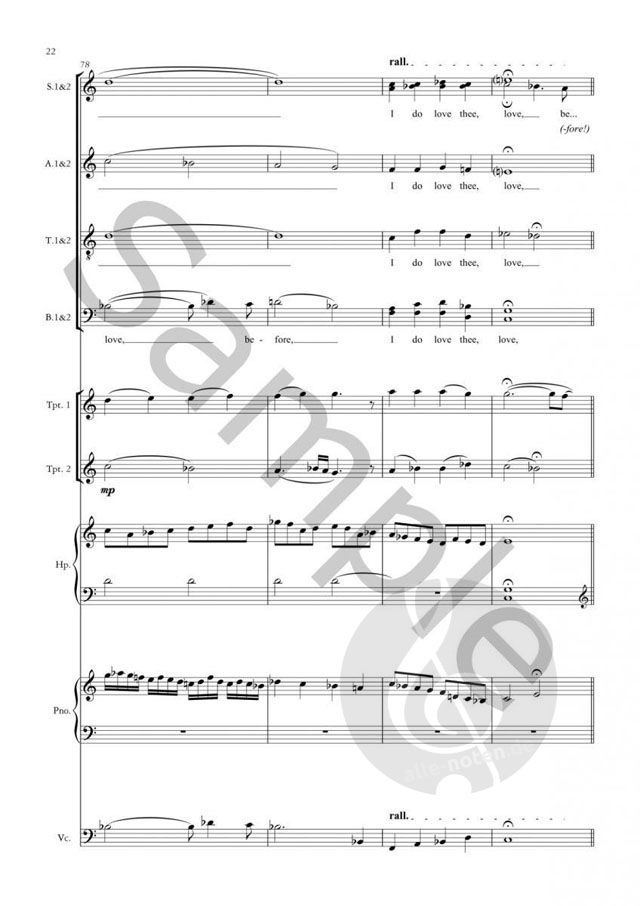
We start with the refrain in which I try to create a sense of yearning - with harmonies that lean into each other and suspensions that only partly resolve. I have given the ladies the first verse of A Year and a Day - I have used mellow flat keys as this is marked 'languorously' as I picture a calm but pining Edwardian lady, reclining in a warm, English Summer's garden. When the men take over in the second verse this comes from a darker place - maybe a noisy, fetid trench where dreams of love and happiness are sometimes hard to conjure. The music shifts in harmonic uncertainty - the harp oscillates and rumbles, creating instability. This part is written in sharp keys which, I think, have a more stringent feel about them. The whole piece is made up of my typical major-minor harmonic language which sets a bittersweet atmosphere and the trumpets remind us, from time to time, of the backdrop of war.
The piece ends meditatively, with Eleven Armistice Chimes and lasts approximately 10 minutes. It's dedicated to Jeffrey Skidmore and Ex Cathedra and my deepest thanks go to them for commissioning the work and Jane Arthur for sponsoring the commission.
A friend steered me towards Vera Brittain's Testament of Youth and, spookily, the book fell open on page 163 where appeared Kathleen Coates' s poem A Year and a Day. This was written between 1910 and 1913 but is, I think, prophetic of the impending war in its depiction of a woman and man in love, reluctantly separated and missing each other.
Around the same time, my mother sent me the poem Since we parted, yestereve by Victorian statesman and poet Robert Bulwer-Lytton (1831-1891) - it seemed to fit beautifully as a refrain to A Year and a Day.
We start with the refrain in which I try to create a sense of yearning - with harmonies that lean into each other and suspensions that only partly resolve. I have given the ladies the first verse of A Year and a Day - I have used mellow flat keys as this is marked 'languorously' as I picture a calm but pining Edwardian lady, reclining in a warm, English Summer's garden. When the men take over in the second verse this comes from a darker place - maybe a noisy, fetid trench where dreams of love and happiness are sometimes hard to conjure. The music shifts in harmonic uncertainty - the harp oscillates and rumbles, creating instability. This part is written in sharp keys which, I think, have a more stringent feel about them. The whole piece is made up of my typical major-minor harmonic language which sets a bittersweet atmosphere and the trumpets remind us, from time to time, of the backdrop of war.
The piece ends meditatively, with Eleven Armistice Chimes and lasts approximately 10 minutes. It's dedicated to Jeffrey Skidmore and Ex Cathedra and my deepest thanks go to them for commissioning the work and Jane Arthur for sponsoring the commission.