
Jan van der Roost
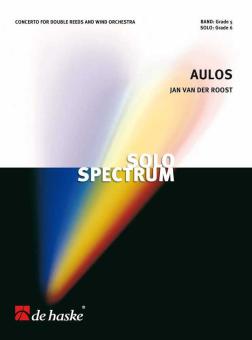
Aulos
Concerto for Double Reeds and Wind Orchestra
NEW
PDF
view
Jan van der Roost
Aulos
Concerto for Double Reeds and Wind Orchestra
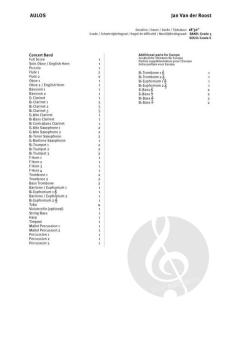
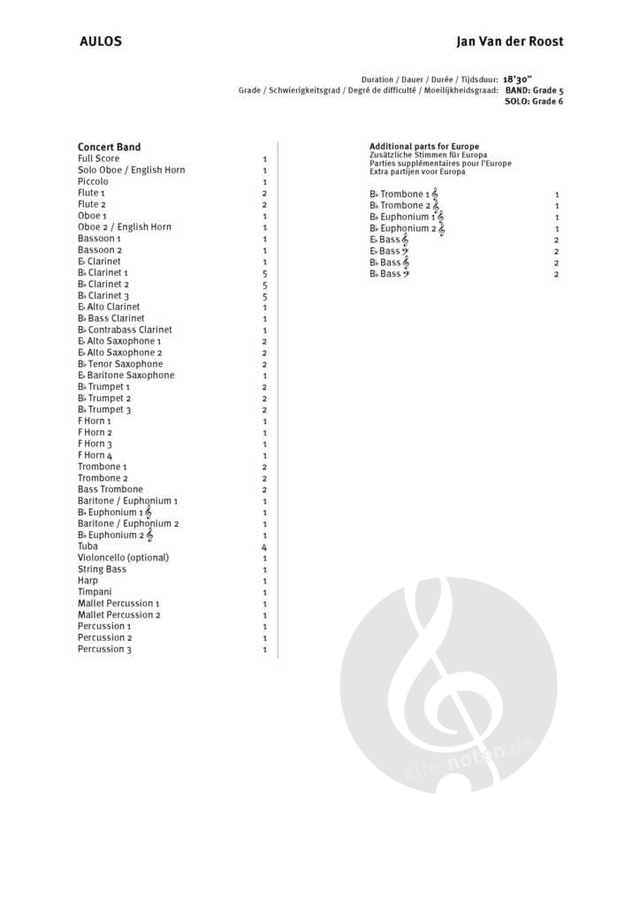
- Instrumentation Concert Band (Solo/Feature: Oboe)
- Composer Jan van der Roost
- Series Solo Spectrum
-
Difficulty Level
- Edition Score
- Publisher De Haske Publications
- Order no. DHP1266567-140
 ships within 3-6 working days
incl. tax,
excl. shipping costs
Not available in all countries. Learn more
Description:
Already in ancient times, a wooden double-reed instrument called aulos existed on the eastern Mediterranean coast. Images of it have been discovered in various countries that are thousands of years old. The instrument consisted of two cylindrical tubes with a variable number of finger holes, which allowed different sounds to be produced. The aulos can be considered a distant predecessor of modern woodwind instruments such as the oboe, as it has a number of similar features and characteristics. Aulos – Concerto for Double Reeds and Wind Orchestra begins with the oboe's "big brother", the cor anglais. The beautiful, slightly melancholic timbre of this instrument is particularly suitable for lyrical and melodic passages. At the beginning of the work, the soloist plays backstage, so that the sound can be heard from a distance, both literally and figuratively. This evokes one of the original functions of the oboe family, which is to give expression to the pastoral atmosphere traditionally associated with shepherds and vast landscapes. The slightly improvisational introduction is followed by a cantabile section, which is given a pronounced rhythmic tension by the use of irregular time signatures. The range of the cor anglais is almost completely exploited, while the orchestra plays an important, active role and does not just serve as an accompaniment. The first movement ends calmly and calmly, which makes the contrast to the second movement seem all the greater. After an impressive passage of percussion instruments, the woodwinds and muted brass create a somewhat exotic atmosphere. The cor anglais is replaced by the oboe, which introduces an oriental theme. This motif is repeated several times in different ways and in different vocal registers in predominantly fast movement. This is followed by another contrast: during a pseudo-medieval dance, the solo oboe plays in the style of the bombarde. The archaic-sounding sounds and rhythms take the listener back to the time when the precursors of the modern oboe still prevailed in our country. Finally, the calm mood returns and in the Meno mosso e caloroso the oboe is given the opportunity to bring out the tonal richness of this expressive instrument through lyricism and musicality. After this cantabile intermezzo, the exotic theme returns and the concert ends fiery and virtuosic. The world premiere of the work took place on 1 March 2026 at the Concertgebouw Brugge (Belgium) on the occasion of the composer's 70th birthday. The soloist was Bram Nolf, who had also commissioned the work. He was accompanied by the Houtlands Harmonieorkest from Torhout under the direction of Nico Logghe. The composition was made possible by the valuable support of Dr. Jean Van Roy.