
Johann Strauss (Sohn)
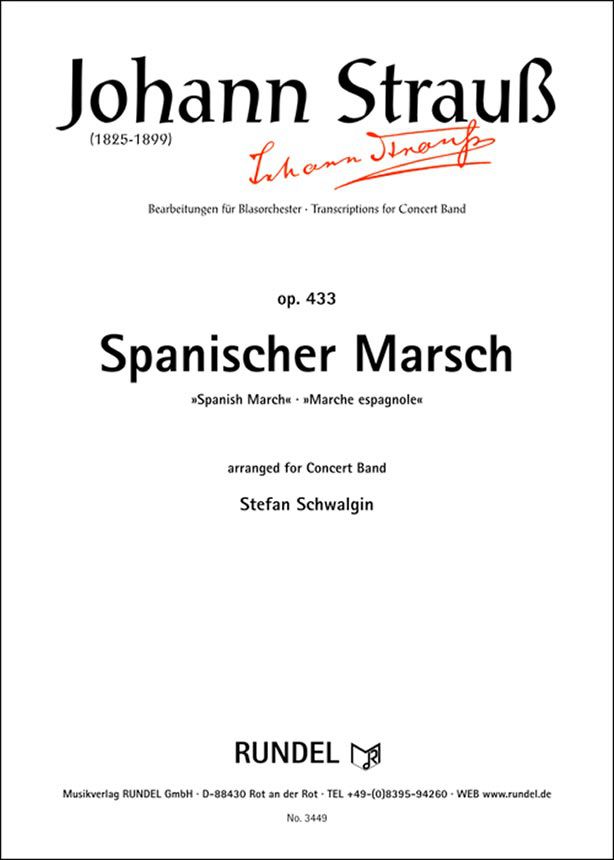
Spanish March op. 433
Demo
listen
PDF
view
Johann Strauss (Sohn)
Spanish March op. 433
- Instrumentation Concert Band
- Composer Johann Strauss (Sohn)
- Editor Stefan Schwalgin
-
Difficulty Level
- Edition Score and Parts
- Publisher Musikverlag Rundel
- Order no. MVSR3449
 ships within 2-5 working days
incl. tax,
excl. shipping costs
Not available in all countries. Learn more

Description:
Johann Strauss II, best known as the “Waltz King”, also composed a few marches. He dedicated a whole series of pieces of this genre to certain countries and their monarchs: the “Persian March op. 289” (1864), the “Egyptian March op. 335” (1869), the “Russian March op. 426” (1886) and finally the “Spanish March op. 433” (1888). The latter was dedicated to the regent of Spain, María Cristina (1858-1929).
The “Spanish March” was composed on the occasion of a planned concert tour of the composer through Spain, which then was canceled. Strauss, who didn’t like long journeys, preferred to avoid the long trip and instead sent his musical greetings to Madrid. As a “reward”, María Cristina awarded the composer the Grand Cross of the Order of Isabella. The work was first performed in Vienna on October 21, 1888, conducted by his brother, Eduard Strauss.
It is a long, dramatic and artistically crafted march, which spreads typical “Spanish” color in terms of melody and shape, even though the themes all come from Strauss himself. After a dignified introductory fanfare, small formal parts alternate with each other, which on the one hand have a folkloric-dance and on the other hand a longing-elegiac character. The “Spanish” coloration becomes evident, among other things, through the use of the Spanish “national instrument”, the castanets. The march is often performed at the Vienna Philharmonic’s New Year’s Concert.
The “Spanish March” was composed on the occasion of a planned concert tour of the composer through Spain, which then was canceled. Strauss, who didn’t like long journeys, preferred to avoid the long trip and instead sent his musical greetings to Madrid. As a “reward”, María Cristina awarded the composer the Grand Cross of the Order of Isabella. The work was first performed in Vienna on October 21, 1888, conducted by his brother, Eduard Strauss.
It is a long, dramatic and artistically crafted march, which spreads typical “Spanish” color in terms of melody and shape, even though the themes all come from Strauss himself. After a dignified introductory fanfare, small formal parts alternate with each other, which on the one hand have a folkloric-dance and on the other hand a longing-elegiac character. The “Spanish” coloration becomes evident, among other things, through the use of the Spanish “national instrument”, the castanets. The march is often performed at the Vienna Philharmonic’s New Year’s Concert.
Customers rated this product:
Manufacturer Information:
Musikverlag Rundel
Untere Gewendhalde 27
88430
Rot an der Rot
Deutschland
Other customers also bought:
Jose Alberto Pina
- Concert Band
- Score and Parts
-
in stock
ships within 1-2 working days
- Concert Band (Solo/Feature: Saxophone Section)
- Score and Parts
-
in stock
ships within 1-2 working days
Jacob de Haan
- Concert Band
- Score and Parts
-
in stock
ships within 1-2 working days
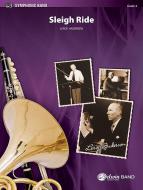
Leroy Anderson
- Concert Band
- Score and Parts
-
in stock
ships within 1-2 working days - Also available for download!
Hector Berlioz
- Concert Band
- Score and Parts
- Désiré Dondeyne
-
in stock
ships within 1-2 working days
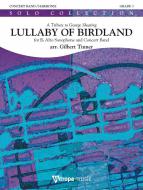
for Eb Alto Saxophone and Concert Band
- Concert Band (Solo/Feature: Alto Saxophone)
- Score and Parts
- Gilbert Tinner
-
in stock
ships within 1-2 working days
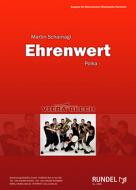
- Concert Band
- Score, Parts and Director's Score
-
in stock
ships within 1-2 working days
José Feliciano
- Concert Band
- Score and Parts
- Heinz Briegel
-
in stock
ships within 1-2 working days
- Concert Band (Solo/Feature: Trumpet)
- Score and Parts
- Lorenzo Pusceddu
-
in stock
ships within 1-2 working days
- Concert Band
- Score and Parts
-
in stock
ships within 1-2 working days
Johann Strauss (Sohn)
- Concert Band
- Sheet Music
- Hans Kolditz
-
ships within 3-6 working days
Johann Strauss (Sohn)
- Concert Band
- Score and Parts
- Fritz Neuböck
-
ships within 3-6 working days
Georg Friedrich Händel
Paraphrase über den Siegeschor aus Händels 'Judas Maccabaeus'
- Concert Band
- Score and Parts
- Albert Loritz
-
in stock
ships within 1-2 working days
Karl Komzák (junior)
- Concert Band
- Score and Parts
- Siegfried Rundel
-
ships within 2-5 working days
- Concert Band
- Score and Parts
- Eiji Suzuki
-
ships within 3-6 working days