
Philippe Hurel
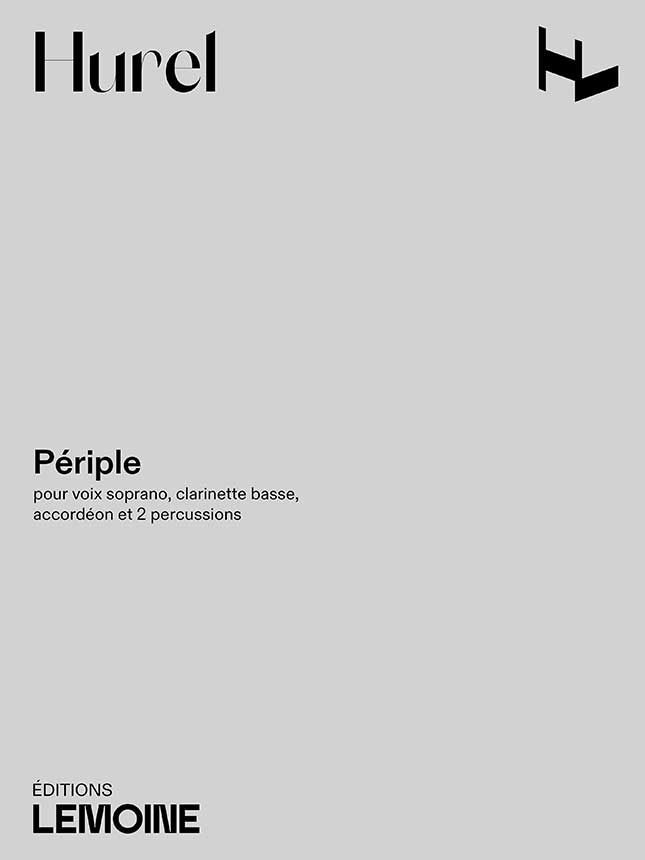
Périple
Philippe Hurel
Périple
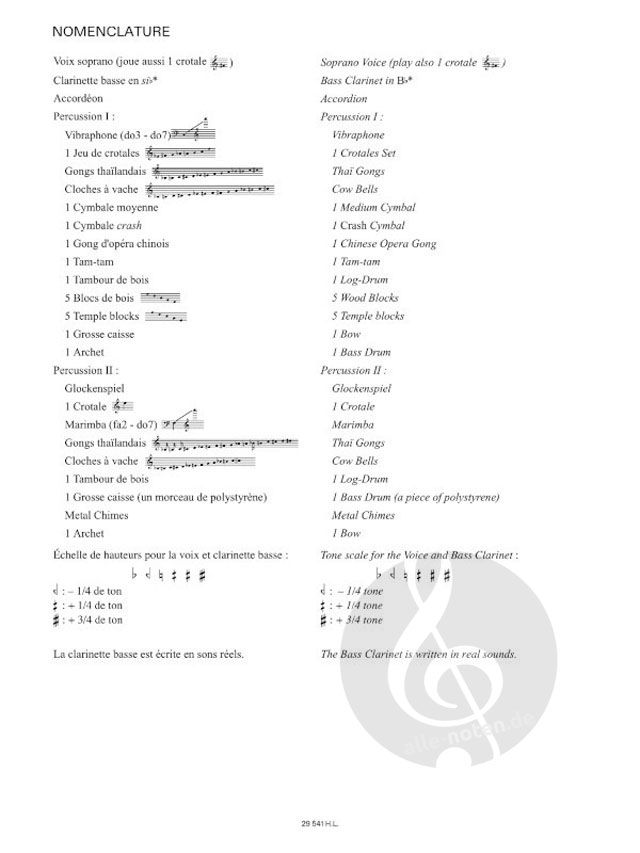
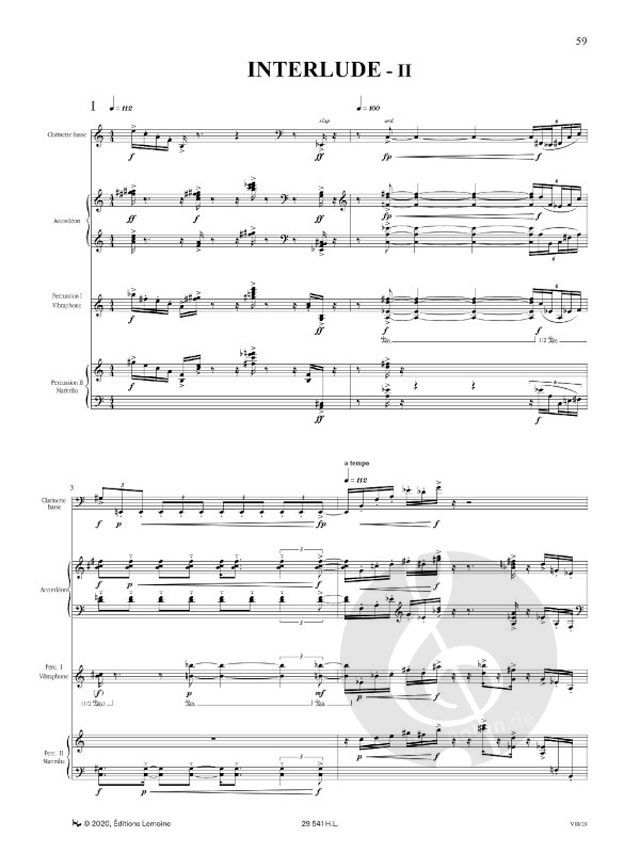
- Instrumentation High Voice, Bass Clarinet, Accordion and 2 Percussion
- Composer Philippe Hurel
- Edition Sheet Music
- Publisher Editions Henry Lemoine
- Order no. LEMO29541
 ships within 4-8 working days
incl. tax,
excl. shipping costs
Not available in all countries. Learn more

Description:
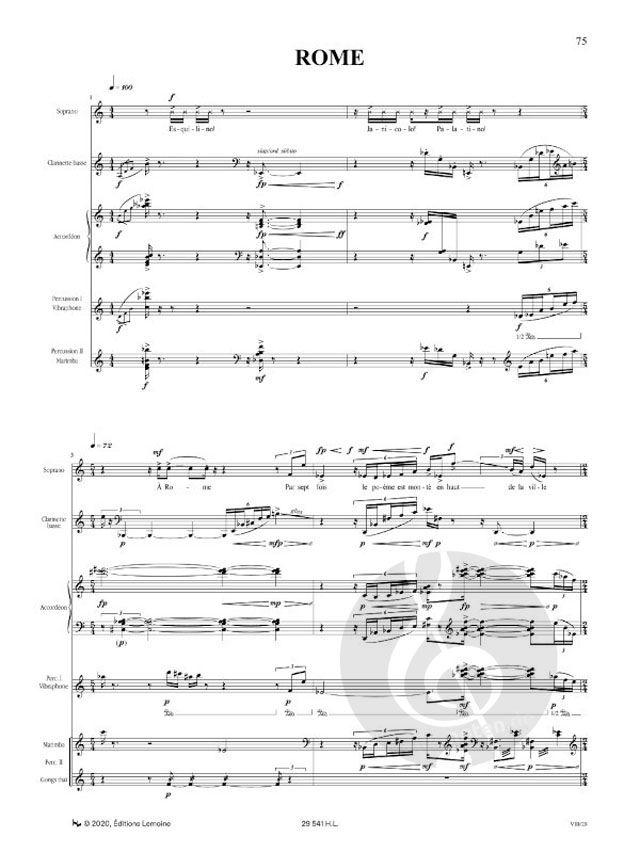
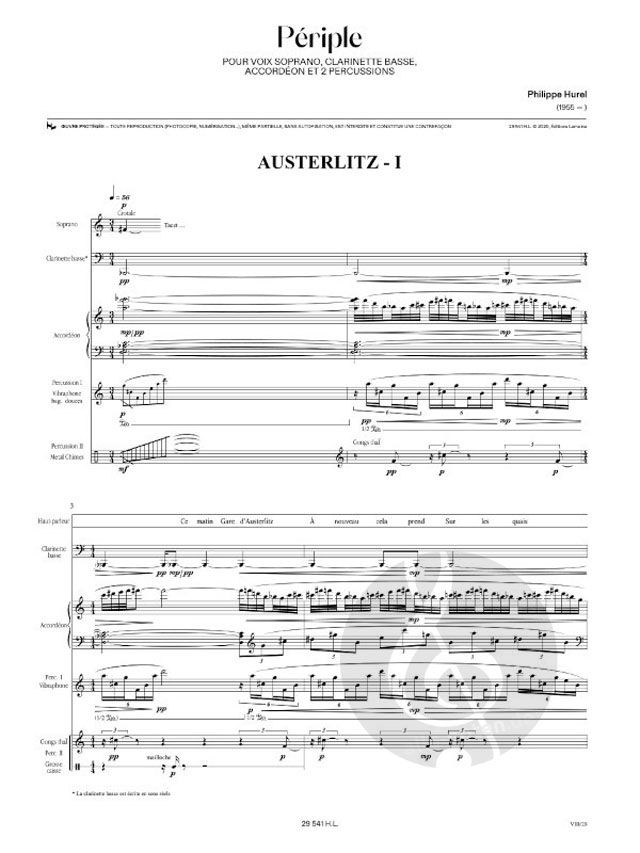
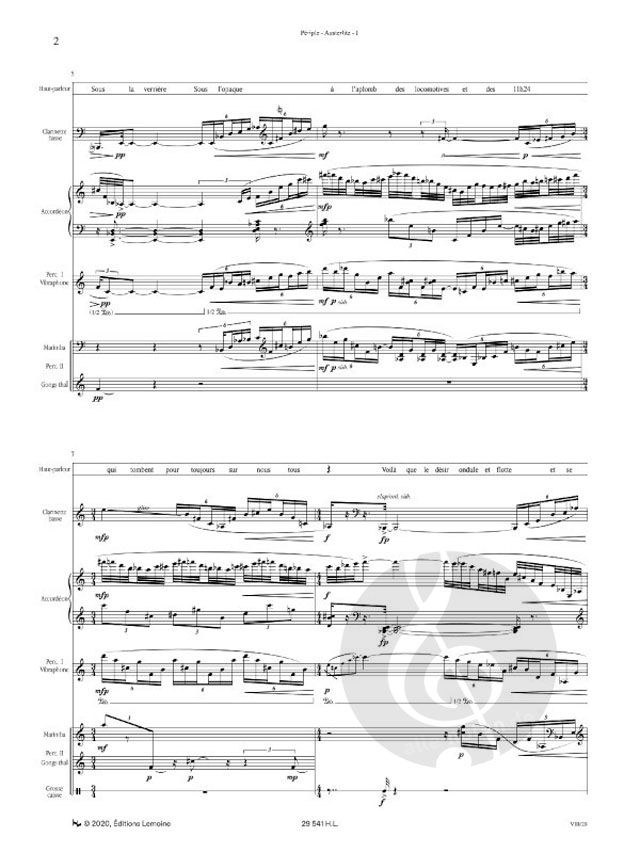
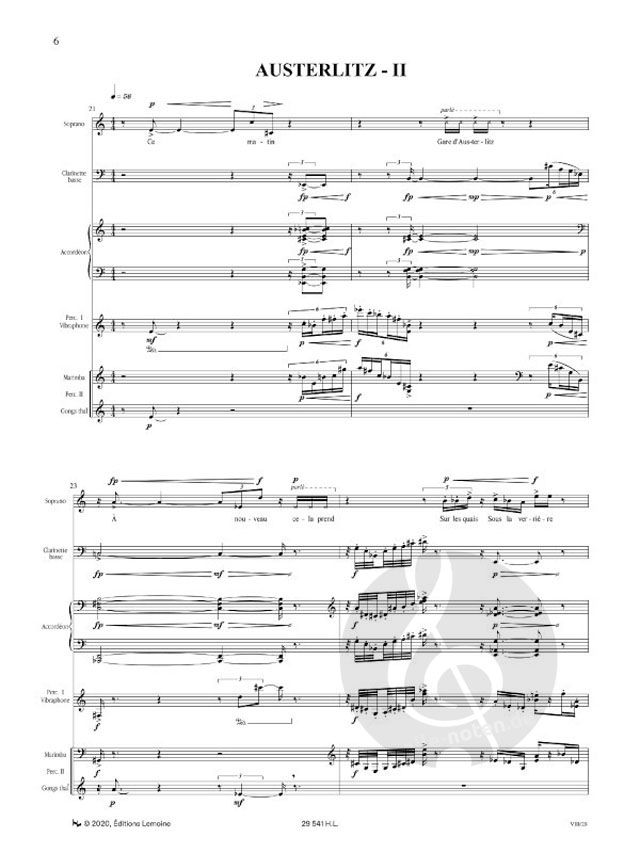
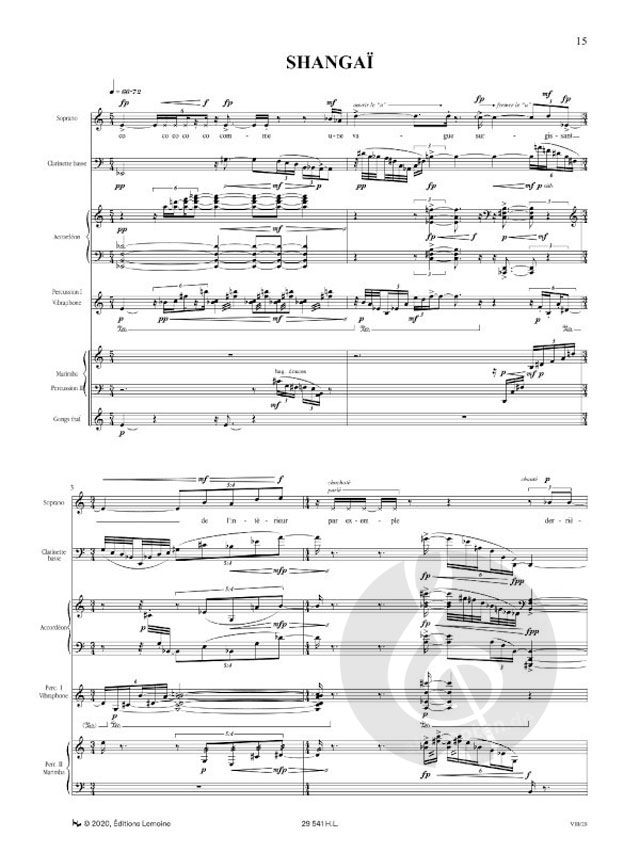
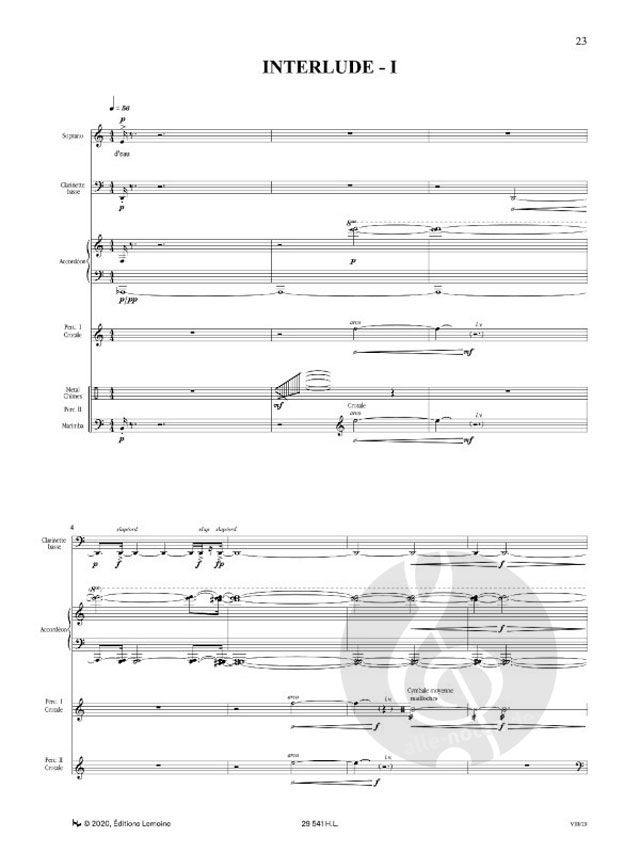
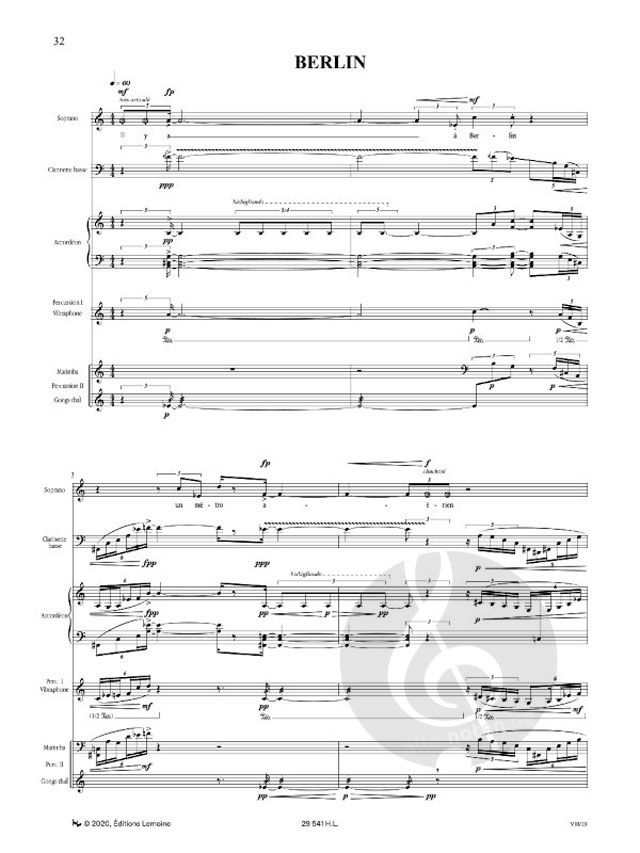
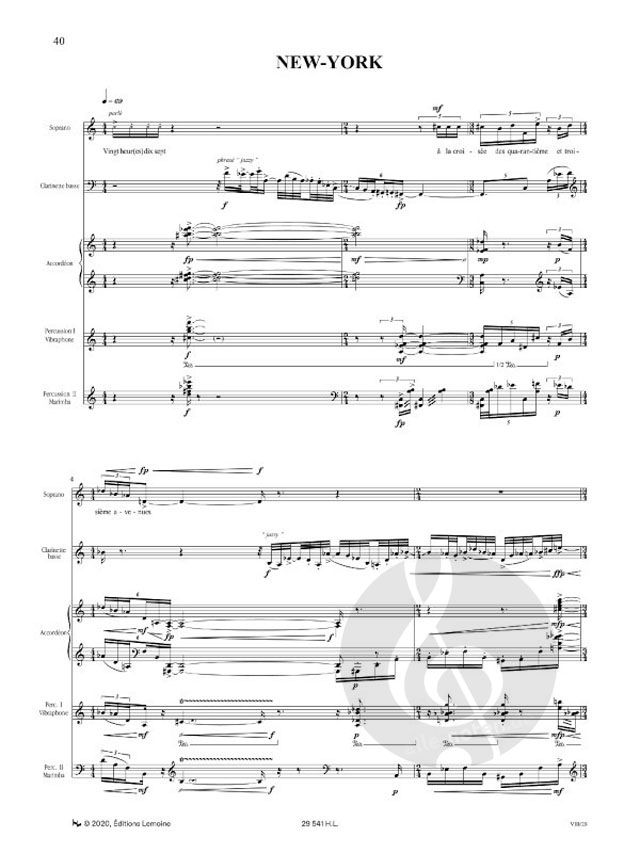
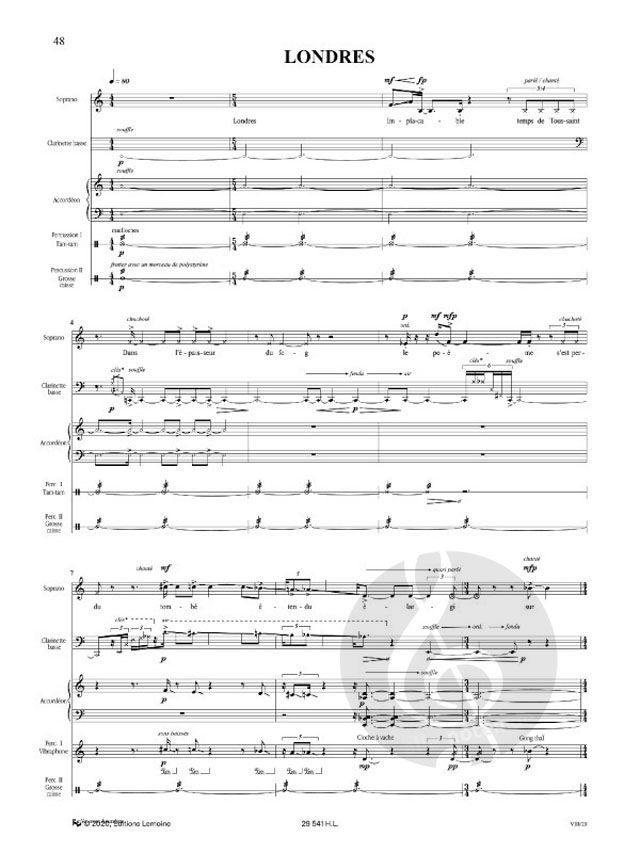
From 2012 to 2014 I had the good fortune to work with writer Tanguy Viel on the opera, Les Pigeons d'argile that the Théâtre du Capitole had commissioned from me. Since then, we've maintained a strong intellectual, artistic and friendly relationship. This is how we came up with the idea of working together again, but on a totally different project. It involves seven "musical situations" - like miniatures or paintings - each linked to a major city that has left its mark on Tanguy Viel. The texts he has written, seven poems, refer to the Chinese Satori, in the sense of the quasi-spiritual wonder that these cities have aroused in him. Tanguy has just returned from a long trip around the world, mainly by cargo ship, and it's the strong impressions of the cities he encountered that he wants to share with us here. The music is written for an ensemble formed by the Trio K/D/M - an accordionist and two percussionists - and Alain Billard, a virtuoso clarinettist, joined by the voice of Elise Chauvin, soprano and actress. As far as the treatment of the voice is concerned, we're moving away completely from what we did for the opera. It's a voice that says the texts, but neither speaks nor really sings, an in-between that has nothing to do with Sprechgesang, but is the result of work with Elise Chauvin based on a restricted set of sounds and modes of play that we developed in line with the text. The piece, which lasts around 30 minutes, is both a kind of travel diary and an expression of the "spiritual awakening" triggered by the places Tanguy Viel visited.Philippe HurelTanguy Viel adds: "The poems that make up Périple are born of a feeling, one that sometimes occurs, without warning, in the heart of big cities, and which takes the form of a rapture: here, for the space of an instant, the flow of perceptions gathers into an emotional synthesis that subjugates the sensibility. The poem would then be the record, or rather the trace. From capital to capital, from Shanghai to London, it is this experience, which the Japanese call "satori", that these texts attempt to circumscribe and stage. May they in turn bring out the intensity of the experience hidden within them.Tanguy Viel