
Georg Abraham Schneider
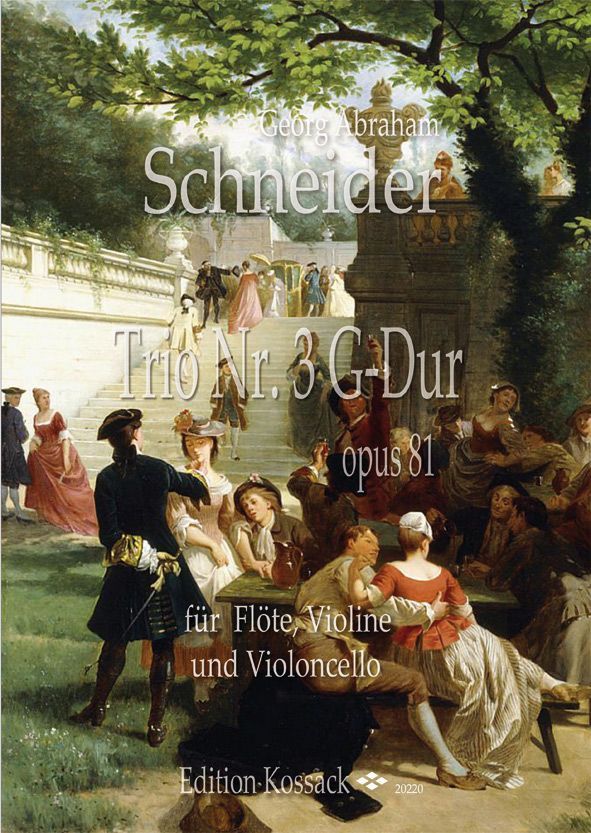
Trio Nr. 3 G-Dur op. 81
für Flöte, Violine und Violoncello
Demo
listen
Georg Abraham Schneider
Trio Nr. 3 G-Dur op. 81
für Flöte, Violine und Violoncello
- Instrumentation Flute, Violin and Cello
- Composer Georg Abraham Schneider
- Edition Score and Parts
- Publisher Edition Kossack
- Order no. KOSSACK20220
 ships within 4-8 working days
incl. tax,
excl. shipping costs
Not available in all countries. Learn more

Description:
Georg Abraham Schneider was born in Darmstadt on April 19, 1770, the same year as Beethoven. As his musical talent became apparent very early on, his father sent him to J.W. Mangold, a "very skillful town musician", as an apprentice, where he learned to play all instruments except the piano. At the age of 17, he became a member of the Darmstadt court orchestra and took composition lessons at the same time. After an educational trip to Rheinsberg, he was engaged by Prince Heinrich of Prussia as a horn player for the Rheinsberg orchestra. He moved there in 1795, where many of his instrumental compositions were written and also printed from 1799. In 1802, after the Prince's death, the chapel was dissolved, which prompted Schneider to move to Berlin, where he worked as a horn player in the royal Prussian chapel and as a music teacher. He was also involved in Berlin's musical life, organizing series of musical events and establishing a musical training academy for the education of music lovers. After traveling as far as Riga and Königsberg on concert tours for several years, he returned to Berlin, where he succeeded Romberg as music director of the royal theater in 1820, where he mainly performed as a conductor and eventually also took over the management of the affiliated music school. When the Prussian Academy of Arts was founded in 1833, Schneider was elected a member. He taught composition there until his retirement in 1837 and died just over a year later on January 19, 1839 after a lengthy illness.
The composer Schneider is a representative of the spirit of Haydn and Mozart, who wanted to be understood as their keeper; reviews attested to his compositional skill and solid artistry, which was in keeping with the bourgeois taste of the time. A reliable overview of his extensive oeuvre, which covers almost all genres with the exception of piano works, including 25 orchestral overtures alone, is not yet available. His instrumental compositions were very successful, his work as an opera composer less so.
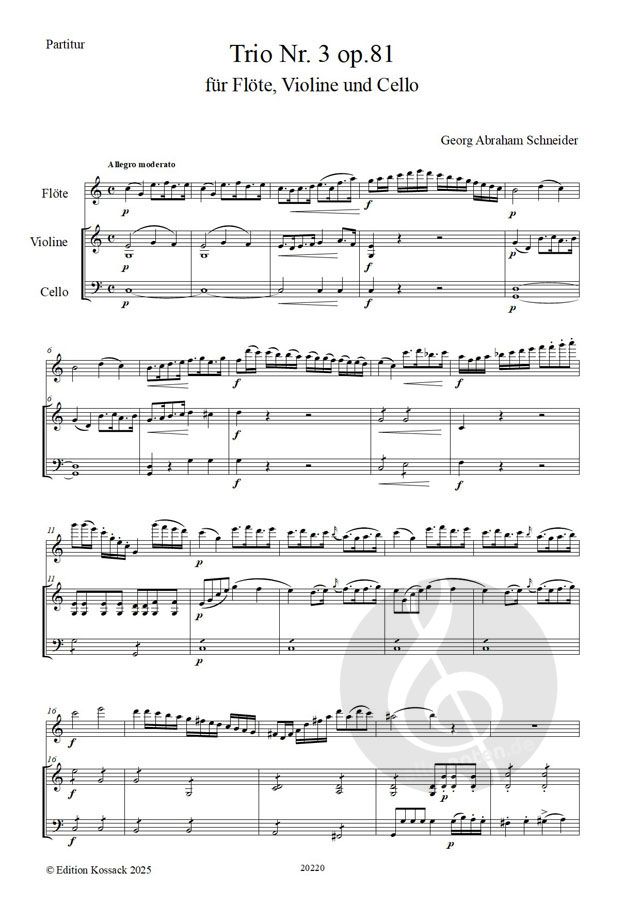
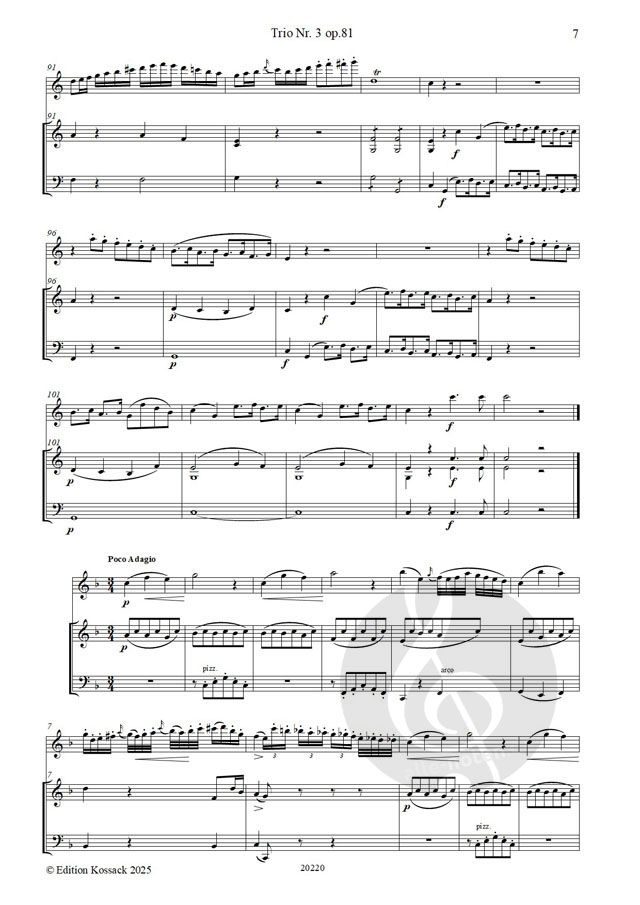
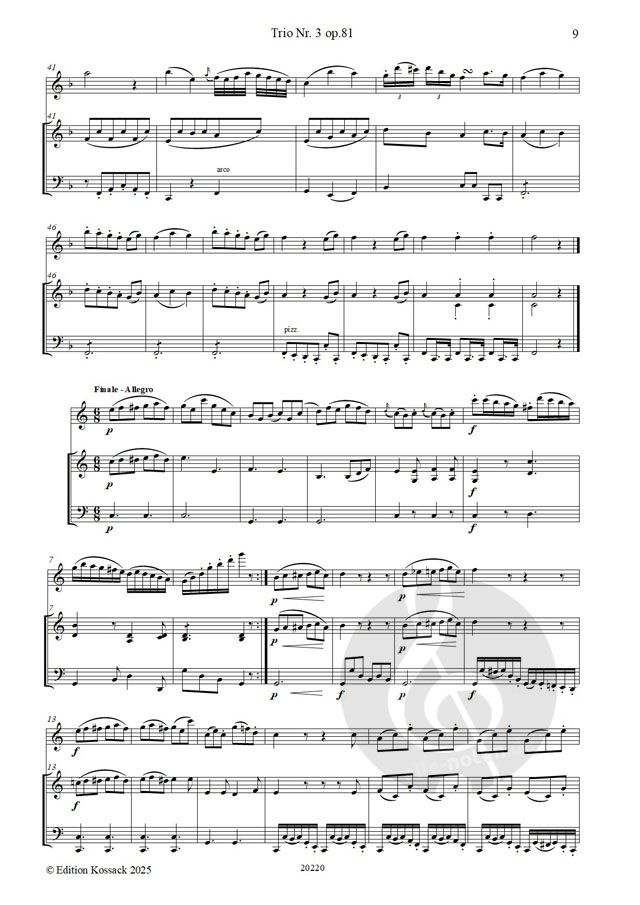
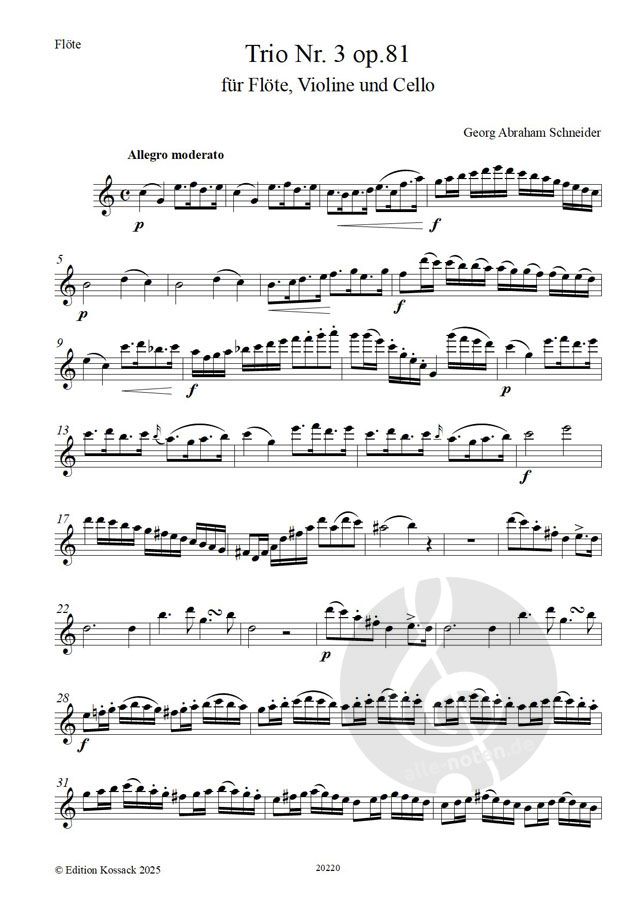
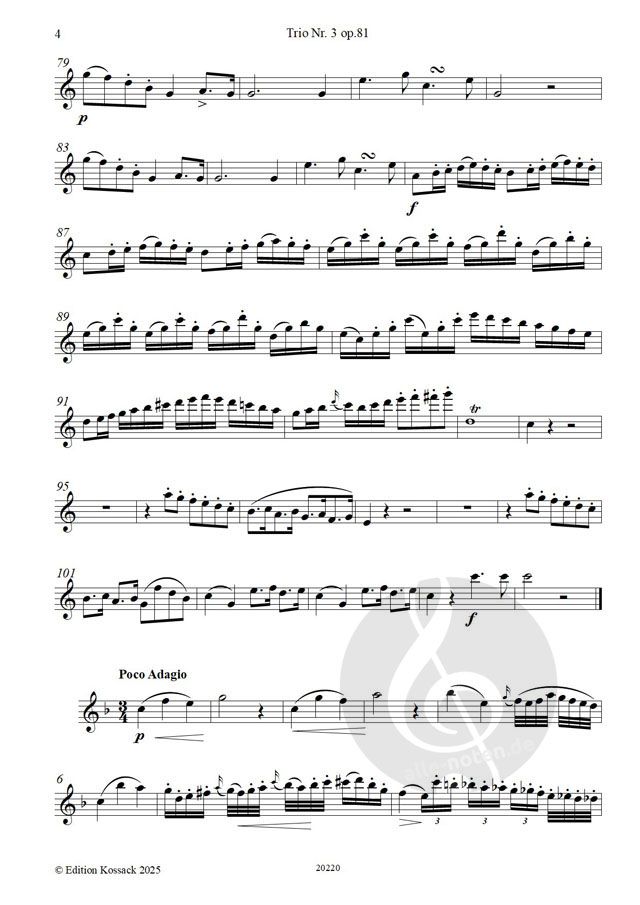
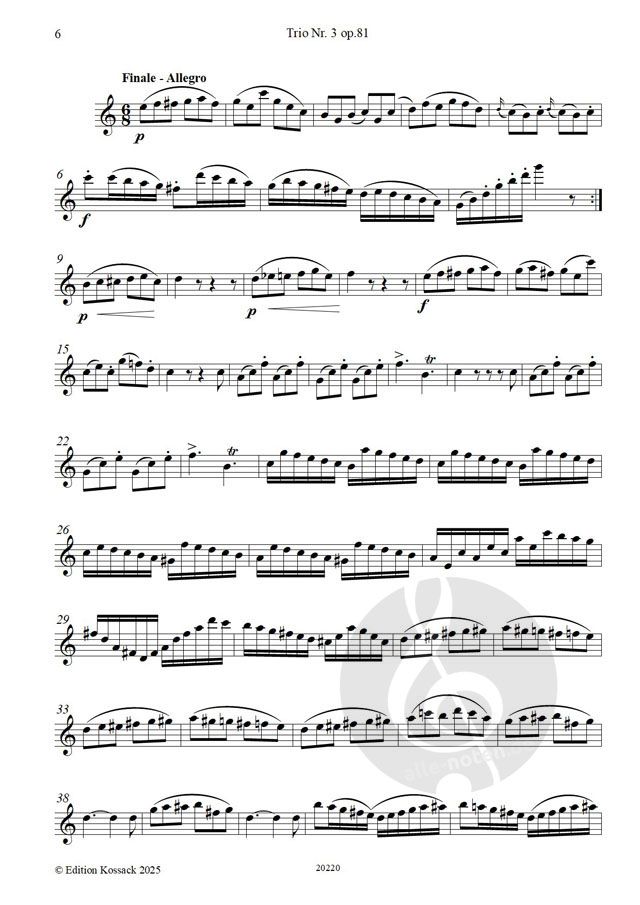
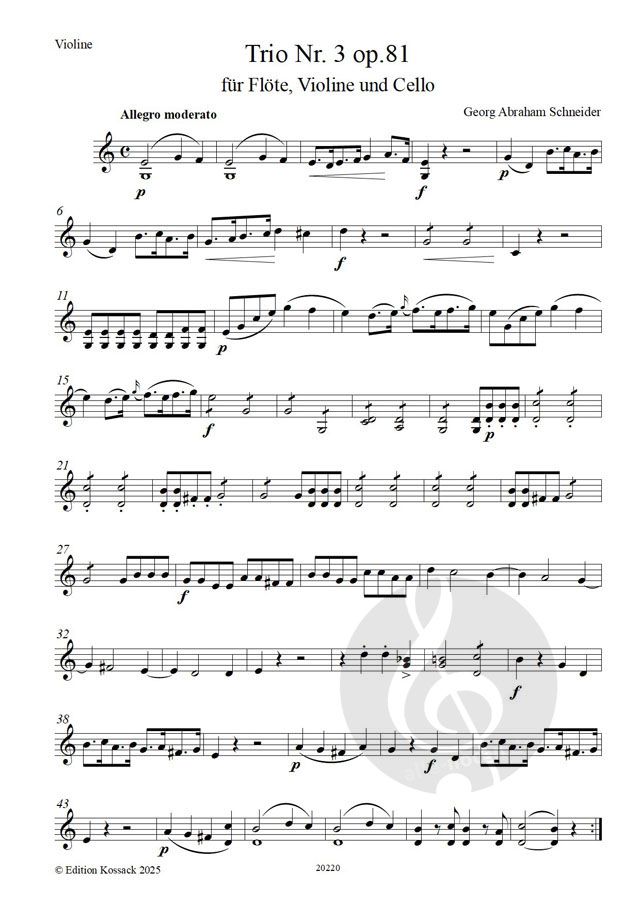
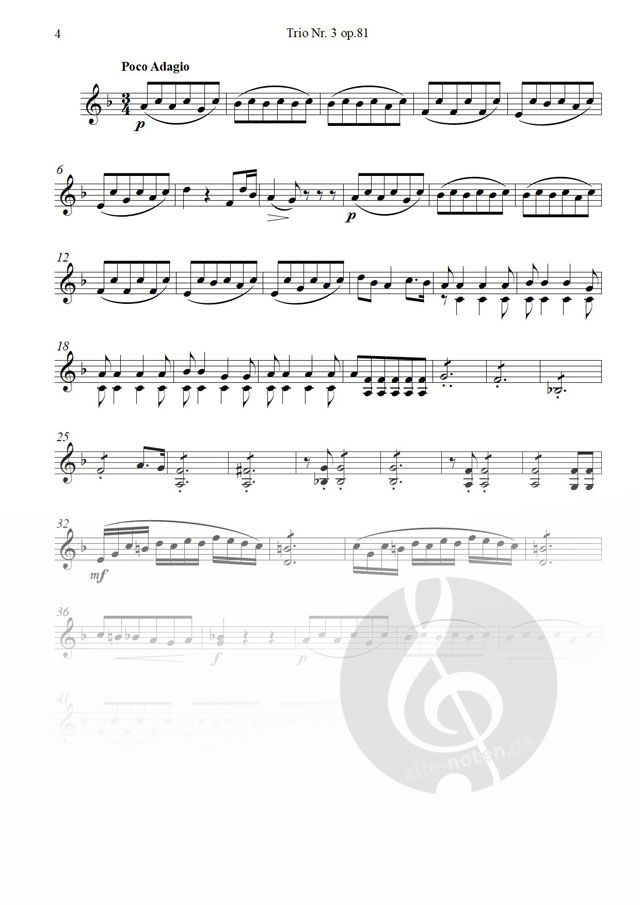
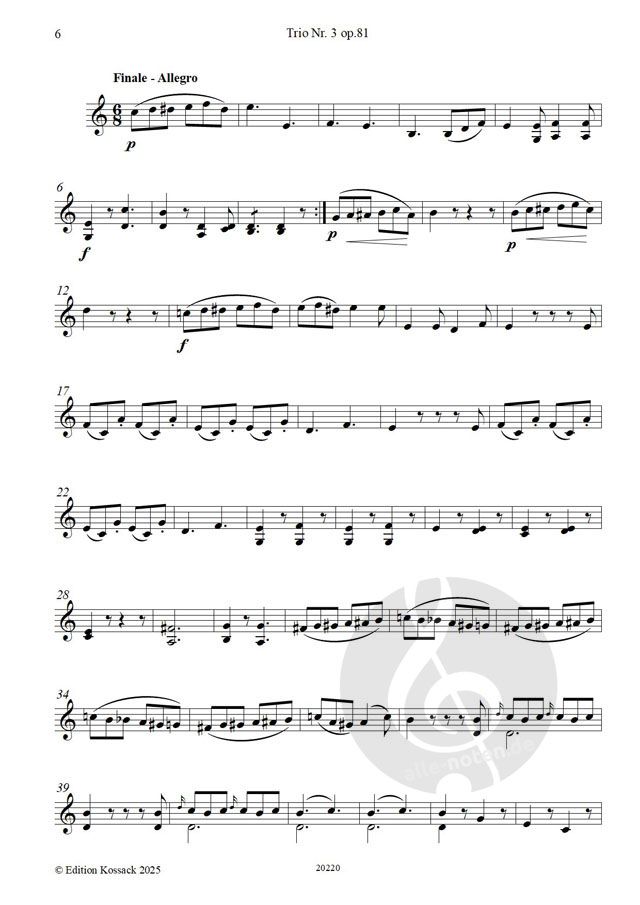
There is much to discover for the flute. In addition to a flute concerto op. 83, which is also said to have been published in various versions for other instruments and, according to MGG, even as a double concerto for flute and oboe as op. 88, there are several quartets for flute and string trio, a flute sonata, as well as flute duets, divertimenti for flute solo and 3 trios for flute, violin and cello, which are now available here with this new edition of the Trios op. 81. The first edition, published by Monzani & Hill in London, served as the source. As usual, the articulation has been harmonized between the individual parts and is intended as a suggestion.
The composer Schneider is a representative of the spirit of Haydn and Mozart, who wanted to be understood as their keeper; reviews attested to his compositional skill and solid artistry, which was in keeping with the bourgeois taste of the time. A reliable overview of his extensive oeuvre, which covers almost all genres with the exception of piano works, including 25 orchestral overtures alone, is not yet available. His instrumental compositions were very successful, his work as an opera composer less so.
There is much to discover for the flute. In addition to a flute concerto op. 83, which is also said to have been published in various versions for other instruments and, according to MGG, even as a double concerto for flute and oboe as op. 88, there are several quartets for flute and string trio, a flute sonata, as well as flute duets, divertimenti for flute solo and 3 trios for flute, violin and cello, which are now available here with this new edition of the Trios op. 81. The first edition, published by Monzani & Hill in London, served as the source. As usual, the articulation has been harmonized between the individual parts and is intended as a suggestion.