
Georg Friedrich Händel
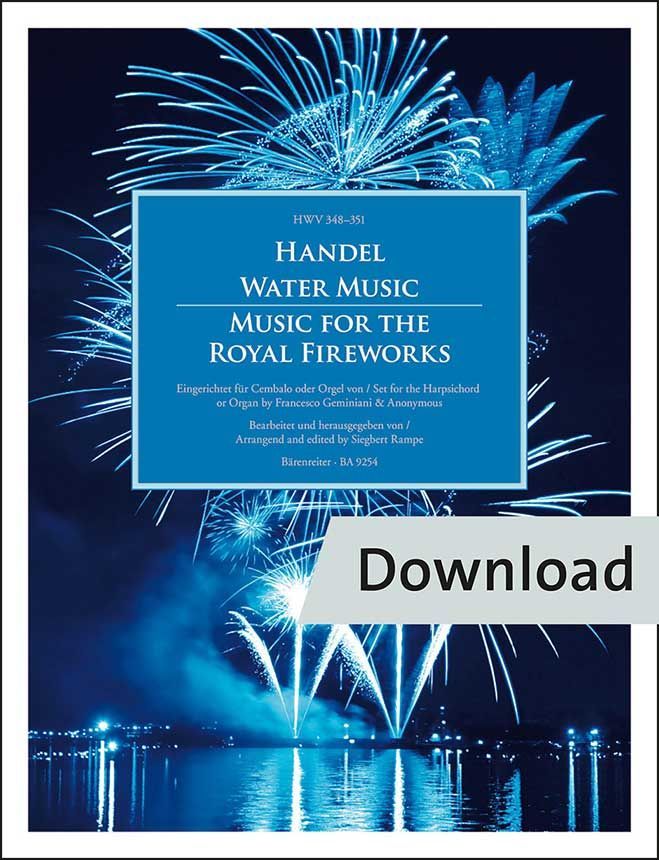
Water Music/Music for the Royal Fireworks HWV 348-351
Equipped for harpsichord or organ
PDF
view
Georg Friedrich Händel
Water Music/Music for the Royal Fireworks HWV 348-351
Equipped for harpsichord or organ
- Instrumentation Flute, Harpsichord and Continuo
- Optional Instrumentation Violin, Organ and Continuo
- Composer Georg Friedrich Händel
- Editor Francesco Geminiani Siegbert Rampe
- Editor Siegbert Rampe
- Edition Score and parts (violin, harpsichord, organ and basso continuo) Download
- Publisher Bärenreiter Verlag
- Order no. BA9254-DL
 immediately available
Download immediately after ordering
incl. tax,
excl. shipping costs
Not available in all countries. Learn more

Description:
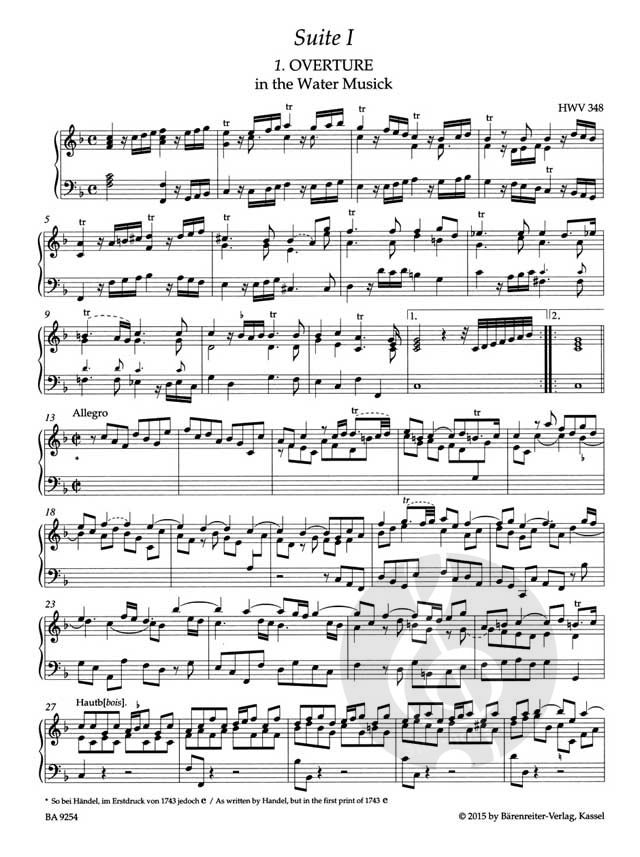
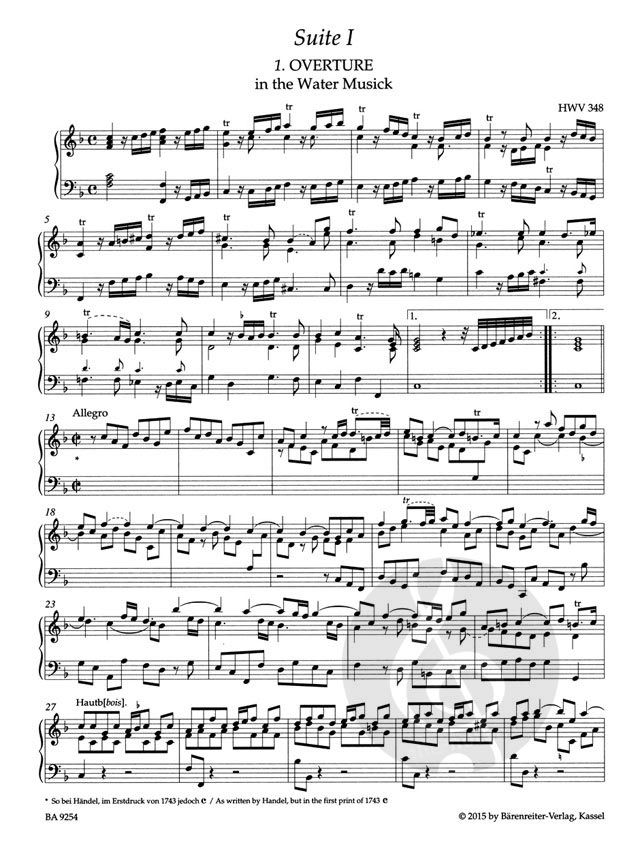
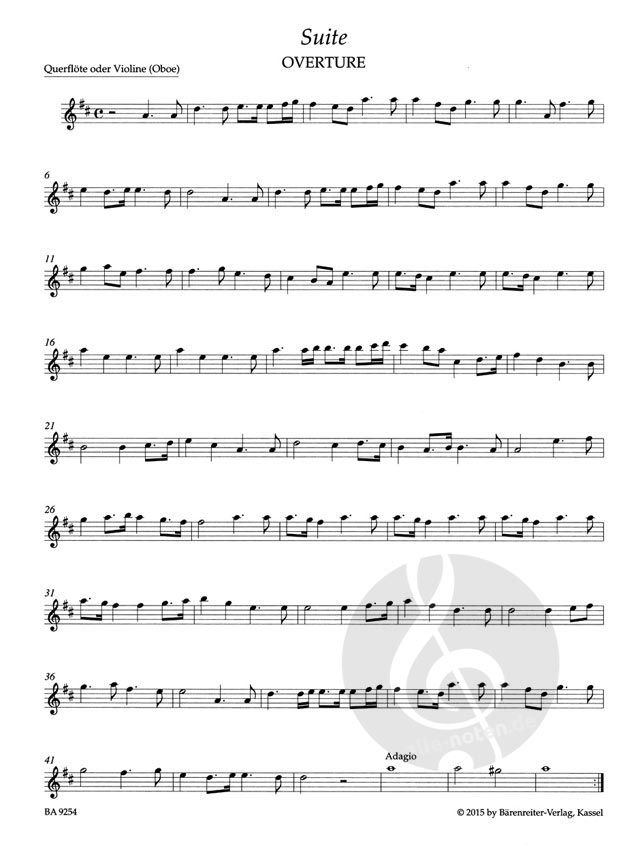
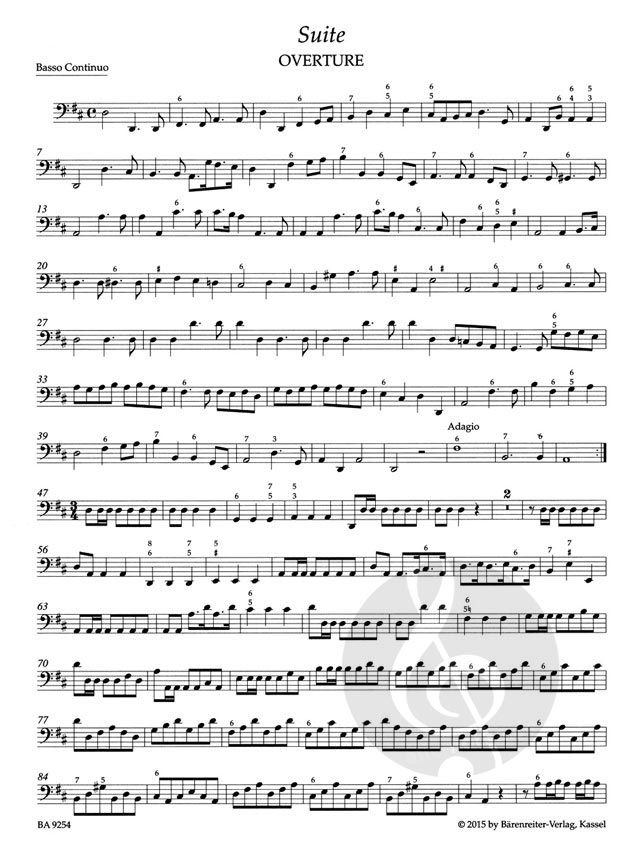
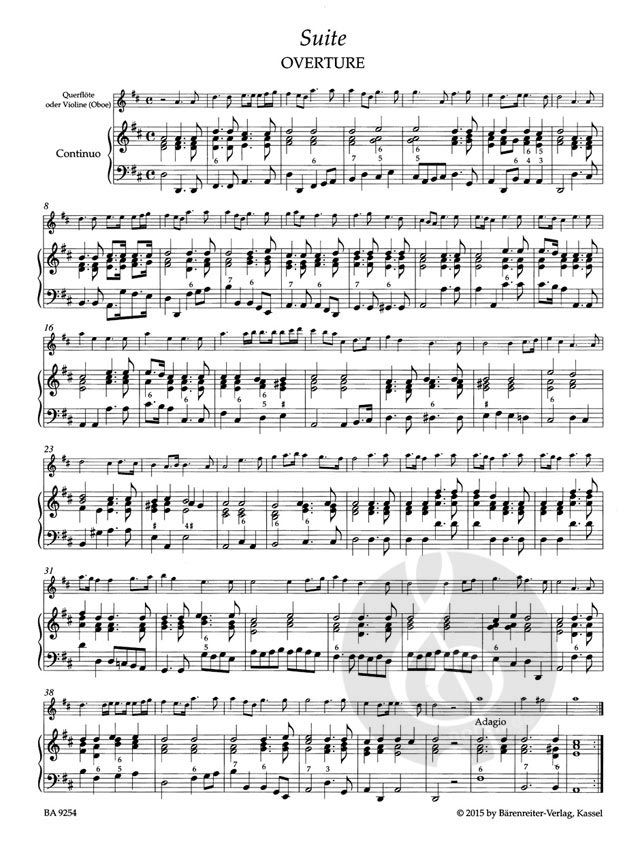
As early as 1743, i.e. during Handel's lifetime, Francesco Geminiani created an arrangement of the "Water Music" for keyboard instruments to enable the popular work to be performed in a domestic setting.
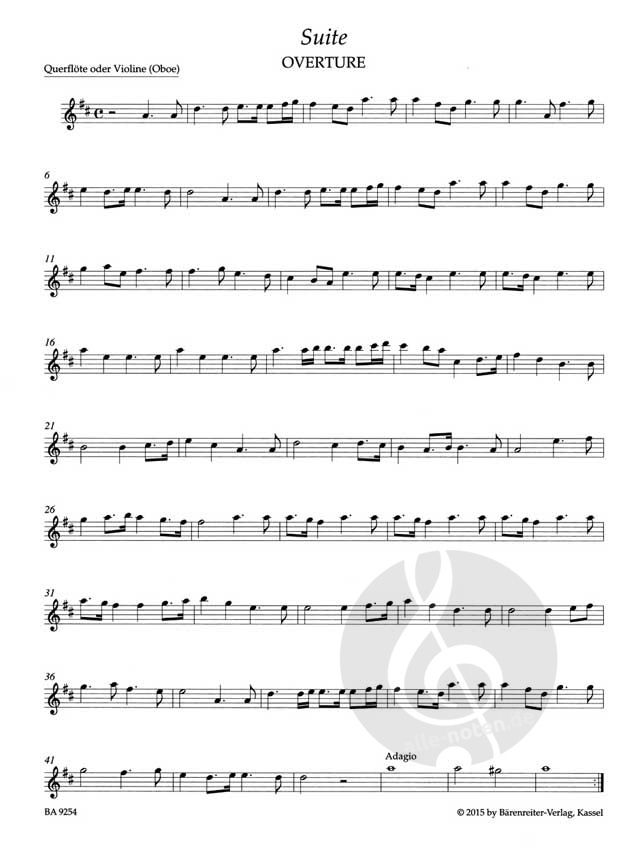
Presumably in 1749 (London), an unknown musician arranged the "Music for the Royal Fireworks" for transverse flute or violin and harpsichord.
In addition to these two contemporary versions, the present edition contains an arrangement by the editor Rampe of the "Music for the Royal Fireworks" for harpsichord or organ based on the first edition. Both early sources name the harpsichord, but the arrangements can also be performed faithfully and effectively on the organ.
Since the surviving version by Anonymus only offers a solo part and figured bass notated as a two-part system, appropriate performance material (one part each for flute/oboe/violin and violoncello/contrabass as well as a suspended continuo part) has been added to the volume.
Presumably in 1749 (London), an unknown musician arranged the "Music for the Royal Fireworks" for transverse flute or violin and harpsichord.
In addition to these two contemporary versions, the present edition contains an arrangement by the editor Rampe of the "Music for the Royal Fireworks" for harpsichord or organ based on the first edition. Both early sources name the harpsichord, but the arrangements can also be performed faithfully and effectively on the organ.
Since the surviving version by Anonymus only offers a solo part and figured bass notated as a two-part system, appropriate performance material (one part each for flute/oboe/violin and violoncello/contrabass as well as a suspended continuo part) has been added to the volume.
-
Suite I in F-Dur HWV 348
-
Suite II in D-Dur HWV 349
-
Suite III in G-Dur HWV 350
-
Suite in D-Dur HWV 351
Related products:
Here is how the download works:
1 Buy download sheet music
Purchase the download score from our online store
2 Order confirmation with download link
Immediately after completing your order, you will receive an order confirmation by email listing all items. You will find the download link next to each item. You can use this link to start the download right away. Please also check your spam folder if necessary.
Customers rated this product:
Manufacturer Information:
Bärenreiter-Verlag Karl Vötterle GmbH & Co. KG
Heinrich-Schütz-Allee 35-37
34131
Kassel
Deutschland
Other customers also bought:
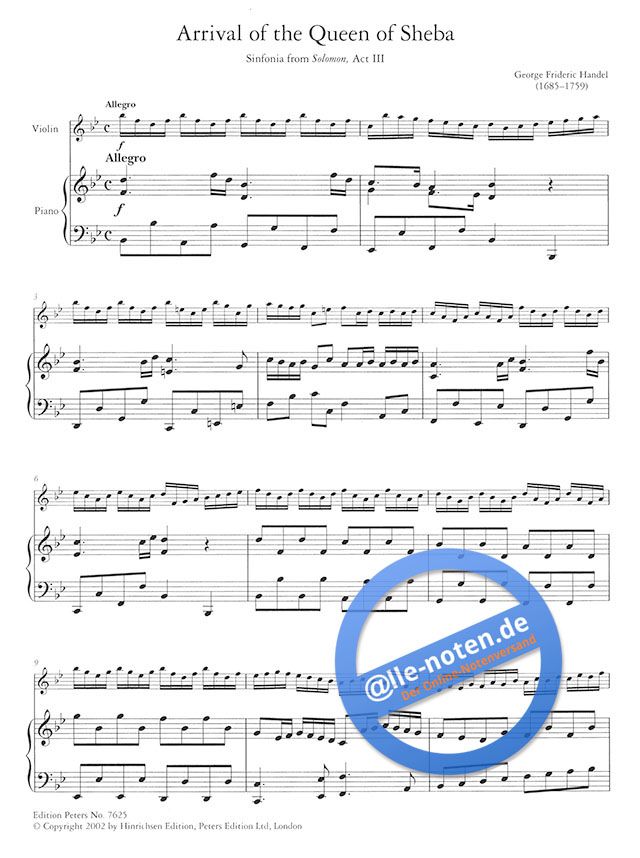
Georg Friedrich Händel
Sinfonia from the Oratorio 'Salomo' - Arrangement for Violin and Piano
- Violin and Piano
- Sheet Music
- David Curran
-
in stock
ships within 1-2 working days
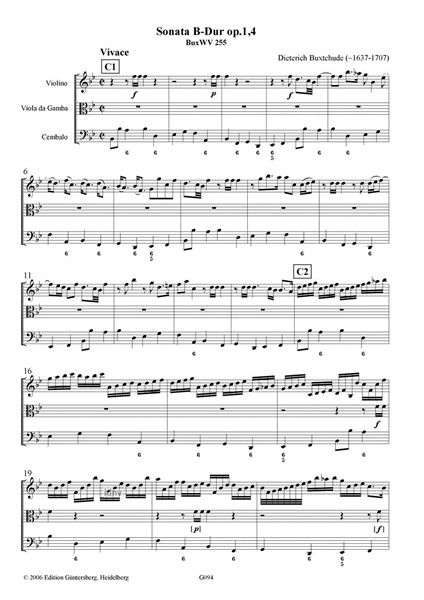
Dietrich Buxtehude
VII. Suonate à doi, Violino & Violadagamba, con Cembalo, Opera prima BuxWV 252-258
- Violin, Viola da Gamba and Harpsichord
- Sheet Music
-
ships within 4-8 working days
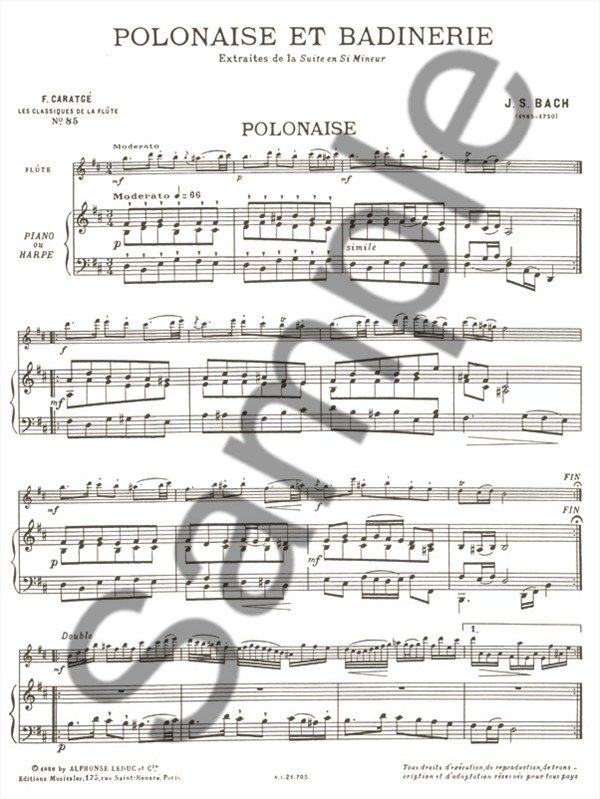
- Flute and Piano
- Sheet Music
-
ships within 3-6 working days
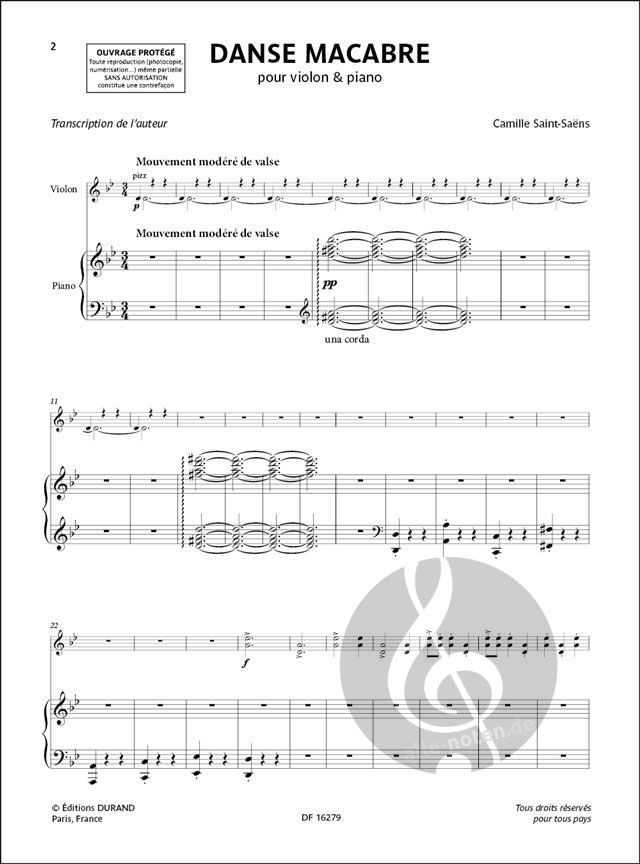
- Violin and Piano
- Piano Score and Part(s)
-
in stock
ships within 1-2 working days