
Maurice Ravel
Bolero
Demo
listen
Maurice Ravel
Bolero
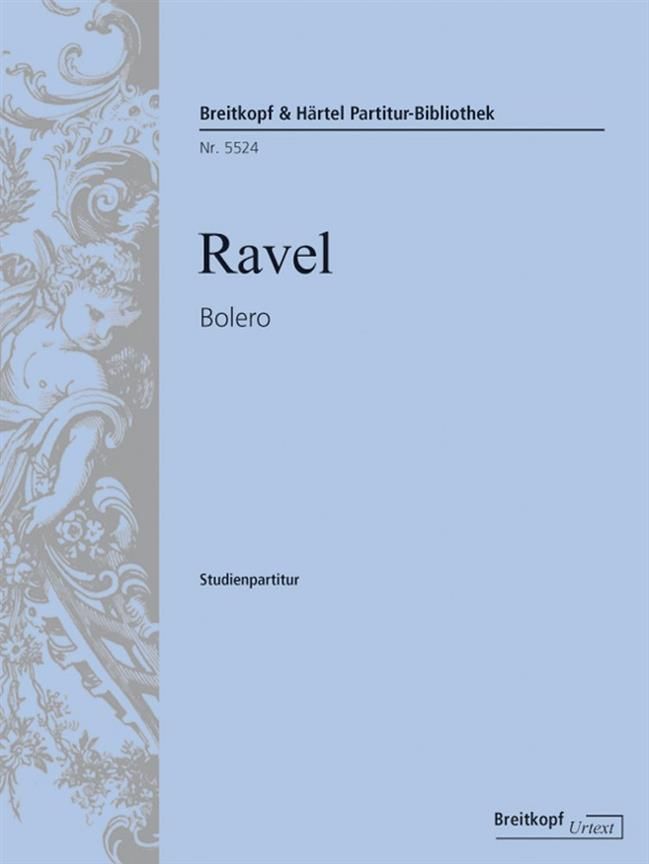
- Instrumentation Orchestra
- Composer Maurice Ravel
- Editor Jean-François Monnard
- Edition Study Score (Urtext)
- Publisher Breitkopf & Härtel
- Order no. PB5524
 in stock
ships within 1-2 working days
incl. tax,
excl. shipping costs
Not available in all countries. Learn more

Description:
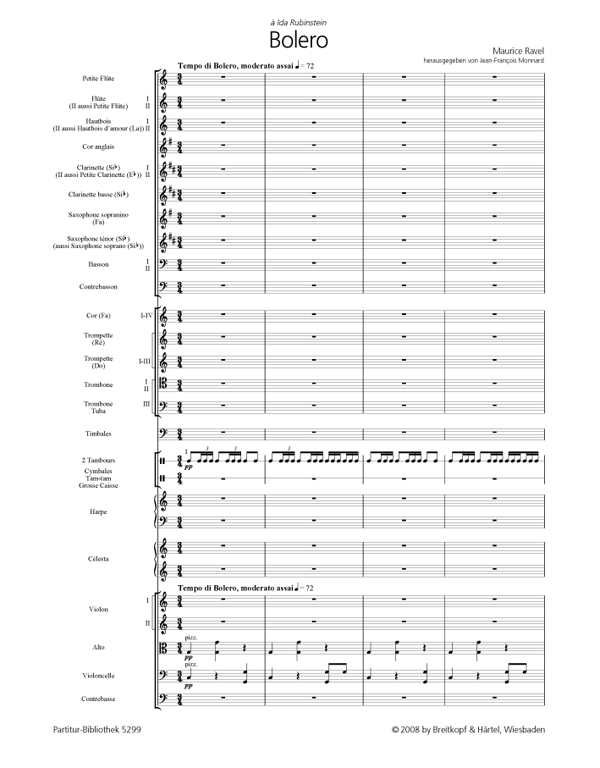
In the preface, Monnard illuminates Ravel's sound aesthetic against the background of concert reception and historical recordings. In addition, the editor offers insights into Ravel's ideas about tempo: "I must confess that Bolero is rarely conducted as I believe it should be. Mengelberg speeds up and slows down excessively. Toscanini conducts it twice faster than it should be and widens the tempo at the end, which is not written anywhere. No: the Bolero must be played in a single tempo from beginning to end, in the plaintive and monotonous style of the Arabic-Spanish melodies."
The performance material for Ravel's Bolero is available for purchase in its entirety for the first time with the publication of this new edition.
"Moreover, musical practice is once again treated to a razor-sharp score that leaves nothing to be desired. More than just a supplement is the preface written by Jean-François Monnard." (Michael Kube, Schweizer Musikzeitung)
"The editor also consults handwritten sources - and that is what is really interesting. Thus he is able to correct errors and inconsistencies of the Durand editions and, in addition, to document, for example, early stages of the compositional process." (Andreas Friesenhagen, FonoForum)
The performance material for Ravel's Bolero is available for purchase in its entirety for the first time with the publication of this new edition.
"Moreover, musical practice is once again treated to a razor-sharp score that leaves nothing to be desired. More than just a supplement is the preface written by Jean-François Monnard." (Michael Kube, Schweizer Musikzeitung)
"The editor also consults handwritten sources - and that is what is really interesting. Thus he is able to correct errors and inconsistencies of the Durand editions and, in addition, to document, for example, early stages of the compositional process." (Andreas Friesenhagen, FonoForum)
Customers rated this product:
Manufacturer Information:
Breitkopf & Härtel KG
Walkmühlstraße 52
65195
Wiesbaden
Deutschland
Other customers also bought:
- Flexible ensemble (3 Instruments)
- Score
- Volkhard Stahl
-
in stock
ships within 1-2 working days - Also available for download!

- Mixed Choir (SATB) and Orchestra
- Score
-
in stock
ships within 1-2 working days

Maurice Ravel
- Flexible ensemble (5 Instruments)
- Score and Parts
- Gert Walter
-
in stock
ships within 1-2 working days - Also available for download!

Ludwig van Beethoven
- Flexible ensemble (5 Instruments and Percussion)
- Score
- Dean Jones
-
ships within 4-8 working days

Maurice Ravel
- String Orchestra
- Score
-
ships within 2-4 weeks

Maurice Ravel
- Orchestra
- Score
- David Andrew
-
ships within 2-4 weeks


- Flexible Ensemble (5 Instruments)
- Score and Parts Download
- Jirka Kadlec
-
immediately available
Download immediately after ordering
Maurice Ravel
- Flexible ensemble (5 Instruments)
- Score and Parts
-
ships within 3-6 working days

- Orchestra
- Score
-
ships within 2-4 working days
Camille Saint-Saëns
- Orchestra
- Study Score (Urtext)
-
in stock
ships within 1-2 working days
Richard Strauss
After the Old Roguish Manner - in Rondo Form
- Orchestra
- Study Score
-
in stock
ships within 1-2 working days - Also available for download!

Hector Berlioz
- Orchestra
- Study Score (Urtext)
-
in stock
ships within 1-2 working days
- Orchestra
- Study Score
-
in stock
ships within 1-2 working days - Also available for download!



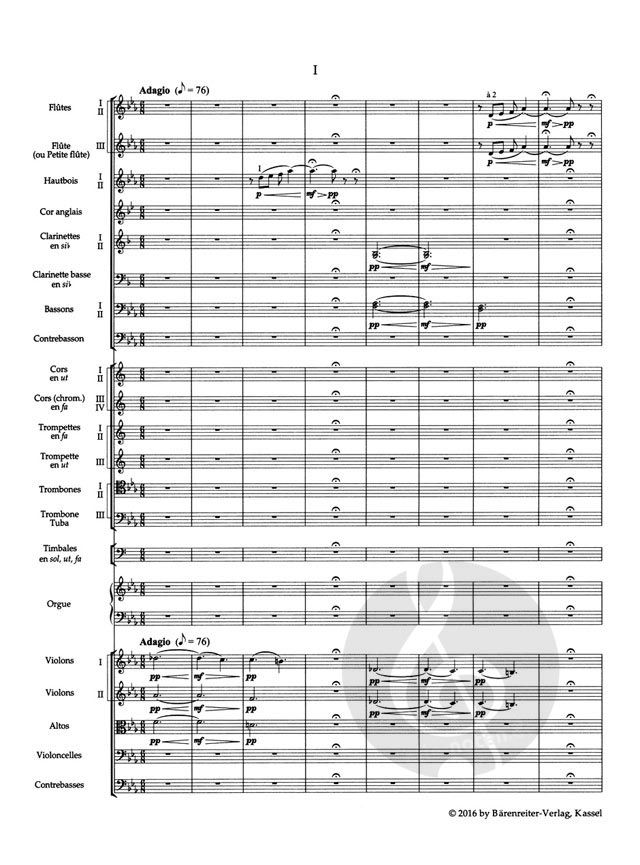
- Orchestra
- Study Score
-
in stock
ships within 1-2 working days - Also available for download!

Gustav Mahler
für Alt, Frauenchor, Knabenchor und Orchester, nach dem Text der Kritischen Gesamtausgabe
- Low Voice, Women's Choir, Boys' Choir and Orchestra
- Study Score
-
in stock
ships within 1-2 working days