
Richard Strauss
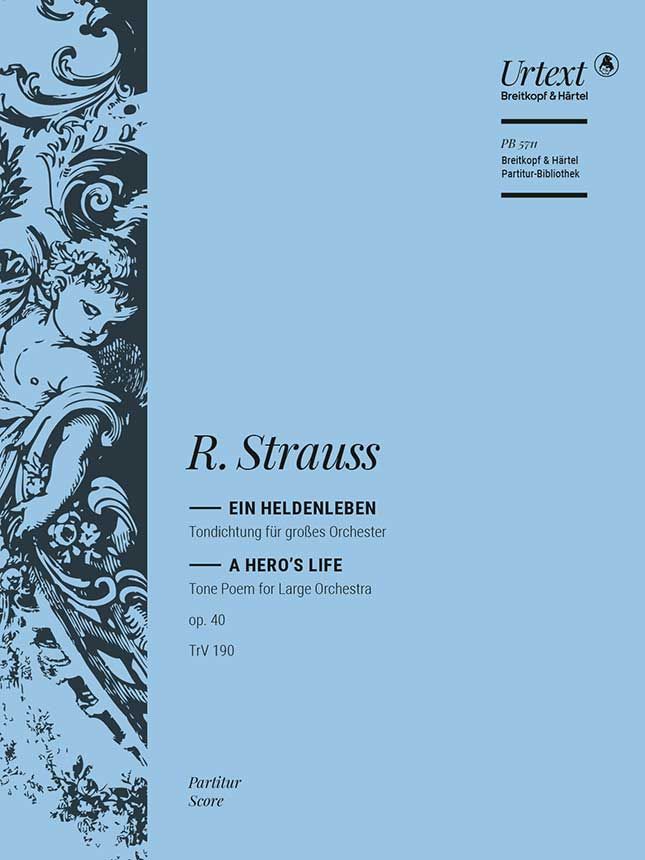
Ein Heldenleben op. 40 TrV 190
tone poem for large orchestra
PDF
view
Richard Strauss
Ein Heldenleben op. 40 TrV 190
tone poem for large orchestra
- Instrumentation Orchestra
- Composer Richard Strauss
- Lyricist Nick Pfefferkorn
- Edition Score (Urtext)
- Publisher Breitkopf & Härtel
- Order no. PB5711
 in stock
ships within 1-2 working days
incl. tax,
excl. shipping costs
Not available in all countries. Learn more

Description:
Tone poem - Urtext edited by Nick Pfefferkorn.
Picc.3.4(4.Eh).Eb-Klar.2.B-Klar.3.Kfg - 8.5.3.T-Tuba.Bb-Tuba - 2Hfe - Pk - Schl - Str
First Urtext edition since the first edition.
Evaluation of all available sources (including the autograph and the corrected scores by Walter Seifert and Clemens Krauss).
Includes the first version of the ending for the first time.
Because of clever alternatives in the performance material, both versions of the ending can be performed.
Paper, sewn binding.
"The others spit venom and bile, mainly because they believed from the analysis that they themselves were meant by the rather ugly description of the naggers and opponents". This comment, as well as performance instructions such as "very sharp and pointed", "snarling, hissing", which were added to the woodwinds, were intended to illustrate once again how little Strauss was interested in the gossip of his critics. The genesis of Ein Heldenleben is closely linked to that of its antagonist, the tragicomic figure of Don Quixote. Originally, Strauss only wanted both works to be performed in conjunction, i.e. in the same concert.
"... the audience doesn't even believe that you can close forte", a visitor is said to have remarked at breakfast about the soft fading of the solo violin and horn. And it is said that young Richard scribbled a new ending on paper between toast and tea. "A state funeral", as Strauss joked at the dress rehearsal about the new ending known today.
Breitkopf & Härtel's Urtext edition not only evaluates all known sources (including the autograph and the corrected score by Walter Seiffert), but also makes the original "pianissimo ending", which was rejected before the premiere, accessible and performable again.
Picc.3.4(4.Eh).Eb-Klar.2.B-Klar.3.Kfg - 8.5.3.T-Tuba.Bb-Tuba - 2Hfe - Pk - Schl - Str
"The others spit venom and bile, mainly because they believed from the analysis that they themselves were meant by the rather ugly description of the naggers and opponents". This comment, as well as performance instructions such as "very sharp and pointed", "snarling, hissing", which were added to the woodwinds, were intended to illustrate once again how little Strauss was interested in the gossip of his critics. The genesis of Ein Heldenleben is closely linked to that of its antagonist, the tragicomic figure of Don Quixote. Originally, Strauss only wanted both works to be performed in conjunction, i.e. in the same concert.
"... the audience doesn't even believe that you can close forte", a visitor is said to have remarked at breakfast about the soft fading of the solo violin and horn. And it is said that young Richard scribbled a new ending on paper between toast and tea. "A state funeral", as Strauss joked at the dress rehearsal about the new ending known today.
Breitkopf & Härtel's Urtext edition not only evaluates all known sources (including the autograph and the corrected score by Walter Seiffert), but also makes the original "pianissimo ending", which was rejected before the premiere, accessible and performable again.
-
1. Der Held
-
2. Des Helden Widersacher
-
3. Des Helden Gefährtin
-
4. Des Helden Walstatt
-
5. Des Helden Friedenswerke
-
6. Des Helden Weltflucht und Vollendung
-
7. Erstfassung des Schlusses vom 1. Dezember 1898
Customers rated this product:
Manufacturer Information:
Breitkopf & Härtel KG
Walkmühlstraße 52
65195
Wiesbaden
Deutschland
Other customers also bought:
- Violin and Orchestra
- Study Score
-
ships within 1-2 weeks
Wolfgang Rihm
- Orchestra
- Study Score
-
in stock
ships within 1-2 working days
- Orchestra
- Score
-
in stock
ships within 1-2 working days

Kaija Saariaho
- Orchestra
- Score
-
ships within 2-4 weeks
- Voice and Orchestra
- Score (Urtext)
-
in stock
ships within 1-2 working days


- Piano and Orchestra
- Score (Urtext)
-
in stock
ships within 1-2 working days
Jean Cras
- String Trio (Cello, Viola and Violin)
- Set of Parts
-
ships within 3-6 working days