
Richard Strauss
Till Eulenspiegels lustige Streiche op. 28
Gesamtausgabe

Richard Strauss
Till Eulenspiegels lustige Streiche op. 28
Gesamtausgabe
- Instrumentation Orchestra
- Composer Richard Strauss
- Editor Stefan Schenk
- Edition Score
- Publisher Schott Musik
- Order no. RSW307
 ships within 2-4 weeks

Description:
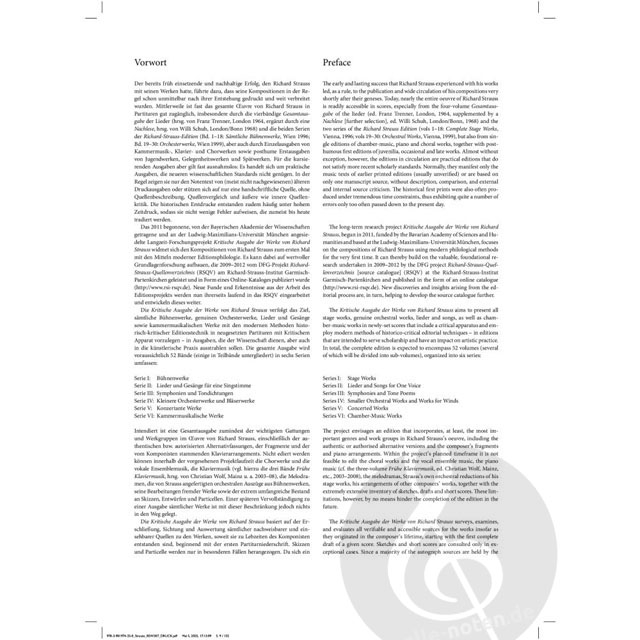
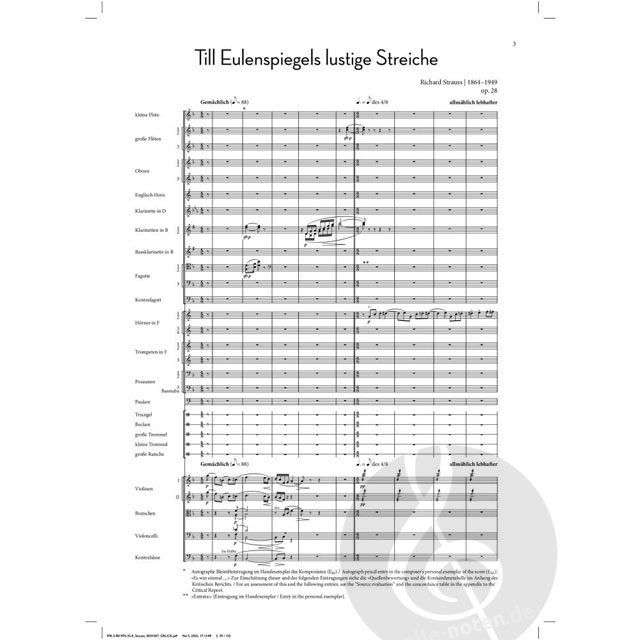
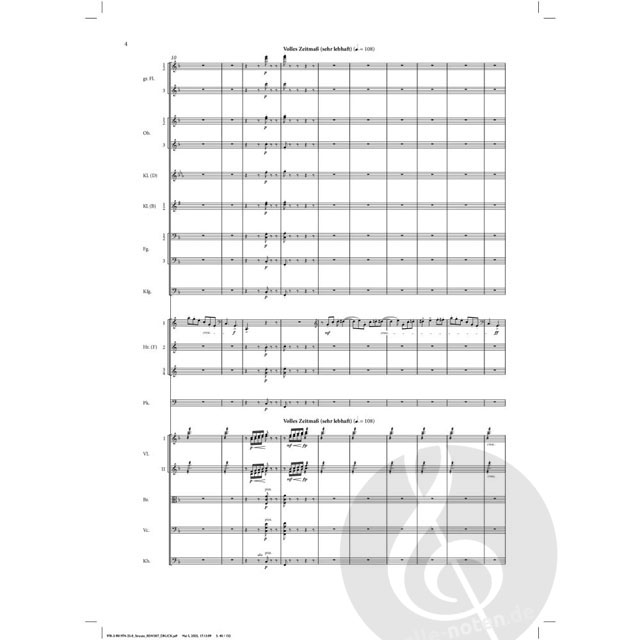
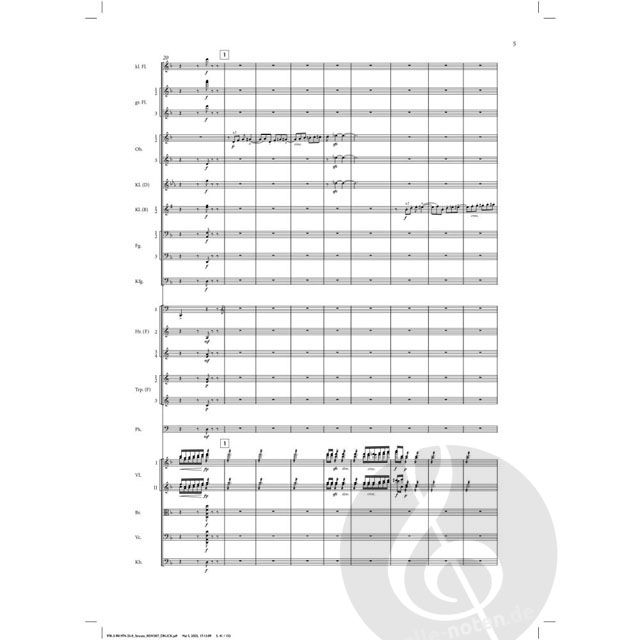
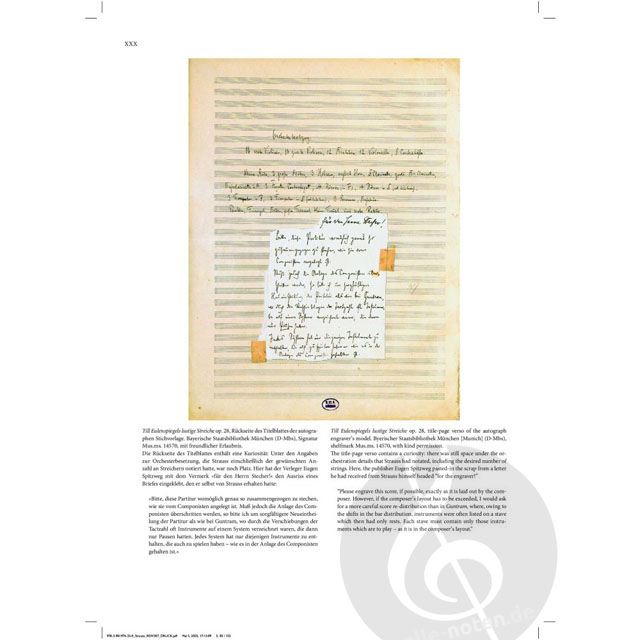
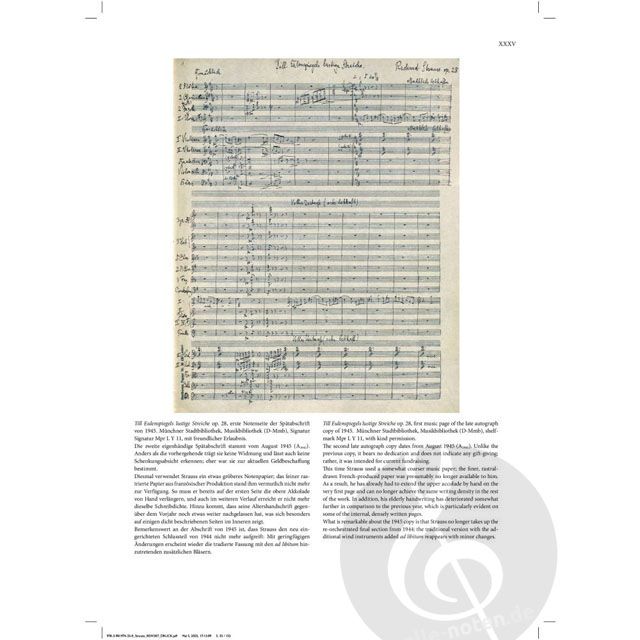
With Till Eulenspiegel's Merry Pranks op. 28, Richard Strauss created a timelessly popular tone poem in 1895, which is still part of the demanding concert repertoire today. The ironic subtitle "Set in rondo form for large orchestra in the old roguish manner", which puzzles rather than clarifies the form, already reveals a new side to the composer which then permeates the music: musical humor. The source material for Till Eulenspiegel is almost abundant: in addition to the sources from the time of its composition, there are also two late copies of the entire score, which Strauss personally made in 1944 ("Dem braven Till zum 50. Geburtstag!") and 1945. As valuable collector's items, they were intended to provide material support for his children and grandchildren during the years of war and crisis. This includes a handwritten copy of the score with entries. These are by no means exact copies, but rather reflect around 50 years of performance experience in numerous, mostly small changes to the musical text. Our edition takes all sources into account for the first time and provides a musical text that has been cleared of many well-known doubts and contains a number of small improvements to details, including previously unknown metronome markings that Strauss communicated to a Belgian conductor in a letter. It should be particularly interesting for musical practitioners that Strauss rearranged the instrumentation in the final section 50 years after the composition. Originally, seven additional horns and trumpets were to be added here ad libitum; in the war year 1944, Strauss omitted them completely and cleverly distributed their notes to other instruments, so that the reduction is hardly noticeable and the tonal result is improved compared to the original performance option without additional instruments. This attractive variant is included in the volume as an appendix to the traditional ending.