
Bruno Mantovani
Memoria
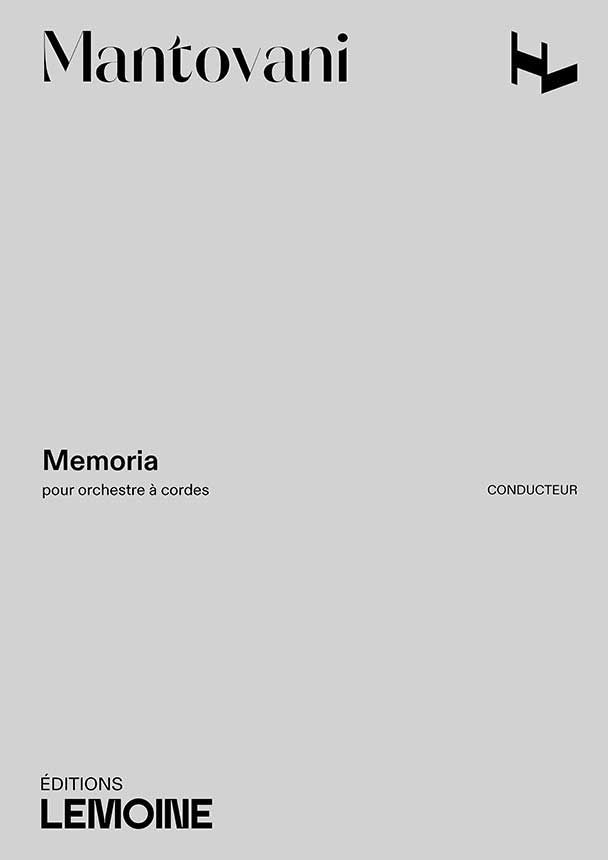
Bruno Mantovani
Memoria
- Instrumentation String Orchestra
- Composer Bruno Mantovani
- Edition Sheet Music
- Publisher Editions Henry Lemoine
- Order no. LEMO29679
 ships within 4-8 working days
incl. tax,
excl. shipping costs
Not available in all countries. Learn more

Description:
Tell us about the genesis of this score, composed as part of your residency with the Strasbourg Philharmonic Orchestra?
I composed Memoria for the Orchestra's strings, recognizable by their shimmer and density, knowing that the next work to be created for the phalanx would be dedicated to the large ensemble. The score was written following the September 2020 offensive by Azerbaijan, then supported by the Turkish army, to invade part of Nagorno-Karabakh in Armenia. For family reasons, this event, already dramatic in itself, upset me. I know this Armenian region and I felt the horror of war, coupled with anger at the lack of interest shown by a large part of the international community in the fate of the Armenian people. The sight of young men from the French University in Yerevan, killed in action, revolted me. I dedicate Memoria to them.
How did you conceive the score, in terms of both form and expression?
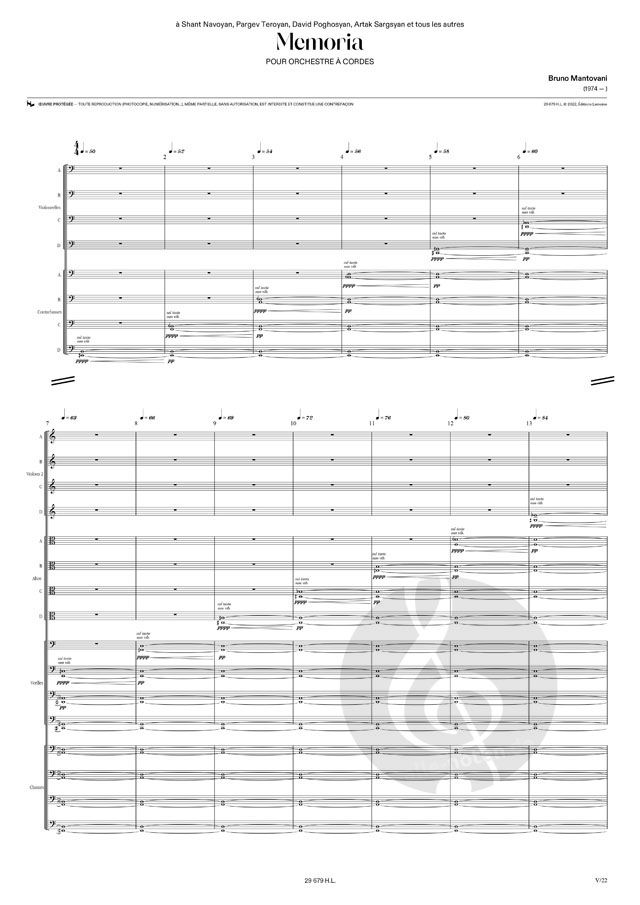
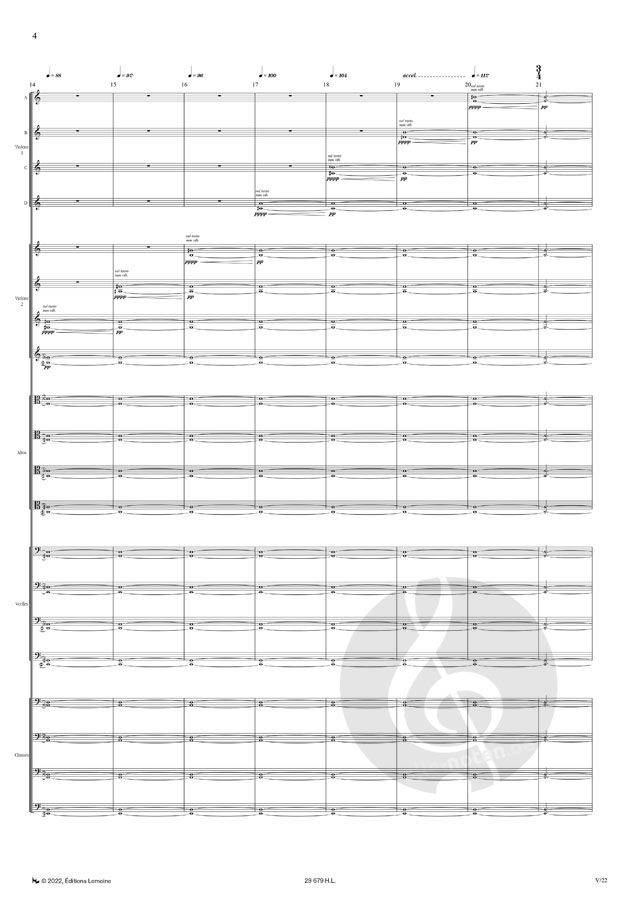
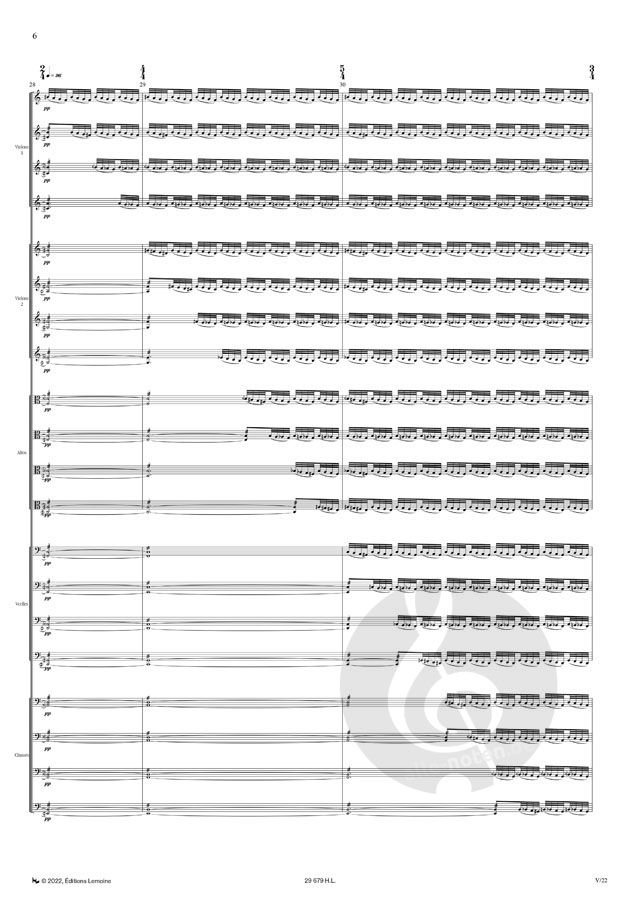
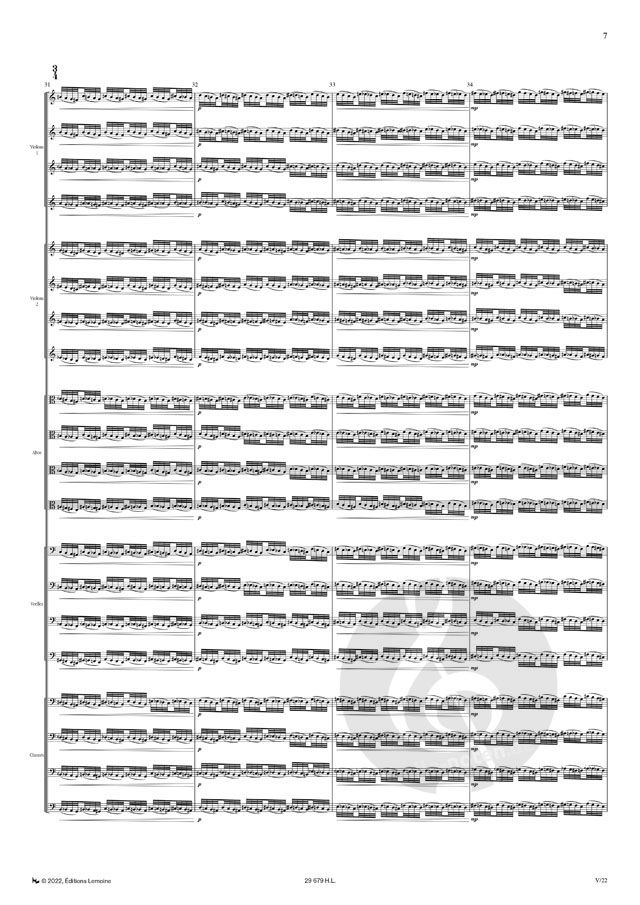
It is built in a single movement, in a cycle form. Indeed, the beginning is a grand crescendo and the end, a grand diminuendo that seems to respond to it. In the middle, the piece incorporates a large cadenza for solo violin, a metaphor for the place of the individual in a society in upheaval. The string writing is totally divided. I let myself be guided by the pen, in a continuous gesture. It's music that generates transformations, metamorphoses and multiplications of colors. The period of writing, i.e. the period of confinement, also saw the composition of two string quartets and a concerto for string quartet. In fact, the influence of these works marks Memoria, whose complex thinking in terms of timbre, in particular, can call to mind the world of electroacoustic music.
You mention the notion of cyclical form. Could this refer to motifs, or even themes inspired by Armenian music, for example?
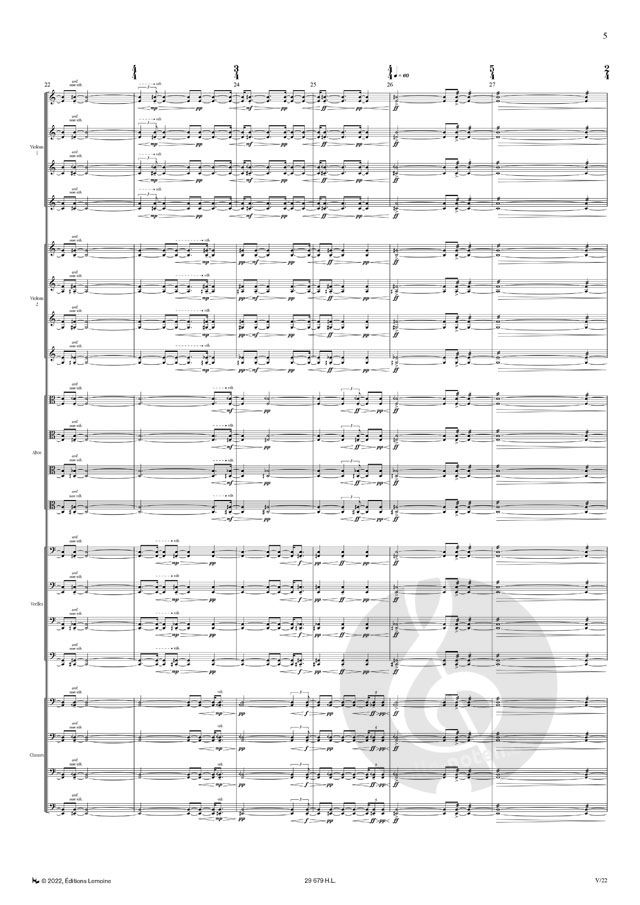
There are no folkloric reminiscences, but the use of micro-tones in the solo violin part may suggest, to the ear, some orientalizing sonorities. There are many rapidly repeated formulas, in the form of loops, which accentuate the expressive density of the score. So it's a very active piece - with lots of notes to play! - but also contemplative, as the notes are set in long durations.
I composed Memoria for the Orchestra's strings, recognizable by their shimmer and density, knowing that the next work to be created for the phalanx would be dedicated to the large ensemble. The score was written following the September 2020 offensive by Azerbaijan, then supported by the Turkish army, to invade part of Nagorno-Karabakh in Armenia. For family reasons, this event, already dramatic in itself, upset me. I know this Armenian region and I felt the horror of war, coupled with anger at the lack of interest shown by a large part of the international community in the fate of the Armenian people. The sight of young men from the French University in Yerevan, killed in action, revolted me. I dedicate Memoria to them.
How did you conceive the score, in terms of both form and expression?
It is built in a single movement, in a cycle form. Indeed, the beginning is a grand crescendo and the end, a grand diminuendo that seems to respond to it. In the middle, the piece incorporates a large cadenza for solo violin, a metaphor for the place of the individual in a society in upheaval. The string writing is totally divided. I let myself be guided by the pen, in a continuous gesture. It's music that generates transformations, metamorphoses and multiplications of colors. The period of writing, i.e. the period of confinement, also saw the composition of two string quartets and a concerto for string quartet. In fact, the influence of these works marks Memoria, whose complex thinking in terms of timbre, in particular, can call to mind the world of electroacoustic music.
You mention the notion of cyclical form. Could this refer to motifs, or even themes inspired by Armenian music, for example?
There are no folkloric reminiscences, but the use of micro-tones in the solo violin part may suggest, to the ear, some orientalizing sonorities. There are many rapidly repeated formulas, in the form of loops, which accentuate the expressive density of the score. So it's a very active piece - with lots of notes to play! - but also contemplative, as the notes are set in long durations.