
Marc Perrone
Treize à la douzaine
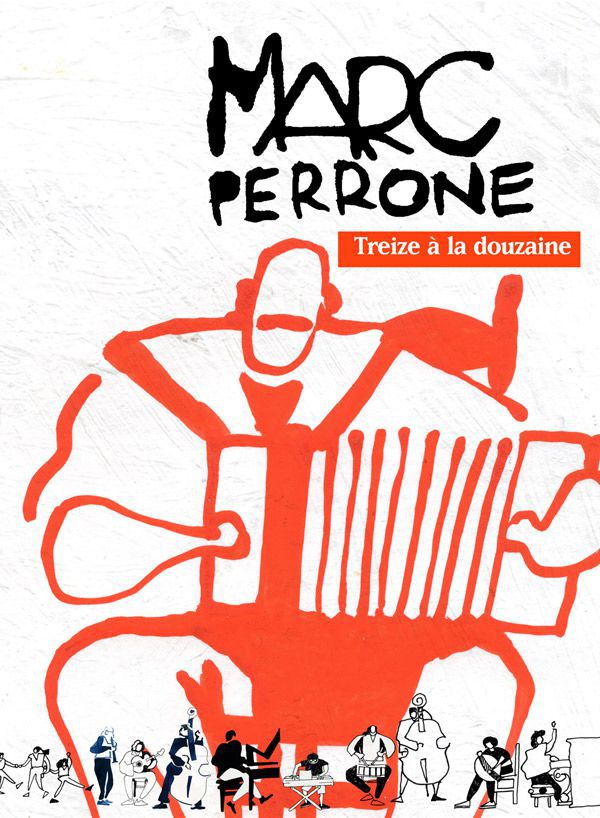

Marc Perrone
Treize à la douzaine
- Instrumentation Accordion
- Composer Marc Perrone
- Artist Marc Perrone
- Editor Armelle Cocheril
- Edition Sheet Music
- Publisher Editions Bourgès R.
- Order no. EBR511
 in stock
ships within 1-2 working days
incl. tax,
excl. shipping costs
Not available in all countries. Learn more

Description:
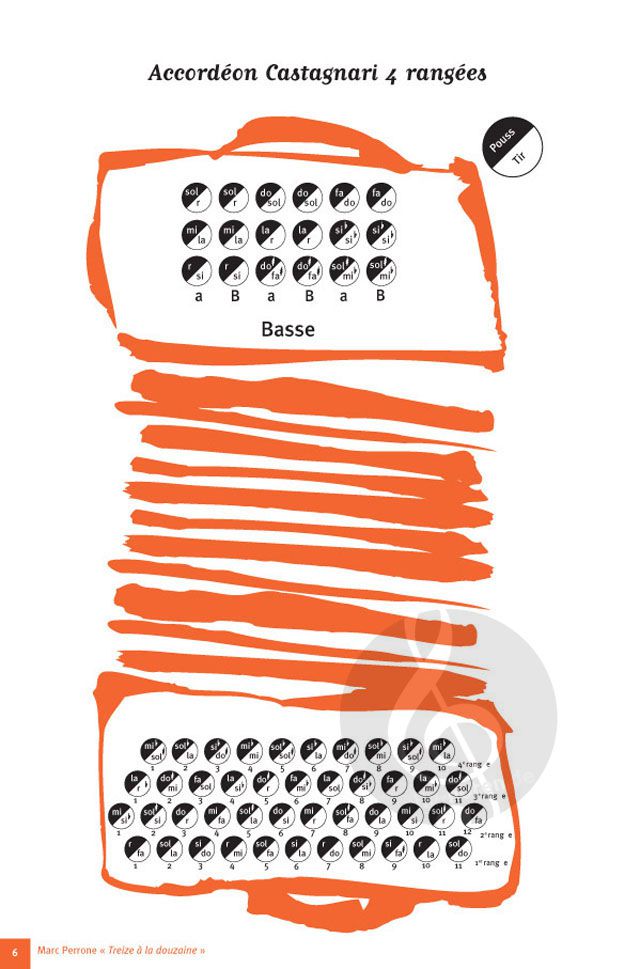
We play the diatonic accordion; it's an unfinished instrument, which means that there are many different systems, and more are being invented all the time. As far as I'm concerned, there's no one system that prevails, so I play on my system, which is described in this book. It's no worse than any other system.
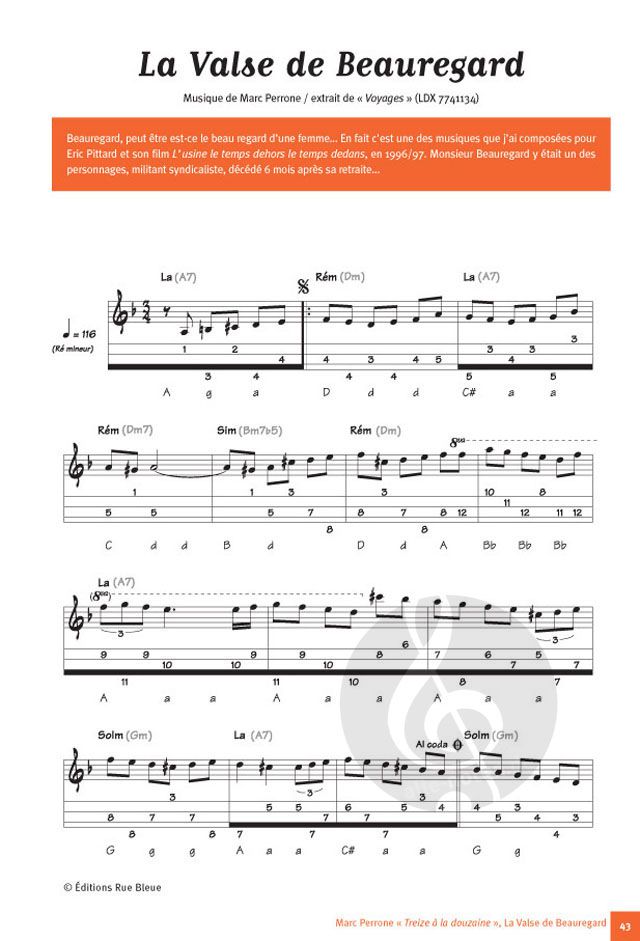
For the collection we fingered some pieces with my system because I composed them on those instruments, so to give a good account of them, the best thing was to finger them in that system, like for example "La valse Dombelle", "La valse de Beauregard", one of the versions of "Valcerves", and then the others are fingered for two rows 8 basses or for three rows Jean-pierre Leray system that is, two rows G-C and, plus one row of accidentals.
This is an important thing, but in any case, the instruments we play are lacunar instruments, i.e. there are things missing to have modern comfort, the possibility of transposition, of being able to do all the harmonies and so on. I've arrived at a system that satisfies me for the time being, and I think that given my advanced age (...) I won't invent any others, because it's beginning to satisfy me enough.
It's the 4 rows where I have all the notes of the chromatic scale in both directions in the right hand, which means that I can superimpose with the left hand all the notes of the chromatic scale, which I couldn't do until now, until I got this instrument in 1995. I think it was important to clarify this detail, that tablatures are all very well, but they're not my thing at all, and neither is musical notation. I read, I decipher amicably, as one of my classmates used to say, and I get by with the notes as best I can, but as a general rule I work by ear and I go relatively fast, so that's my own system.
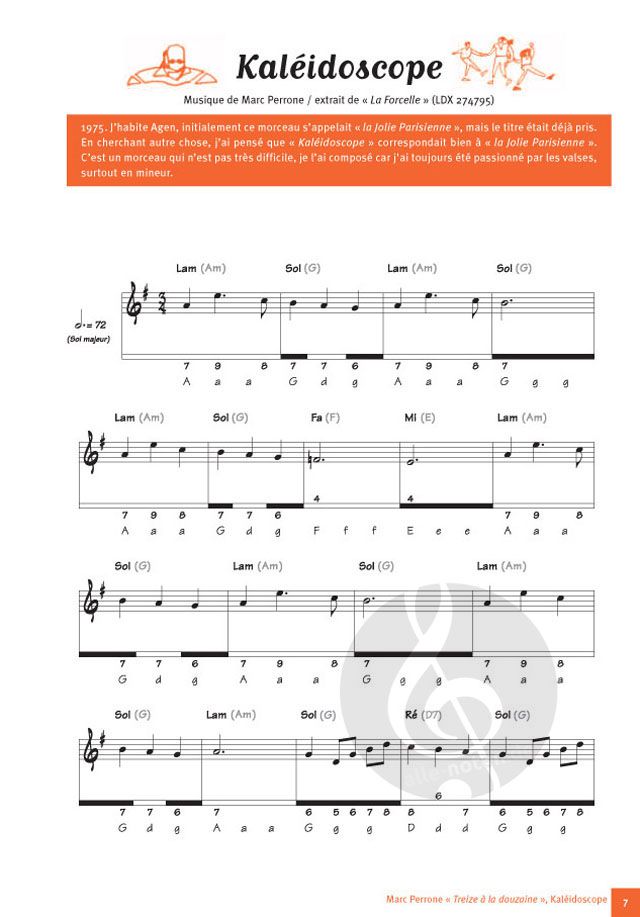
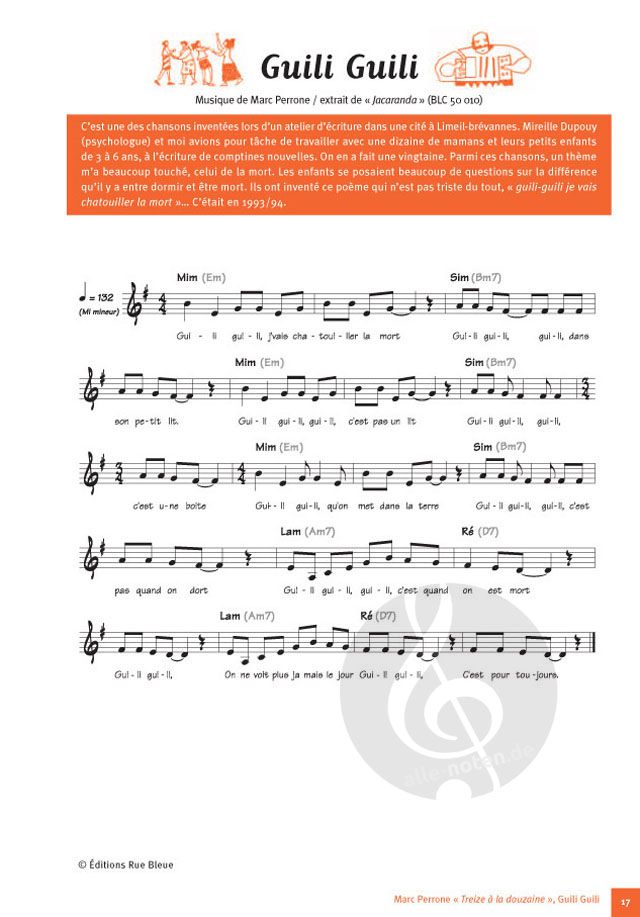
So to make part of my repertoire accessible, we've put it in score for those who read music well, and in tablature for those who need the help of tablature to find the fingerings, or put the fingers in, etc.
So to make part of my repertoire accessible, we've put it in score for those who read music well, and in tablature for those who need the help of tablature to find the fingerings, or put the fingers in, etc. etc.
That said, the important thing for me anyway is the idea that music really does come through the body, i.e. you have to sing a melody first, get it into your head, and then generally get it into your fingers, and I think the score is only indicative, unless you're a gigantically good reader. For me, tablature is very boring, so I don't use it, but I can understand why people need this help.
What I recommend is to listen to the records a lot and try to sing before playing.
Secondly, there are the chord grids on the sheet music, and I think it's important to sing them, just with the left hand, in order to identify the direction of the bellows strike, and then to use the tablature, the sheet music and what's in your ear.
Marc Perrone
-
Kaléidoscope
-
Les Valcerves (La m)
-
Adrien Re Les Valcerves
-
Guili Guili
-
Vas-y Mimile
-
Esperenza
-
Voyages
-
La Forcelle
-
Larmes D'Espoir
-
La Valse Dombelle
-
La Valse De Beauregard
-
La Valse De Catherine
-
Velverde
Customers rated this product:
Manufacturer Information:
Editions Bourgès R.
17 Rue de Clichy
75009
Paris
Frankreich
Other customers also bought:
Marc Perrone
- Accordion, Piano and Guitar
- Sheet Music
- Patrice Bourgès Armelle Cocheril
-
in stock
ships within 1-2 working days
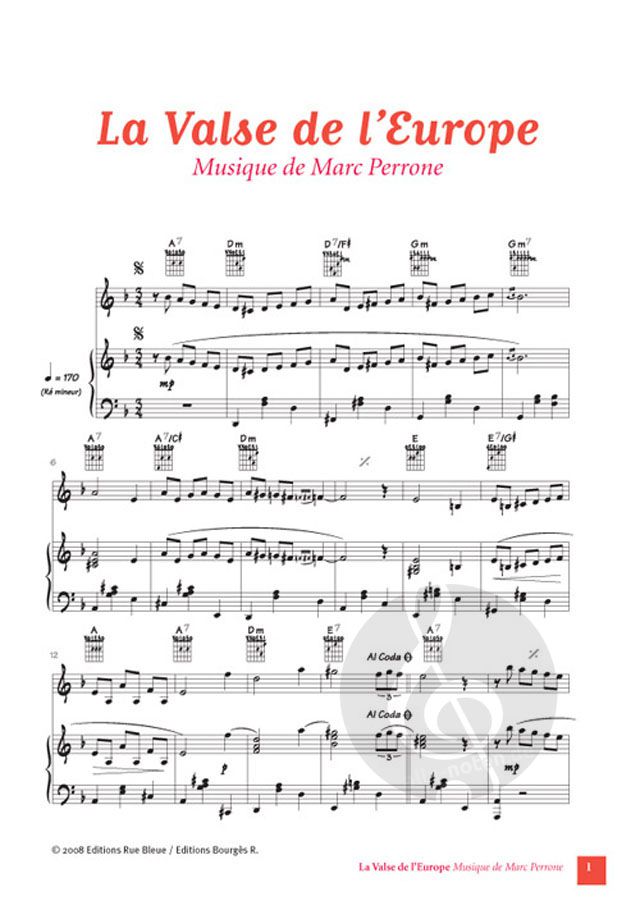
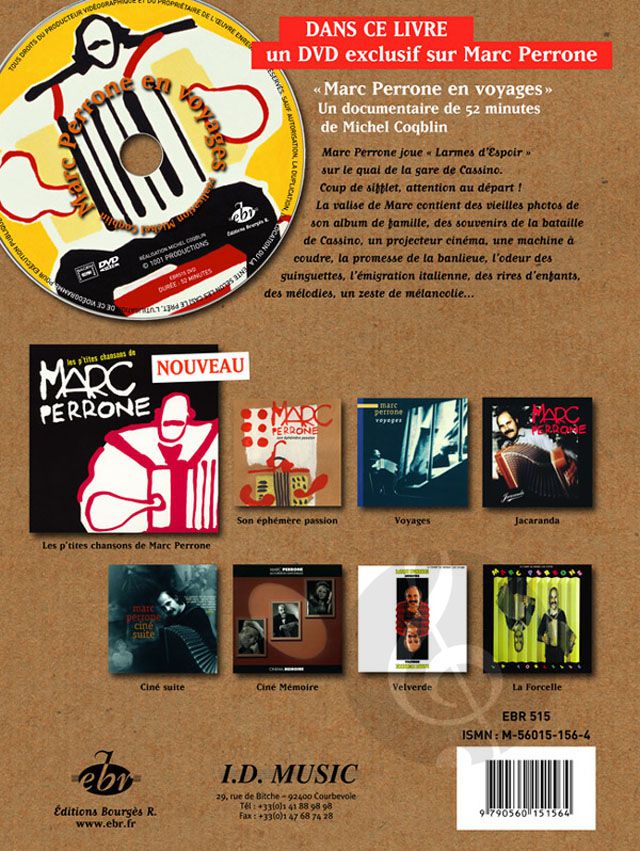
Marc Perrone
- Accordion
- Sheet Music and DVD
- Armelle Cocheril
-
ships within 2-4 weeks