
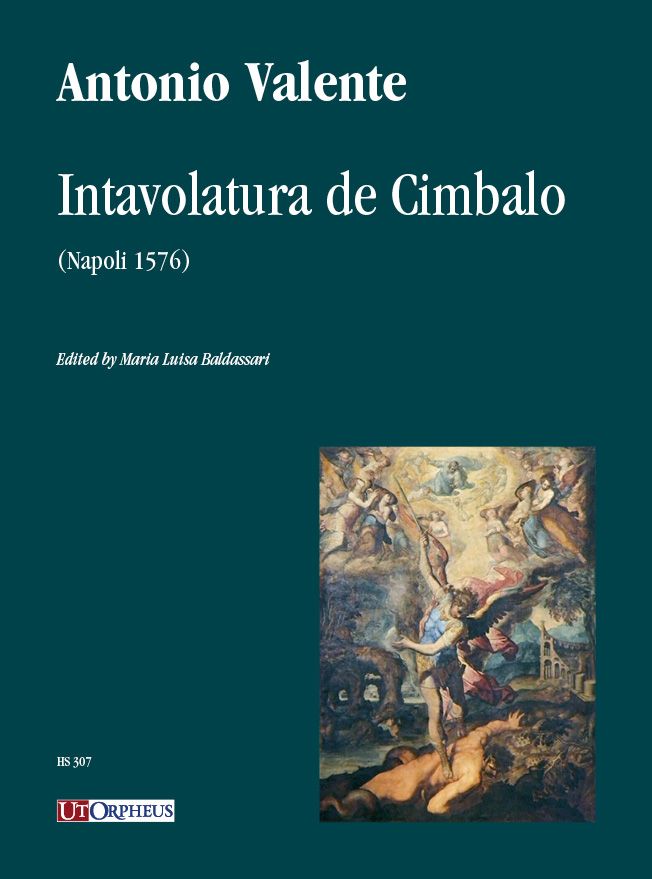
Antonio Valente
Intavolatura de Cimbalo
Napoli 1576
PDF
view
Antonio Valente
Intavolatura de Cimbalo
Napoli 1576
- Instrumentation Harpsichord
- Composer Antonio Valente
- Editor Maria Luisa Baldassari
- Edition Sheet Music
- Publisher UT Orpheus Edizioni
- Order no. ORPH-HS307
 ships within 2-4 working days
incl. tax,
excl. shipping costs
Not available in all countries. Learn more

Description:
Antonio Valente "blind", Neapolitan by antiquity according to the classification of Neapolitan musicians drawn up by Scipione Cerreto and organist of S. Angelo a Nilo in Naples, is known to us for two volumes of keyboard music: the Spiritual Verses published in 1580 and, a few years earlier, the volume we are dealing with, the Intavolatura de cimbalo, published by Giuseppe Cacchio in 1576.
The volume has numerous features of originality: the first tablature for keyboard printed in Naples, it is not compiled in notes but adopts a numerical system that does not appear in practically any other print or manuscript, Italian or not. The dedication of the volume, by Fra' Alberto Mazza, attributes to Valente the invention of this method of writing that would make musical reading and execution very simple, so much so as to allow anyone, even "rough young people who knew neither music nor keys", to get to play in two months.
The repertoire of the Tablature is very varied: one fantasy, six sought-afters, a Salve Regina on cantus firmus, four tablatures of more or less diminished vocal chansons and 9 variations, dances and dances/variations that use long-lived "tenors" such as Romanesca or Zefiro. There is a lack of compositions for liturgical use, both because of the amateur destination of the volume and perhaps because it was the subject of Valente's subsequent publication.
The Intavolatura is a kind of bignami of the keyboard repertoire of the period, similar to earlier Spanish and later Neapolitan publications, such as those of Trabaci and Majone and in the opposite direction to the Verses and contemporary Ricercate by Rocco Rodio, which contain a single genre of compositions.
The volume has numerous features of originality: the first tablature for keyboard printed in Naples, it is not compiled in notes but adopts a numerical system that does not appear in practically any other print or manuscript, Italian or not. The dedication of the volume, by Fra' Alberto Mazza, attributes to Valente the invention of this method of writing that would make musical reading and execution very simple, so much so as to allow anyone, even "rough young people who knew neither music nor keys", to get to play in two months.
The repertoire of the Tablature is very varied: one fantasy, six sought-afters, a Salve Regina on cantus firmus, four tablatures of more or less diminished vocal chansons and 9 variations, dances and dances/variations that use long-lived "tenors" such as Romanesca or Zefiro. There is a lack of compositions for liturgical use, both because of the amateur destination of the volume and perhaps because it was the subject of Valente's subsequent publication.
The Intavolatura is a kind of bignami of the keyboard repertoire of the period, similar to earlier Spanish and later Neapolitan publications, such as those of Trabaci and Majone and in the opposite direction to the Verses and contemporary Ricercate by Rocco Rodio, which contain a single genre of compositions.
Customers rated this product:
Manufacturer Information:
Ut Orpheus Edizioni S.r.l.
Via Marsala 31/E
40126
Bologna
Italien
Other customers also bought:
Antoine Geoffroy-Dechaume
- Sheet Music
-
ships within 4-8 working days
Nicolas Siret
- Harpsichord
- Sheet Music
-
ships within 2-4 weeks

- Lute
- Sheet Music
-
in stock
ships within 1-2 working days
Joseph Bodin de Boismortier
- Harpsichord
- Sheet Music
-
ships within 2-4 weeks
- Lute
- Sheet Music
-
in stock
ships within 1-2 working days
90 keyboard pieces from early Italian manuscripts
- Harpsichord
- Sheet Music
- Christopher Hogwood
-
in stock
ships within 1-2 working days

John Sheeles
- Harpsichord
- Sheet Music
-
in stock
ships within 1-2 working days
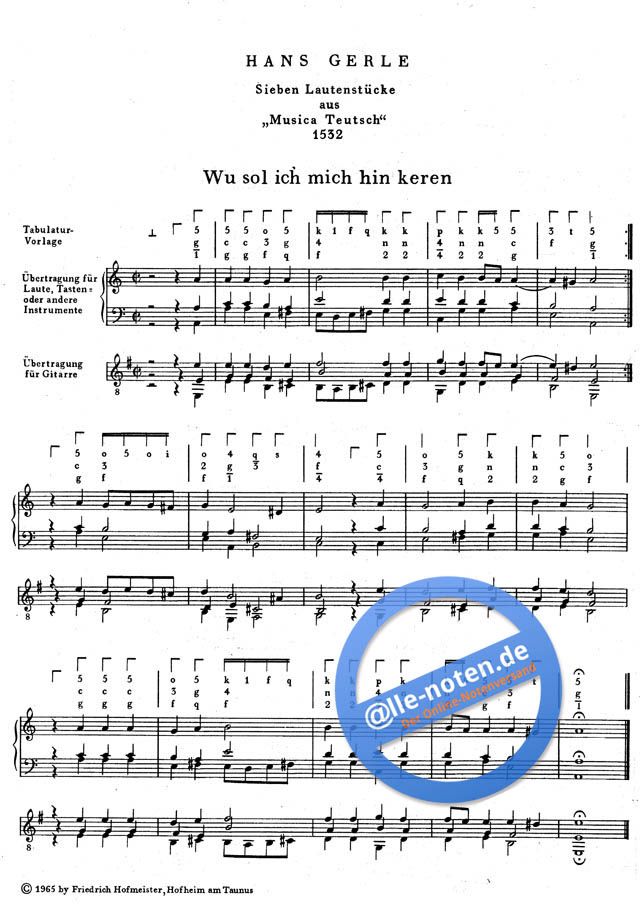
Hans Gerle
Ausgewählte Werke in ihrer Originalnotation mit Übertragungen für Laute und Gitarre
- Guitar
- Sheet Music
-
ships within 2-4 working days

John Sheeles
- Harpsichord
- Sheet Music
-
in stock
ships within 1-2 working days


- Piano
- Sheet Music
-
ships within 2-4 weeks
- Piano
- Sheet Music
-
ships within 2-4 weeks
- Violin and Continuo
- Score and Parts
- David Ponsford
-
in stock
ships within 1-2 working days