
Paul Hindemith
Langsames Stück und Rondo
Fassung für Orgel

Paul Hindemith
Langsames Stück und Rondo
Fassung für Orgel
- Instrumentation Organ
- Edition Sheet Music
-
Difficulty Level
- Composer Paul Hindemith
- Publisher Schott Musik
- Editor Pier Damiano Peretti
- Order no. ED23977
incl. tax,
excl. shipping costs
 ships within 2-4 working days

Description:
Slow Piece and Rondo was composed in 1935 as the last of three works that Paul Hindemith created for the electronic Trautonium, invented by Friedrich Trautwein. As early as 1930, Hindemith had already composed the Seven Pieces for Three Trautoniums ("The Little Electromusician’s Favorites"); during that early phase of the instrument’s development, it could be played exclusively in unison. By 1935, however, a further development by Oskar Sala was available, which Hindemith himself mentions in his handwritten catalog of works:
"Early August. Slow Piece and Rondo for Trautonium. Written for Sala. An interesting challenge, since the Trautonium can now be played in four-part harmony, but only in such a way that two voices are coupled with the notes 2, 3, 4, or 5 of the subtonal series (octave, twelfth, second octave, and third below that)), which, while imposing severe restrictions on composition, also yields strange possibilities due to the intermingling of the two coupling series (which can run independently and differently from one another)."
Sala’s model (an early form of the "Mixture Trautonium") had now been expanded to include a second manual; the "subharmonic overtones"—modeled after the organ’s aliquot stops—enabled a broader harmonic spectrum, which Hindemith skillfully utilized. Furthermore, during performance, two pedals—similar to swell pedals—allowed direct control over changes in timbre. An organ adaptation of the "Slow Piece and Rondo" therefore seems more than justified. Stylistically, too, the work is quite close to Hindemith’s first two organ sonatas (1937): The opening motif of Sonata I is foreshadowed as early as the first few measures; overall, the diptych seems to anticipate Sonata II.
The work is documented sonically by two Trautonium recordings by Oskar Sala, while the score is considered lost during the war. The present reconstruction was based on Paul Hindemith’s sketches transcribed by Heinz-Jürgen Winkler, a transcription by Oskar Sala of the opening measures of the rondo, and Sala’s 1985 audio recording. The third movement of Paul Hindemith’s Piano Sonata No. 2 (1936), into which the "Slow Piece" was incorporated, served as an additional reference.
I would like to express my gratitude for the support and advice provided by the director of the Hindemith Institute in Frankfurt, Dr. Susanne Schaal-Gotthardt; the curator of the Sala Fund at the Deutsches Museum in Munich, Dr. Silke Berdux; and the Trautonium player Peter Pichler of Munich.
- Pier Damiano Peretti
Customers rated this product:
alle-noten.de: Sheet music shipping since 1969
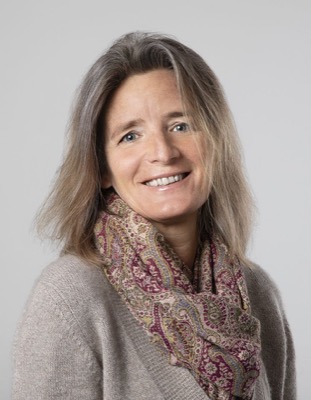
Since 1969, over 500,000 customers have trusted us. With a huge selection of over 1,000,000 sheet music titles, we are one of the largest providers in Europe. Thanks to our large stock we can often ship sheet music within 24 hours. No matter what sheet music you are looking for: you are in the right place!
Yours, Stefanie Reichert
Head of Customer Service
Related products:


- Organ
- Sheet Music Download
- Pier Damiano Peretti
- Schott Musik
-
-
immediately available
|
Download immediately after ordering
- Instant download