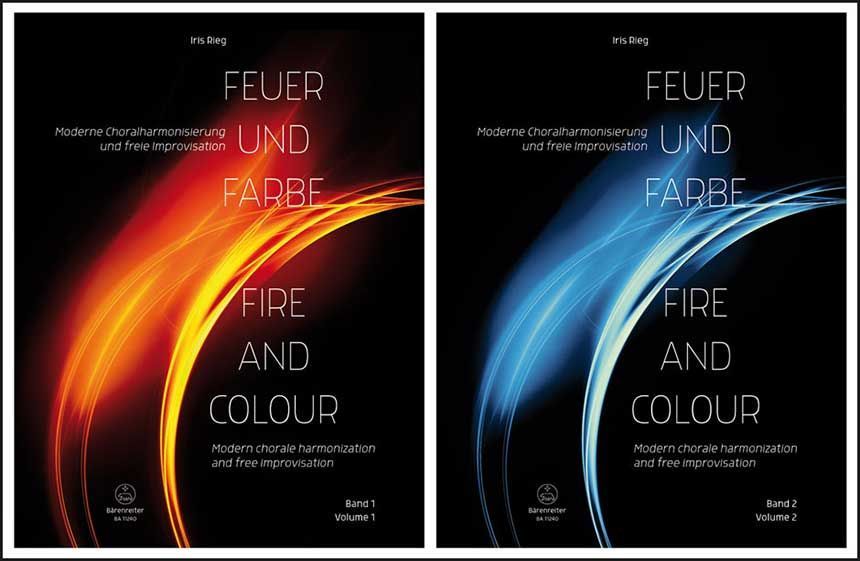
Iris Rieg
The Colours of Fire
Modern chorale harmonization and free improvisation
Iris Rieg
The Colours of Fire
Modern chorale harmonization and free improvisation
- Instrumentation Organ
- Composer Iris Rieg
-
Difficulty Level
- Edition Sheet Music
- Publisher Bärenreiter Verlag
- Order no. BA11240
ships within 1-2 working days
incl. tax,
excl. shipping costs
- Credit Card
- Invoice
- PayPal
- Sepa
Not available in all countries. Learn more

Description:
- Language: German English
- Pages: 468
- Release: 01.10.2025
- Rubric: Methods
- ISMN: 9790006564132
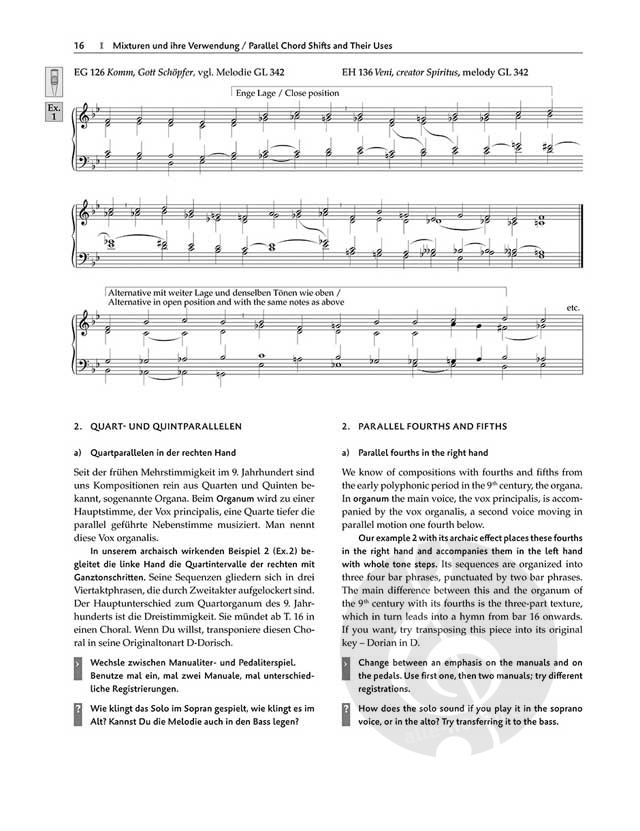
In her two-volume organ improvisation method, Iris Rieg presents an immense wealth of creative yet systematic approaches for discovering colourful harmonies on the “queen of instruments.” She clearly demonstrates how one can experiment and play with intervals, chords, scales, rhythm patterns and much more, in styles ranging from the Renaissance to the modern era.
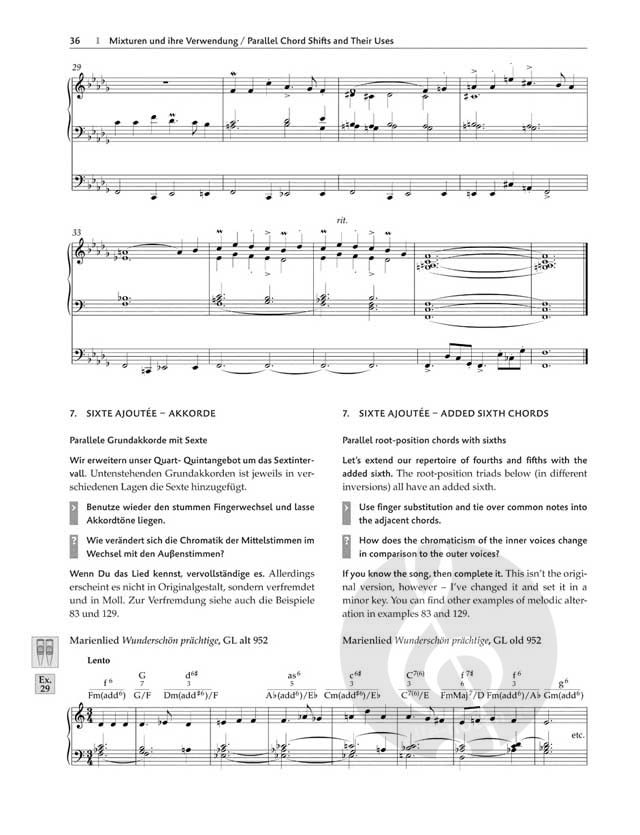
In the first volume, the author provides an introduction to various harmonic techniques, starting with systematic exercises based on parallel shifting musical structures (intervals, chords). The harmonisation of scales leads to interesting chord combinations, including those based on thirds and tritones. Using ostinato models, instructions are given for the conception of a virtuoso toccata.
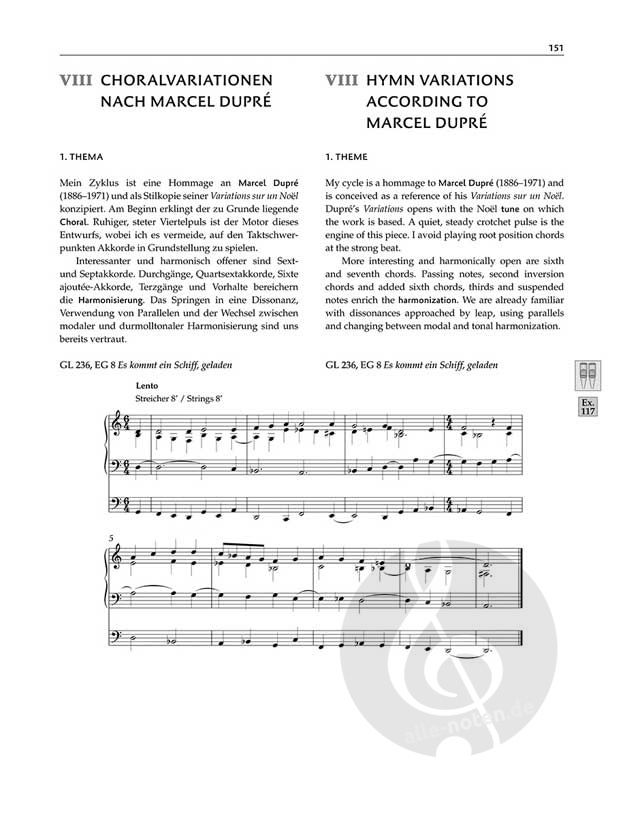
Significant milestones in the history of organ music form the guiding principle for the second volume. Here organists becomes acquainted with characteristic improvisation techniques. Valuable tips for creating stylistic imitations enrich the detailed descriptions of multi-movement forms, such as concerto, mass or suite. Particular emphasis is based on romantic harmonisation (Max Reger) and French tonal aesthetics (Marcel Dupré).
The two volumes, which are ideal for self-study for students, teachers and professional organists, are aimed at those who want to start improvising in church services, but also offer inspiration to those who already improvise on a daily basis and, for example, want to create an organ symphony based on hymns in a live setting. The numerous exercises at different levels of difficulty are logically structured yet allow organists to start at any chapter and begin right away.
Above all, the joy of playing always takes centre stage!
In the first volume, the author provides an introduction to various harmonic techniques, starting with systematic exercises based on parallel shifting musical structures (intervals, chords). The harmonisation of scales leads to interesting chord combinations, including those based on thirds and tritones. Using ostinato models, instructions are given for the conception of a virtuoso toccata.
Significant milestones in the history of organ music form the guiding principle for the second volume. Here organists becomes acquainted with characteristic improvisation techniques. Valuable tips for creating stylistic imitations enrich the detailed descriptions of multi-movement forms, such as concerto, mass or suite. Particular emphasis is based on romantic harmonisation (Max Reger) and French tonal aesthetics (Marcel Dupré).
The two volumes, which are ideal for self-study for students, teachers and professional organists, are aimed at those who want to start improvising in church services, but also offer inspiration to those who already improvise on a daily basis and, for example, want to create an organ symphony based on hymns in a live setting. The numerous exercises at different levels of difficulty are logically structured yet allow organists to start at any chapter and begin right away.
Above all, the joy of playing always takes centre stage!
-
Band 1:
-
Vorwort
-
Einleitung
-
I Mixturen und ihre Verwendung
-
1. Terzparallelen
-
2. Quart- und Quintparallelen
-
3. Terz- und Quintparallelen gemischt
-
4. Quart- und Quintparallelen gemischt
-
5. Quintparallelen
-
6. Verschiebung von Grundakkorden
-
7. Sixte ajoutée-Akkorde: Parallel geführte Grundakkorde mit Sexte
-
8. Parallele Grundakkorde mit Septime
-
9. Parallele Sextakkorde und Fauxbourdon
-
10. Parallele Mollsextakkorde mit kleiner Sekunde
-
11. Parallele Quartsextakkorde in Dur
-
12. Parallele Quartsextakkorde in Dur mit großer Sekunde
-
13. Parallele Quartsextakkorde in Moll mit großer Sekunde
-
14. Parallele Quartsextakkorde in Moll mit kleiner Terz
-
15. Parallele Durseptakkorde
-
16. Parallele Terzquartakkorde in Dur
-
17. Parallele Sekundakkorde
-
18. Parallele Durseptakkorde mit Quinte
-
19. Parallele Durseptakkorde mit Sexte
-
20. Parallele große Durseptakkorde
-
21. Parallele Mollseptakkorde
-
22. Quintfälle von Septakkorden mit None und Undezime
-
23. Exkurs: Von Jazzharmonik beeinflusste Klänge am Choral
-
II Tonleiter
-
1. Achtzehn verschiedene Tonleitern auf d
-
2. Chromatik und Tonrepetition
-
3. Modi und Akkordtypen
-
III Weitere Mittel zur Harmoniegewinnung
-
1. Veränderung der Mittelstimmen im harmonischen Verlauf
-
2. Veränderung der Außenstimmen im harmonischen Verlauf
-
3. Dreiklänge ohne gemeinsamen Ton
-
4. Harmonisierung mit der Molldominante
-
5. Terzbeziehung und Mediantik
-
6. Tritonus-Beziehungen – Qualitäten des Diabolus in musica
-
7. Exkurs: Der verminderte Akkord und seine Auflösungen beim Choral
-
8. Der übermäßige Akkord
-
9. Ganztonfortschreitungen
-
10. Perpetuum mobile
-
11. Akkordfarbigkeit – Dissonanz ist nicht gleich Dissonanz
-
IV Bitonalität
-
1. Dur und Moll gleichzeitig
-
2. Berücksichtigung von Stimmführungsregeln bei Dissonanzen
-
3. Enharmonik und Modulation
-
V Rhythmus
-
1. Ungerade Takte
-
2. Phrasierung Vier gegen Fünf
-
3. Phrasierung Fünf gegen Vier
-
4. Ostinato, Pattern, Taktwechsel
-
VI Techniken zur Fantasie und Toccata
-
1. Langsame Einleitung oder Zwischenspiel
-
2. Figuren der linken Hand
-
3. Laufwerk und Figuration
-
4. Figuren der rechten Hand
-
5. Cantus firmus im Alt
-
6. Geläufigk eitsstudie manualiter
-
7. Laufwerk in beiden Händen
-
8. Funktionstausch der Hände und Bass-Cantus firmus
-
9. Lagenwechsel
-
10. Geläufigk eitsstudie mit Pedal
-
11. Liegetöne und Schlussakkorde
-
VII Finale
-
1. Liedauswahl
-
2. Notenempfehlung
-
3. Buchempfehlung
-
4. Nachwort
-
5. Dank
-
6. Verzeichnis der Rechteinhaber
-
Band 2:
-
Anmerkungen
-
I Renaissance
-
1. Stilmittel der Renaissance
-
2. Modus und Kirchentonart
-
3. Kadenzen II, Verzierungen und Satztechniken in ausgewählter Literatur
-
4. Suite der Renaissance bzw. des Frühbarock
-
II Das barocke Conerto
-
1. Barockes Concerto 1. Satz: schnell
-
2. Barockes Concerto 2. Satz: langsam
-
3. Barockes Concerto 3. Satz: schnell
-
III Die klassische französische Messe des Barock
-
1. Chorale en taille
-
2. Duo
-
3. Trio en dialogue
-
4. Dialogue sur les Grands Jeux
-
5. Fugue
-
6. Dialogue sur la Trompette et Cromorne
-
7. Tierce en taille
-
IV Die französische moderne Suite auf Grundlage eines Chorals
-
1. Suite française moderne: 1. Satz
-
2. Suite française moderne: 2. Satz
-
3. Suite française moderne: 3. Satz
-
4. Suite française moderne: 4. Satz
-
V Romantische Harmonisierung
-
1. Romantische Akkordik I
-
2. Sequenzen
-
3. Romantische Akkordik II: chromatisches Auseinanderstreben doppelter Akkordtöne
-
4. Sukzessiv progressivere Harmonisierung anhand einer Choralzeile
-
5. Romantische Akkordik III: Tonrepetitonen und chromatische Basslinie
-
6. Romantische Akkordik IV: Vorhaltsbildung und chromatische Rückung
-
7. Moderne Romantiker
-
VI Harmonisierung nach Max Reger
-
1. Regerharmonik I: Auszüge aus den Choralvorspielen
-
2. Regerharmonik II: Der 100. Psalm
-
3. Regerharmonik III: zehn Harmonisierungen derselben Choralzeile
-
VII Zeitgenössische Harmonisierung französischer Art
-
1. Akkordkombinationen, Nonenakkord, Quintalteration und Tritonusbezug
-
2. Begleitende Sixte ajoutée-Akkorde
-
3. Begleitende übermäßige Akkorde bzw. Undezimenakkorde
-
4. Begleitende Terzquartakkorde
-
5. Begleitende Septnonakkorde in Dur
-
6. Begleitende Sekundakkorde
-
7. Begleitende Nonenakkorde
-
8. Septakkorde im Abstand eines Tritonusintervalls
-
9. Mollakkorde im Abstand einer kleinen Terz
-
10. Mollakkorde mit großer Septime
-
VIII Choralvariationen nach Marcel Dupré
-
1. Thema
-
2. Tenor-Cantus firmus
-
3. Oktavkanon
-
4. Chromatisches Scherzo I
-
5. Tanz
-
6. Chromatisches Scherzo II
-
7. Chromatisches Scherzo III
-
8. Pentatonisches Scherzo
-
9. Quart- und Quintkanon I
-
10. Quart- und Quintkanon II
-
11. Quart- und Quintkanon III
-
12. Zweistimmige Kanonstudien
-
13. Sekundkanon im Dupré-Stil
-
14. Fugato
-
15. Toccata
-
16. Toccata à la française
-
IX Gregorianisches Vorspiel und Choralsteigerungsfuge
-
1. Vorspiel zum Introitus I mit moderner Harmonisierung
-
2. Choralsteigerungsfuge als Introitus II oder zum Offertorium
-
X Orgelsymphonie
-
1. Grundsätzliche Überlegungen vorab
-
2. Baustein I: kurze Themen und ihre Kombination
-
3. Baustein II
-
4. Baustein III: entspannende Elemente
-
5. Baustein IV: Klang und Lage
-
XI Finale
-
1. Liedauswahl
-
2. Notenempfehlungen
-
3. Buchempfehlungen
-
4. Dank
-
5. Verzeichnis der Rechteinhaber
-
6. Quellenangabe der zitierten Werke
Customers rated this product:
No reviews available.
Manufacturer Information:
Bärenreiter-Verlag Karl Vötterle GmbH & Co. KG
Heinrich-Schütz-Allee 35-37
34131
Kassel
Deutschland
Related products:
- Organ
- Sheet Music Download
- Bärenreiter Verlag
-
-
immediately available
Download immediately after ordering - Instant download
Other customers also bought:
for organ solo
- Organ
- Sheet Music
-
in stock
ships within 1-2 working days
Handbook of classical-modern organ playing
- Organ
- Sheet Music
-
ships within 2-4 working days
- Also available for download!
- Organ
- Sheet Music
-
not in stock | uncertain
Fred Bock
- Organ
- Sheet Music
-
ships within 2-4 weeks
Christiane Michel-Ostertun
Anleitungen und Tipps für leichte Intonationen auf der Orgel
- Organ
- Sheet Music
-
in stock
ships within 1-2 working days
- Organ
- Sheet Music
-
ships within 3-6 working days
- Organ
- Sheet Music
-
ships within 3-6 working days
- Organ
- Sheet Music
-
ships within 3-6 working days
- Organ
- Sheet Music
-
in stock
ships within 1-2 working days
- Organ
- Organ Score
-
ships within 3-6 working days
- Piano
- Sheet Music
- Jane Smisor Bastien
-
ships within 3-6 working days
- Piano
- Sheet Music
-
ships within 3-6 working days
Alfred Reed
- Clarinet and Piano
- Sheet Music
-
ships within 3-6 working days
David Maslanka
- Concert Band
- Score
-
in stock
ships within 1-2 working days
Martin Ellerby
- Clarinet
- Sheet Music
-
ships within 1-2 weeks