
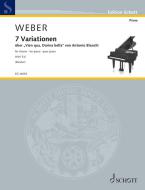
Carl Maria von Weber
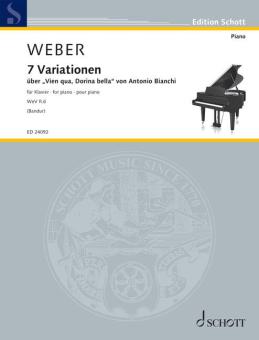
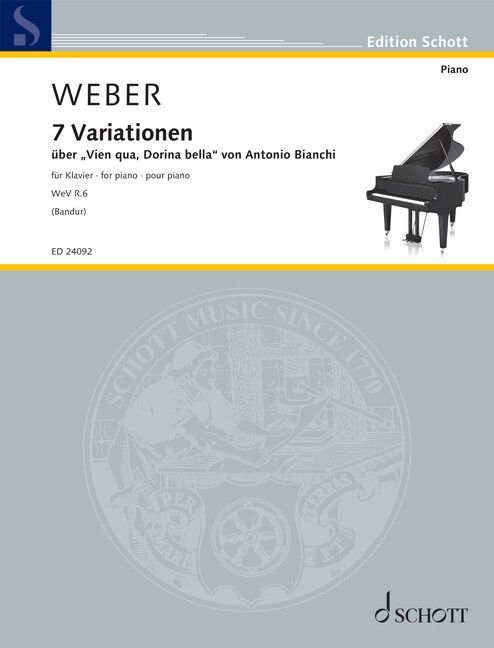
7 Variations op. 7 WeV R.6
on "Vien qua, Dorina bella" by Antonio Bianchi for piano
NEW
PDF
1
view
PDF
2
view
Carl Maria von Weber
7 Variations op. 7 WeV R.6
on "Vien qua, Dorina bella" by Antonio Bianchi for piano
- Instrumentation Piano
- Composer Carl Maria von Weber
- Editor Markus Bandur
-
Difficulty Level
- Edition Sheet Music
- Publisher Schott Musik
- Order no. ED24092
 in stock
ships within 1-2 working days
incl. tax,
excl. shipping costs
Not available in all countries. Learn more

Description:
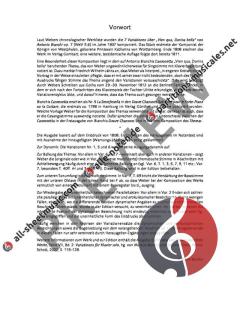
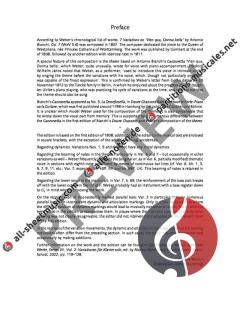
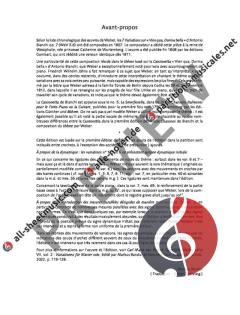
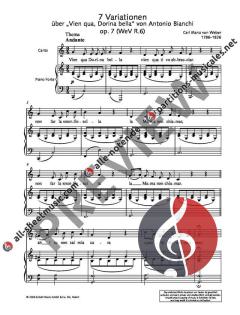
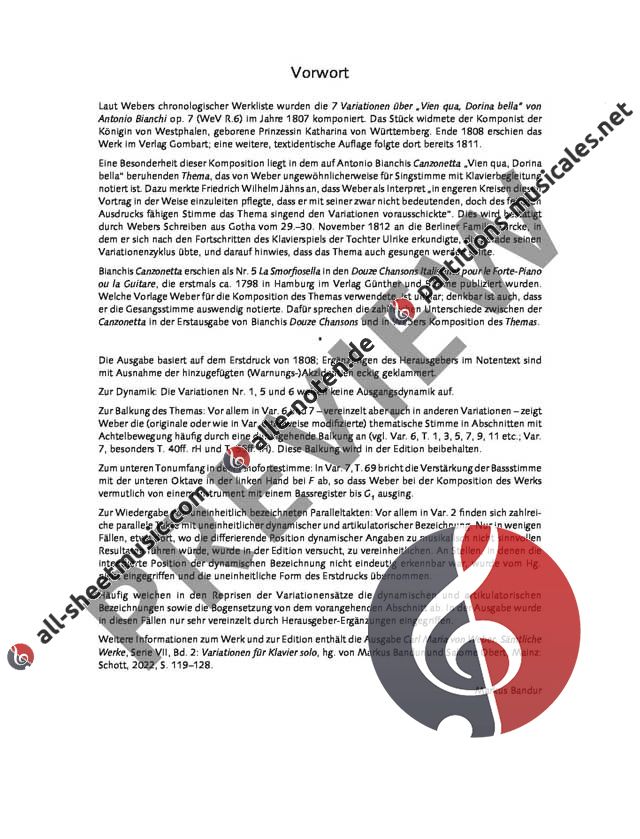
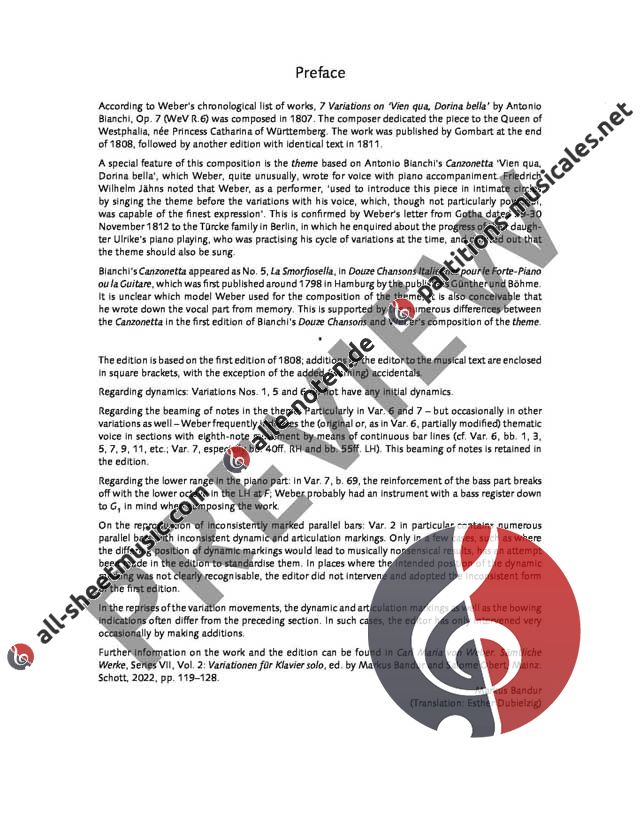
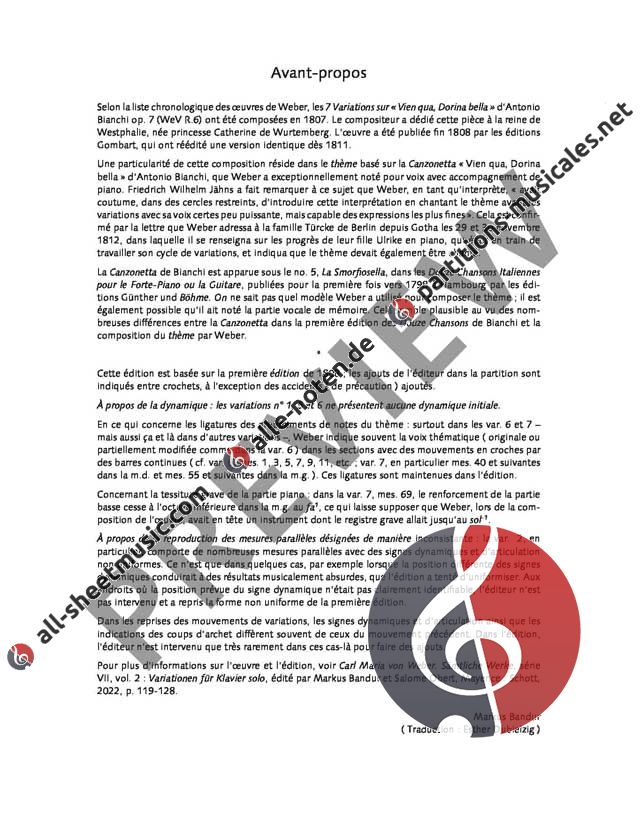
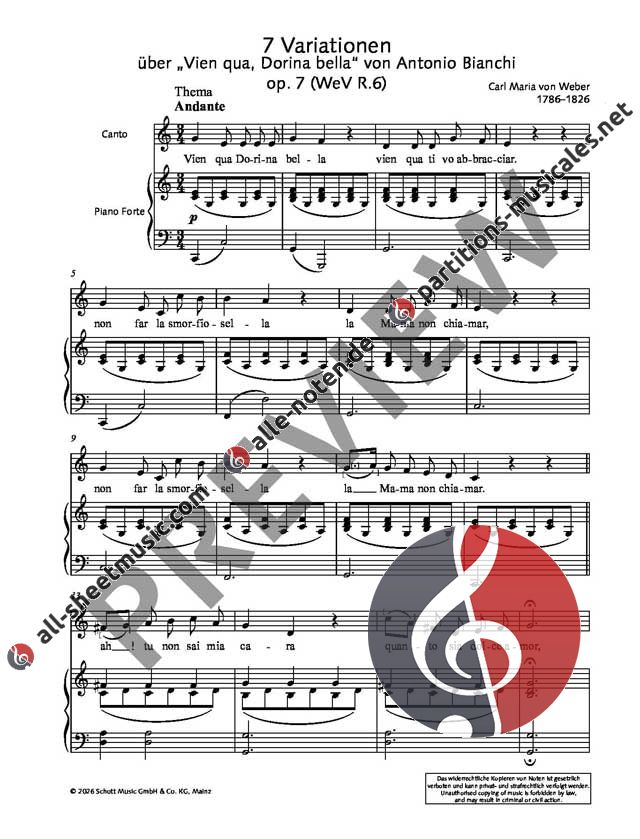
According to Weber's chronological list of works, 7 Variations on 'Vien qua, Dorina bella' by Antonio Bianchi, op. 7 (WeV R.6) was composed in 1807. The composer dedicated the piece to the Queen of Westphalia, née Princess Catharina of Württemberg. The work was published by Gombart at the end of 1808, followed by another edition with identical text in 1811. A special feature of this composition is the theme based on Antonio Bianchi's Canzonetta 'Vien qua, Dorina bella', which Weber, quite unusually, wrote for voice with piano accompaniment. Friedrich Wilhelm Jähns noted that Weber, as a performer, 'used to introduce this piece in intimate circles by singing the theme before the variations with his voice, which, though not particularly powerful, was capable of the finest expression'. This is confirmed by Weber's letter from Gotha dated 29-30 November 1812 to the Türcke family in Berlin, in which he enquired about the progress of their daughter Ulrike's piano playing, who was practising his cycle of variations at the time, and pointed out that the theme should also be sung. Bianchi's Canzonetta appeared as No. 5, La Smorfiosella, in Douze Chansons Italiennes pour le Forte-Piano ou la Guitare, which was first published around 1798 in Hamburg by the publishers Günther und Böhme. It is unclear which model Weber used for the composition of the theme; it is also conceivable that he wrote down the vocal part from memory. This is supported by the numerous differences between the Canzonetta in the first edition of Bianchi's Douze Chansons and Weber's composition of the theme. - Markus Bandur (Translation: Esther Dubielzig)
Customers rated this product:
Manufacturer Information:
Schott Music GmbH & Co. KG
Weihergarten 5
55116
Mainz
Deutschland
Related products:

Carl Maria von Weber
on "Vien qua, Dorina bella" by Antonio Bianchi for piano
- Piano
- Sheet Music Download
- Schott Musik
-
-
immediately available
Download immediately after ordering - Instant download