
Franz Liszt
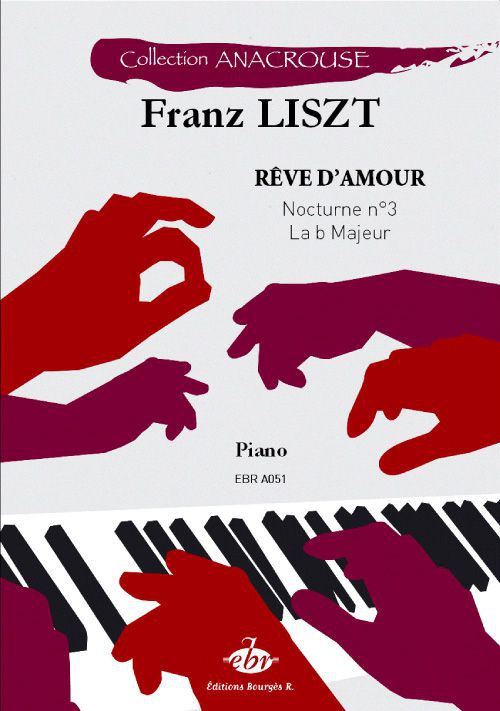
Reve D'amour La B Majeur
Demo
listen
Franz Liszt
Reve D'amour La B Majeur
- Instrumentation Piano
- Composer Franz Liszt
- Edition Sheet Music
- Publisher Editions Bourgès R.
- Order no. EBRA051
 ships within 2-4 weeks
Description:
The ANACROUSE collection offers novice and experienced pianists alike a wide choice of classical works, from the Renaissance to the modern era.
We have set ourselves the goal of offering both "must-haves" from the classical repertoire and pieces by sometimes forgotten composers, all of undeniable pedagogical value. Each piece, sold individually, has been the subject of careful editorial work, both in terms of the musical text and its engraving, in order to guarantee musicians the conditions essential to the pleasures derived from frequent trade in these works.
The scores are offered in the form of traditional works (paper sheets), and also available by download.
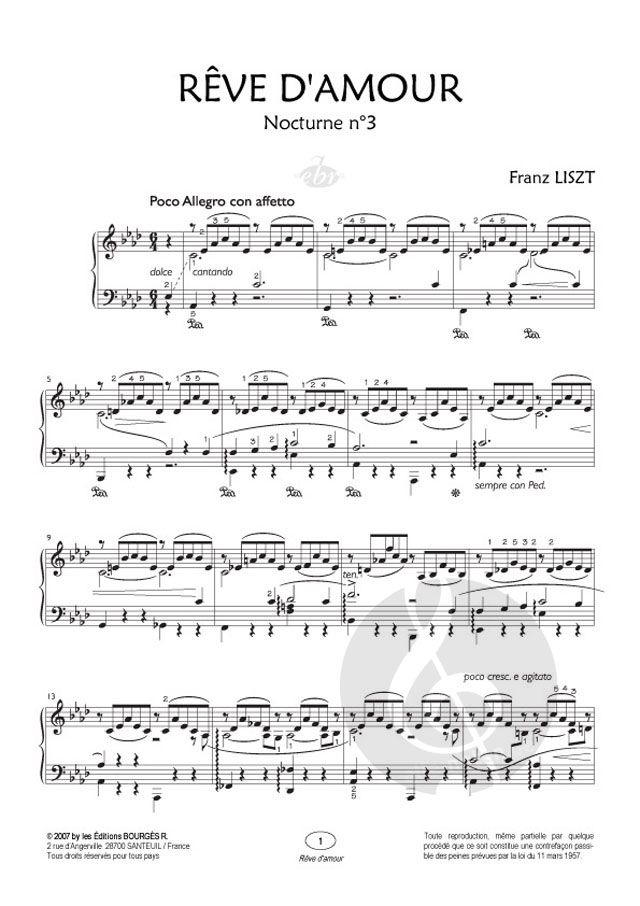
In 1850, Franz Liszt wrote three nocturnes. He imagined the piano as a lieder for tenor voice. The immensely gentle Dream of Love is inseparable from the other two nocturnes. This nocturne, in A-flat major, is universally appreciated by a wide audience. Its fame stems from its melodic lyricism and fertile blend of harmonies and modulations. The declamation of the central part, followed by the recitative episode in a mournful tone, both bewitches and fascinates.
Although the piece is secondary in Liszt's repertoire, it stands out for its elegiac side, the fruit of the composer's most penetrating inspiration.
We have set ourselves the goal of offering both "must-haves" from the classical repertoire and pieces by sometimes forgotten composers, all of undeniable pedagogical value. Each piece, sold individually, has been the subject of careful editorial work, both in terms of the musical text and its engraving, in order to guarantee musicians the conditions essential to the pleasures derived from frequent trade in these works.
The scores are offered in the form of traditional works (paper sheets), and also available by download.
In 1850, Franz Liszt wrote three nocturnes. He imagined the piano as a lieder for tenor voice. The immensely gentle Dream of Love is inseparable from the other two nocturnes. This nocturne, in A-flat major, is universally appreciated by a wide audience. Its fame stems from its melodic lyricism and fertile blend of harmonies and modulations. The declamation of the central part, followed by the recitative episode in a mournful tone, both bewitches and fascinates.
Although the piece is secondary in Liszt's repertoire, it stands out for its elegiac side, the fruit of the composer's most penetrating inspiration.