
Ludwig van Beethoven
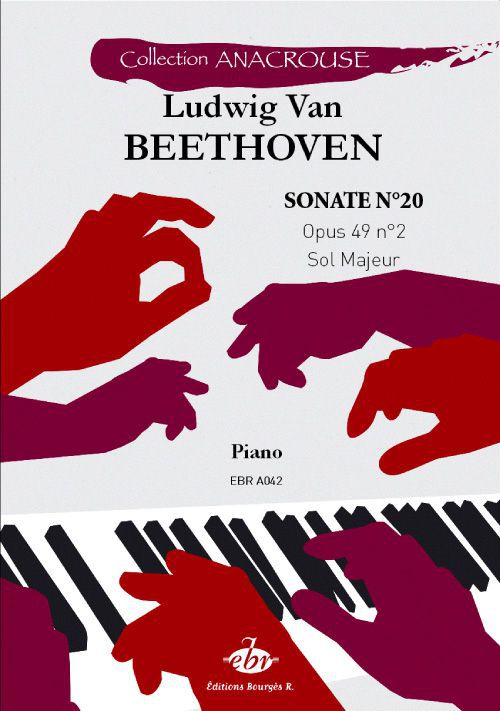
Sonata 20 op. 49 No. 2 Sol Majeur
Demo
listen
Ludwig van Beethoven
Sonata 20 op. 49 No. 2 Sol Majeur
- Instrumentation Piano
- Composer Ludwig van Beethoven
- Edition Sheet Music
- Publisher Editions Bourgès R.
- Order no. EBRA042
 ships within 2-4 weeks
Description:
The ANACROUSE collection offers novice and experienced pianists alike a wide choice of classical works, from the Renaissance to the modern era.
We have set ourselves the goal of offering both "must-haves" from the classical repertoire and pieces by sometimes forgotten composers, all of undeniable pedagogical value. Each piece, sold individually, has been the subject of careful editorial work, both in terms of the musical text and its engraving, in order to guarantee musicians the conditions essential to the pleasures derived from frequent trade in these works.
The scores are offered in traditional book form (paper sheets), and also available by download.
Composed in 1796, this sonata no. 20 is also known as sonate facile like sonata no. 19 in G minor opus 49 no. 1.
It predates the first sonata of this opus 49. Despite the difficulty of publishing its score with German publishers, sonata no.20 was finally published in Vienna in 1805 by the Office of Art and Industry.
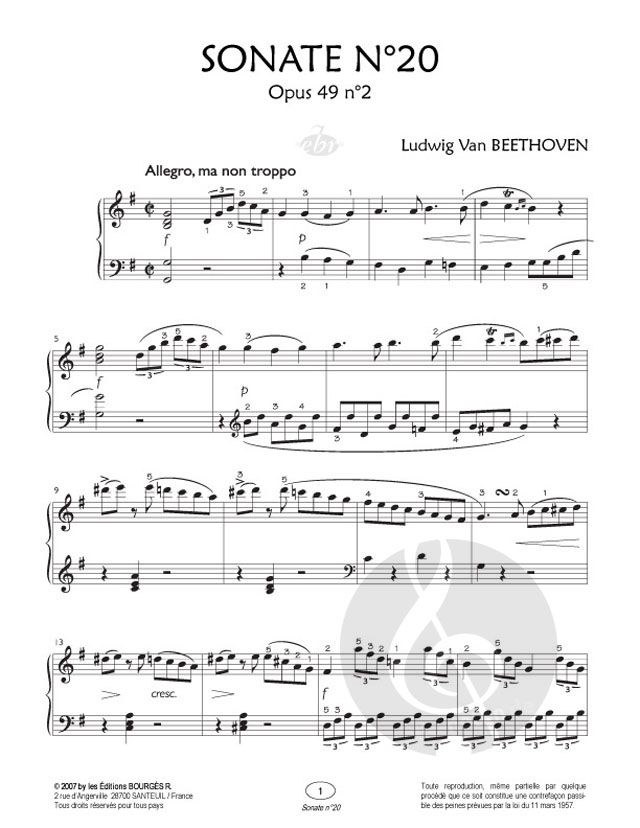
This sonata is characterized by great simplicity in its writing, but shows more originality in its compositional treatment than the first sonata of opus 49. Brightness, deep grace and richness of theme development are represented in this second sonata. It consists of two movements, as in the first: an Allegro ma non troppo and a Tempo di Menuetto.
The second movement is a minuet of great originality. It uses a theme from a folk song from the Rhineland countries in a welcoming, cheerful tone. It's worth noting that Beethoven was particularly fond of this theme, having used it in other works such as his Septet Op. 20 and the Adagio of his Trio Op. 11.
In sonata no. 20, we find the beginnings of the great difficulties of Beethoven's 32 sonatas. Easy and interesting to write, this piece will lead the pianist into the deepest recesses of the composer's mind.
We have set ourselves the goal of offering both "must-haves" from the classical repertoire and pieces by sometimes forgotten composers, all of undeniable pedagogical value. Each piece, sold individually, has been the subject of careful editorial work, both in terms of the musical text and its engraving, in order to guarantee musicians the conditions essential to the pleasures derived from frequent trade in these works.
The scores are offered in traditional book form (paper sheets), and also available by download.
Composed in 1796, this sonata no. 20 is also known as sonate facile like sonata no. 19 in G minor opus 49 no. 1.
It predates the first sonata of this opus 49. Despite the difficulty of publishing its score with German publishers, sonata no.20 was finally published in Vienna in 1805 by the Office of Art and Industry.
This sonata is characterized by great simplicity in its writing, but shows more originality in its compositional treatment than the first sonata of opus 49. Brightness, deep grace and richness of theme development are represented in this second sonata. It consists of two movements, as in the first: an Allegro ma non troppo and a Tempo di Menuetto.
The second movement is a minuet of great originality. It uses a theme from a folk song from the Rhineland countries in a welcoming, cheerful tone. It's worth noting that Beethoven was particularly fond of this theme, having used it in other works such as his Septet Op. 20 and the Adagio of his Trio Op. 11.
In sonata no. 20, we find the beginnings of the great difficulties of Beethoven's 32 sonatas. Easy and interesting to write, this piece will lead the pianist into the deepest recesses of the composer's mind.