
Edwin F. Kalmus Sheet Music
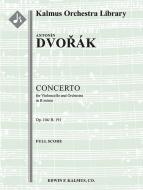
Antonín Dvorák (1841-1904) composed his Concerto for Cello in B minor, Op. 104/B. 191 in 1894. It was the last solo concerto that the composer wrote, and it was the final work that he wrote during his...
Antonín Dvorák (1841-1904) composed his Concerto for Cello in B minor, Op. 104/B. 191 in 1894. It was the last solo concerto that the composer wrote, and it was the final work that he wrote during his...
- Cello and Orchestra
- Score
- Edwin F. Kalmus
-
 ships within 2-4 weeks
ships within 2-4 weeks
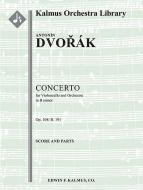
Antonín Dvorák (1841-1904) composed his Concerto for Cello in B minor, Op. 104/B. 191 in 1894. It was the last solo concerto that the composer wrote, and it was the final work that he wrote during his...
Antonín Dvorák (1841-1904) composed his Concerto for Cello in B minor, Op. 104/B. 191 in 1894. It was the last solo concerto that the composer wrote, and it was the final work that he wrote during his...
- Cello and Orchestra
- Score and Parts
- Edwin F. Kalmus
-
ships within 2-4 weeks
ships within 2-4 weeks
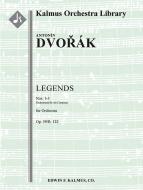
In October 1880, as he was completing his sixth symphony, Antonín Dvorák (1841-1904) wrote to his publisher Fritz Simrock that he wanted to complete a set of duets for piano in the next month. On Janu...
In October 1880, as he was completing his sixth symphony, Antonín Dvorák (1841-1904) wrote to his publisher Fritz Simrock that he wanted to complete a set of duets for piano in the next month. On Janu...
- Orchestra
- Score
- Edwin F. Kalmus
-
ships within 2-4 weeks
ships within 2-4 weeks
![Legends, Op. 59/B. 122; Nos. 1-5 [composer's orchestration]](https://www.all-sheetmusic.com/out/pictures/generated/product/1/145_190_75/Art_1524630.JPEG)
In October 1880, as he was completing his sixth symphony, Antonín Dvorák (1841-1904) wrote to his publisher Fritz Simrock that he wanted to complete a set of duets for piano in the next month. On Janu...
In October 1880, as he was completing his sixth symphony, Antonín Dvorák (1841-1904) wrote to his publisher Fritz Simrock that he wanted to complete a set of duets for piano in the next month. On Janu...
- Orchestra
- Score and Parts
- Edwin F. Kalmus
-
ships within 2-4 weeks
ships within 2-4 weeks
Composed by Antonín Dvorák (1841-1904) in the spring of 1883, SCHERZO CAPRICCIOSO IN D-FLAT MAJOR, Op. 66/B. 131 is a favorite of the concert hall not only for its colorful humor but also for its rest...
Composed by Antonín Dvorák (1841-1904) in the spring of 1883, SCHERZO CAPRICCIOSO IN D-FLAT MAJOR, Op. 66/B. 131 is a favorite of the concert hall not only for its colorful humor but also for its rest...
- Orchestra
- Score
- Edwin F. Kalmus
-
ships within 2-4 weeks
ships within 2-4 weeks
In 1892 Antonín Dvorák (1841-1904) embarked on a "farewell" tour of Bohemian and Moravian cities prior to departing for the United States, and he chose his friends, violinist Ferdinand Lachner and cel...
In 1892 Antonín Dvorák (1841-1904) embarked on a "farewell" tour of Bohemian and Moravian cities prior to departing for the United States, and he chose his friends, violinist Ferdinand Lachner and cel...
- Cello and Orchestra
- Score
- Edwin F. Kalmus
-
ships within 2-4 weeks
ships within 2-4 weeks
In 1892 Antonín Dvorák (1841-1904) embarked on a "farewell" tour of Bohemian and Moravian cities prior to departing for the United States, and he chose his friends, violinist Ferdinand Lachner and cel...
In 1892 Antonín Dvorák (1841-1904) embarked on a "farewell" tour of Bohemian and Moravian cities prior to departing for the United States, and he chose his friends, violinist Ferdinand Lachner and cel...
- Cello and Orchestra
- Score and Parts
- Edwin F. Kalmus
-
ships within 2-4 weeks
ships within 2-4 weeks
Antonín Dvořák (1841-1904) wrote this single-movement Romance in F minor for solo violin and orchestra (or piano) in 1877 at the request of Josef Markus, leader of the Provisional Theatre Orchestra in...
Antonín Dvořák (1841-1904) wrote this single-movement Romance in F minor for solo violin and orchestra (or piano) in 1877 at the request of Josef Markus, leader of the Provisional Theatre Orchestra in...
- Violin and Orchestra
- Score
- Edwin F. Kalmus
-
ships within 2-4 weeks
ships within 2-4 weeks
Antonín Dvořák (1841-1904) wrote this single-movement Romance in F minor for solo violin and orchestra (or piano) in 1877 at the request of Josef Markus, leader of the Provisional Theatre Orchestra in...
Antonín Dvořák (1841-1904) wrote this single-movement Romance in F minor for solo violin and orchestra (or piano) in 1877 at the request of Josef Markus, leader of the Provisional Theatre Orchestra in...
- Violin and Orchestra
- Score and Parts
- Edwin F. Kalmus
-
ships within 2-4 weeks
ships within 2-4 weeks
In October of 1898, Edward Elgar returned home after a long day of teaching, ate dinner, then sat down at the piano to doodle on the keys. Elgar described what followed: “In a little while, soothed an...
In October of 1898, Edward Elgar returned home after a long day of teaching, ate dinner, then sat down at the piano to doodle on the keys. Elgar described what followed: “In a little while, soothed an...
- Orchestra
- Score
- Edwin F. Kalmus
-
ships within 2-4 weeks
ships within 2-4 weeks
In October of 1898, Edward Elgar returned home after a long day of teaching, ate dinner, then sat down at the piano to doodle on the keys. Elgar described what followed: “In a little while, soothed an...
In October of 1898, Edward Elgar returned home after a long day of teaching, ate dinner, then sat down at the piano to doodle on the keys. Elgar described what followed: “In a little while, soothed an...
- Orchestra
- Score and Parts
- Edwin F. Kalmus
-
ships within 2-4 weeks
ships within 2-4 weeks
The Pavane in F-sharp minor, Op. 50, is by French composer Gabriel Fauré written in 1887. It was originally a piano piece, but is better known in Fauré's version for orchestra and optional chorus. Obt...
The Pavane in F-sharp minor, Op. 50, is by French composer Gabriel Fauré written in 1887. It was originally a piano piece, but is better known in Fauré's version for orchestra and optional chorus. Obt...
- Orchestra
- Score
- Edwin F. Kalmus
-
ships within 2-4 weeks
ships within 2-4 weeks
The Pavane in F-sharp minor, Op. 50, is by French composer Gabriel Fauré written in 1887. It was originally a piano piece, but is better known in Fauré's version for orchestra and optional chorus. Obt...
The Pavane in F-sharp minor, Op. 50, is by French composer Gabriel Fauré written in 1887. It was originally a piano piece, but is better known in Fauré's version for orchestra and optional chorus. Obt...
- Orchestra
- Score and Parts
- Edwin F. Kalmus
-
ships within 2-4 weeks
ships within 2-4 weeks
The Pavane in F-sharp minor, Op. 50, is by French composer Gabriel Fauré written in 1887. It was originally a piano piece, but is better known in Fauré's version for orchestra and optional chorus. Obt...
The Pavane in F-sharp minor, Op. 50, is by French composer Gabriel Fauré written in 1887. It was originally a piano piece, but is better known in Fauré's version for orchestra and optional chorus. Obt...
- Vocal Score
- Edwin F. Kalmus
-
ships within 2-4 weeks
ships within 2-4 weeks
The Pavane in F-sharp minor, Op. 50, is by French composer Gabriel Fauré written in 1887. It was originally a piano piece, but is better known in Fauré's version for orchestra and optional chorus. Obt...
The Pavane in F-sharp minor, Op. 50, is by French composer Gabriel Fauré written in 1887. It was originally a piano piece, but is better known in Fauré's version for orchestra and optional chorus. Obt...
- Orchestra
- Choral Score
- Edwin F. Kalmus
-
ships within 2-4 weeks
ships within 2-4 weeks
The Pavane in F-sharp minor, Op. 50, is by French composer Gabriel Fauré written in 1887. It was originally a piano piece, but is better known in Fauré's version for orchestra and optional chorus. Obt...
The Pavane in F-sharp minor, Op. 50, is by French composer Gabriel Fauré written in 1887. It was originally a piano piece, but is better known in Fauré's version for orchestra and optional chorus. Obt...
- Orchestra
- Choral Score
- Edwin F. Kalmus
-
ships within 2-4 weeks
ships within 2-4 weeks
Gabriel Fauré (1845-1924) wrote the Dolly Suite, Op. 56, originally as a collection of six pieces for piano duet. Each short work marked the birthday or other event in the life of the daughter of Emma...
Gabriel Fauré (1845-1924) wrote the Dolly Suite, Op. 56, originally as a collection of six pieces for piano duet. Each short work marked the birthday or other event in the life of the daughter of Emma...
- Orchestra
- Score
- Henri Rabaud
- Edwin F. Kalmus
-
ships within 2-4 weeks
ships within 2-4 weeks
Gabriel Fauré (1845-1924) wrote the Dolly Suite, Op. 56, originally as a collection of six pieces for piano duet. Each short work marked the birthday or other event in the life of the daughter of Emma...
Gabriel Fauré (1845-1924) wrote the Dolly Suite, Op. 56, originally as a collection of six pieces for piano duet. Each short work marked the birthday or other event in the life of the daughter of Emma...
- Orchestra
- Score and Parts
- Henri Rabaud
- Edwin F. Kalmus
-
ships within 2-4 weeks
ships within 2-4 weeks
César Franck's (1822-1890) SYMPHONY IN D MINOR is the French composer's best-known orchestral work. In three, rather than four, movements, the work's shape is attained through thematic transformation,...
César Franck's (1822-1890) SYMPHONY IN D MINOR is the French composer's best-known orchestral work. In three, rather than four, movements, the work's shape is attained through thematic transformation,...
- Orchestra
- Score
- Clinton Nieweg
- Edwin F. Kalmus
-
ships within 2-4 weeks
ships within 2-4 weeks
LES DJINNS was written at the request of pianist Caroline Montigny-Rémaury, though César Franck's (1822-1890) short work for piano and orchestra was instead premiered on March 15, 1885 by Louis Diémer...
LES DJINNS was written at the request of pianist Caroline Montigny-Rémaury, though César Franck's (1822-1890) short work for piano and orchestra was instead premiered on March 15, 1885 by Louis Diémer...
- Piano and Orchestra
- Score
- Edwin F. Kalmus
-
ships within 2-4 weeks
ships within 2-4 weeks
LES DJINNS was written at the request of pianist Caroline Montigny-Rémaury, though César Franck's (1822-1890) short work for piano and orchestra was instead premiered on March 15, 1885 by Louis Diémer...
LES DJINNS was written at the request of pianist Caroline Montigny-Rémaury, though César Franck's (1822-1890) short work for piano and orchestra was instead premiered on March 15, 1885 by Louis Diémer...
- Piano and Orchestra
- Score and Parts
- Edwin F. Kalmus
-
ships within 2-4 weeks
ships within 2-4 weeks
LES DJINNS was written at the request of pianist Caroline Montigny-Rémaury, though César Franck's (1822-1890) short work for piano and orchestra was instead premiered on March 15, 1885 by Louis Diémer...
LES DJINNS was written at the request of pianist Caroline Montigny-Rémaury, though César Franck's (1822-1890) short work for piano and orchestra was instead premiered on March 15, 1885 by Louis Diémer...
- Piano and Orchestra
- Score and Parts
- Edwin F. Kalmus
-
ships within 2-4 weeks
ships within 2-4 weeks
Le Chasseur maudit (The Accursed Huntsman) is a symphonic poem by Romantic composer César Franck (1822-1890). Inspired by the ballad Der wilde Jäger (The Wild Hunter) by German poet Gottfried August B...
Le Chasseur maudit (The Accursed Huntsman) is a symphonic poem by Romantic composer César Franck (1822-1890). Inspired by the ballad Der wilde Jäger (The Wild Hunter) by German poet Gottfried August B...
- Orchestra
- Score
- Clinton F. Nieweg Nancy M. Bradburd
- Edwin F. Kalmus
-
ships within 2-4 weeks
ships within 2-4 weeks
Russian composer Aleksandr Glazunov (1865-1936) had a particular love for ballet, and that love for the genre drove him to compose the eight-dance suite SCÈNES DE BALLET, Op. 52 in 1894. The work was...
Russian composer Aleksandr Glazunov (1865-1936) had a particular love for ballet, and that love for the genre drove him to compose the eight-dance suite SCÈNES DE BALLET, Op. 52 in 1894. The work was...
- Orchestra
- Score
- Edwin F. Kalmus
-
ships within 2-4 weeks
ships within 2-4 weeks
Russian composer Aleksandr Glazunov (1865-1936) had a particular love for ballet, and that love for the genre drove him to compose the eight-dance suite SCÈNES DE BALLET, Op. 52 in 1894. The work was...
Russian composer Aleksandr Glazunov (1865-1936) had a particular love for ballet, and that love for the genre drove him to compose the eight-dance suite SCÈNES DE BALLET, Op. 52 in 1894. The work was...
- Orchestra
- Score and Parts
- Edwin F. Kalmus
-
ships within 2-4 weeks
ships within 2-4 weeks
Edwin F. Kalmus
The music publisher Edwin F. Kalmus offers a large repertoire of classical works for voice, choir, piano, strings, winds and ensemble. Here you will find the complete offer with over 1,800 sheet music by Edwin F. Kalmus.