
Kalmus Orchestra Library
Anton Stepanovich Arensky (1861-1906) wrote VARIATIONS ON A THEME OF TCHAIKOVSKY, Op. 35a in 1894, a year after Tchaikovsky's death, as a tribute to the master composer who most influenced his own mus...
Anton Stepanovich Arensky (1861-1906) wrote VARIATIONS ON A THEME OF TCHAIKOVSKY, Op. 35a in 1894, a year after Tchaikovsky's death, as a tribute to the master composer who most influenced his own mus...
- String Orchestra
- Director's Score
- Edwin F. Kalmus
-
 ships within 2-4 weeks
ships within 2-4 weeks
Anton Stepanovich Arensky (1861-1906) wrote VARIATIONS ON A THEME OF TCHAIKOVSKY, Op. 35a in 1894, a year after Tchaikovsky's death, as a tribute to the master composer who most influenced his own mus...
Anton Stepanovich Arensky (1861-1906) wrote VARIATIONS ON A THEME OF TCHAIKOVSKY, Op. 35a in 1894, a year after Tchaikovsky's death, as a tribute to the master composer who most influenced his own mus...
- String Orchestra
- Score and Parts
- Edwin F. Kalmus
-
ships within 2-4 weeks
ships within 2-4 weeks
The Brandenburg Concertos are a collection of six instrumental works by Johann Sebastian Bach (1685-1750) written around or before 1721 to be presented to Christian Ludwig, the Margrave of Brandenburg...
The Brandenburg Concertos are a collection of six instrumental works by Johann Sebastian Bach (1685-1750) written around or before 1721 to be presented to Christian Ludwig, the Margrave of Brandenburg...
- String Orchestra
- Score
- Bach-Gesellschaft
- Edwin F. Kalmus
-
ships within 2-4 weeks
ships within 2-4 weeks
The Brandenburg Concertos are a collection of six instrumental works by Johann Sebastian Bach (1685-1750) written around or before 1721 to be presented to Christian Ludwig, the Margrave of Brandenburg...
The Brandenburg Concertos are a collection of six instrumental works by Johann Sebastian Bach (1685-1750) written around or before 1721 to be presented to Christian Ludwig, the Margrave of Brandenburg...
- String Orchestra
- Score and Parts
- Bach-Gesellschaft
- Edwin F. Kalmus
-
ships within 2-4 weeks
ships within 2-4 weeks
The EIGHT LITTLE ORGAN PRELUDES AND FUGUES, BWV 553-560 is a collection for keyboard and pedal formerly attributed to Johann Sebastian Bach. It is now believed that the works were composed by one of B...
The EIGHT LITTLE ORGAN PRELUDES AND FUGUES, BWV 553-560 is a collection for keyboard and pedal formerly attributed to Johann Sebastian Bach. It is now believed that the works were composed by one of B...
- String Orchestra
- Score
- Isidore Russ, Alexander Richter
- Edwin F. Kalmus
-
ships within 2-4 weeks
ships within 2-4 weeks
The EIGHT LITTLE ORGAN PRELUDES AND FUGUES, BWV 553-560 is a collection for keyboard and pedal formerly attributed to Johann Sebastian Bach. It is now believed that the works were composed by one of B...
The EIGHT LITTLE ORGAN PRELUDES AND FUGUES, BWV 553-560 is a collection for keyboard and pedal formerly attributed to Johann Sebastian Bach. It is now believed that the works were composed by one of B...
- String Orchestra
- Score and Parts
- Isidore Russ, Alexander Richter
- Edwin F. Kalmus
-
ships within 2-4 weeks
ships within 2-4 weeks
STRING QUINTET IN E MAJOR, Op. 11, No. 5 was composed in 1771 by Luigi Boccherini (1743-1805). The quintet, scored for two violins, viola, and two cellos—a configuration Boccherini helped popula...
STRING QUINTET IN E MAJOR, Op. 11, No. 5 was composed in 1771 by Luigi Boccherini (1743-1805). The quintet, scored for two violins, viola, and two cellos—a configuration Boccherini helped popula...
- String Orchestra
- Score
- Edwin F. Kalmus
-
ships within 2-4 weeks
ships within 2-4 weeks
STRING QUINTET IN E MAJOR, Op. 11, No. 5 was composed in 1771 by Luigi Boccherini (1743-1805). The quintet, scored for two violins, viola, and two cellos—a configuration Boccherini helped popula...
STRING QUINTET IN E MAJOR, Op. 11, No. 5 was composed in 1771 by Luigi Boccherini (1743-1805). The quintet, scored for two violins, viola, and two cellos—a configuration Boccherini helped popula...
- String Orchestra
- Score and Parts
- Edwin F. Kalmus
-
ships within 2-4 weeks
ships within 2-4 weeks
The present edition of Corelli's "Christmas" Concerto is based on the edition by Roger of Antwerp, printed in 1714. At that time, 12 Concerti Grossi - namely 8 Church Concerti (Concerti da Chiesa) and...
The present edition of Corelli's "Christmas" Concerto is based on the edition by Roger of Antwerp, printed in 1714. At that time, 12 Concerti Grossi - namely 8 Church Concerti (Concerti da Chiesa) and...
- String Orchestra
- Score
- Waldemar Woehl
- Edwin F. Kalmus
-
ships within 2-4 weeks
ships within 2-4 weeks
The present edition of Corelli's "Christmas" Concerto is based on the edition by Roger of Antwerp, printed in 1714. At that time, 12 Concerti Grossi - namely 8 Church Concerti (Concerti da Chiesa) and...
The present edition of Corelli's "Christmas" Concerto is based on the edition by Roger of Antwerp, printed in 1714. At that time, 12 Concerti Grossi - namely 8 Church Concerti (Concerti da Chiesa) and...
- String Orchestra
- Score and Parts
- Waldemar Woehl
- Edwin F. Kalmus
-
ships within 2-4 weeks
ships within 2-4 weeks
The present edition of Corelli's "Christmas" Concerto is based on the edition by Roger of Antwerp, printed in 1714. At that time, 12 Concerti Grossi - namely 8 Church Concerti (Concerti da Chiesa) and...
The present edition of Corelli's "Christmas" Concerto is based on the edition by Roger of Antwerp, printed in 1714. At that time, 12 Concerti Grossi - namely 8 Church Concerti (Concerti da Chiesa) and...
- String Orchestra
- Set of Parts
- Waldemar Woehl
- Edwin F. Kalmus
-
ships within 2-4 weeks
ships within 2-4 weeks
Composed in just two weeks in May 1875, this five-movement suite is one of Dvorák's most popular works. The piece combines cantabile style (first movement), a slow waltz (second movement), humorous hi...
Composed in just two weeks in May 1875, this five-movement suite is one of Dvorák's most popular works. The piece combines cantabile style (first movement), a slow waltz (second movement), humorous hi...
- String Orchestra
- Score
- Edwin F. Kalmus
-
ships within 2-4 weeks
ships within 2-4 weeks
Composed in just two weeks in May 1875, this five-movement suite is one of Dvorák's most popular works. The piece combines cantabile style (first movement), a slow waltz (second movement), humorous hi...
Composed in just two weeks in May 1875, this five-movement suite is one of Dvorák's most popular works. The piece combines cantabile style (first movement), a slow waltz (second movement), humorous hi...
- String Orchestra
- Score and Parts
- Edwin F. Kalmus
-
ships within 2-4 weeks
ships within 2-4 weeks
Sir Edward Elgar's Introduction and Allegro for Strings, Op. 47, was composed in 1905 for performance in an all-Elgar concert by the newly formed London Symphony Orchestra. Scored for string quartet a...
Sir Edward Elgar's Introduction and Allegro for Strings, Op. 47, was composed in 1905 for performance in an all-Elgar concert by the newly formed London Symphony Orchestra. Scored for string quartet a...
- String Orchestra
- Score
- Edwin F. Kalmus
-
ships within 2-4 weeks
ships within 2-4 weeks
Sir Edward Elgar's Introduction and Allegro for Strings, Op. 47, was composed in 1905 for performance in an all-Elgar concert by the newly formed London Symphony Orchestra. Scored for string quartet a...
Sir Edward Elgar's Introduction and Allegro for Strings, Op. 47, was composed in 1905 for performance in an all-Elgar concert by the newly formed London Symphony Orchestra. Scored for string quartet a...
- String Orchestra
- Score and Parts
- Edwin F. Kalmus
-
ships within 2-4 weeks
ships within 2-4 weeks
The Serenade for Strings in E minor, Op. 20, is a piece for string orchestra in three short movements, by Edward Elgar. It was written in March 1892 and first performed in private in that year, by the...
The Serenade for Strings in E minor, Op. 20, is a piece for string orchestra in three short movements, by Edward Elgar. It was written in March 1892 and first performed in private in that year, by the...
- String Orchestra
- Score
- Edwin F. Kalmus
-
ships within 2-4 weeks
ships within 2-4 weeks
The Serenade for Strings in E minor, Op. 20, is a piece for string orchestra in three short movements, by Edward Elgar. It was written in March 1892 and first performed in private in that year, by the...
The Serenade for Strings in E minor, Op. 20, is a piece for string orchestra in three short movements, by Edward Elgar. It was written in March 1892 and first performed in private in that year, by the...
- String Orchestra
- Score and Parts
- Edwin F. Kalmus
-
ships within 2-4 weeks
ships within 2-4 weeks
Edward Elgar's (1857-1934) ELEGY, Op. 58, written for string orchestra in 1909, was composed at the request of his publisher following the death of Rev. Robert Hadden, a fellow freeman of the Worshipf...
Edward Elgar's (1857-1934) ELEGY, Op. 58, written for string orchestra in 1909, was composed at the request of his publisher following the death of Rev. Robert Hadden, a fellow freeman of the Worshipf...
- String Orchestra
- Score and Parts
- Edwin F. Kalmus
-
ships within 2-4 weeks
ships within 2-4 weeks
German composer Christoph Willibald Gluck (1714-1787) was a pivotal figure, bridging the gap between the Baroque and Classical periods. Composing in both Italy and France, he brought about many reform...
German composer Christoph Willibald Gluck (1714-1787) was a pivotal figure, bridging the gap between the Baroque and Classical periods. Composing in both Italy and France, he brought about many reform...
- String Orchestra
- Score
- Adolf Hoffmann
- Edwin F. Kalmus
-
ships within 2-4 weeks
ships within 2-4 weeks
German composer Christoph Willibald Gluck (1714-1787) was a pivotal figure, bridging the gap between the Baroque and Classical periods. Composing in both Italy and France, he brought about many reform...
German composer Christoph Willibald Gluck (1714-1787) was a pivotal figure, bridging the gap between the Baroque and Classical periods. Composing in both Italy and France, he brought about many reform...
- String Orchestra
- Score and Parts
- Adolf Hoffmann
- Edwin F. Kalmus
-
ships within 2-4 weeks
ships within 2-4 weeks
These two short movements, arranged by Edvard Grieg for string orchestra, were selected from his "12 Melodies," Op. 33, which were settings for voice and piano of text by Norwegian poet Aasmund Olovss...
These two short movements, arranged by Edvard Grieg for string orchestra, were selected from his "12 Melodies," Op. 33, which were settings for voice and piano of text by Norwegian poet Aasmund Olovss...
- String Orchestra
- Score
- Edwin F. Kalmus
-
ships within 2-4 weeks
ships within 2-4 weeks
These two short movements, arranged by Edvard Grieg for string orchestra, were selected from his "12 Melodies," Op. 33, which were settings for voice and piano of text by Norwegian poet Aasmund Olovss...
These two short movements, arranged by Edvard Grieg for string orchestra, were selected from his "12 Melodies," Op. 33, which were settings for voice and piano of text by Norwegian poet Aasmund Olovss...
- String Orchestra
- Score and Parts
- Edwin F. Kalmus
-
ships within 2-4 weeks
ships within 2-4 weeks
Subtitled "Suite in olden style," this five-movement suite was written to celebrate the 200th anniversary of the birth of Dano-Norwegian humanist playwright Ludvig Holberg. Each movement is based on 1...
Subtitled "Suite in olden style," this five-movement suite was written to celebrate the 200th anniversary of the birth of Dano-Norwegian humanist playwright Ludvig Holberg. Each movement is based on 1...
- String Orchestra
- Score
- Edwin F. Kalmus
-
ships within 2-4 weeks
ships within 2-4 weeks
Subtitled "Suite in olden style," this five-movement suite was written to celebrate the 200th anniversary of the birth of Dano-Norwegian humanist playwright Ludvig Holberg. Each movement is based on 1...
Subtitled "Suite in olden style," this five-movement suite was written to celebrate the 200th anniversary of the birth of Dano-Norwegian humanist playwright Ludvig Holberg. Each movement is based on 1...
- String Orchestra
- Score and Parts
- Edwin F. Kalmus
-
ships within 2-4 weeks
ships within 2-4 weeks
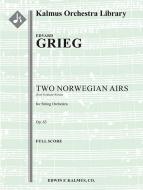
Edvard Grieg (1843-1907) composed his Two Norwegian Airs (Two Nordic Melodies; Zwei Nordische Weisen), Op. 63 in 1895. The first movement, an at-times melancholy and warm orchestration called I folket...
Edvard Grieg (1843-1907) composed his Two Norwegian Airs (Two Nordic Melodies; Zwei Nordische Weisen), Op. 63 in 1895. The first movement, an at-times melancholy and warm orchestration called I folket...
- String Orchestra
- Score
- Edwin F. Kalmus
-
ships within 2-4 weeks
ships within 2-4 weeks