
Richard Strauss
Der Zweikampf "The Duel" o.op. 82, TrV 133 (1884)
Score and Parts for String Quartet
Demo
listen
Richard Strauss
Der Zweikampf "The Duel" o.op. 82, TrV 133 (1884)
Score and Parts for String Quartet
- Instrumentation String Quartet
- Composer Richard Strauss
- Editor C. M. M. Nex F. H. Nex
- Edition Score and Parts Download
- Publisher Clifton Edition
- Order no. STAIN-C841-DL
 immediately available
Download immediately after ordering
incl. tax,
excl. shipping costs
Not available in all countries. Learn more
Description:
Der Zweikampf (1884) "The Duel" is edited by Chris & Frances Nex and published in three versions:
• A Piano Reduction by Chris Nex, including solo parts for Flute and Bassoon (C839).
• A Full score with a set of orchestral parts: 2 Horns in Eb, 2 Trumpets in Bb, Trombone, Timpani and Strings (C840).
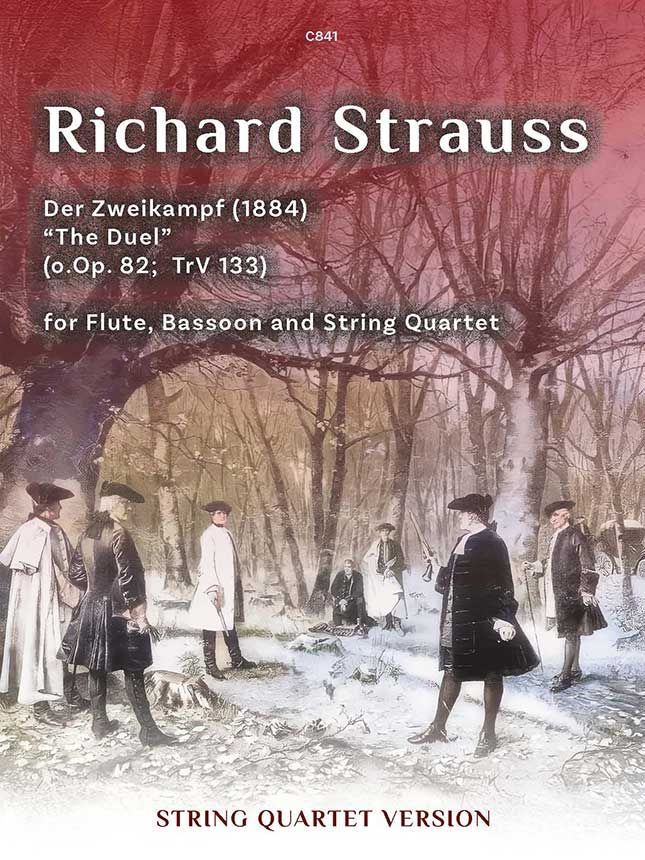
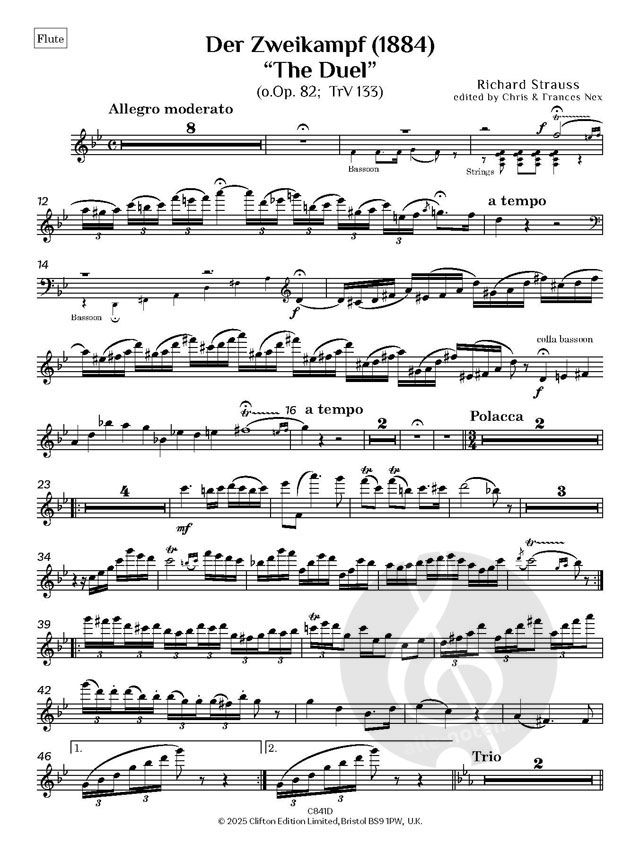
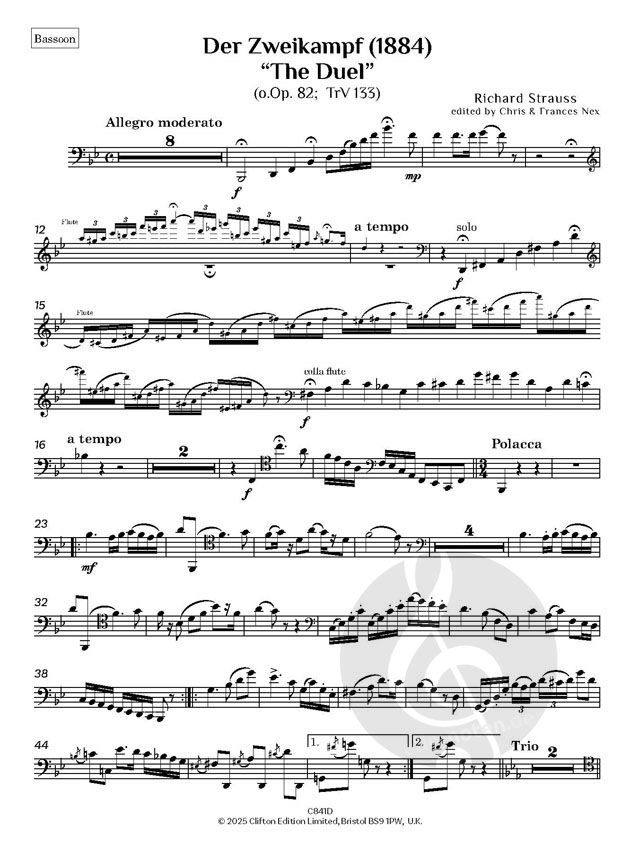
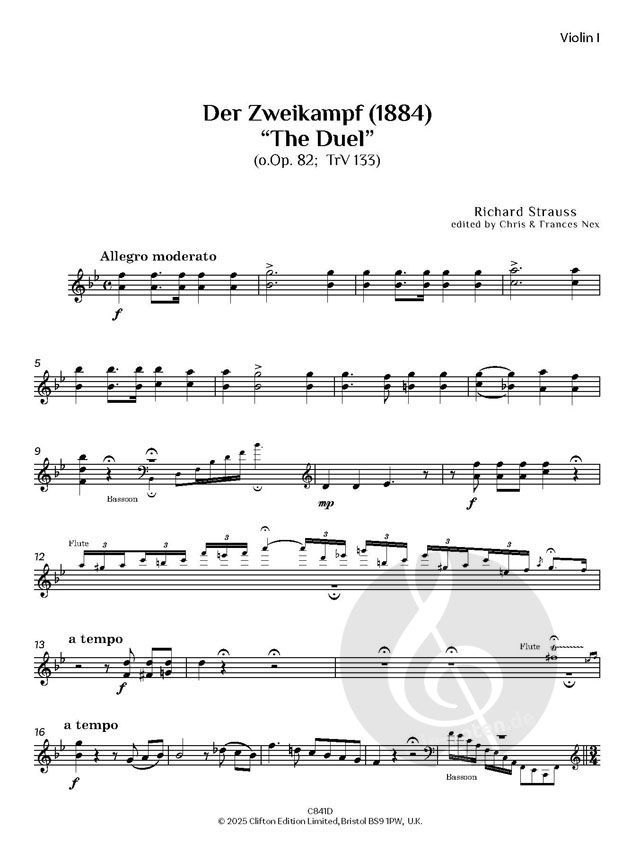
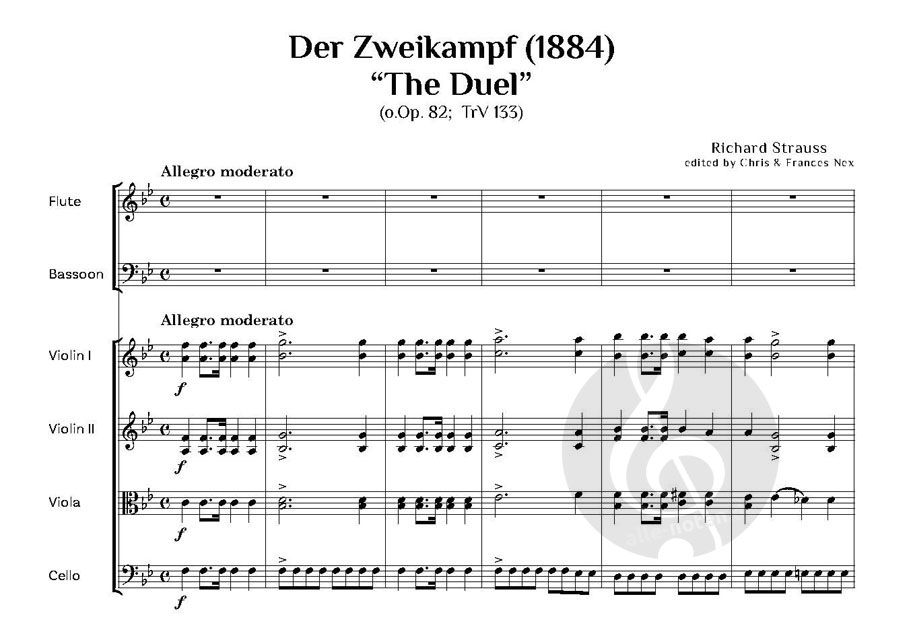
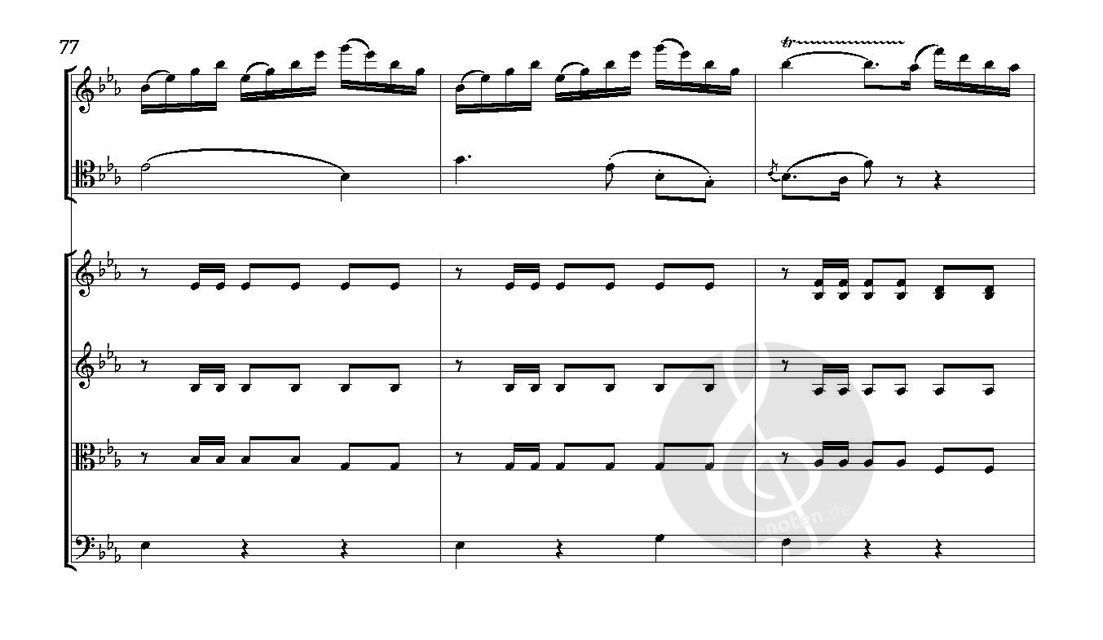
• A version for String Quartet comprising full score, with solo parts for Flute, Bassoon, Violin I, Violin II, Viola and Cello (C841).
We are grateful to the University of Edinburgh Library Centre for Research Collections for providing us with access to a manuscript of this work. At shelf-mark Mus.M.645 lives a set of parts in the hand of an unknown copyist, annotated by John Parr (The Bassoonist of Sheffield), who also wrote a full score and second copies of the Bassoon and Bass parts. The score is dated 1930 and the bassoon part 1934. It is here entitled merely 'duet for flute and bassoon with orchestra', and ascribed to R. Strauss.
We are also grateful for advice from Dr. Christian Wolf of the Richard Strauss Institut in Munich. The work appears in Franz Trenner's Richard Strauss - Werkverzeichnis (TrV 133), the definitive thematic catalogue of Richard Strauss's works and is listed in the Richard Strauss Complete Edition (Richard-Strauss-Ausgabe), published by Schott Music, under Orchesterlieder (Balladen) - Der Zweikampf, TrV 133.
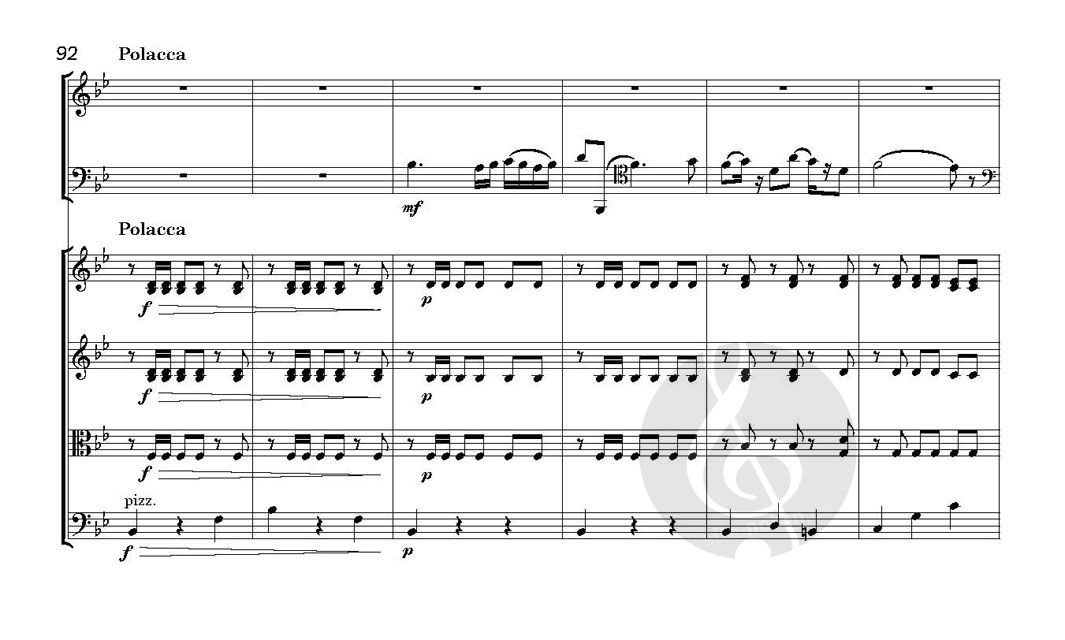
This piece was composed in 1884 by Richard Strauss when he was about 20 years old, alongside his Symphony No. 2 and other early vocal/orchestral works. In editing the work we have corrected a few evident errors and made the dynamics consistent. There was no given tempo indication in some of the parts, but Parr added 'Allegro moderato'. He also suggested the bass pizzicato in most of the Polacca. There are some discrepancies between the Edinburgh score and parts which we have resolved somewhat arbitrarily on musical grounds. The trumpets are in F in the former, but in Bb in the latter; the dance is entitled the French 'Polonaise' in the former, but the Italian 'Polacca' in the latter.
This work is also available for Flute, Bassoon and String Quartet (C841). For this string quartet version, in the few places where the trombone part is significant, these notes have been cued into the cello part.
• A Piano Reduction by Chris Nex, including solo parts for Flute and Bassoon (C839).
• A Full score with a set of orchestral parts: 2 Horns in Eb, 2 Trumpets in Bb, Trombone, Timpani and Strings (C840).
• A version for String Quartet comprising full score, with solo parts for Flute, Bassoon, Violin I, Violin II, Viola and Cello (C841).
We are grateful to the University of Edinburgh Library Centre for Research Collections for providing us with access to a manuscript of this work. At shelf-mark Mus.M.645 lives a set of parts in the hand of an unknown copyist, annotated by John Parr (The Bassoonist of Sheffield), who also wrote a full score and second copies of the Bassoon and Bass parts. The score is dated 1930 and the bassoon part 1934. It is here entitled merely 'duet for flute and bassoon with orchestra', and ascribed to R. Strauss.
We are also grateful for advice from Dr. Christian Wolf of the Richard Strauss Institut in Munich. The work appears in Franz Trenner's Richard Strauss - Werkverzeichnis (TrV 133), the definitive thematic catalogue of Richard Strauss's works and is listed in the Richard Strauss Complete Edition (Richard-Strauss-Ausgabe), published by Schott Music, under Orchesterlieder (Balladen) - Der Zweikampf, TrV 133.
This piece was composed in 1884 by Richard Strauss when he was about 20 years old, alongside his Symphony No. 2 and other early vocal/orchestral works. In editing the work we have corrected a few evident errors and made the dynamics consistent. There was no given tempo indication in some of the parts, but Parr added 'Allegro moderato'. He also suggested the bass pizzicato in most of the Polacca. There are some discrepancies between the Edinburgh score and parts which we have resolved somewhat arbitrarily on musical grounds. The trumpets are in F in the former, but in Bb in the latter; the dance is entitled the French 'Polonaise' in the former, but the Italian 'Polacca' in the latter.
This work is also available for Flute, Bassoon and String Quartet (C841). For this string quartet version, in the few places where the trombone part is significant, these notes have been cued into the cello part.