
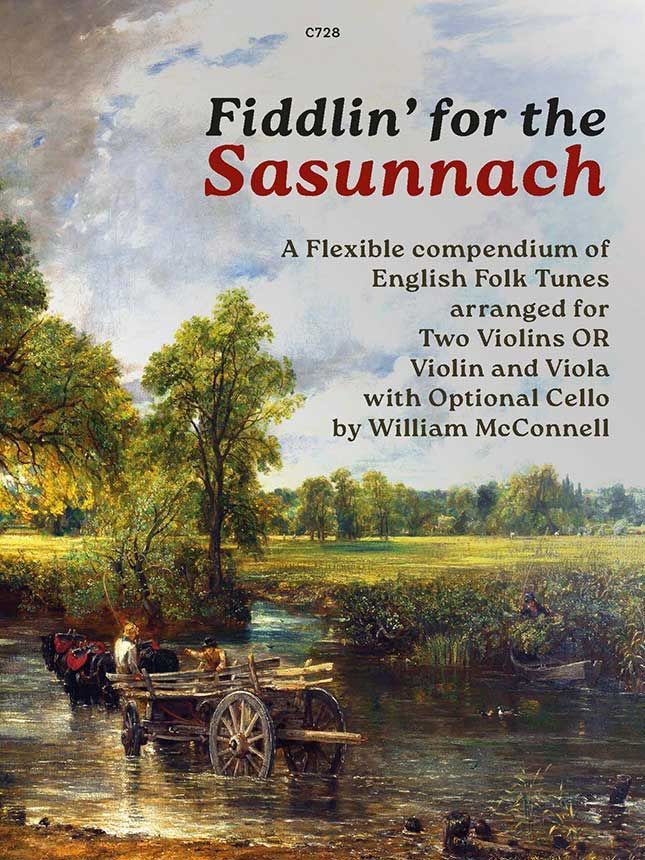
Fiddlin' for the Sasunnach
A Flexible Compendium of English Folk Tunes
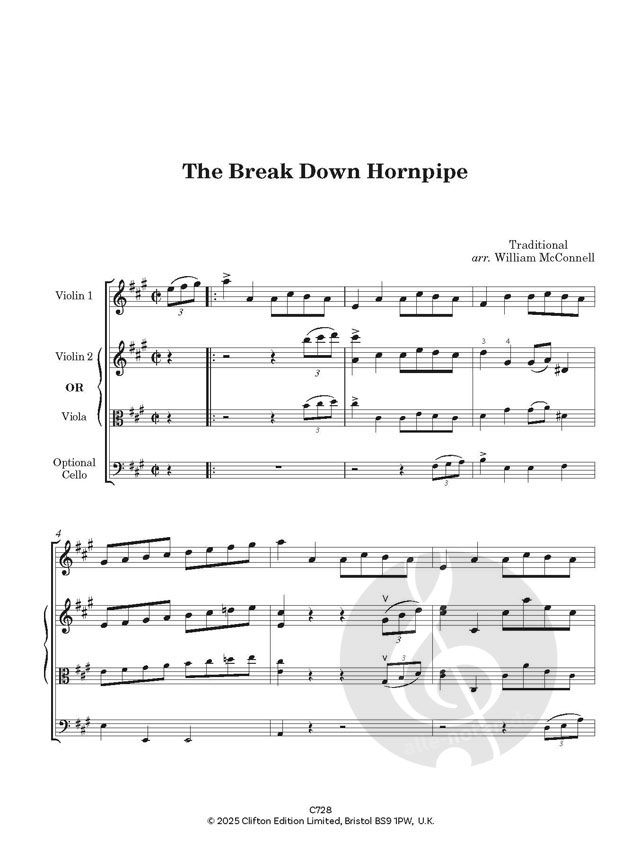
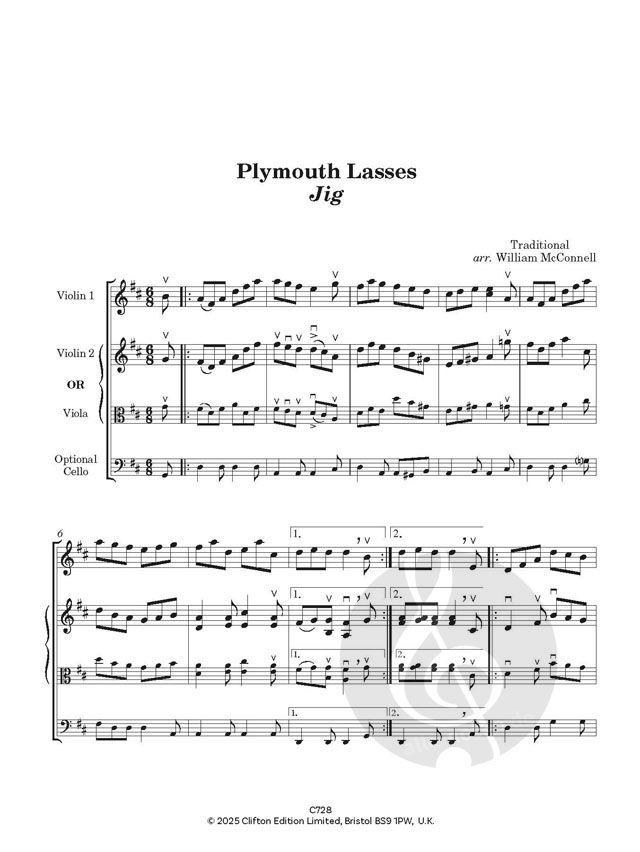
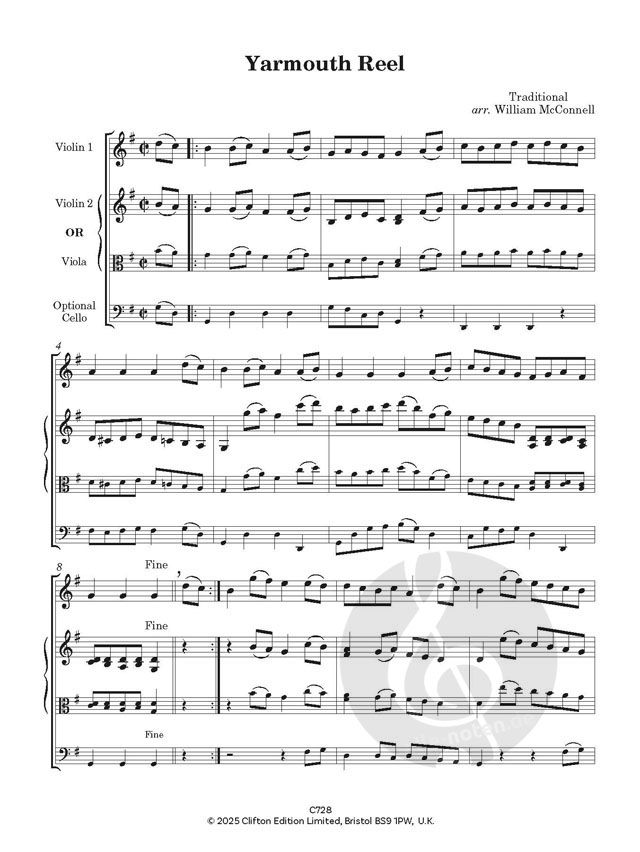
Demo
listen
Fiddlin' for the Sasunnach
A Flexible Compendium of English Folk Tunes
- Instrumentation 2 Violins
- Optional Instrumentation String Trio (Violin, Viola and Cello)
- Editor William McConnell
- Edition Sheet Music Download
- Publisher Clifton Edition
- Order no. STAIN-C728-DL
 immediately available
Download immediately after ordering
incl. tax,
excl. shipping costs
Not available in all countries. Learn more

Description:
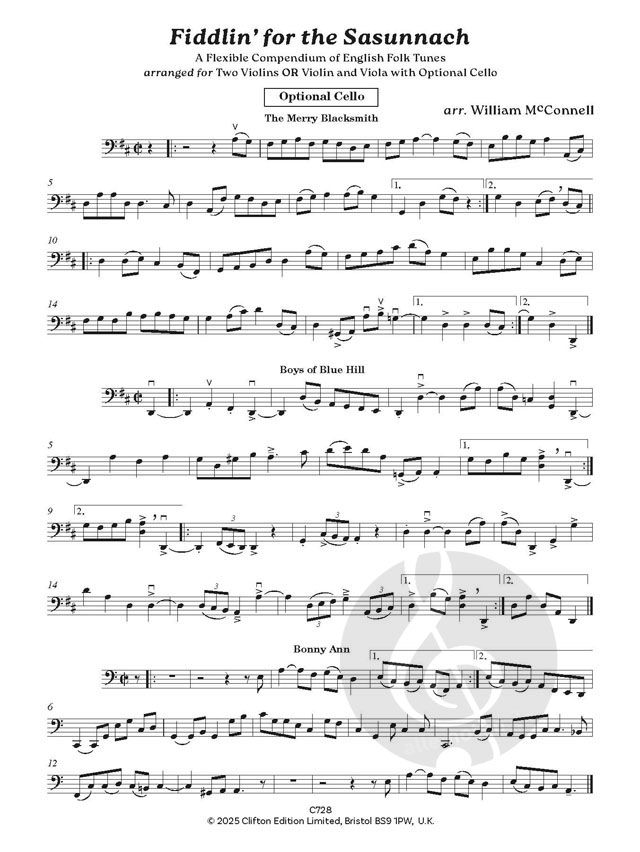
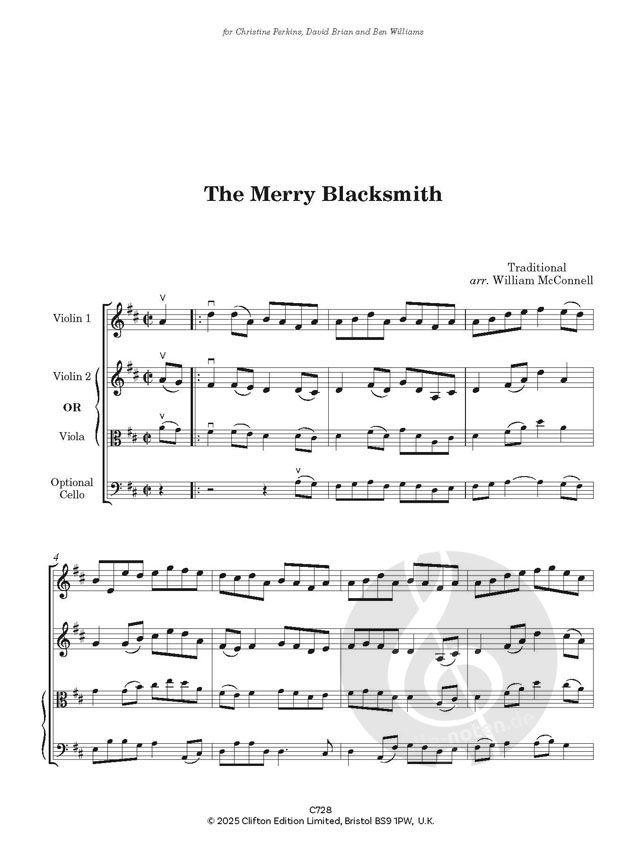
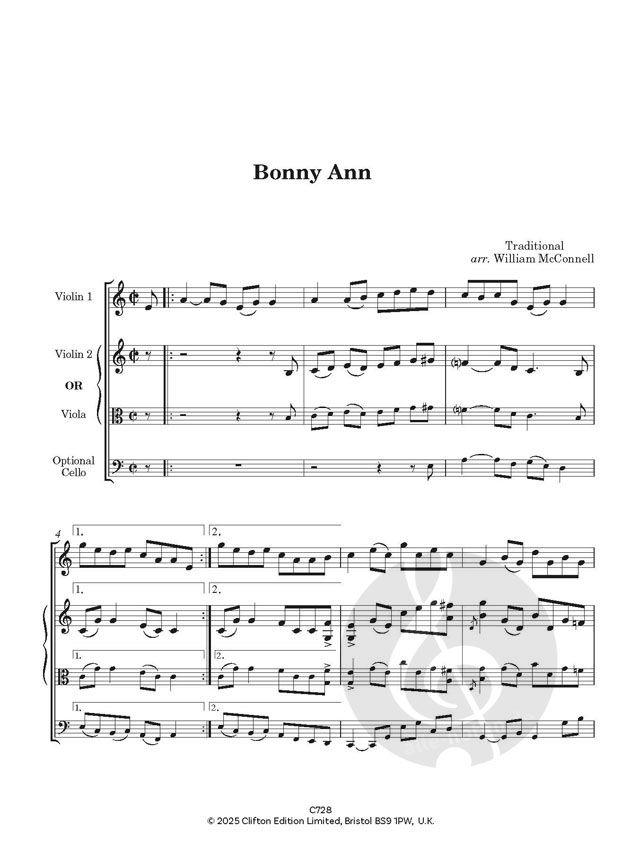
A flexible compendium of English folk tunes arranged for two violins OR violin & viola, with optional cello. Sasunnach means English in Scots Gaelic. Note: Sasunn means England in Scots Gaelic. Sasunnach means English.
Folk music is the product of evolution. It is the composition of the people, and in their music is reflected not only the characteristics of the race, but also the culture of the countryside. English folk music is tuneful and rhythmic, not as mystic in feeling as the Irish, or as plaintive and spirited as the Welsh and Scots, but purely melodic as Plainsong. There is little evidence of any folk harmony, projecting a very real national expression.
The Hornpipe, for example, is peculiar to England and is associated with sailors and the sea. Hornpipes are to be found in the works of Handel and Purcell. The Rant is a mysterious name given to an old English dance dating back to the 16th Century.
Folk music is the product of evolution. It is the composition of the people, and in their music is reflected not only the characteristics of the race, but also the culture of the countryside. English folk music is tuneful and rhythmic, not as mystic in feeling as the Irish, or as plaintive and spirited as the Welsh and Scots, but purely melodic as Plainsong. There is little evidence of any folk harmony, projecting a very real national expression.
The Hornpipe, for example, is peculiar to England and is associated with sailors and the sea. Hornpipes are to be found in the works of Handel and Purcell. The Rant is a mysterious name given to an old English dance dating back to the 16th Century.