
Antonio Vivaldi
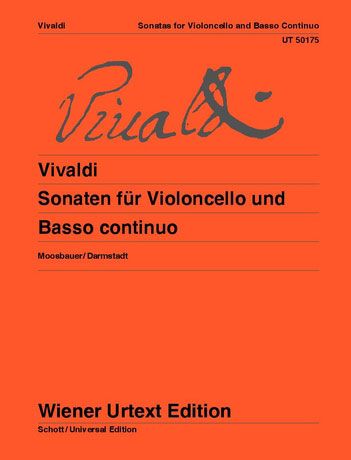
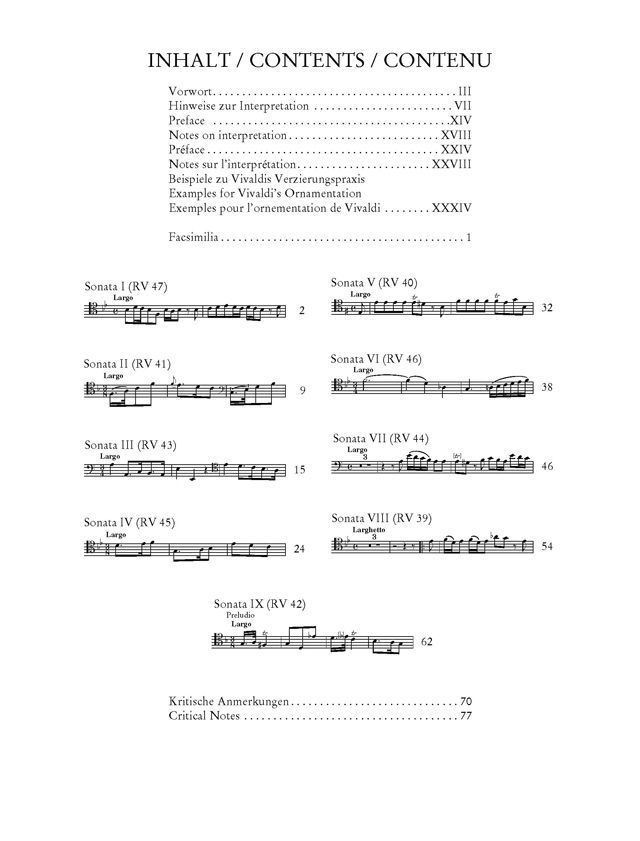
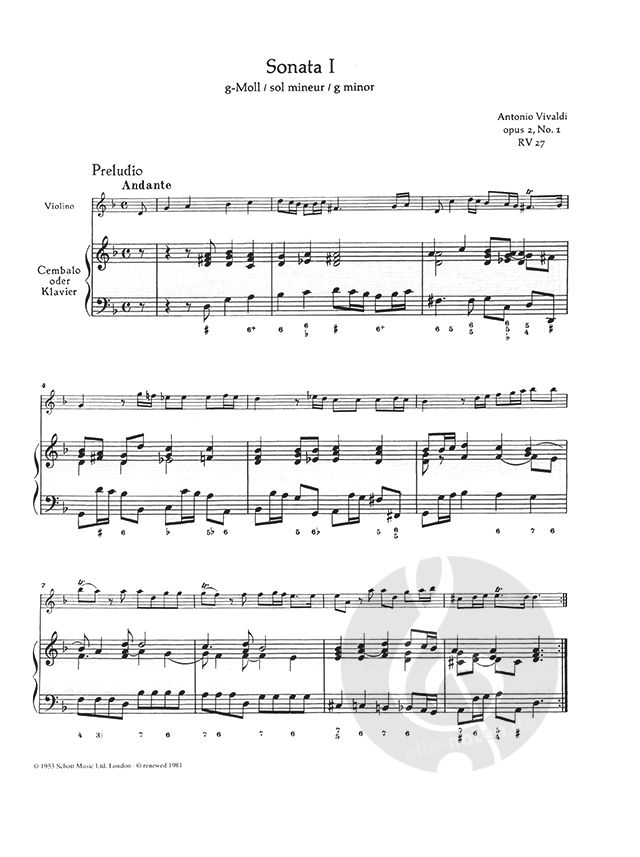
Complete Sonatas for Cello and Basso Continuo
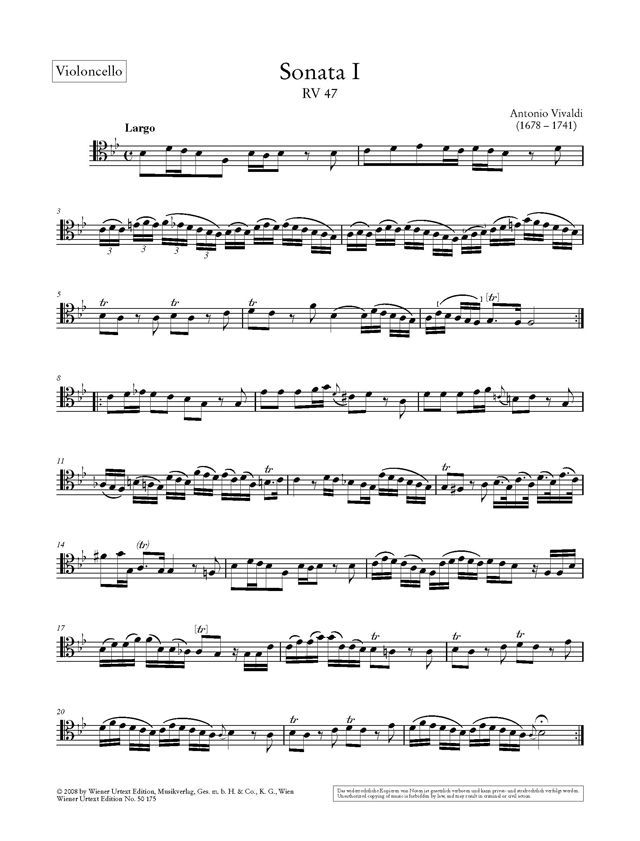
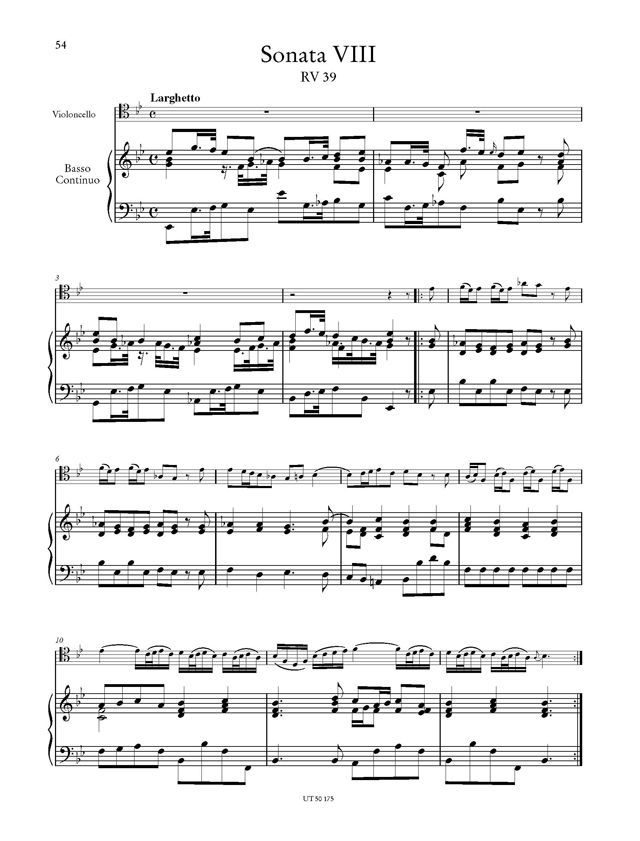
Edited from the sources and realization of the figured bass by Bernhard Moosbauer. Provided with Notes on Interpretation by Gerhardt Darmstadt.

PDF
view
Antonio Vivaldi
Complete Sonatas for Cello and Basso Continuo
Edited from the sources and realization of the figured bass by Bernhard Moosbauer. Provided with Notes on Interpretation by Gerhardt Darmstadt.
- Instrumentation Cello and Harpsichord
- Composer Antonio Vivaldi
- Editor Bernhard Moosbauer
- Series Wiener Urtext Edition
-
Difficulty Level
- Edition Sheet Music (Urtext)
- Publisher Wiener Urtext Edition
- Order no. UT50175
 in stock
ships within 1-2 working days
incl. tax,
excl. shipping costs
Not available in all countries. Learn more

Description:
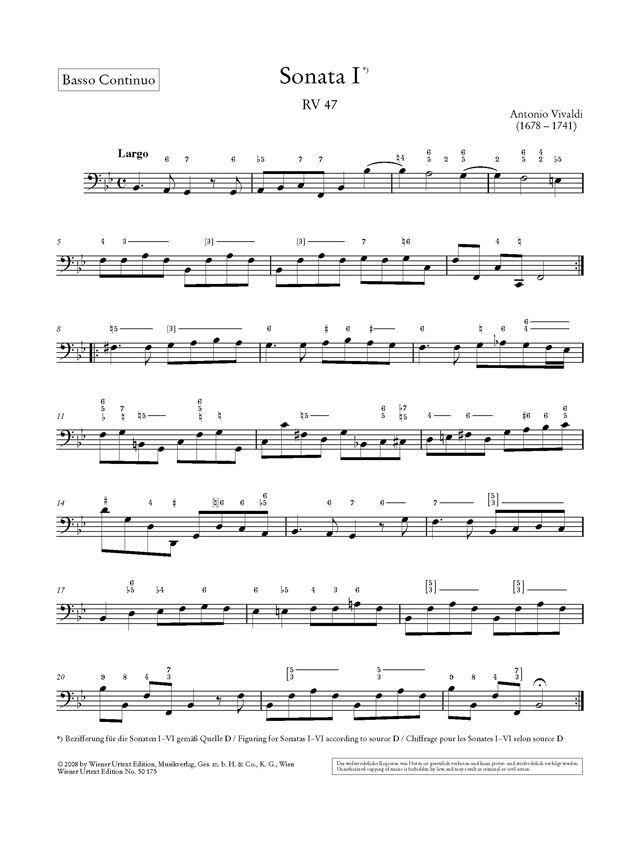
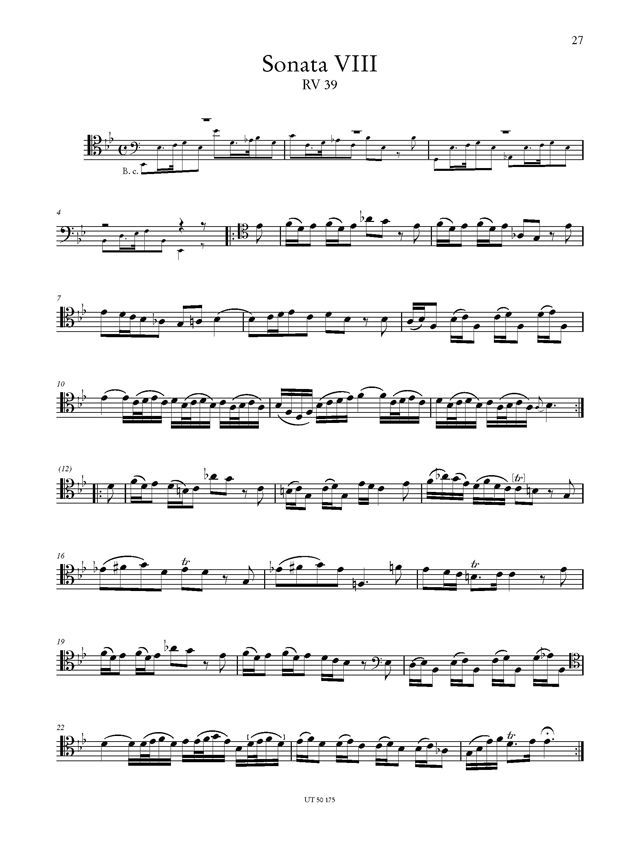
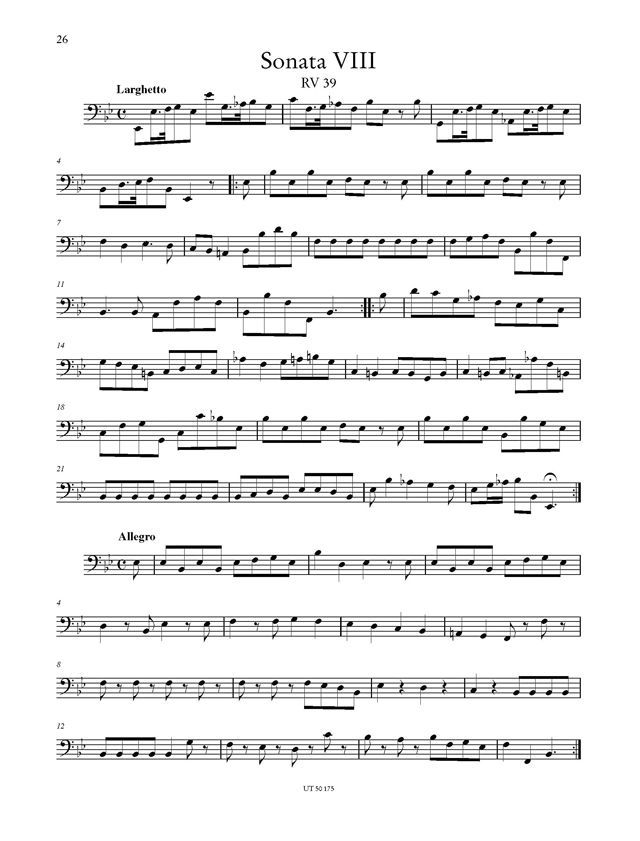
The nine sonatas for violoncello and basso continuo by Antonio Vivaldi are among the best-known cello works of the Baroque era. Thanks to their moderate technical demands, the pieces have a firm place in lessons as well as in private music education. But they are also a focal point of the cello repertoire for the professional early music scene. The new edition of the Wiener Urtext Edition does equal justice to all three target groups. It offers a reliable musical text which is no longer based on the unauthorized Paris first edition by Le Clerc & Boivin, but on a copy from Naples which Vivaldi himself reviewed, as well as two other manuscripts close to the composer from the Bibliothèque Nationale in Paris and the music library of the Counts of Schönborn in Wiesentheid. In addition to the solo part, the edition includes a piano score with suspended basso continuo, which should be very welcome as a basis for music-making for students and amateurs. For the professional continuo player, an unrealized basso continuo part is included, in which the figures of the Paris first edition have been integrated. Although they do not go back to Vivaldi himself, they are a testimony to contemporary basso continuo practice and can serve as a 'hand guide' for the performance of the bass part which Vivaldi left unfigured. Detailed information on performance practice is also provided by Gerhart Darmstadt's notes on interpretation based on historical sources.
Customers rated this product:
Manufacturer Information:
Wiener Urtext Edition
Karlsplatz 6
1010
Wien
Österreich
Other customers also bought:
Ladislav Zelenka
- Cello
- Sheet Music
-
ships within 2-4 working days
Johann Nepomuk Hummel
- Bassoon and Piano
- Piano Reduction
-
in stock
ships within 1-2 working days

Gioacchino Rossini
- Bassoon and Piano
- Sheet Music
- Friedrich Berr
-
in stock
ships within 1-2 working days
- Flute, Violin and Continuo
- Sheet Music
- Manfredo Zimmermann
-
ships within 4-8 working days
- Cello
- Sheet Music (Urtext)
-
in stock
ships within 1-2 working days - Also available for download!
- Violin and Continuo
- Sheet Music
-
in stock
ships within 1-2 working days - Also available for download!
- Violin and Continuo
- Sheet Music
-
in stock
ships within 1-2 working days - Also available for download!
- Cello and Piano
- Sheet Music
- Arpad Pejtsik
-
in stock
ships within 1-2 working days

David Popper
15 leichte, melodisch-harmonische und rhythmische Etüden für Violoncello (1. Lage)
- Cello
- Sheet Music
- Walter Schulz
-
in stock
ships within 1-2 working days
- Cello and Piano
- Sheet Music
- Johannes Palaschko
-
ships within 2-5 working days
- Also available for download!
Louis R. Feuillard
- Cello
- Sheet Music
-
in stock
ships within 1-2 working days - Also available for download!
- Cello
- Sheet Music
-
in stock
ships within 1-2 working days - Also available for download!
- Double Bass
- Sheet Music and CD
-
ships within 3-6 working days
- String Bass Duet
- Sheet Music
-
in stock
ships within 1-2 working days




Jamey Aebersold
- Electric Bass
- Sheet Music and CD
-
in stock
ships within 1-2 working days