
Horst Rudolf Windhagauer
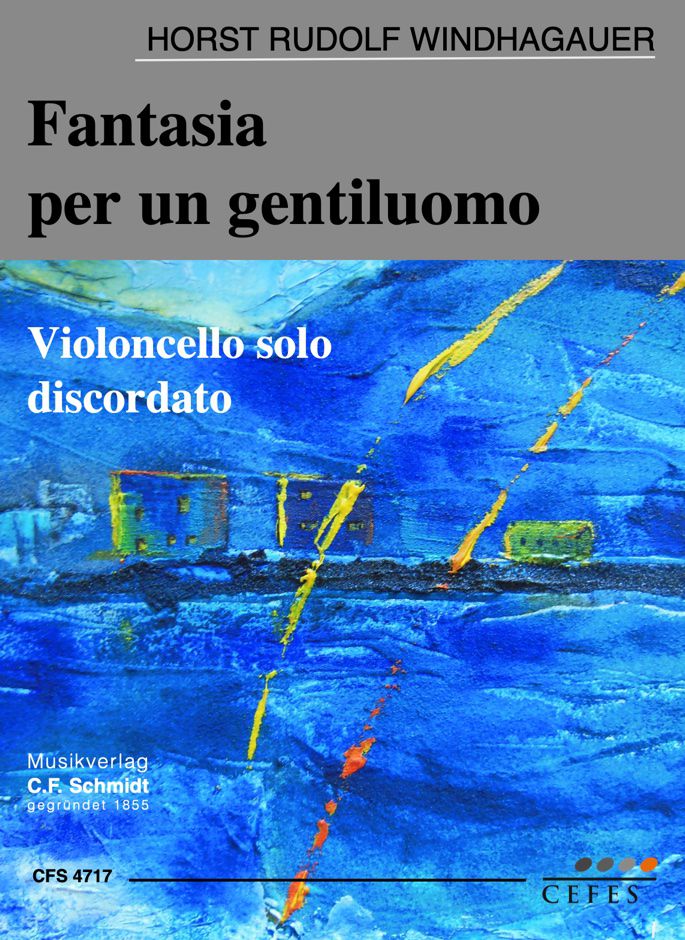
Fantasia per un gentiluomo
Violoncello solo discorda (H-Fis-d-g)
Horst Rudolf Windhagauer
Fantasia per un gentiluomo
Violoncello solo discorda (H-Fis-d-g)
- Instrumentation Cello
- Composer Horst Rudolf Windhagauer
- Series Neue Musik
- Edition Sheet Music
- Publisher C. F. Schmidt
- Order no. CFS4717
 in stock
ships within 1-2 working days
incl. tax,
excl. shipping costs
Not available in all countries. Learn more

Description:
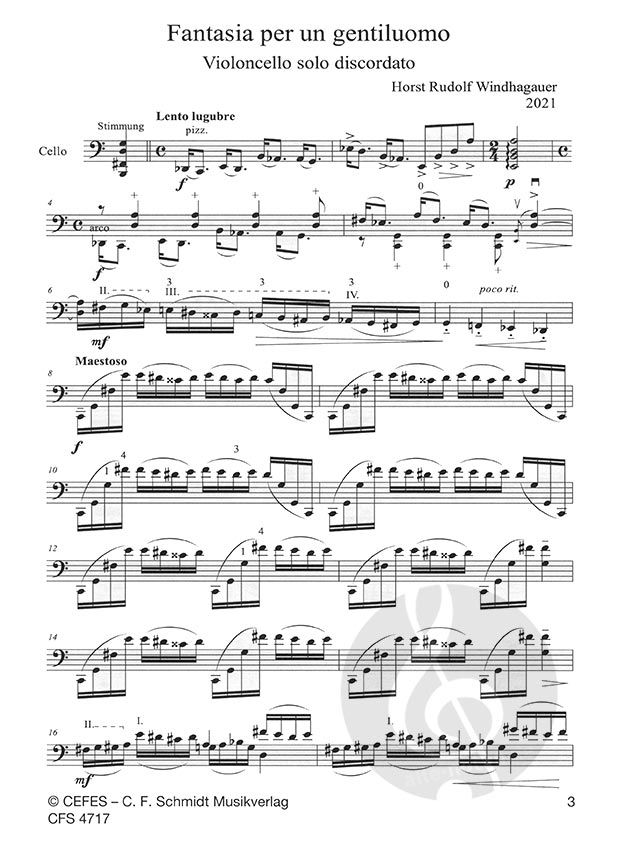
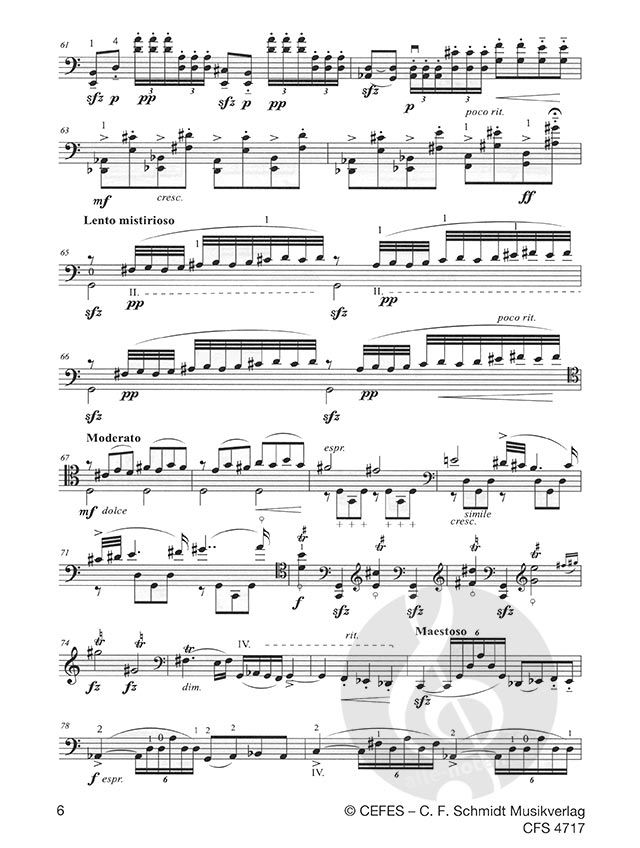
The work combines the tunings in J. S. Bach Suite V. in C minor for cello discordato and Zoltan Kodaly's solo sonata. The cello develops completely new timbres with the given tuning B-F sharp-d-g, reinforces the sonorous sound and at the same time expands the tonal range. There are echoes of Bach's Suite in G major and a trill passage reminiscent of Kodaly's solo sonata. At the center of the fantasia is the Moderato molto elegante, which gives the work its name. By stringing together the short sections, separated only by fermatas, the Fantasia seems like the microcosm of a suite, consisting of nine individual, self-contained musical units.
Horst Rudolf Windhagauer
was born in Gmunden in Upper Austria in 1955 and grew up in Nuremberg. He has lived with his family near Bamberg since 1988. He studied violoncello in Nuremberg and was a teacher at the Musisches Gymnasium in Erlangen until 2021. He is the author of a string symphony, works and arrangements for cello quartet, various chamber music works, and a number of works for school and teaching. Over the years, he has developed a very personal musical language based on baroque models and a moderate late-romantic, post-modern style.
Horst Rudolf Windhagauer
was born in Gmunden in Upper Austria in 1955 and grew up in Nuremberg. He has lived with his family near Bamberg since 1988. He studied violoncello in Nuremberg and was a teacher at the Musisches Gymnasium in Erlangen until 2021. He is the author of a string symphony, works and arrangements for cello quartet, various chamber music works, and a number of works for school and teaching. Over the years, he has developed a very personal musical language based on baroque models and a moderate late-romantic, post-modern style.