
Jean Sibelius
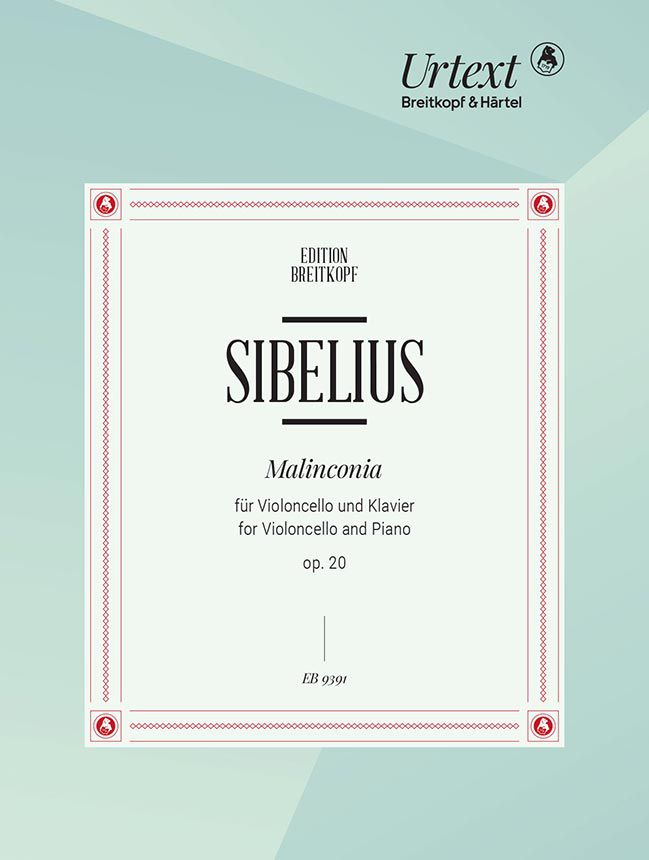
Malinconia op. 20
for Violoncello and Piano
PDF
view
Jean Sibelius
Malinconia op. 20
for Violoncello and Piano
- Instrumentation Cello and Piano
- Composer Jean Sibelius
- Editor Anna Pulkkis
- Edition Piano Score and Part(s)
- Publisher Breitkopf & Härtel
- Order no. EB9391
 in stock
ships within 1-2 working days
incl. tax,
excl. shipping costs
Not available in all countries. Learn more

Description:
Jean Sibelius composed far less music for the cello than for the violin. Malinconia (op. 20) - published in 1911 but composed in 1900 under the title Fantasia - remained his only opus-numbered work exclusively for cello and piano.
The Fantasia for cello and piano, an early stage of Malinconia, was premiered at a soirée in the Solemnity Hall of the University of Helsinki on 12 March 1900 and was given positive press reviews: 'The work, which mainly drew attention with its logical and clear structure, begins with a powerful and substantial cello solo, to which the piano responds with a glimmering series of arpeggiated chords. At the end where the instruments unite in a harmonious, deeply emotional song, the harmonic impression they create is very bright and lovely.'
The autograph manuscript of Fantasia shows that Sibelius omitted a larger passage of music between the present bars 24 and 25 and that he made further revisions to the work, either before the publishing process or in the proofs he read in April 1911 for Breitkopf.
The Fantasia for cello and piano, an early stage of Malinconia, was premiered at a soirée in the Solemnity Hall of the University of Helsinki on 12 March 1900 and was given positive press reviews: 'The work, which mainly drew attention with its logical and clear structure, begins with a powerful and substantial cello solo, to which the piano responds with a glimmering series of arpeggiated chords. At the end where the instruments unite in a harmonious, deeply emotional song, the harmonic impression they create is very bright and lovely.'
The autograph manuscript of Fantasia shows that Sibelius omitted a larger passage of music between the present bars 24 and 25 and that he made further revisions to the work, either before the publishing process or in the proofs he read in April 1911 for Breitkopf.
Customers rated this product:
Manufacturer Information:
Breitkopf & Härtel KG
Walkmühlstraße 52
65195
Wiesbaden
Deutschland
Other customers also bought:
- Cello and Piano
- Sheet Music
-
in stock
ships within 1-2 working days - Also available for download!
- Cello
- Sheet Music
-
in stock
ships within 1-2 working days
- Cello and Piano
- Sheet Music
- Friedrich Hermann
-
in stock
ships within 1-2 working days
Jean Sibelius
- Cello and Piano
- Sheet Music
-
in stock
ships within 1-2 working days
Benjamin Britten
- High Voice and Piano
- Sheet Music
-
in stock
ships within 1-2 working days
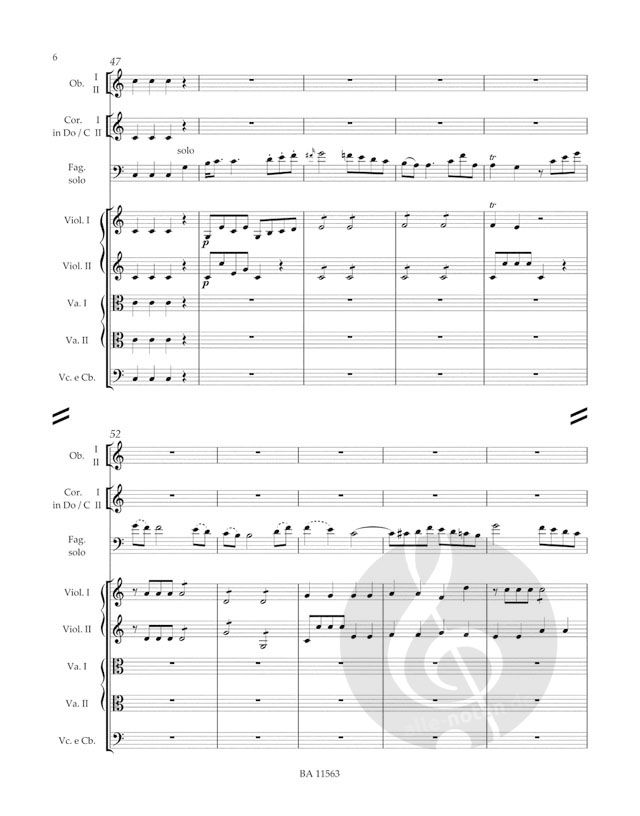
- Bassoon and Orchestra
- Score
-
in stock
ships within 1-2 working days

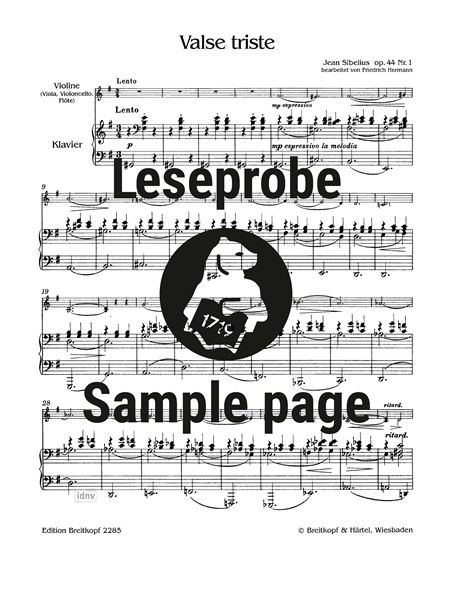
- Violin
- Sheet Music
-
in stock
ships within 1-2 working days - Also available for download!
- Piano
- Sheet Music
-
in stock
ships within 1-2 working days