
Egon Sassmannshaus, Kurt Sassmannshaus
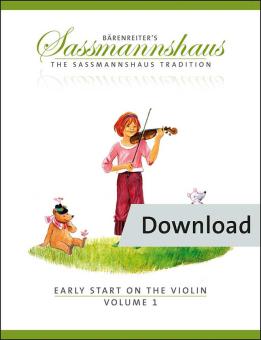
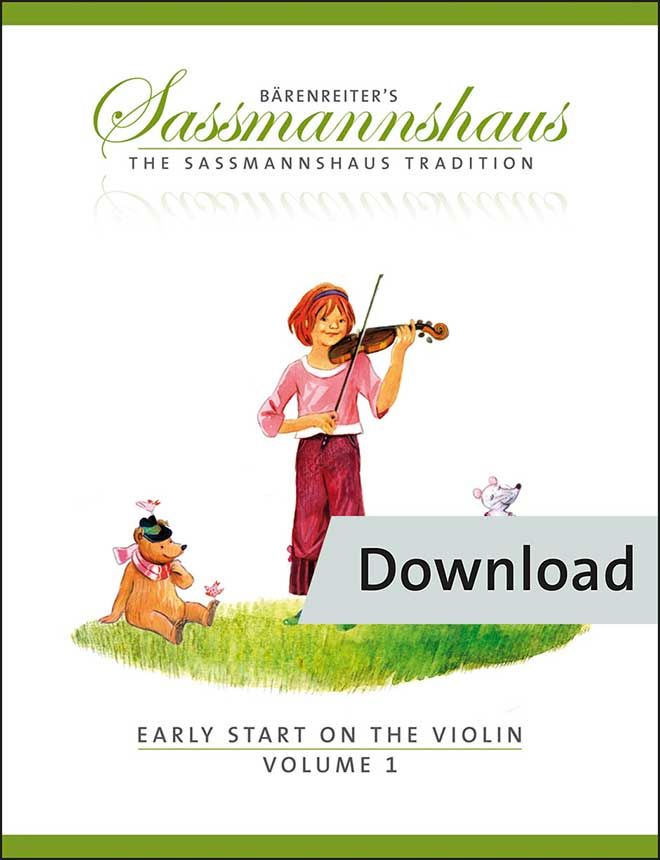
Early Start On The Violin 1
A Violin Method For Children Age Four And Older (With A French Text Supplement)
NEW

Egon Sassmannshaus, Kurt Sassmannshaus
Early Start On The Violin 1
A Violin Method For Children Age Four And Older (With A French Text Supplement)
- Instrumentation Violin
- Composer Egon Sassmannshaus Kurt Sassmannshaus
- Series Bärenreiter's Sassmannshaus
- Edition Sheet Music Download
- Publisher Bärenreiter Verlag
- Order no. BA9666-DL
 immediately available
Download immediately after ordering
incl. tax,
excl. shipping costs
Not available in all countries. Learn more

Description:
This edition consists of the English booklet BA 9676 and a supplement containing French translations of all text sections.
Please also see the German edition of this booklet: BA 9671.
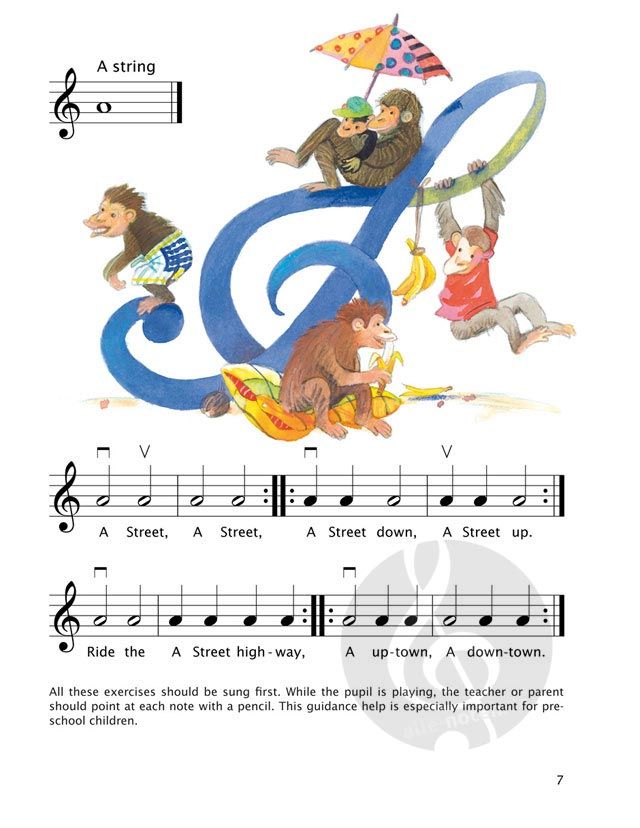
After an introduction featuring open strings and the simplest note values, the "Rufterz" is introduced as a fundamental and orienting interval, particularly with a view to learning clean intonation. Using children’s songs—all of which include lyrics so that the melodic lines can always be understood in their entirety—the first booklet gradually introduces all fingers and note values ranging from whole notes to eighth notes. From the very beginning, special emphasis is placed on reading musical notation; in addition, simple string crossovers and basic bowing techniques are practiced.
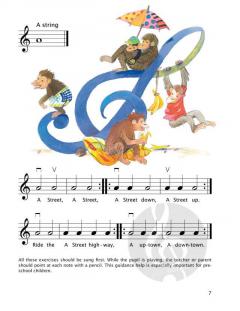
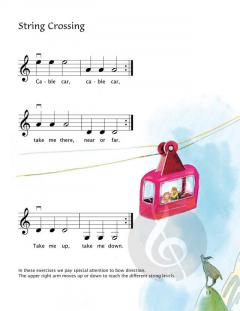
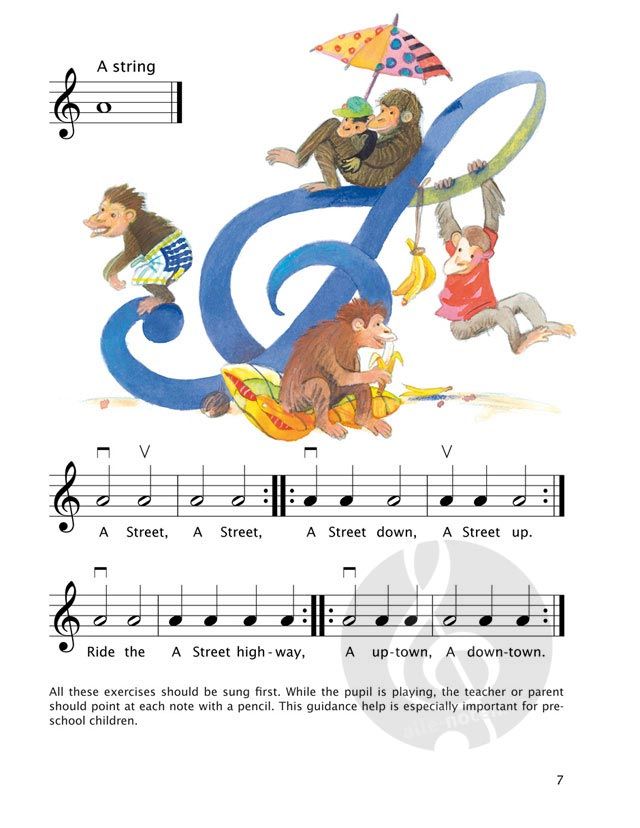
The book, which is designed to be particularly child-friendly with enlarged musical notation and enchanting colorful illustrations, includes a sheet of cut-out note cards that young students can use to invent numerous matching and guessing games and, later on, to learn scales and note names.
As a companion volume, we recommend the first volume of the "Violin Recital Album"" (BA 9668), edited by Kurt and Christoph Sassmannshaus and Melissa Lusk, is an ideal companion volume. It includes 20 pieces in first position with piano accompaniment and an alternative second violin part, allowing young students to showcase their progress in student recitals. The two booklets edited by Egon Saßmannshaus, "Playbook for Strings" (BA 9698) and "Christmas Playbook" (BA 9699), give even the youngest students the opportunity to try their hand at playing in a string ensemble.
A complete piano accompaniment is available for the first volume of the violin method. (BA 10751)
The piano part for each piece serves as a harmonic backdrop: it supports the violinist while leaving them ample room to shine. The piano accompaniment is easy to play—for example, by the violin teacher or a parent.
The Author
Published in 1976 by Egon Saßmannshaus, one of the most experienced and renowned violin teachers in Germany, the violin method "Früher Anfang auf der Geige" (The Standard Work for Young String Players), published in 1976 by Egon Saßmannshaus, one of Germany’s most experienced and renowned violin teachers, quickly became the most popular and best-selling method for beginner violinists in the German-speaking world.
"The Saßmannshaus" is one of the most thorough and well-thought-out violin methods for beginners worldwide.
Other language versions
German: BA 9671
English: BA 9676
Spanish/English: BA 9664
Egon Saßmannshaus’s introductory method for string instruments, published by Bärenreiter, has long been renowned in German- and English-speaking countries and provides a solid early foundation while remaining fun.
An additional workbook in French covering the first two volumes of the "Early Start on the Violin" method is now available to make it more accessible to French speakers. This workbook can be ordered separately or with one of the first two volumes of the violin method at no additional cost. It can also be downloaded below.
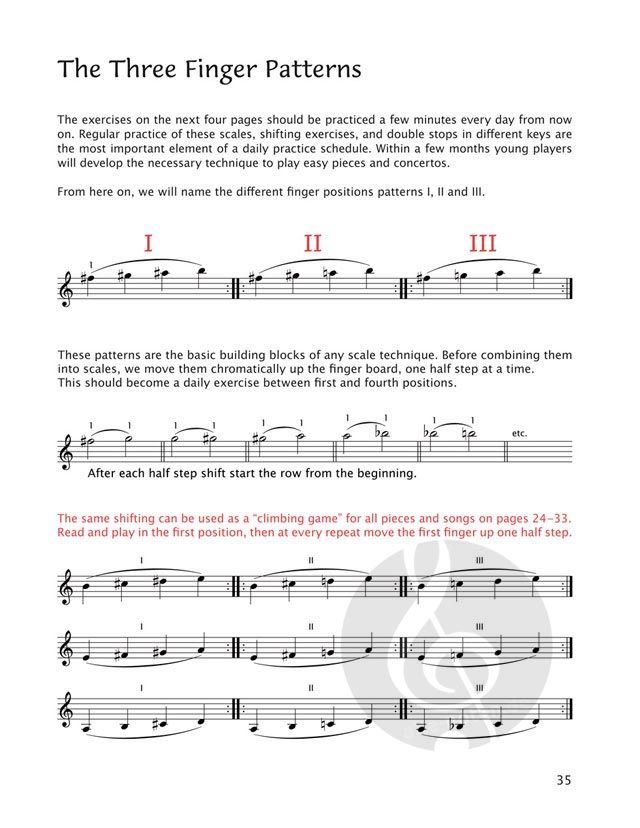
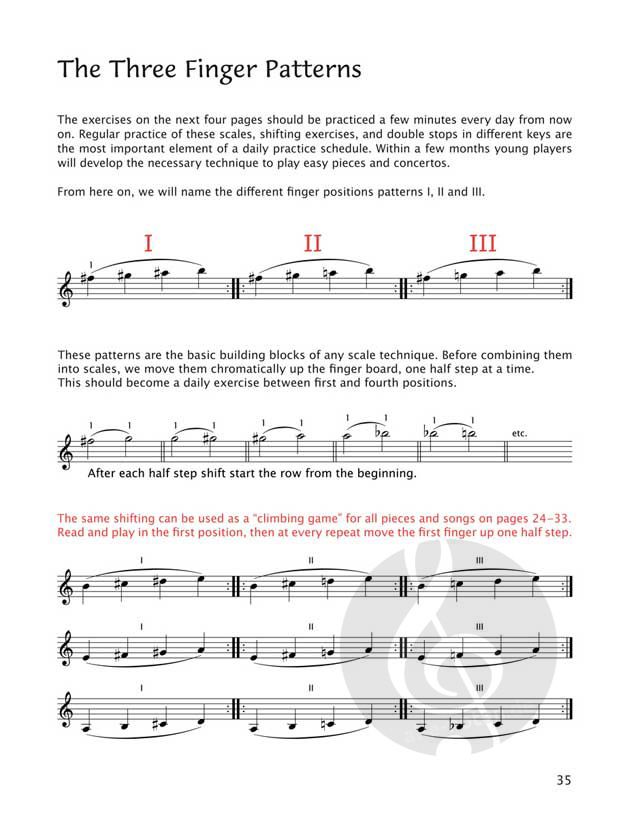
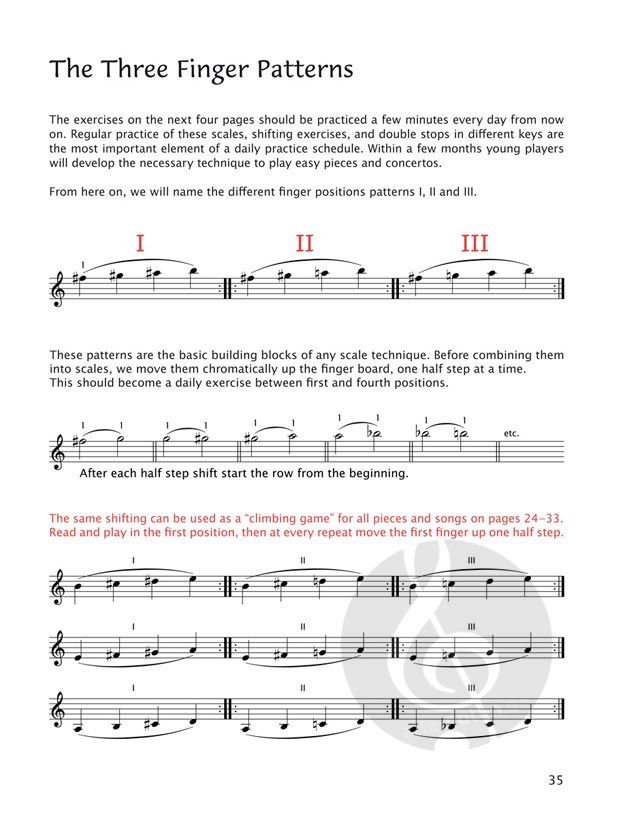
The first volume of "Early Start on the Violin" introduces note reading, note values, and accidentals in a way that is appropriate for young children. Various bowing techniques and the use of the left hand are introduced using well-known children’s songs. The use of various left-hand patterns is one of the most important aspects of the second volume. This technique effectively lays the necessary foundation for early virtuosity.
Please also see the German edition of this booklet: BA 9671.
After an introduction featuring open strings and the simplest note values, the "Rufterz" is introduced as a fundamental and orienting interval, particularly with a view to learning clean intonation. Using children’s songs—all of which include lyrics so that the melodic lines can always be understood in their entirety—the first booklet gradually introduces all fingers and note values ranging from whole notes to eighth notes. From the very beginning, special emphasis is placed on reading musical notation; in addition, simple string crossovers and basic bowing techniques are practiced.
The book, which is designed to be particularly child-friendly with enlarged musical notation and enchanting colorful illustrations, includes a sheet of cut-out note cards that young students can use to invent numerous matching and guessing games and, later on, to learn scales and note names.
As a companion volume, we recommend the first volume of the "Violin Recital Album"" (BA 9668), edited by Kurt and Christoph Sassmannshaus and Melissa Lusk, is an ideal companion volume. It includes 20 pieces in first position with piano accompaniment and an alternative second violin part, allowing young students to showcase their progress in student recitals. The two booklets edited by Egon Saßmannshaus, "Playbook for Strings" (BA 9698) and "Christmas Playbook" (BA 9699), give even the youngest students the opportunity to try their hand at playing in a string ensemble.
A complete piano accompaniment is available for the first volume of the violin method. (BA 10751)
The piano part for each piece serves as a harmonic backdrop: it supports the violinist while leaving them ample room to shine. The piano accompaniment is easy to play—for example, by the violin teacher or a parent.
The Author
Published in 1976 by Egon Saßmannshaus, one of the most experienced and renowned violin teachers in Germany, the violin method "Früher Anfang auf der Geige" (The Standard Work for Young String Players), published in 1976 by Egon Saßmannshaus, one of Germany’s most experienced and renowned violin teachers, quickly became the most popular and best-selling method for beginner violinists in the German-speaking world.
"The Saßmannshaus" is one of the most thorough and well-thought-out violin methods for beginners worldwide.
Other language versions
German: BA 9671
English: BA 9676
Spanish/English: BA 9664
Egon Saßmannshaus’s introductory method for string instruments, published by Bärenreiter, has long been renowned in German- and English-speaking countries and provides a solid early foundation while remaining fun.
An additional workbook in French covering the first two volumes of the "Early Start on the Violin" method is now available to make it more accessible to French speakers. This workbook can be ordered separately or with one of the first two volumes of the violin method at no additional cost. It can also be downloaded below.
The first volume of "Early Start on the Violin" introduces note reading, note values, and accidentals in a way that is appropriate for young children. Various bowing techniques and the use of the left hand are introduced using well-known children’s songs. The use of various left-hand patterns is one of the most important aspects of the second volume. This technique effectively lays the necessary foundation for early virtuosity.
-
Preface
-
Note Values And Symbols
-
Open Strings
-
String Crossing
-
The Cuckoo's Third" With The Second Finger"
-
The Fourth Finger
-
The Triad
-
The First Finger
-
String Crossing And Fingering On Different Strings
-
The Third Finger
-
Accidentals
-
Scales On Two Strings
-
More Exercises, Songs And Stroke Patterns
-
New Stroke Patterns
-
Slurred Notes
-
The Portato Stroke
Here is how the download works:
1 Buy download sheet music
Purchase the download score from our online store
2 Order confirmation with download link
Immediately after completing your order, you will receive an order confirmation by email listing all items. You will find the download link next to each item. You can use this link to start the download right away. Please also check your spam folder if necessary.
Customers rated this product:
Manufacturer Information:
Bärenreiter-Verlag Karl Vötterle GmbH & Co. KG
Heinrich-Schütz-Allee 35-37
34131
Kassel
Deutschland
Related products:
Egon Sassmannshaus
A Violin Method For Children (With A French Text Supplement)
- Violin
- Sheet Music
- Bärenreiter Verlag
-
in stock
ships within 1-2 working days - Also available for download!

Egon Sassmannshaus, Kurt Sassmannshaus
A violin method for children
- Violin
- Sheet Music Download
- Bärenreiter Verlag
-
immediately available
Download immediately after ordering - Instant download
Egon Sassmannshaus, Kurt Sassmannshaus
A violin method for children
- Violin
- Sheet Music
- Bärenreiter Verlag
-
in stock
ships within 1-2 working days - Also available for download!
Egon Sassmannshaus
A Violin Method For Children (With A Spanish Text Supplement)
- Violin
- Sheet Music
- Bärenreiter Verlag
-
ships within 2-4 working days
- Also available for download!
Egon Sassmannshaus, Kurt Sassmannshaus
A violin method for children
- Violin
- Sheet Music
- Bärenreiter Verlag
-
in stock
ships within 1-2 working days - Also available for download!
Egon Sassmannshaus
Elementary duets. Dances and other pieces in various keys
- Violin
- Sheet Music
- Bärenreiter Verlag
-
ships within 2-4 working days
Egon Sassmannshaus
A Violin Method For Children Age Four And Older (With A French Text Supplement)
- Violin
- Sheet Music
- Bärenreiter Verlag
-
ships within 2-4 working days
- Also available for download!
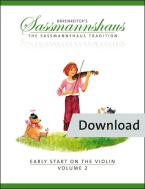
Egon Sassmannshaus, Kurt Sassmannshaus
A Violin Method For Children (With A Spanish Text Supplement)
- Violin
- Sheet Music Download
- Bärenreiter Verlag
-
immediately available
Download immediately after ordering - Instant download
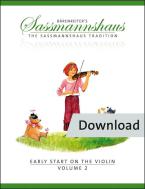
Egon Sassmannshaus, Kurt Sassmannshaus
A violin method for children
- Violin
- Sheet Music Download
- Bärenreiter Verlag
-
immediately available
Download immediately after ordering - Instant download
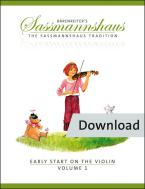
Egon Sassmannshaus, Kurt Sassmannshaus
A Violin Method For Children Age Four And Older (With A Spanish Text Supplement)
- Violin
- Sheet Music Download
- Bärenreiter Verlag
-
immediately available
Download immediately after ordering - Instant download
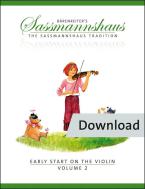

Egon Sassmannshaus, Kurt Sassmannshaus
A Violin Method For Children (With A French Text Supplement)
- Violin
- Sheet Music Download
- Bärenreiter Verlag
-
immediately available
Download immediately after ordering - Instant download