
Vladimir Dyck, Friedrich Gernsheim, Boris Levenson, Sinowi Feldman
Violin Music by Jewish Composers
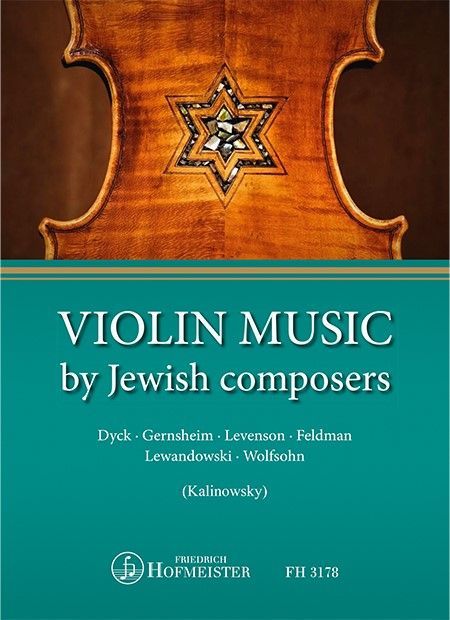
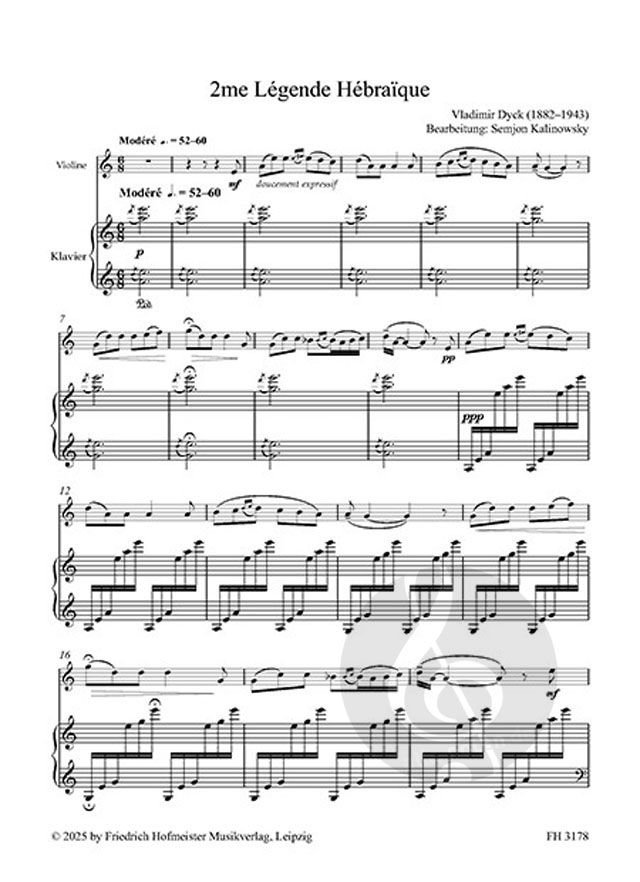
Vladimir Dyck, Friedrich Gernsheim, Boris Levenson, Sinowi Feldman
Violin Music by Jewish Composers
- Instrumentation Violin and Piano
- Composer Vladimir Dyck Friedrich Gernsheim Boris Levenson Sinowi Feldman
- Editor Semjon Kalinowsky
-
Difficulty Level
- Edition Sheet Music
- Publisher Friedrich Hofmeister Musikverlag
- Order no. FH3178
 ships within 2-4 working days
incl. tax,
excl. shipping costs
Not available in all countries. Learn more

Description:
The composers represented in this anthology had very different levels of fame in their day. Some of the works mentioned are now considered lost or obsolete. Their biographies reflect specific characteristics of Jewish life and participation in Western culture in the 19th and first half of the 20th century. These composers, each in their own way, have given their origins and their contact with Jewish traditions their own significance in their work. This anthology may illustrate the extraordinarily large space that Jews have occupied in music in all its branches in modern Europe and America. The great attention paid in the past to the identity of prominent Western European composers of Jewish origin is a theme that first emerged in response to Richard Wagner's famous anti-Jewish pamphlet of 1850.
The concept of "Jewish" music emerged in the public sphere in the mid-19th century, when ideas about the nature of the Jewish nation were emerging among Jews in European countries. Music was an essential part of their religious experience. The intrinsic soundscape inherent in Jewish liturgy found its way into the art music of many composers. Likewise traditional (folk) melodies, songs and dances, some of which were themselves influenced in different ways by their own and foreign cultures.
In the first decades of the 20th century, quite a few arrangements or paraphrases of (...) Jewish folk songs were created.
This happened in the course of the urge of Western and Central European Jews after the Jewish Enlightenment movement and with the rise of Jewish nationalism. (...) The above-mentioned arrangements seemed to the composers to be a suitable medium for rescuing treasures of Jewish musical traditions from oblivion, "domesticating" them in the context of European art music and bringing them closer to the Western public. Thanks in part to the composers presented in this anthology, 'Jewish music' achieved a worldwide public presence in the 20th century.
The concept of "Jewish" music emerged in the public sphere in the mid-19th century, when ideas about the nature of the Jewish nation were emerging among Jews in European countries. Music was an essential part of their religious experience. The intrinsic soundscape inherent in Jewish liturgy found its way into the art music of many composers. Likewise traditional (folk) melodies, songs and dances, some of which were themselves influenced in different ways by their own and foreign cultures.
In the first decades of the 20th century, quite a few arrangements or paraphrases of (...) Jewish folk songs were created.
This happened in the course of the urge of Western and Central European Jews after the Jewish Enlightenment movement and with the rise of Jewish nationalism. (...) The above-mentioned arrangements seemed to the composers to be a suitable medium for rescuing treasures of Jewish musical traditions from oblivion, "domesticating" them in the context of European art music and bringing them closer to the Western public. Thanks in part to the composers presented in this anthology, 'Jewish music' achieved a worldwide public presence in the 20th century.