
Peter Iljitsch Tschaikowsky
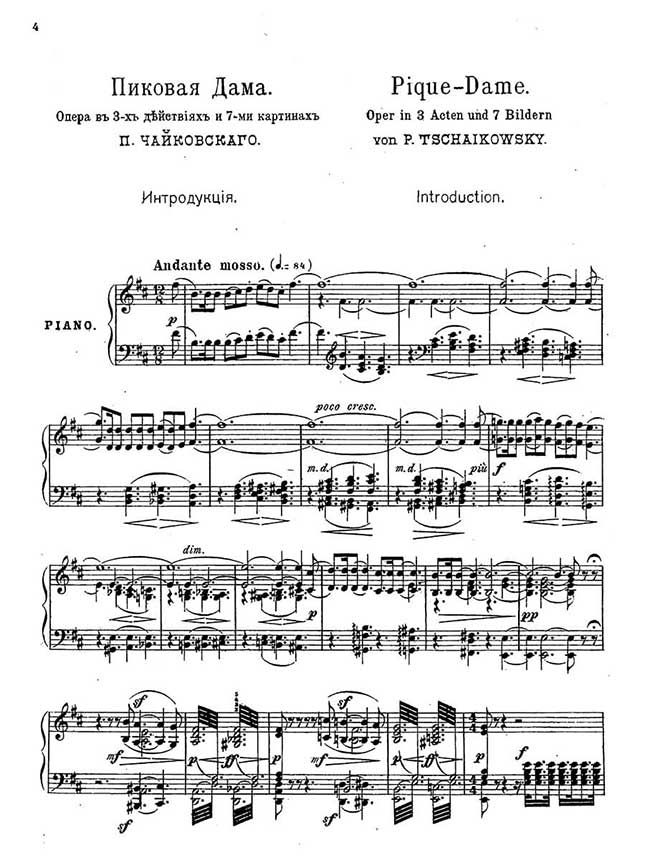
Pique Dame op. 68
vocal score with Russian & German libretto
Peter Iljitsch Tschaikowsky
Pique Dame op. 68
vocal score with Russian & German libretto
- Instrumentation Voice
- Composer Peter Iljitsch Tschaikowsky
- Edition Vocal Score
- Publisher Musikproduktion Höflich
- Order no. MPH81B
 ships within 1-2 weeks

Description:
Preface: It all began with Queen of Spades in 1887, when Modest Tchaikovsky set out to write an opera libretto based on Alexander Pushkin's famous 1833 novella for the rather insignificant composer and theater conductor Nikolai Klenovsky. Pushkin's text, which had already served as an opera model for Fromental Halévy (1850) and Franz von Suppé (1862), is a harrowing description of a mental breakdown, written in a strongly ironic tone and once described by Dostoyevsky as a masterpiece of "cold anger". However, the management of St. Petersburg's Mariinsky Theatre had something completely different in mind when commissioning the work: they were looking for an elaborate "costume drama" that could boast spectacular stage effects and elements of French grand opéra. In order to meet these requirements, Modest Tchaikovsky had to expand and fundamentally change the plot of the novella many times over: The time of the plot was moved from the 19th century to the late 18th century of the Ancien Regime in order to accommodate historical dance interludes and set pieces from the Grand Opéra (including a brief appearance by Tsarina Catherine the Great); the love story between German and Lisa was given greater prominence and the ending was changed to a double suicide of the two lovers (in Pushkin's work, German is committed to a mental hospital, while Lisa enters into a loveless marriage of convenience with a lowly civil servant). The character of Prince Yeletsky has also been added, and the countess has been transformed into a demonic figure who is able to control the destinies of the protagonists even after death. In short, a story full of self-destructive compulsive acts in the spirit of Edgar Allan Poe became an operatic tragedy with strong melodramatic features.