
Graham Sheen
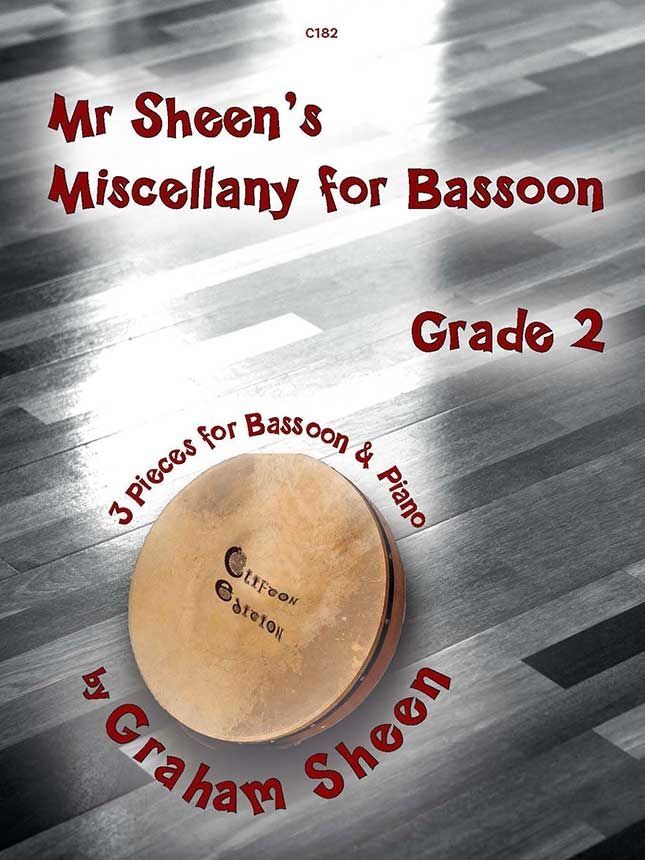
Mr Sheen's Miscellany
Grade 2
Demo
listen
Graham Sheen
Mr Sheen's Miscellany
Grade 2
- Instrumentation Bassoon and Piano
- Composer Graham Sheen
- Edition Sheet Music Download
- Publisher Clifton Edition
- Order no. STAIN-C182-DL
 immediately available
Download immediately after ordering
incl. tax,
excl. shipping costs
Not available in all countries. Learn more

Description:
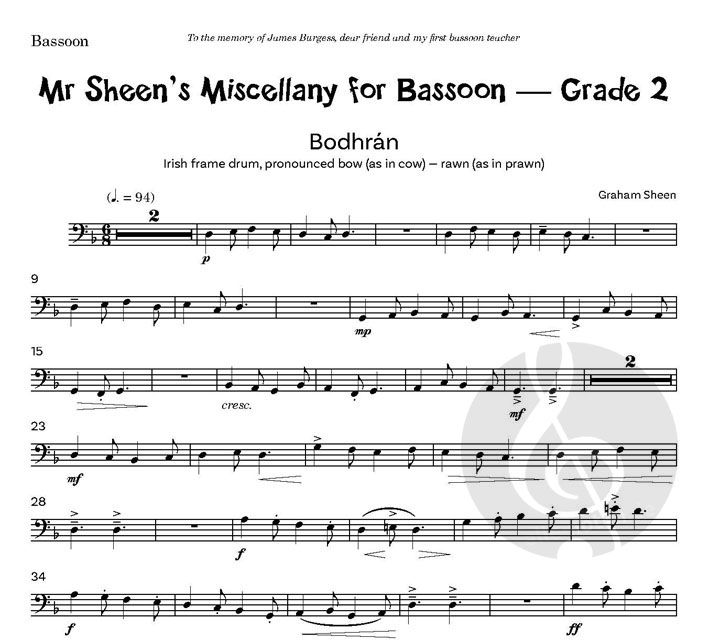
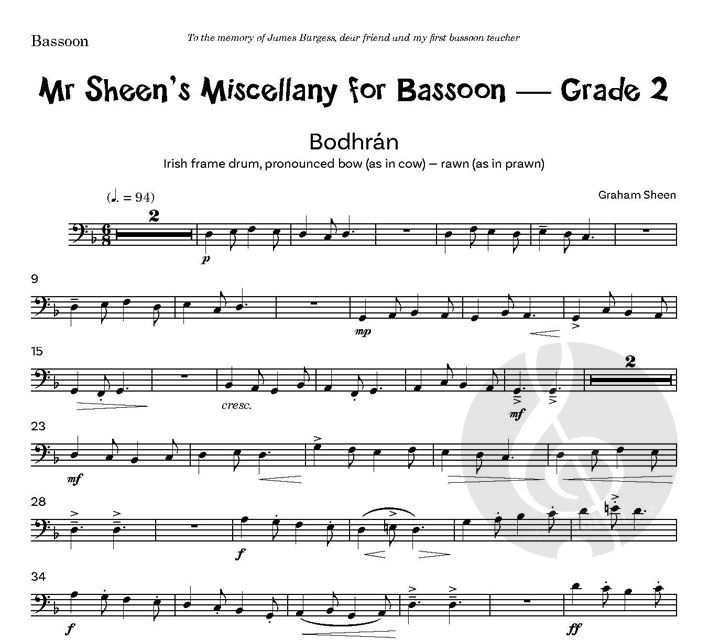
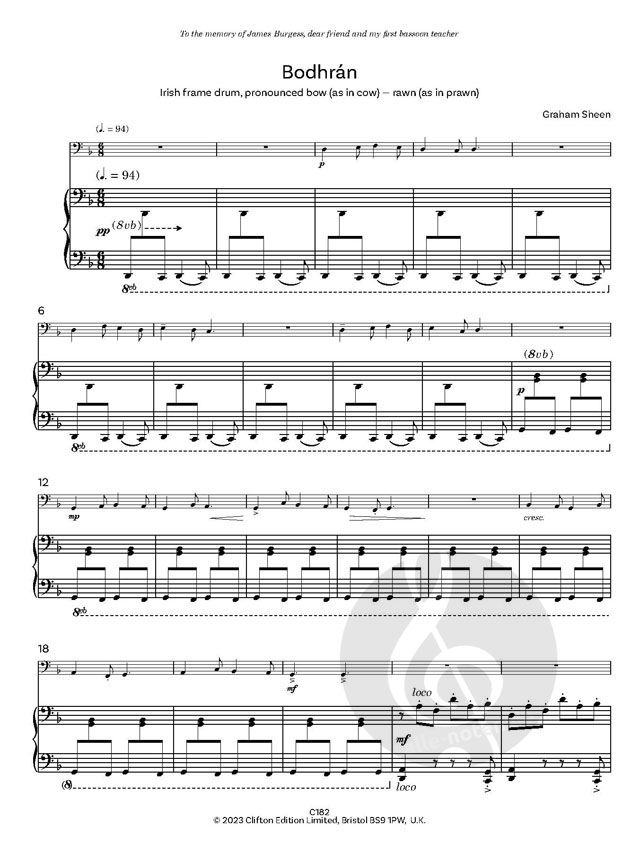
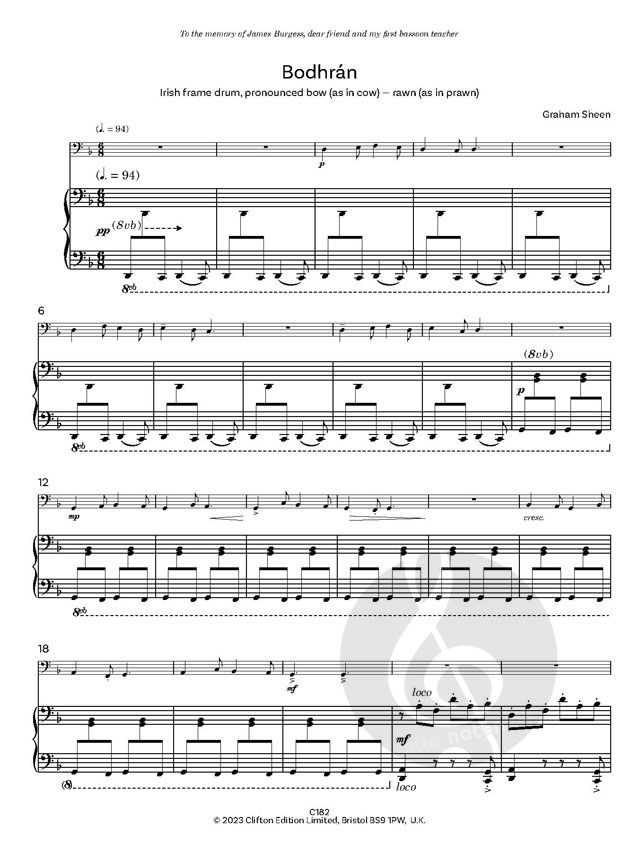
Bodhán:
The melody here is very broken up, so breathe and be ready for the next entry in good time. Don't drag behind the "drum" in the piano part. Notice that only some of the notes are marked staccato.
À la Modal:
Modes are scales based on the white notes of the piano, say, so you won't find a single accidental in this piece. It shows that expression in music depends on more than just the dynamics, that is, how loudly and softly you play. We also need to observe the articulation markings such as staccato, tenuto and the accents on both long and short notes.
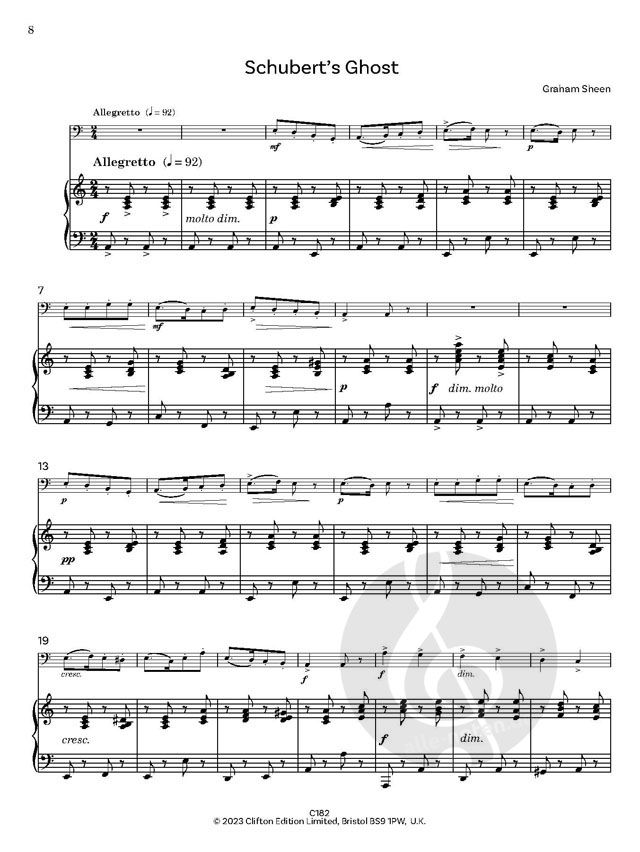
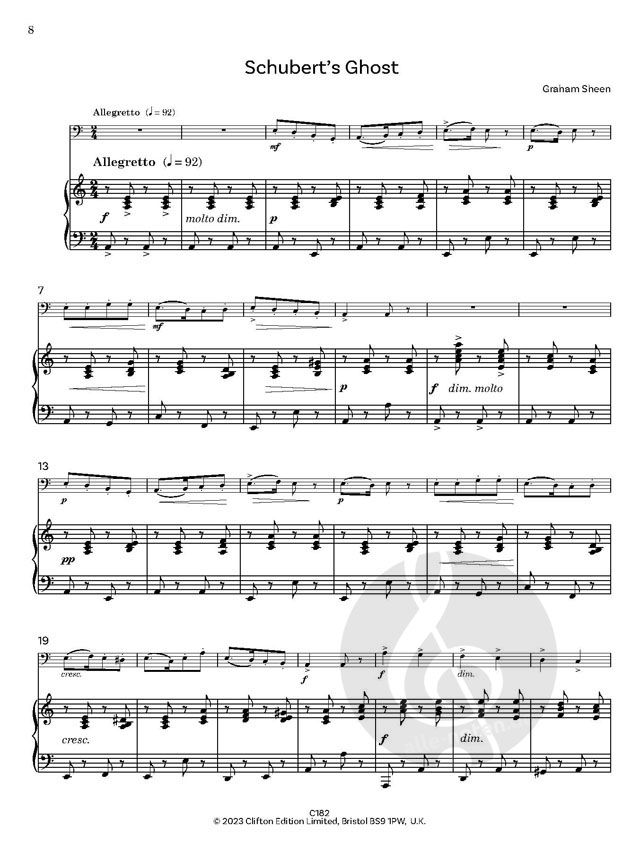
Schubert's Ghost:
Schubert is one of my favourite composers. I hope you enjoy the swing of the dotted rhythms and accents in this little Viennese impression. There are three musical quotations: one from Schubert himself, one from a later Viennese composer, Gustav Mahler and, near the end, the Dies Irae tune which has been used by many composers.
The melody here is very broken up, so breathe and be ready for the next entry in good time. Don't drag behind the "drum" in the piano part. Notice that only some of the notes are marked staccato.
À la Modal:
Modes are scales based on the white notes of the piano, say, so you won't find a single accidental in this piece. It shows that expression in music depends on more than just the dynamics, that is, how loudly and softly you play. We also need to observe the articulation markings such as staccato, tenuto and the accents on both long and short notes.
Schubert's Ghost:
Schubert is one of my favourite composers. I hope you enjoy the swing of the dotted rhythms and accents in this little Viennese impression. There are three musical quotations: one from Schubert himself, one from a later Viennese composer, Gustav Mahler and, near the end, the Dies Irae tune which has been used by many composers.
-
Bodhán
-
À la Modal
-
Schubert’s Ghost
Here is how the download works:
1 Buy download sheet music
Purchase the download score from our online store
2 Order confirmation with download link
Immediately after completing your order, you will receive an order confirmation by email listing all items. You will find the download link next to each item. You can use this link to start the download right away. Please also check your spam folder if necessary.
Customers rated this product:
Manufacturer Information:
Clifton Edition Limited
4 Sneyd Park House, Goodeve Road
BS9 1PW
Bristol
United Kingdom
Related products:
- Bassoon and Piano
- Sheet Music
- Clifton Edition
-
ships within 2-4 weeks
- Also available for download!