
Wolfgang Amadeus Mozart
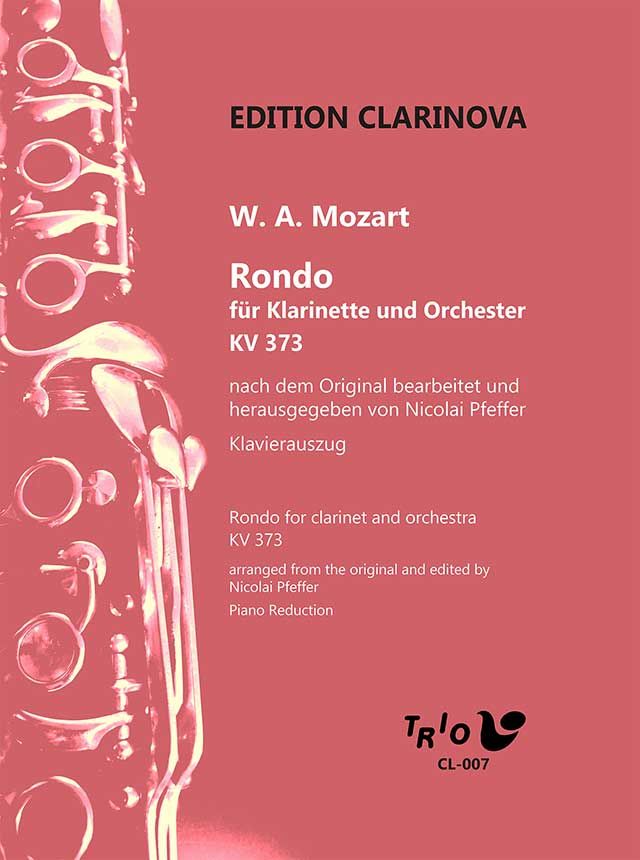
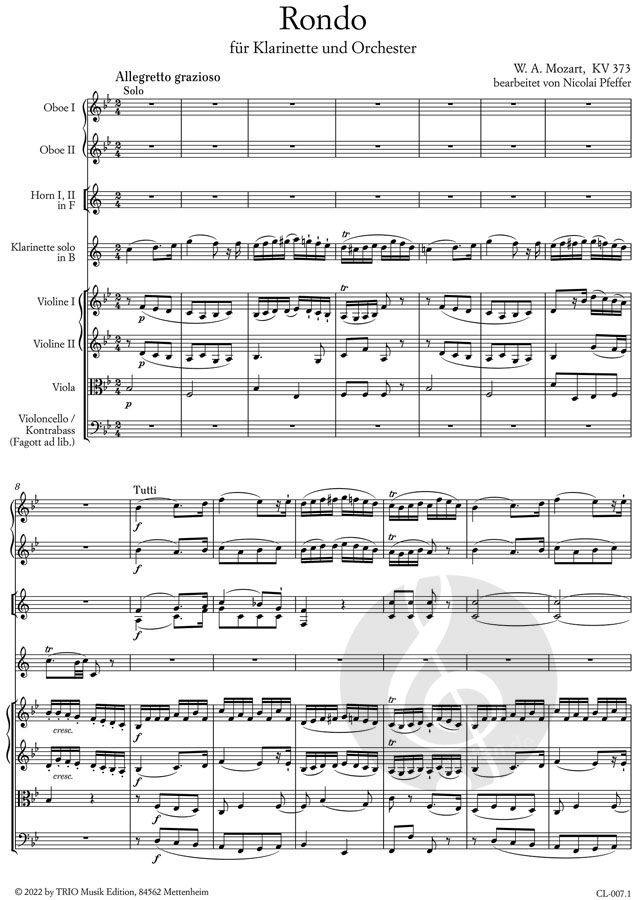
Rondo KV 373
for clarinet and orchestra
Video
view
Wolfgang Amadeus Mozart
Rondo KV 373
for clarinet and orchestra
- Instrumentation Clarinet and Orchestra
- Composer Wolfgang Amadeus Mozart
- Editor Nicolai Pfeffer
- Edition Piano reduction with part(s)
- Publisher Trio Musik Edition
- Order no. TRIO-CL007-KA

Description:
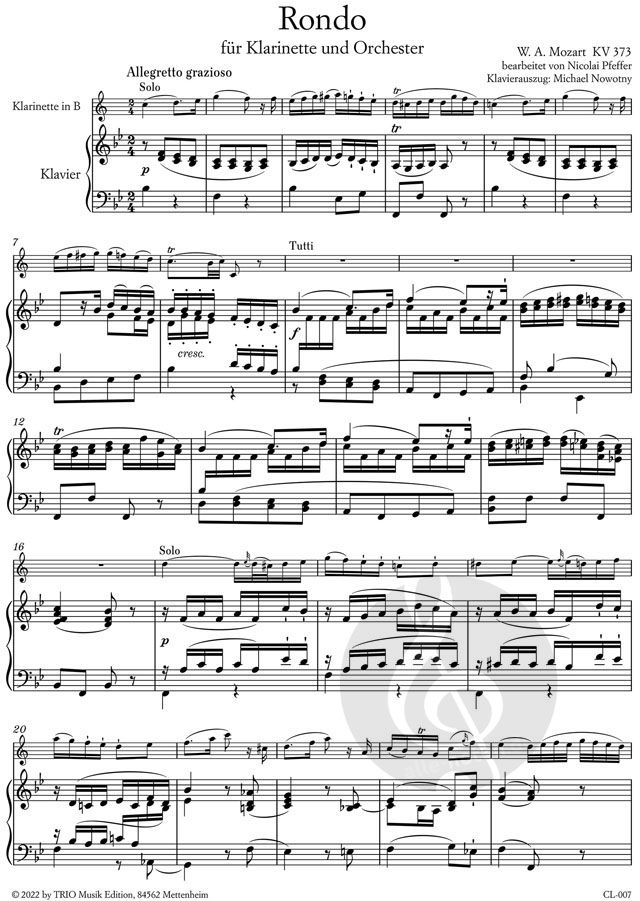
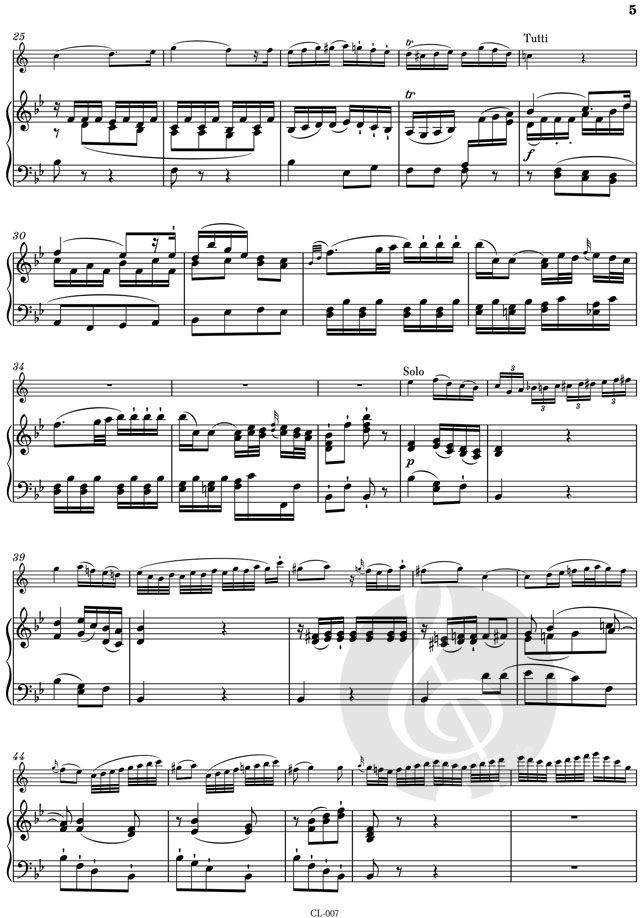
Mozart's Rondo in C major KV 373 is very familiar to film lovers. In the original version for violin and orchestra, it appears in Hollywood productions such as "Schindler's List", "Titanic" or "True Lies". With the Orchestra della Toscana, conducted by Markus Stenz, Nicolai Pfeffer has recorded the charming miniature for the first time on CD in his own arrangement for clarinet and orchestra, which is now also available in our Clarinova series as a version for clarinet and piano.
Mozart composed the Rondo in 1781 for a musical academy of the Salzburg Court Orchestra in Vienna. In just one night, he devised a lively, catchy melody that recurs as a refrain between two couplets. The solo instrument has ample opportunity here to display its vocal qualities and revel in refined rhythms. About 150 years later, the Argentine tango star Carlos Gardel borrowed a motif from the second couplet, which has since led a second life in the popular song "Por una cabeza". As a delightful miniature, the Rondo KV 373 works just as well in our arrangement as an encore - due to the large ambitus of the clarinet - as it does as an independent concert piece with orchestra or piano.
Mozart composed the Rondo in 1781 for a musical academy of the Salzburg Court Orchestra in Vienna. In just one night, he devised a lively, catchy melody that recurs as a refrain between two couplets. The solo instrument has ample opportunity here to display its vocal qualities and revel in refined rhythms. About 150 years later, the Argentine tango star Carlos Gardel borrowed a motif from the second couplet, which has since led a second life in the popular song "Por una cabeza". As a delightful miniature, the Rondo KV 373 works just as well in our arrangement as an encore - due to the large ambitus of the clarinet - as it does as an independent concert piece with orchestra or piano.
Customers rated this product:
Manufacturer Information:
Trio Musik Edition
Mühldorfstraße 2
84533
Marktl
Deutschland
Related products:
- Clarinet and Orchestra
- Score
- Nicolai Pfeffer
- Trio Musik Edition
-
 ships within 1-2 weeks
- Clarinet and Orchestra
- Instrumental Part: Oboe 1
- Nicolai Pfeffer
- Trio Musik Edition
-
ships within 1-2 weeks
- Clarinet and Orchestra
- Instrumental Part: Oboe 2
- Nicolai Pfeffer
- Trio Musik Edition
-
ships within 1-2 weeks
- Clarinet and Orchestra
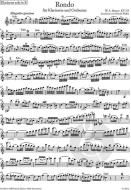
- Instrumental Part: Clarinet
- Nicolai Pfeffer
- Trio Musik Edition
-
ships within 1-2 weeks
- Clarinet and Orchestra
- Instrumental Parts: Horn 1 & Horn 2
- Nicolai Pfeffer
- Trio Musik Edition
-
ships within 1-2 weeks
- Clarinet and Orchestra
- Instrumental Part: Violin 1
- Nicolai Pfeffer
- Trio Musik Edition
-
ships within 1-2 weeks
- Clarinet and Orchestra
- Instrumental Part: Violin 2
- Nicolai Pfeffer
- Trio Musik Edition
-
ships within 1-2 weeks
- Clarinet and Orchestra
- Instrumental Part: Viola
- Nicolai Pfeffer
- Trio Musik Edition
-
ships within 1-2 weeks
- Clarinet and Orchestra
- Instrumental Parts: Cello and Double Bass
- Nicolai Pfeffer
- Trio Musik Edition
-
ships within 1-2 weeks