
Mel Bonis
Sonate op. 112
for flute and piano
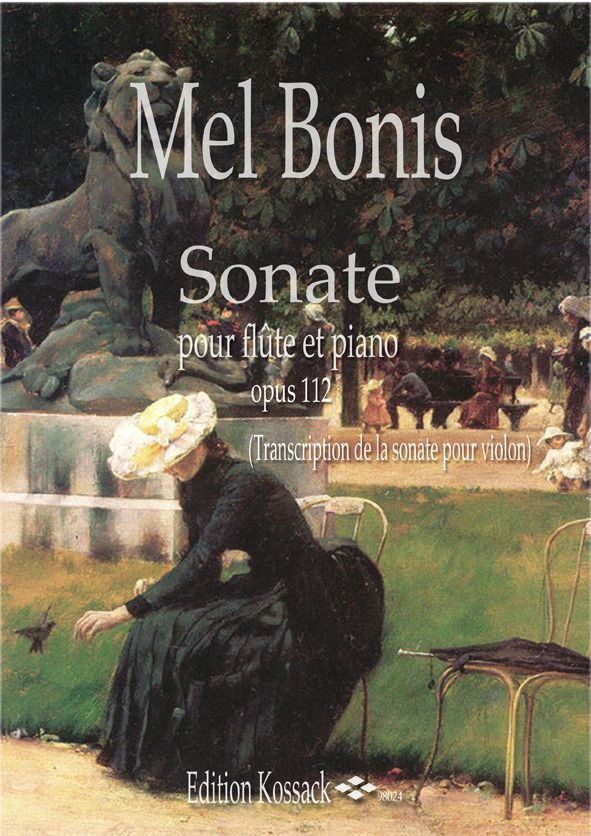
Mel Bonis
Sonate op. 112
for flute and piano
- Instrumentation Flute and Piano
- Composer Mel Bonis
- Edition Sheet Music
- Publisher Edition Kossack
- Order no. KOSSACK98024
 ships within 4-8 working days
incl. tax,
excl. shipping costs
Not available in all countries. Learn more

Description:
Transcription of the Sonata for violin and piano.
This edition offers a transcription of Mel Bonis's Violin Sonata for flute and piano, a project that required extensive research, detailed transcription and practical testing in performance contexts. The editorial decisions in this edition were guided by both practical and stylistic considerations.
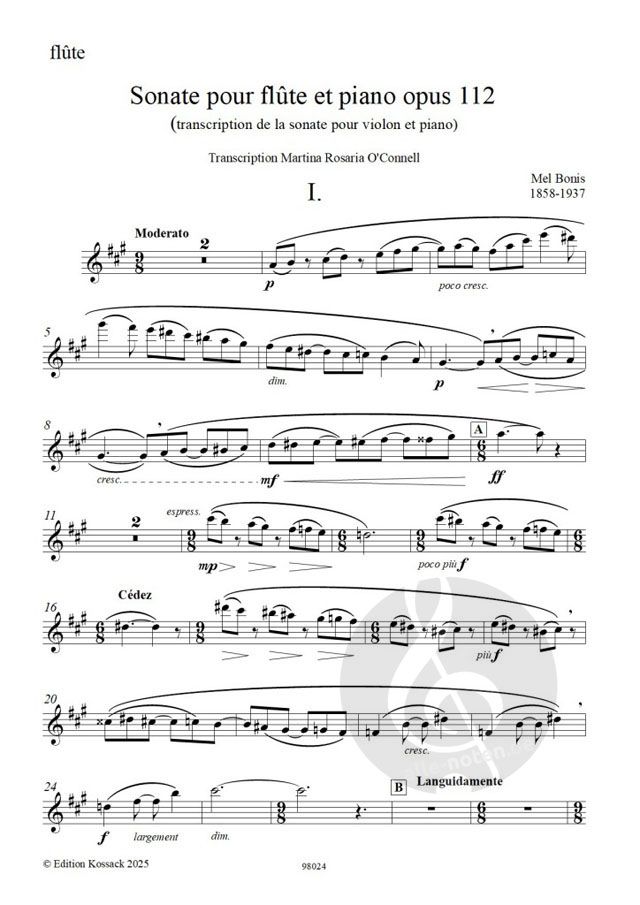
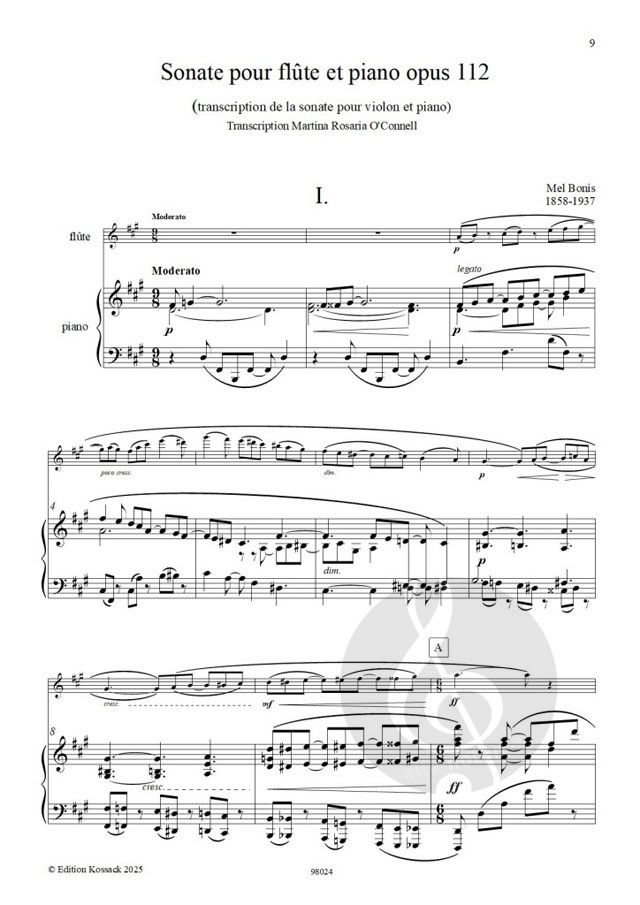
Among the more than 300 works by Mel Bonis, the Violin Sonata in F sharp minor, Op. 112, stands out as her most mature contribution to the sonata genre. It was composed in the last years of her life and was published by Maurice Senart in 1923. The work testifies to her mastery of large-scale chamber music, in which she combines personal expressiveness with structural rigor. Bonis had already written two sonatas - her flute sonata (1904) and cello sonata (1905) - before she turned to the violin. The violin sonata fully adopts the cyclical technique influenced by her teacher César Franck, with thematic and harmonic connections linking its four movements. In 1998, Eberhard Mayer described the opening Moderato as a style that "interweaves rhythmic complexity, chromaticism and deeply haunting, melancholy themes, ultimately expressing a pure sense of melancholy."
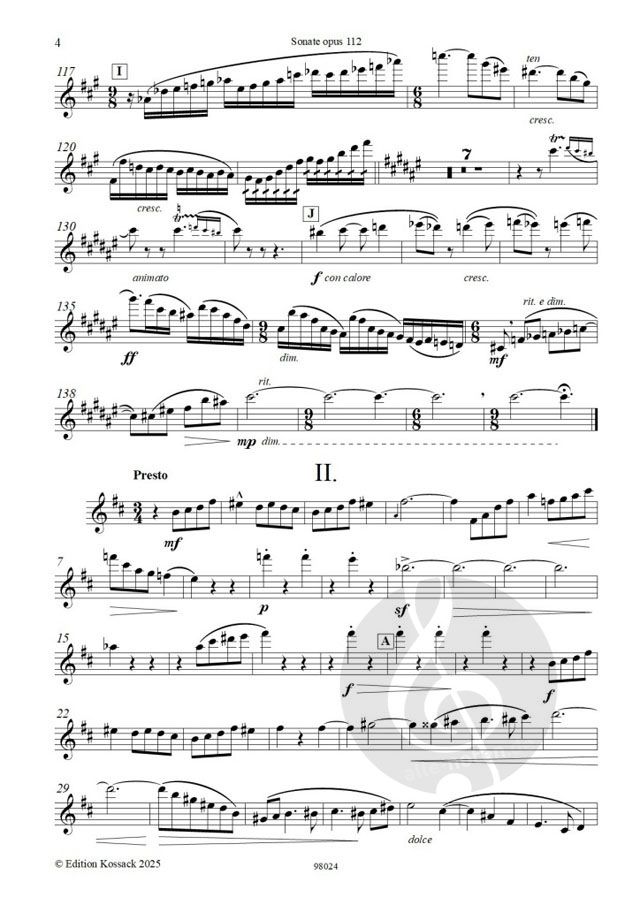
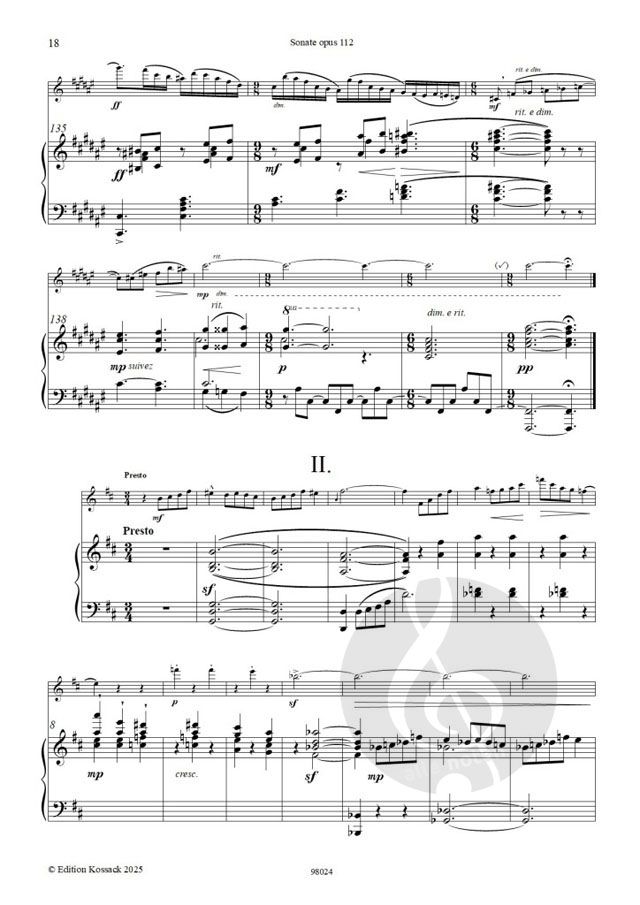
The first movement establishes this atmosphere through flowing lyricism and harmonic instability, shaped by rhythmic subtleties between melodic line and accompaniment. The second movement, a Presto scherzo, provides a contrast through its spirit and lightness. It can be compared not only with the corresponding scherzo of the flute sonata, but also with the concluding scherzo of the suite for flute, violin and piano.
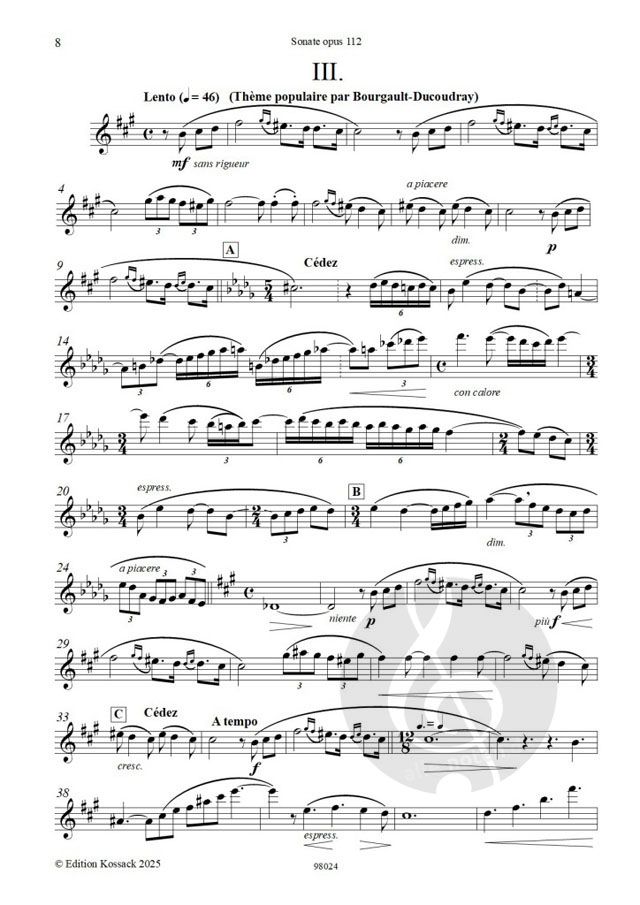
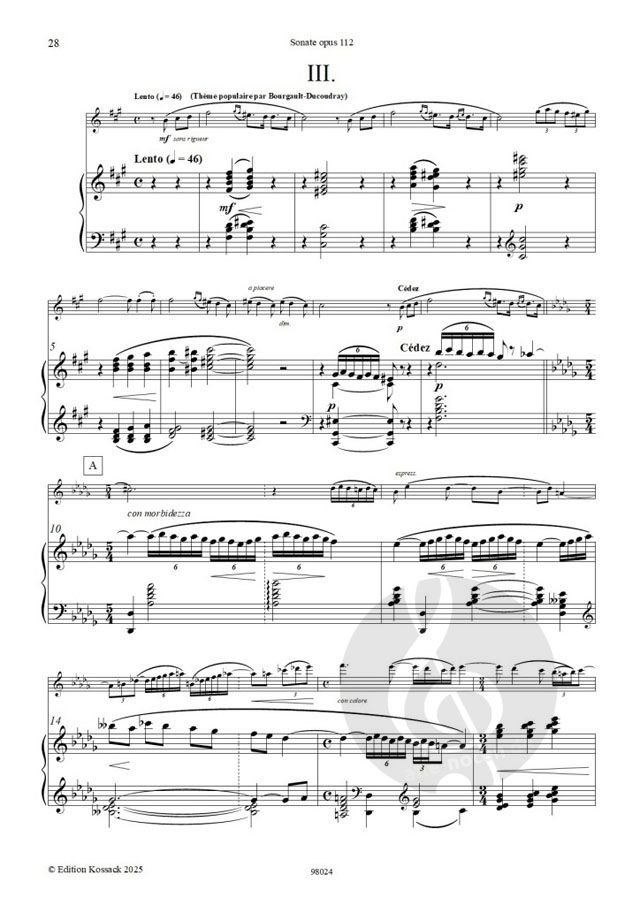
The third movement forms the expressive center of the sonata, similar to Franck's violin sonata in A major. It is based on a Greek folk song. The movement is reminiscent of the sound of Orthodox chants and integrates modal writing that refers to the traditions of ancient Greece.
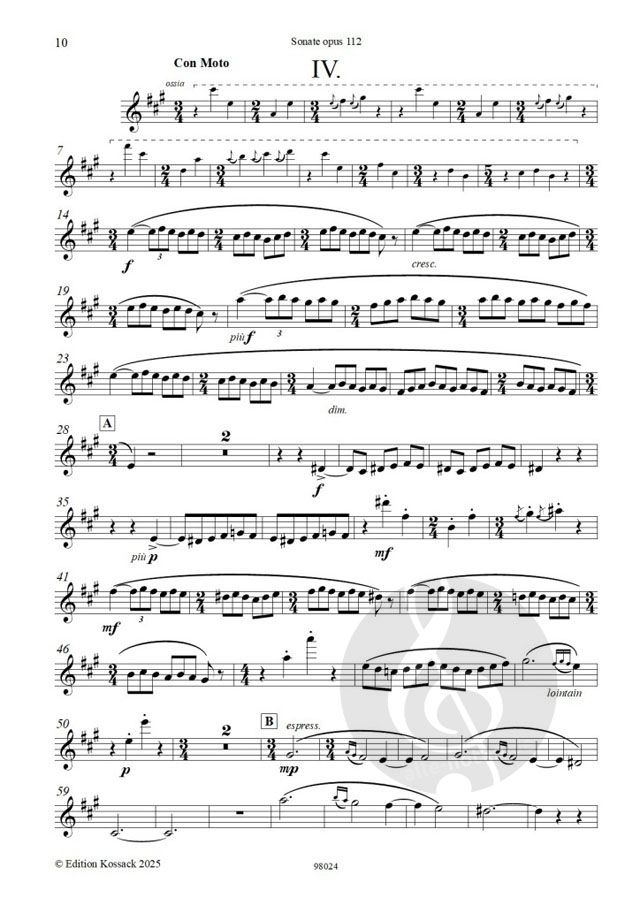
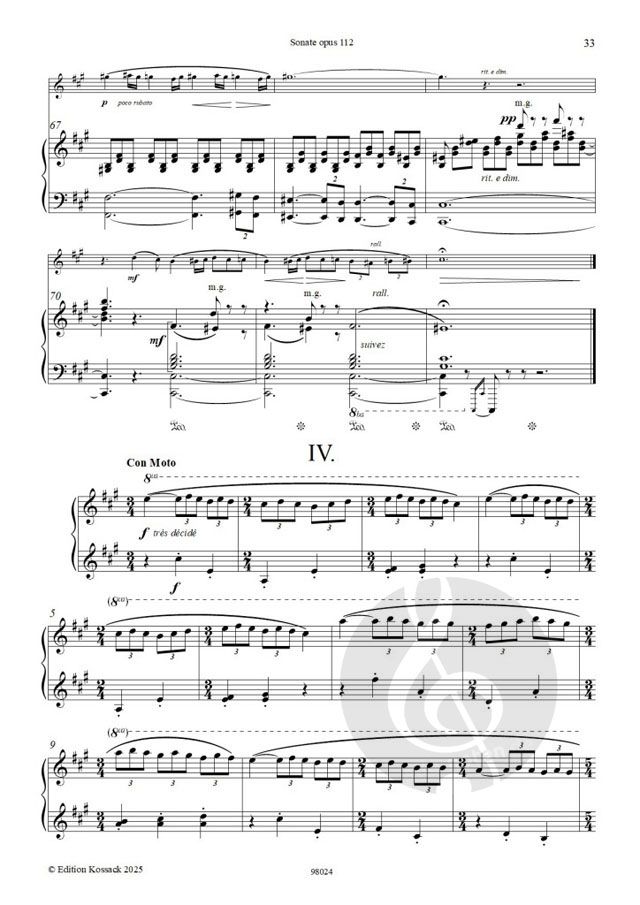
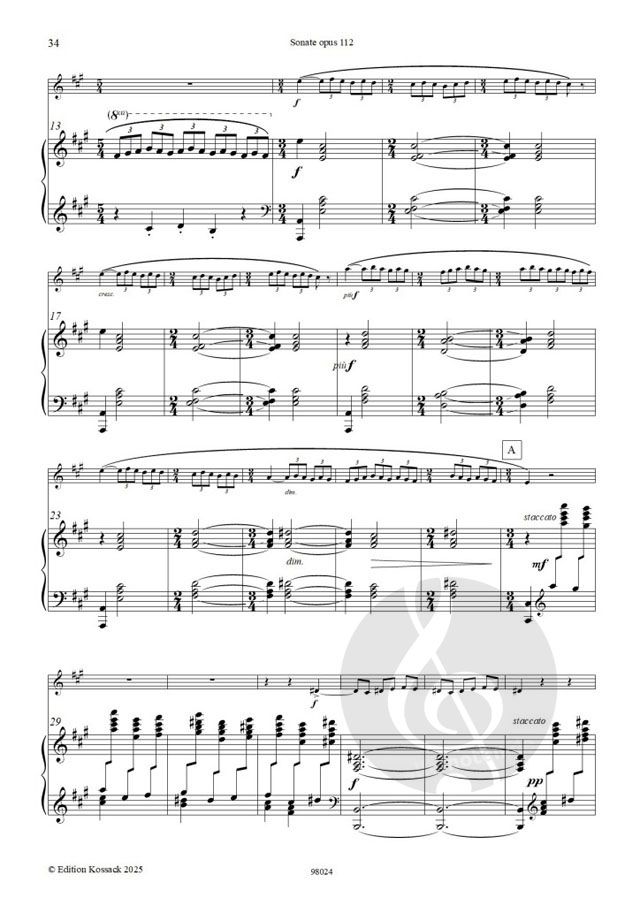
The last movement develops this material with increased energy and an extended dialog between violin and piano. Motivic fragments from earlier sections reappear in new harmonic contexts, reinforcing the cyclical conception of the work. Taken together, these elements give the movement coherence and momentum, leading to a decisive conclusion.
The sonata was premiered in 1919 at the Salle Gaveau in Paris under the auspices of the Société Musicale Indépendante. Contemporary reactions were positive. A critic of the Courrier des Musiciens emphasized the contrasts of the work and particularly praised "an Andante, carefully constructed on a Greek melody, which unfolds in a captivating development before leading to a lively and powerful finale." This testimony underlines the balance of darkness and light that characterizes the work. Although the sonata fell into obscurity over the course of the 20th century, its recent rediscovery has confirmed its status as one of Bonis' most significant chamber works: a composition that, while showing Franck's influence, also asserts a personal voice - lyrical, harmonically bold and deeply expressive.Mel Bonis (1858-1937), born Mélanie Hélène, was a prolific French composer whose catalog of more than 300 works includes piano, organ, chamber, orchestral and vocal music. In 1881, while studying at the Paris Conservatoire, she adopted the name "Mel Bonis", a step from improvisation to mature composition. Her first work signed under this name was a piano piece entitled Impromptu, ma première pièce, par Mel Bonis. The choice of an androgynous pseudonym reflected both a desire for artistic independence and a strategy to assert herself in a male-dominated musical environment. Christine Géliot, president of the Association Mel Bonis and a descendant of the composer, has emphasized that modern references must respect this chosen professional identity.
Mel Bonis was a student of César Franck and Ernest Guiraud, whose teaching shaped her harmonic and structural thinking, while at the same time she developed her own compositional style, characterized by lyricism, rhythmic delicacy and harmonic colour.
Christine Géliot's biography Mel Bonis, femme et "compositeur" (L'Harmattan, 2010; German translation Mel Bonis, Frau und Komponistin, Furore, 2015; English translation Mel Bonis, Woman and Composer, Furore, 2025) offers a more comprehensive picture of her professional and private life, including her relationships, professional challenges and efforts to promote her work internationally. It presents Mel Bonis as a respected and internationally recognized composer whose music embodies technical mastery, expressive depth, and lasting meaning.
This edition offers a transcription of Mel Bonis's Violin Sonata for flute and piano, a project that required extensive research, detailed transcription and practical testing in performance contexts. The editorial decisions in this edition were guided by both practical and stylistic considerations.
Among the more than 300 works by Mel Bonis, the Violin Sonata in F sharp minor, Op. 112, stands out as her most mature contribution to the sonata genre. It was composed in the last years of her life and was published by Maurice Senart in 1923. The work testifies to her mastery of large-scale chamber music, in which she combines personal expressiveness with structural rigor. Bonis had already written two sonatas - her flute sonata (1904) and cello sonata (1905) - before she turned to the violin. The violin sonata fully adopts the cyclical technique influenced by her teacher César Franck, with thematic and harmonic connections linking its four movements. In 1998, Eberhard Mayer described the opening Moderato as a style that "interweaves rhythmic complexity, chromaticism and deeply haunting, melancholy themes, ultimately expressing a pure sense of melancholy."
The first movement establishes this atmosphere through flowing lyricism and harmonic instability, shaped by rhythmic subtleties between melodic line and accompaniment. The second movement, a Presto scherzo, provides a contrast through its spirit and lightness. It can be compared not only with the corresponding scherzo of the flute sonata, but also with the concluding scherzo of the suite for flute, violin and piano.
The third movement forms the expressive center of the sonata, similar to Franck's violin sonata in A major. It is based on a Greek folk song. The movement is reminiscent of the sound of Orthodox chants and integrates modal writing that refers to the traditions of ancient Greece.
The last movement develops this material with increased energy and an extended dialog between violin and piano. Motivic fragments from earlier sections reappear in new harmonic contexts, reinforcing the cyclical conception of the work. Taken together, these elements give the movement coherence and momentum, leading to a decisive conclusion.
The sonata was premiered in 1919 at the Salle Gaveau in Paris under the auspices of the Société Musicale Indépendante. Contemporary reactions were positive. A critic of the Courrier des Musiciens emphasized the contrasts of the work and particularly praised "an Andante, carefully constructed on a Greek melody, which unfolds in a captivating development before leading to a lively and powerful finale." This testimony underlines the balance of darkness and light that characterizes the work. Although the sonata fell into obscurity over the course of the 20th century, its recent rediscovery has confirmed its status as one of Bonis' most significant chamber works: a composition that, while showing Franck's influence, also asserts a personal voice - lyrical, harmonically bold and deeply expressive.Mel Bonis (1858-1937), born Mélanie Hélène, was a prolific French composer whose catalog of more than 300 works includes piano, organ, chamber, orchestral and vocal music. In 1881, while studying at the Paris Conservatoire, she adopted the name "Mel Bonis", a step from improvisation to mature composition. Her first work signed under this name was a piano piece entitled Impromptu, ma première pièce, par Mel Bonis. The choice of an androgynous pseudonym reflected both a desire for artistic independence and a strategy to assert herself in a male-dominated musical environment. Christine Géliot, president of the Association Mel Bonis and a descendant of the composer, has emphasized that modern references must respect this chosen professional identity.
Mel Bonis was a student of César Franck and Ernest Guiraud, whose teaching shaped her harmonic and structural thinking, while at the same time she developed her own compositional style, characterized by lyricism, rhythmic delicacy and harmonic colour.
Christine Géliot's biography Mel Bonis, femme et "compositeur" (L'Harmattan, 2010; German translation Mel Bonis, Frau und Komponistin, Furore, 2015; English translation Mel Bonis, Woman and Composer, Furore, 2025) offers a more comprehensive picture of her professional and private life, including her relationships, professional challenges and efforts to promote her work internationally. It presents Mel Bonis as a respected and internationally recognized composer whose music embodies technical mastery, expressive depth, and lasting meaning.