
Luiz Paulo Coutinho
The 3 moments of lapacho
for flute and piano
Luiz Paulo Coutinho
The 3 moments of lapacho
for flute and piano
- Instrumentation Flute and Piano
- Composer Luiz Paulo Coutinho
- Edition Piano Score and Part(s)
- Publisher Edition Kossack
- Order no. KOSSACK20221
 ships within 4-8 working days
incl. tax,
excl. shipping costs
Not available in all countries. Learn more

Description:
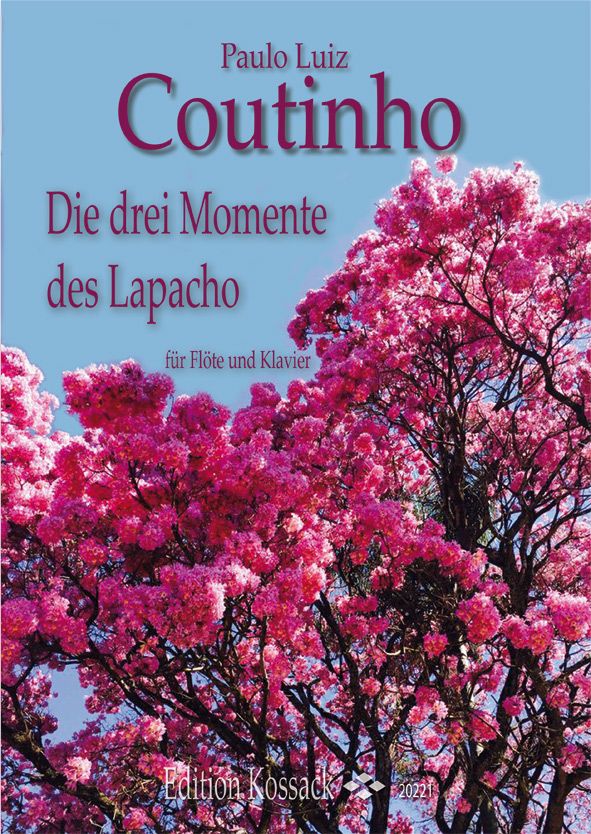
In the month of August, the city of Santiago del Estero is covered with living colors of purple, pink, yellow and white of the flowering lapachos (native tree of the Chaco forests), which give a spring-like hue to the urban landscape, the streets, the squares and the paths. The Lapachos announce with a rainbow of colors after the gray winter the return and renewal of life in the ancient and traditional "mother of cities" Santiago del Estero.
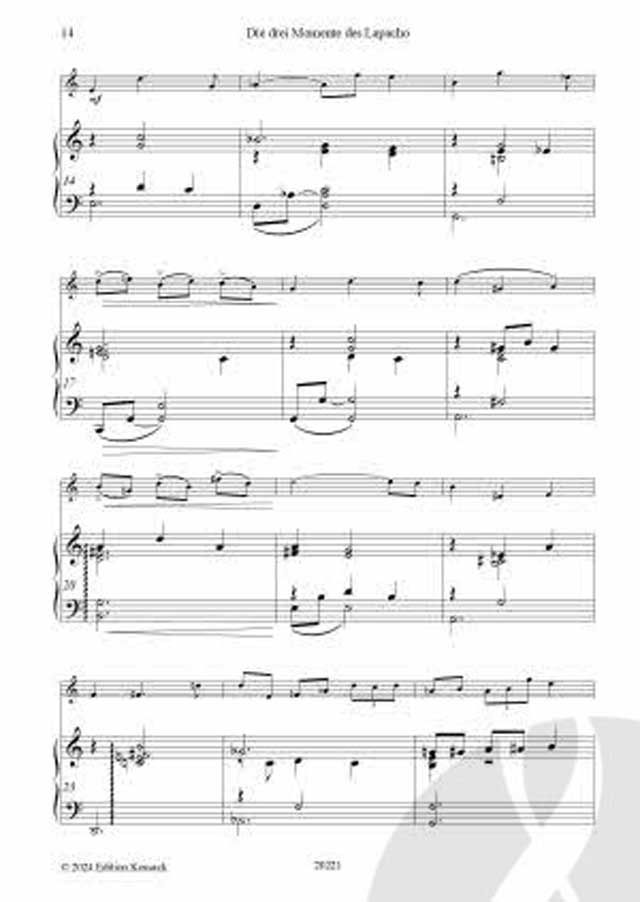
This work was written by Coutinho in the winter of 1991 for piano and flute and was dedicated to the pianist Delia Torresi Massuh and the flutist Martin Thren.
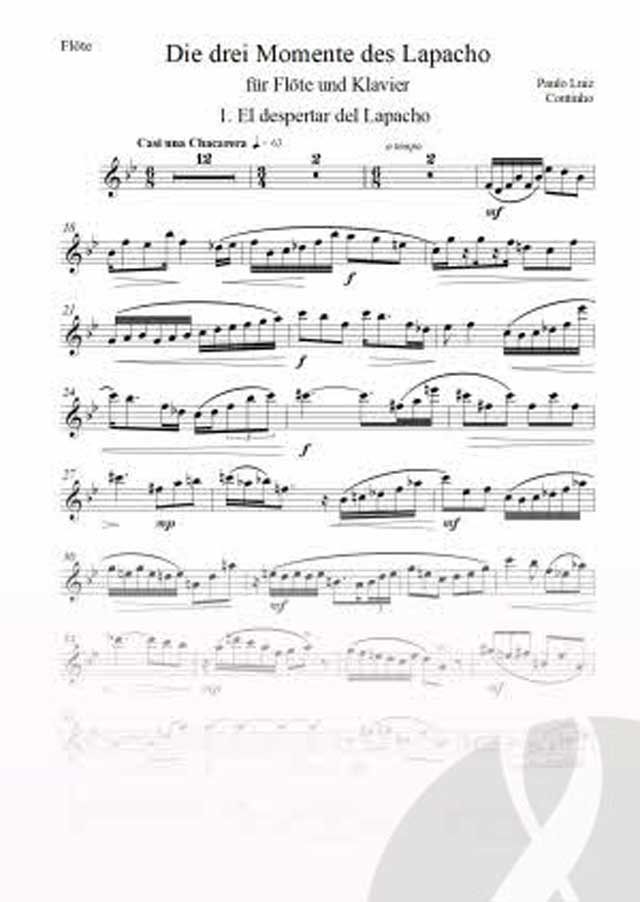
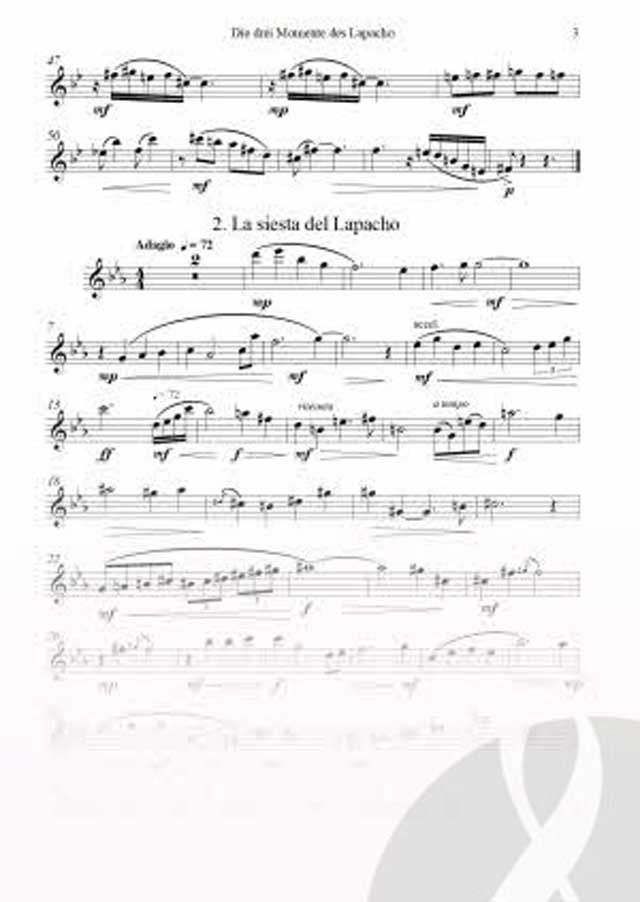
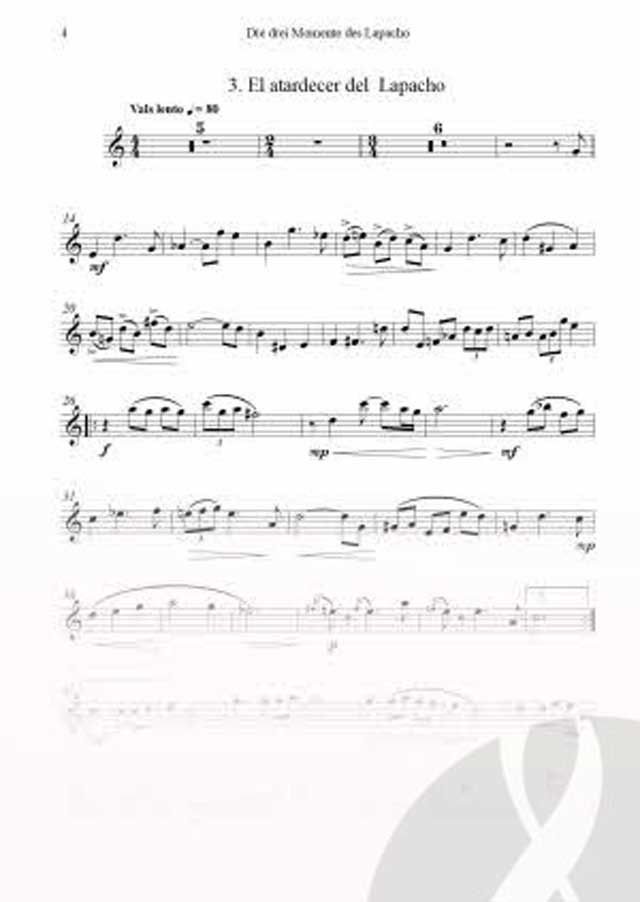
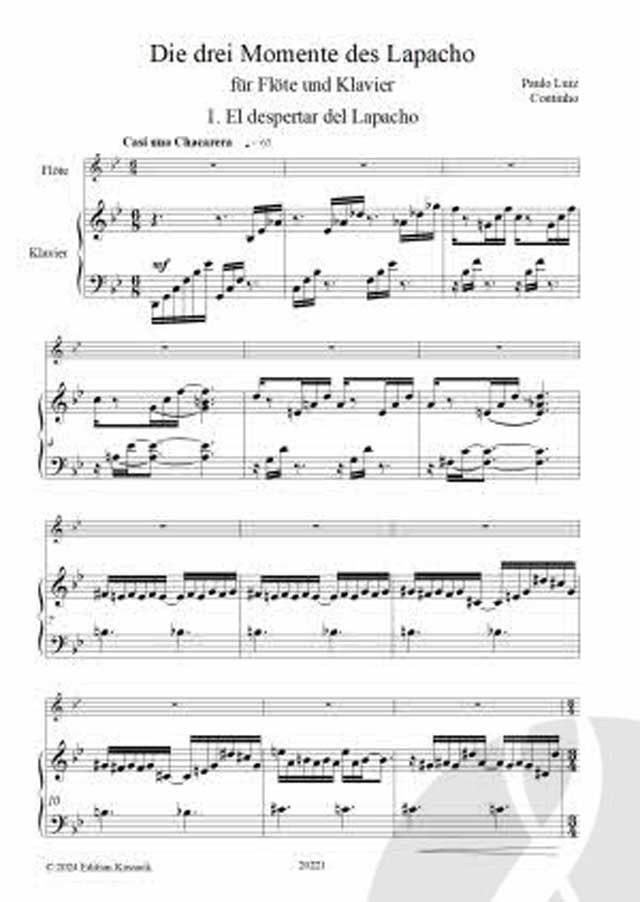
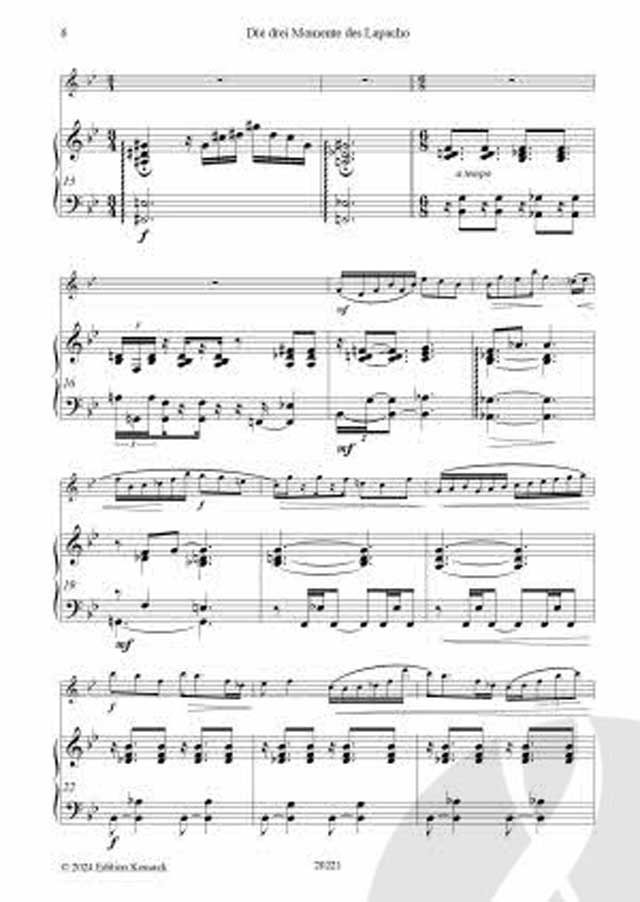
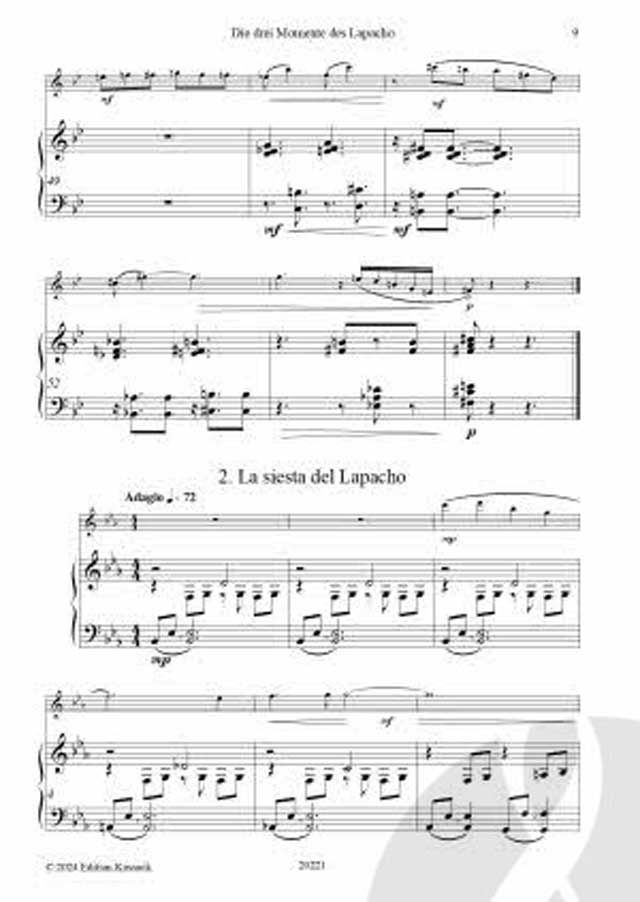
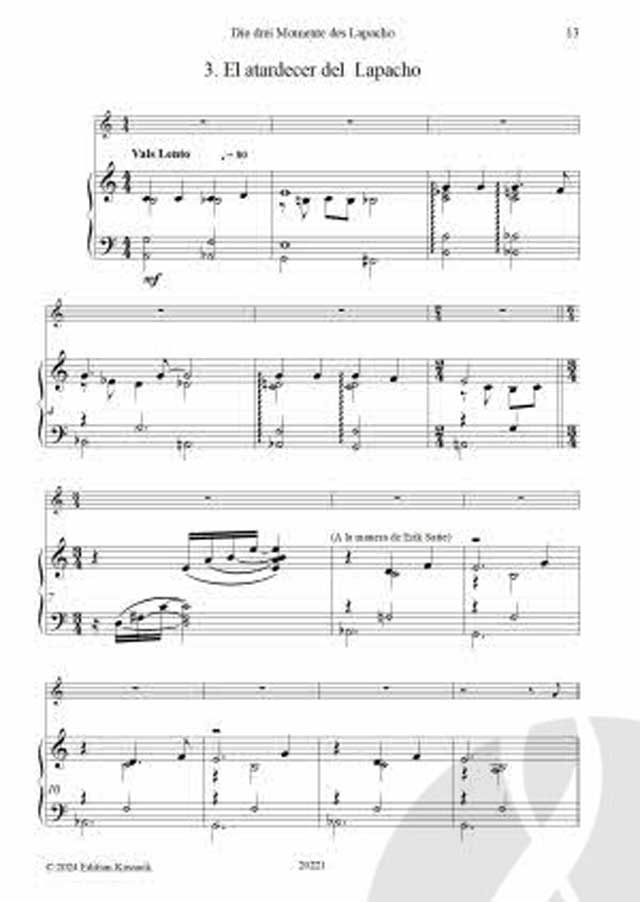
It contains the three moments "El Despertar (Sunrise)", "La Siesta (Midday Rest)" and "El Atardecer (Dusk)" of the Lapachos and summarizes the special musical aesthetics of the composer Coutinho: a very successful symbiosis between compositional resources of the different styles of regional folk music and grammatical elements of the avant-garde, derived from traditional European music, especially Impressionism. And all this from a masterful knowledge of the different musical forms of expression that he chooses for his work, in particular the dimensions of harmony, individuality and rhythm.
This work was written by Coutinho in the winter of 1991 for piano and flute and was dedicated to the pianist Delia Torresi Massuh and the flutist Martin Thren.
It contains the three moments "El Despertar (Sunrise)", "La Siesta (Midday Rest)" and "El Atardecer (Dusk)" of the Lapachos and summarizes the special musical aesthetics of the composer Coutinho: a very successful symbiosis between compositional resources of the different styles of regional folk music and grammatical elements of the avant-garde, derived from traditional European music, especially Impressionism. And all this from a masterful knowledge of the different musical forms of expression that he chooses for his work, in particular the dimensions of harmony, individuality and rhythm.