
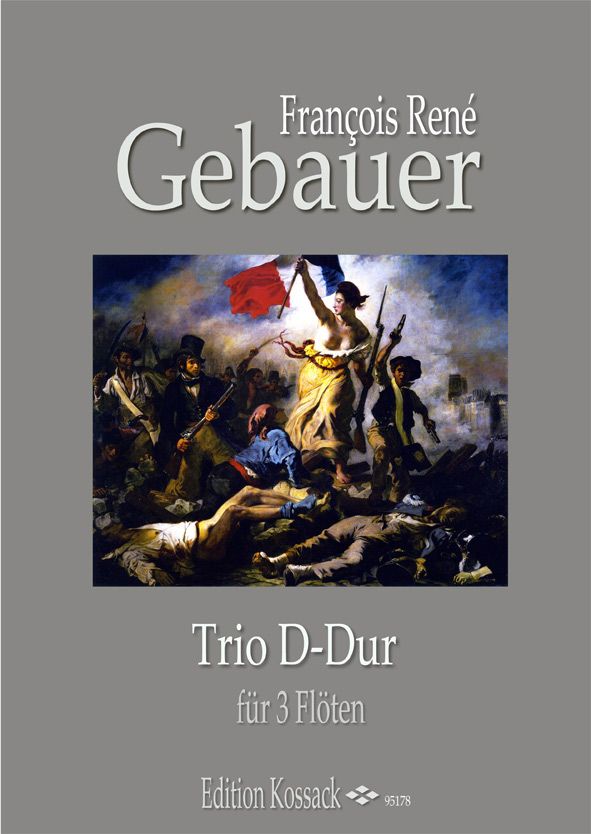
François-René Gebauer
Trio D-Dur
für 3 Flöten
Demo
listen
François-René Gebauer
Trio D-Dur
für 3 Flöten
- Instrumentation Flute Trio
- Composer François-René Gebauer
- Edition Score and Parts
- Publisher Edition Kossack
- Order no. KOSSACK95178
 ships within 4-8 working days
incl. tax,
excl. shipping costs
Not available in all countries. Learn more

Description:
The composer and bassoonist FRANÇOIS-RENE GEBAUER was born on March 15, 1773 in Versailles (Seine-et-Oise) and came from a highly talented family of musicians. His three brothers were also musicians. He received his first bassoon lessons from his brother Michel Joseph, ten years his senior, and then from François Devienne.
At the age of fifteen, he joined the Swiss Guards in Versailles as a bassoonist and then followed his older brother into the music section of the Paris National Guard. At the age of twenty-three, he was accepted as a bassoon teacher at the Paris Conservatoire, but was dismissed in the course of the 1802 reform, as he was younger than Ozy and Delcambre; however, when the latter retired in 1825, Gebauer succeeded him. In January 1801 he joined the opera orchestra, where he worked until 1826, leaving after twenty-five years of service. Gebauer was also a member of Emperor Napoleon's chapel, an appointment he held until the final dissolution of this orchestra following the revolution of July 1830. In 1814, King Louis XVIII made him a Knight of the Legion of Honor and composer of the music for the general staff of his guard. He died in Paris on July 28, 1845, "with the glory of having been one of the most prolific composers for his instrument". Like his three brothers, he knew how to cultivate the new galant style of the time, which was strongly influenced by the works of Joseph Haydn.
Gebauer composed primarily for his instrument, the bassoon, but also wrote numerous works for other wind instruments, including duos for flute and bassoon, flute duets, trios etc.
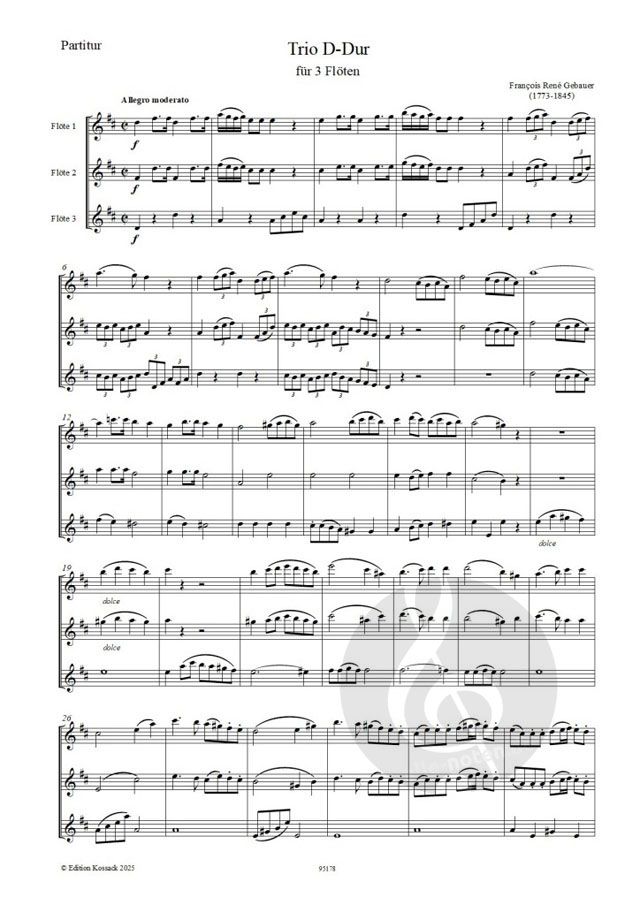
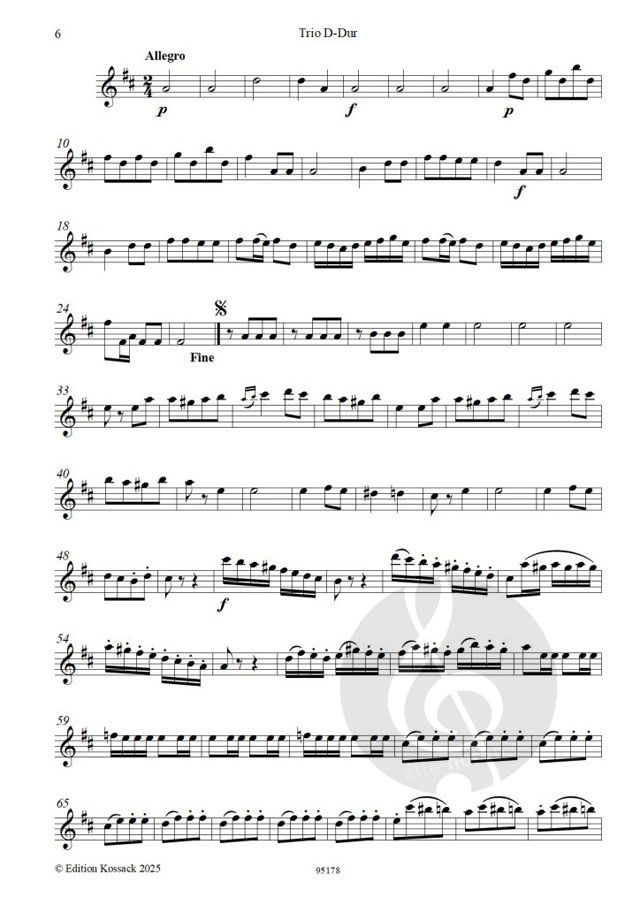
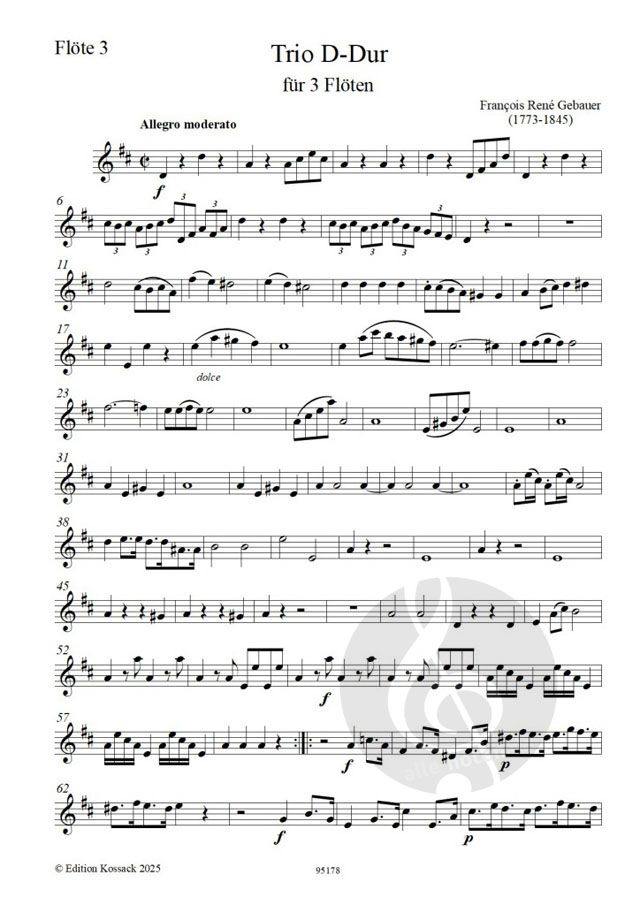
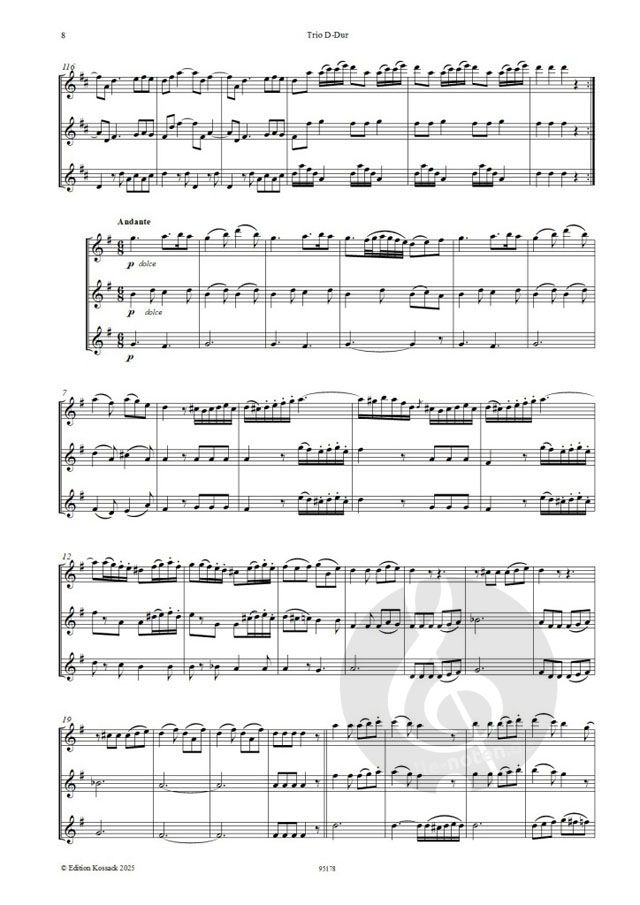
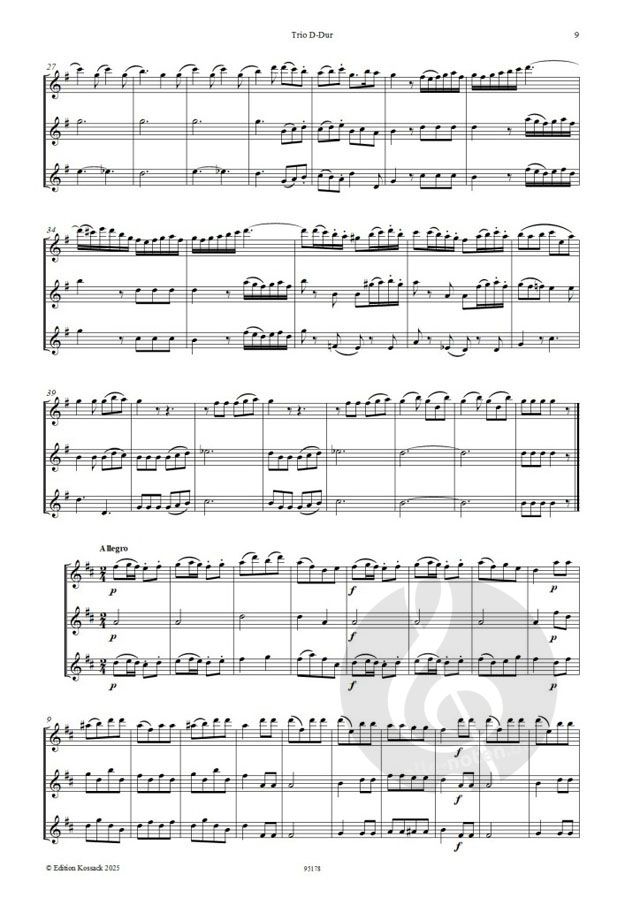
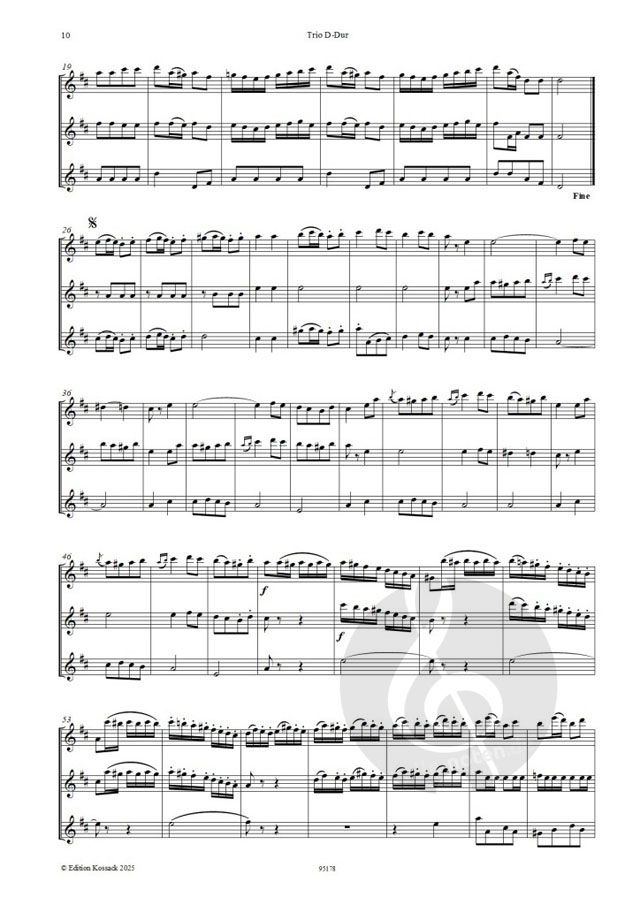
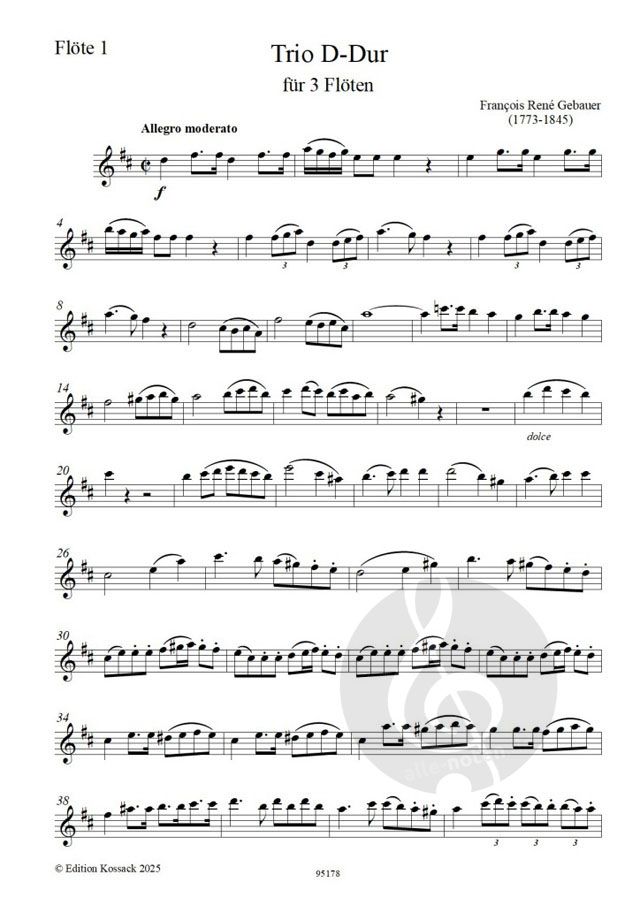
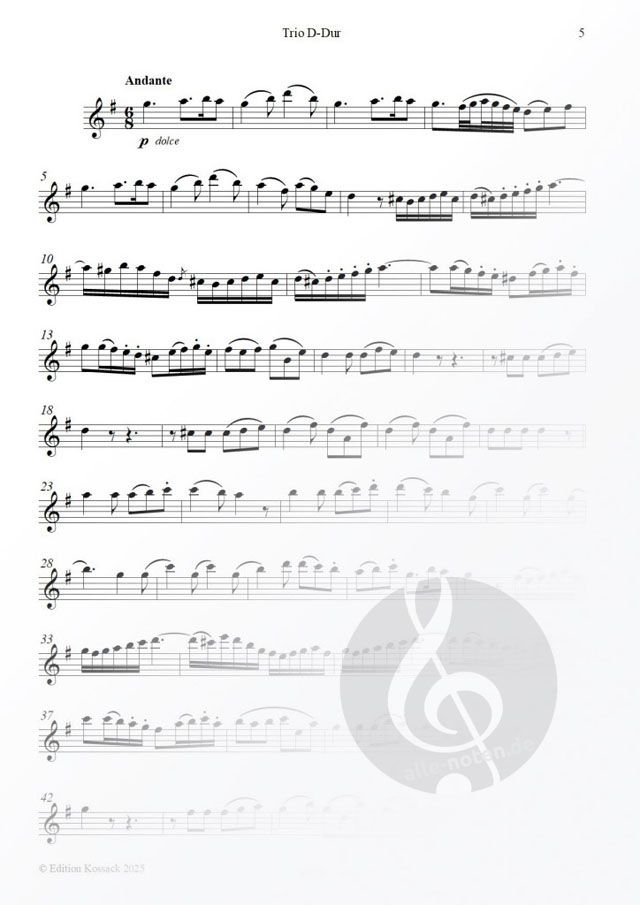
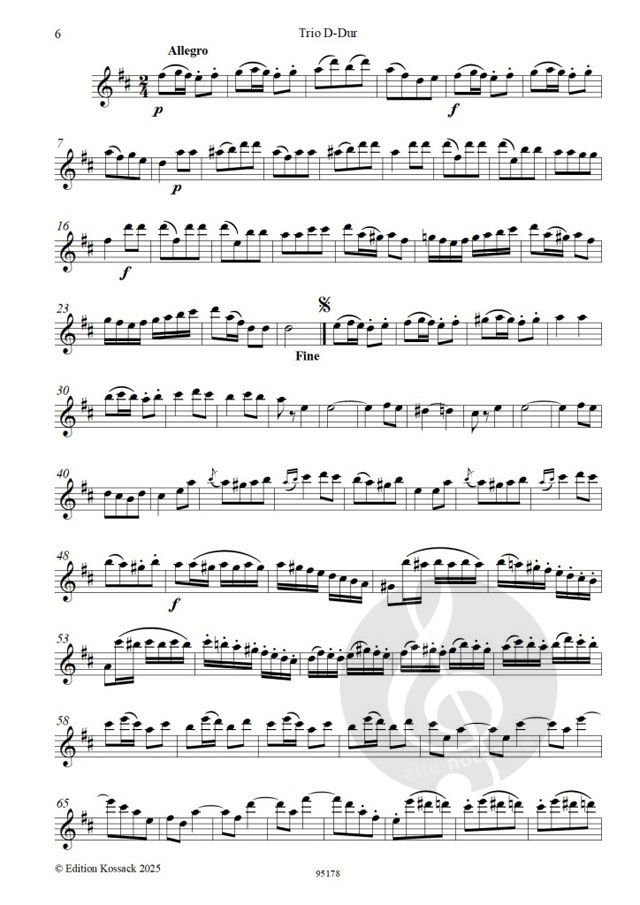
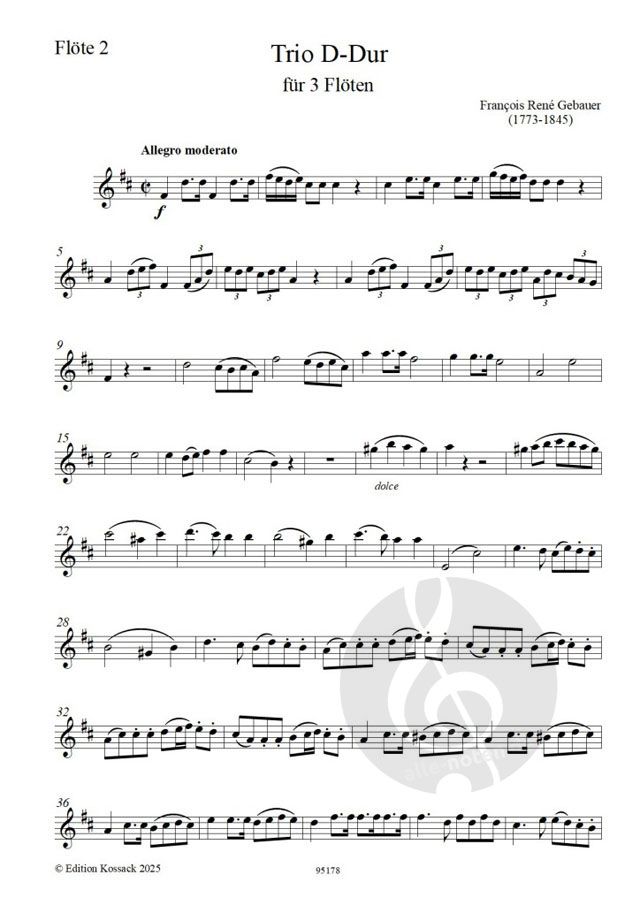
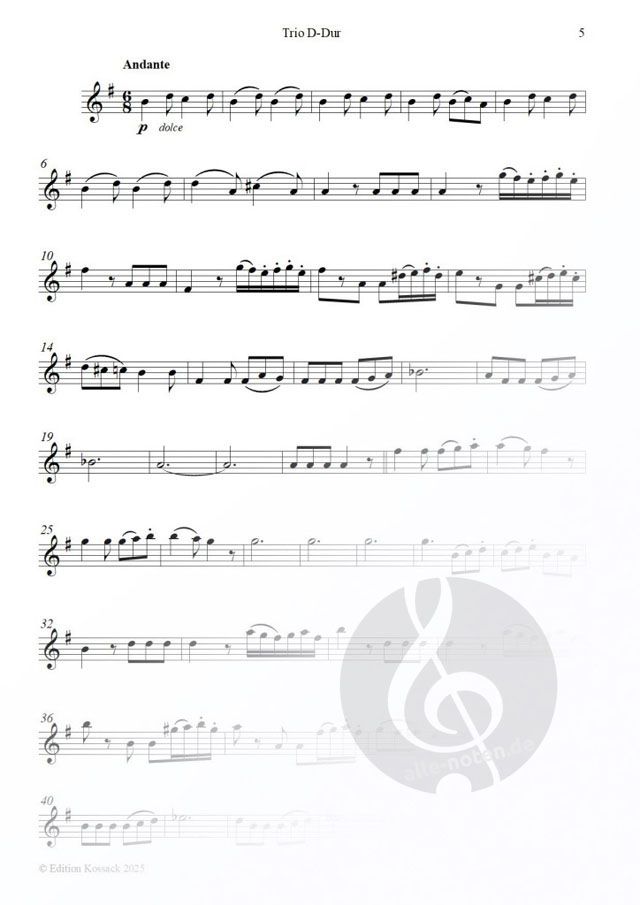
The present trio in D major, based on the first edition of 1815, is captivating in its elegance and melodic richness. The three flute parts are balanced in their degree of difficulty throughout. Errors in the first edition have been tacitly corrected and the articulation and dynamics adjusted.
At the age of fifteen, he joined the Swiss Guards in Versailles as a bassoonist and then followed his older brother into the music section of the Paris National Guard. At the age of twenty-three, he was accepted as a bassoon teacher at the Paris Conservatoire, but was dismissed in the course of the 1802 reform, as he was younger than Ozy and Delcambre; however, when the latter retired in 1825, Gebauer succeeded him. In January 1801 he joined the opera orchestra, where he worked until 1826, leaving after twenty-five years of service. Gebauer was also a member of Emperor Napoleon's chapel, an appointment he held until the final dissolution of this orchestra following the revolution of July 1830. In 1814, King Louis XVIII made him a Knight of the Legion of Honor and composer of the music for the general staff of his guard. He died in Paris on July 28, 1845, "with the glory of having been one of the most prolific composers for his instrument". Like his three brothers, he knew how to cultivate the new galant style of the time, which was strongly influenced by the works of Joseph Haydn.
Gebauer composed primarily for his instrument, the bassoon, but also wrote numerous works for other wind instruments, including duos for flute and bassoon, flute duets, trios etc.
The present trio in D major, based on the first edition of 1815, is captivating in its elegance and melodic richness. The three flute parts are balanced in their degree of difficulty throughout. Errors in the first edition have been tacitly corrected and the articulation and dynamics adjusted.