
Philippe Chamouard
Étude argosienne
for flute and piano
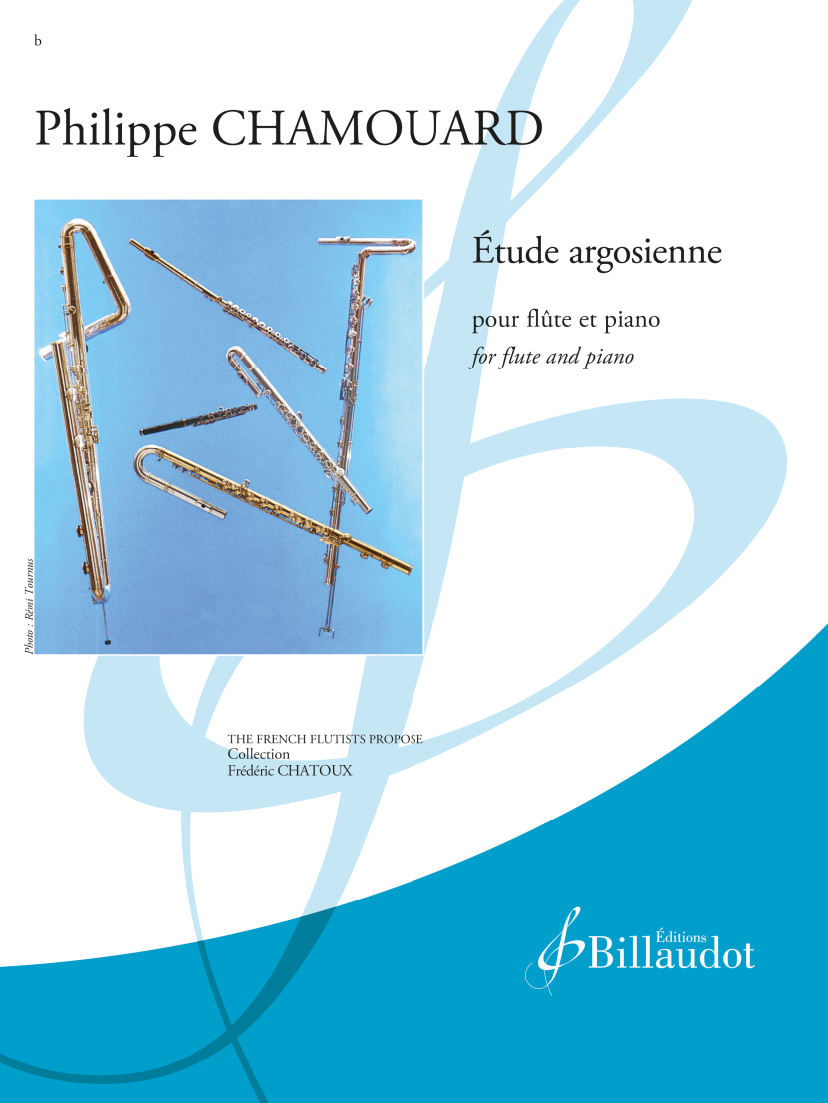
PDF
view
Philippe Chamouard
Étude argosienne
for flute and piano
- Instrumentation Flute and Piano
- Composer Philippe Chamouard
- Edition Piano Score and Part(s)
- Publisher Gerard Billaudot
- Order no. BILL10532
 in stock
ships within 1-2 working days
incl. tax,
excl. shipping costs
Not available in all countries. Learn more

Description:
In this work, the transverse flute replaces the ancient Greek aulos and retains the virtuosity and improvisatory character required in ancient Hellenistic competitions. The music was always improvised, and the performer was in fact also the composer.
One of the hallmarks of ancient Greece were the sporting, equestrian and musical competitions that took place mainly in Olympia, Athens, Delphi and Corinth.
In Argos, the competition "the Shield of Argos" (its name is due to the fact that the winner received a shield, which could also become a warrior) was created especially for musicians. Competitors could play the aulos or the zither, solo or in duet with a singer. The music was always improvised, so that the performer was also the composer. Competitors competed for glory and honours, as the prize was a laurel wreath (the most prestigious being that of Delphi).
In this work, the transverse flute replaces the aulos and retains the virtuosity and improvisational character demanded in Hellenistic competitions.
One of the hallmarks of ancient Greece were the sporting, equestrian and musical competitions that took place mainly in Olympia, Athens, Delphi and Corinth.
In Argos, the competition "the Shield of Argos" (its name is due to the fact that the winner received a shield, which could also become a warrior) was created especially for musicians. Competitors could play the aulos or the zither, solo or in duet with a singer. The music was always improvised, so that the performer was also the composer. Competitors competed for glory and honours, as the prize was a laurel wreath (the most prestigious being that of Delphi).
In this work, the transverse flute replaces the aulos and retains the virtuosity and improvisational character demanded in Hellenistic competitions.