
Johann Sebastian Bach
6 Suites Vol. 1
Suites 1-2-3 (d'apres les Suites pour Violoncelle)

Johann Sebastian Bach
6 Suites Vol. 1
Suites 1-2-3 (d'apres les Suites pour Violoncelle)
- Instrumentation Alto Recorder
- Edition Sheet Music
- Composer Johann Sebastian Bach
- Editor Jean-Claude Veilhan
- Publisher Alphonse Leduc
- Order no. AL25369
incl. tax,
excl. shipping costs
 ships within 3-6 working days

Description:
Six Suites - Vol. 1 for Alto Recorder is the first volume of a series of two by J. S. Bach. Initially composed for Cello between 1717 and 1723, it was transcribed by Jean-Claude Veilhan and features the Suites I, II and III. The transcription keeps the original key and only some passages have to be played one octave higher than in the original sheet.
The first suite, BWV 1007, is in G major and contains a Prelude, an Allemande, a Courante, a Sarabande, two Minuets and a Guigue. Its Prelude is the most famous movement of the whole set of Suites, consisting mainly of only arpeggiated chords. It can be heard in many films and is highly recognisable. The second one, BWV1008, is in D minor and held the same movements' organisation. Its prelude in two parts features a cadenza, which leads to other cadenzas in the Allemande. The Minuet part is quite technical to play. Finally, the third one, BWV 1009 in C major, sees the Minuets being replaced by Bourrées which are often played together, as a solo material. The second Bourrée only has a partial signature and the Allemande has a rhythm quite unique for the piece as it includes three semiquavers instead of one. These suites also exist arranged for Piano, for Trombone and for many other instruments.
The first suite, BWV 1007, is in G major and contains a Prelude, an Allemande, a Courante, a Sarabande, two Minuets and a Guigue. Its Prelude is the most famous movement of the whole set of Suites, consisting mainly of only arpeggiated chords. It can be heard in many films and is highly recognisable. The second one, BWV1008, is in D minor and held the same movements' organisation. Its prelude in two parts features a cadenza, which leads to other cadenzas in the Allemande. The Minuet part is quite technical to play. Finally, the third one, BWV 1009 in C major, sees the Minuets being replaced by Bourrées which are often played together, as a solo material. The second Bourrée only has a partial signature and the Allemande has a rhythm quite unique for the piece as it includes three semiquavers instead of one. These suites also exist arranged for Piano, for Trombone and for many other instruments.
Customers rated this product:
Hal Leonard Europe B. V.
Businesspark Friesland-West 15
8447
SL Heerenveen
Niederlande
Sheet music shipping since 1969

Since 1969, over 500,000 customers have trusted us. With a huge selection of over 1,000,000 sheet music titles, we are one of the largest providers in Europe. Thanks to our large stock we can often ship sheet music within 24 hours. No matter what sheet music you are looking for: you are in the right place!
Yours, Stefanie Reichert
Head of Customer Service

Other customers also bought:

- Alto Recorder and Continuo
- Sheet Music
-
in stock
|
ships within 1-2 working days

- Alto Recorder
- Sheet Music
-
ships within 3-6 working days

- Alto Recorder
- Sheet Music
-
ships within 3-6 working days

- Alto Recorder
- Sheet Music (Facsimile)
-
in stock
|
ships within 1-2 working days

- Alto Recorder
- Sheet Music
-
ships within 3-6 working days

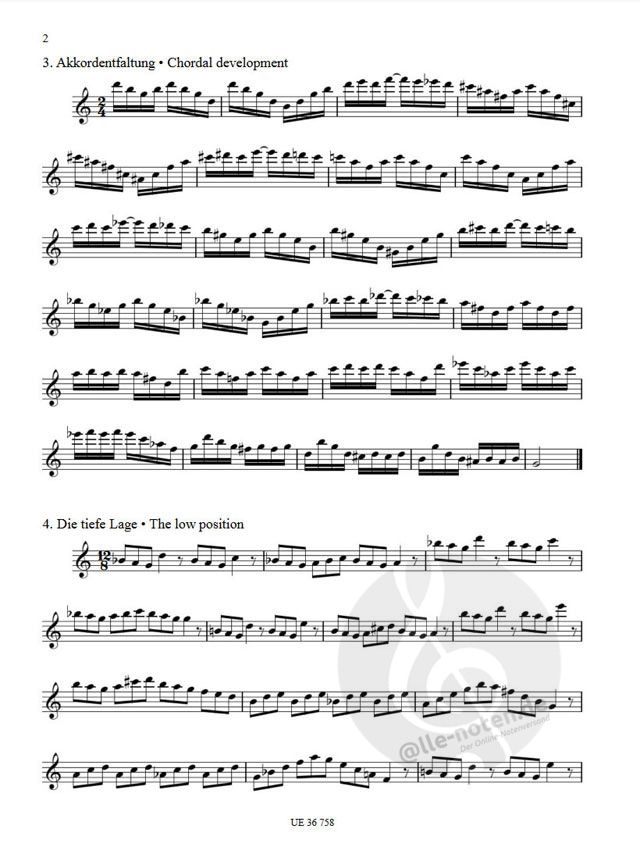
Hans Ulrich Staeps
Exercises within the complete chromatic compass of the treble (alto) recorder
- Alto Recorder
- Sheet Music
-
in stock
|
ships within 1-2 working days

- Alto Recorder
- Sheet Music
-
ships within 3-6 working days

- Alto Recorder
- Sheet Music
-
in stock
|
ships within 1-2 working days

- Alto Recorder
- Sheet Music
-
in stock
|
ships within 1-2 working days

- Alto Recorder
- Sheet Music
-
ships within 3-6 working days




Johann Sebastian Bach
- Alto Recorder and Piano
- Sheet Music
-
in stock
|
ships within 1-2 working days