
Russell Stokes
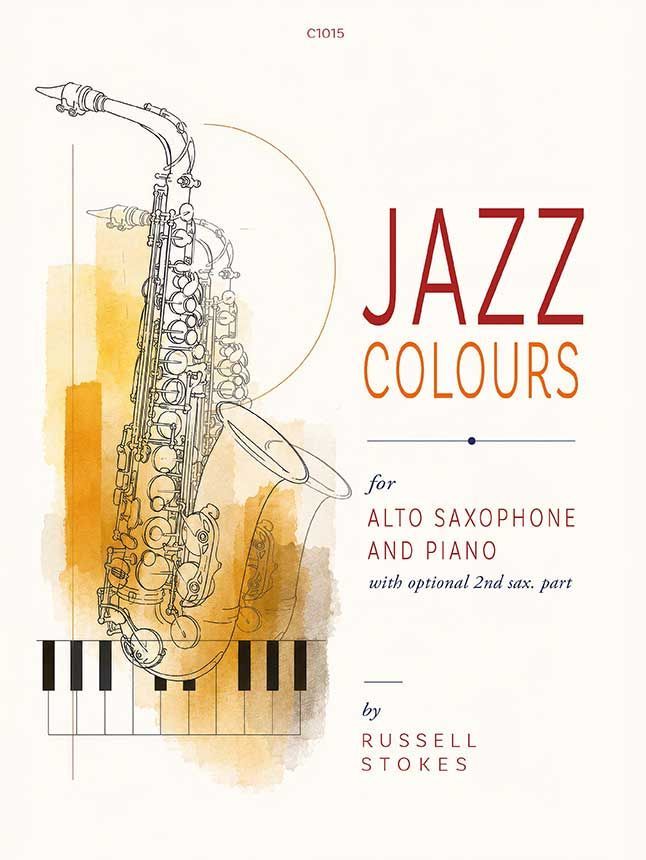
Jazz Colours
for Alto Saxophone and Piano
NEW

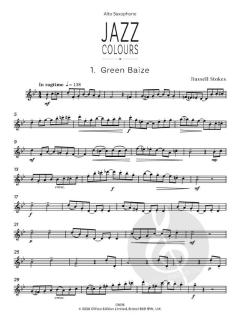
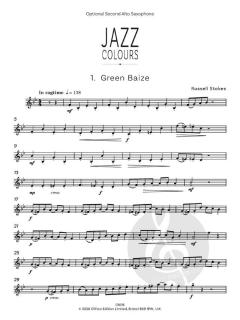
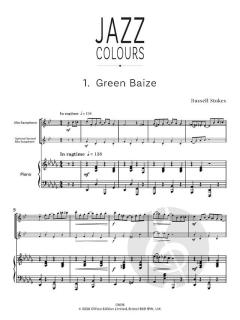
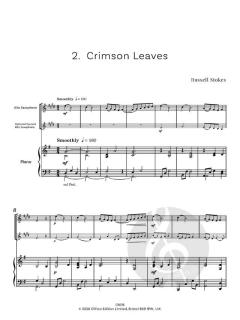
Demo
listen
Russell Stokes
Jazz Colours
for Alto Saxophone and Piano
- Instrumentation Alto Saxophone and Piano
- Composer Russell Stokes
-
Difficulty Level
- Edition Sheet Music Download
- Publisher Clifton Edition
- Order no. STAIN-C1015-DL
 immediately available
Download immediately after ordering
incl. tax,
excl. shipping costs
Not available in all countries. Learn more
Description:
Welcome to JAZZ COLOURS: an established series of pieces for alto saxophone and piano written in jazz/popular styles. An optional 2nd saxophone part has been included for those who enjoy performing duets. Jazz Colours will appeal to students of all ages who want to extend their repertoire of styles and will encourage the development of rhythmic technique in a popular setting. This volume contains pieces which range in difficulty from about Grade 3 to Grade 6.
Please note, the quavers in these pieces should be played straight and not swung.
To the saxophonist(s):
If you are new to playing jazz or popular music, then you will need to be very careful with the rhythms. There are many places where you will be playing off the beat, so try counting in quavers (slowly at first) to work out the syncopations. Once you are happy with the counting, try not to let the rhythms become too strict and rigid: instead let the music flow and swing.
If you are playing the duet versions, attempt to learn both parts so that you can take it in turns to play the first sax. part. Remember always to listen to each other so that the ensemble between you is tight. One last thing: enjoy the music!
To the pianist:
If you are an inexperienced player, you may find that some of the accompaniments are quite difficult. lf so, try simplifying them by leaving out some of the notes in larger chords. However, always make sure you get the rhythms right so that you can support the soloist(s) correctly. Please use the sustain pedal where you feel it is appropriate, but try not to blur the changing harmonies.
Please note, the quavers in these pieces should be played straight and not swung.
To the saxophonist(s):
If you are new to playing jazz or popular music, then you will need to be very careful with the rhythms. There are many places where you will be playing off the beat, so try counting in quavers (slowly at first) to work out the syncopations. Once you are happy with the counting, try not to let the rhythms become too strict and rigid: instead let the music flow and swing.
If you are playing the duet versions, attempt to learn both parts so that you can take it in turns to play the first sax. part. Remember always to listen to each other so that the ensemble between you is tight. One last thing: enjoy the music!
To the pianist:
If you are an inexperienced player, you may find that some of the accompaniments are quite difficult. lf so, try simplifying them by leaving out some of the notes in larger chords. However, always make sure you get the rhythms right so that you can support the soloist(s) correctly. Please use the sustain pedal where you feel it is appropriate, but try not to blur the changing harmonies.
-
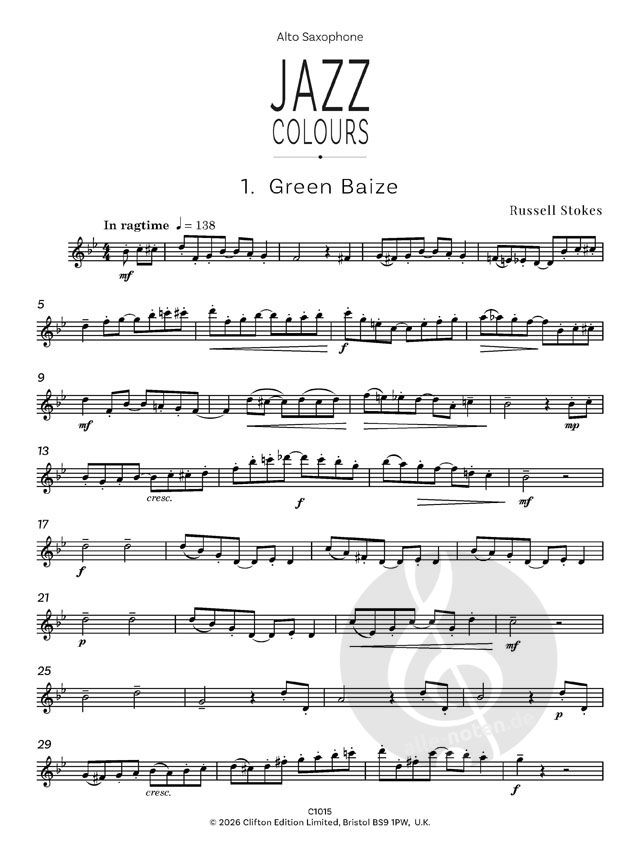
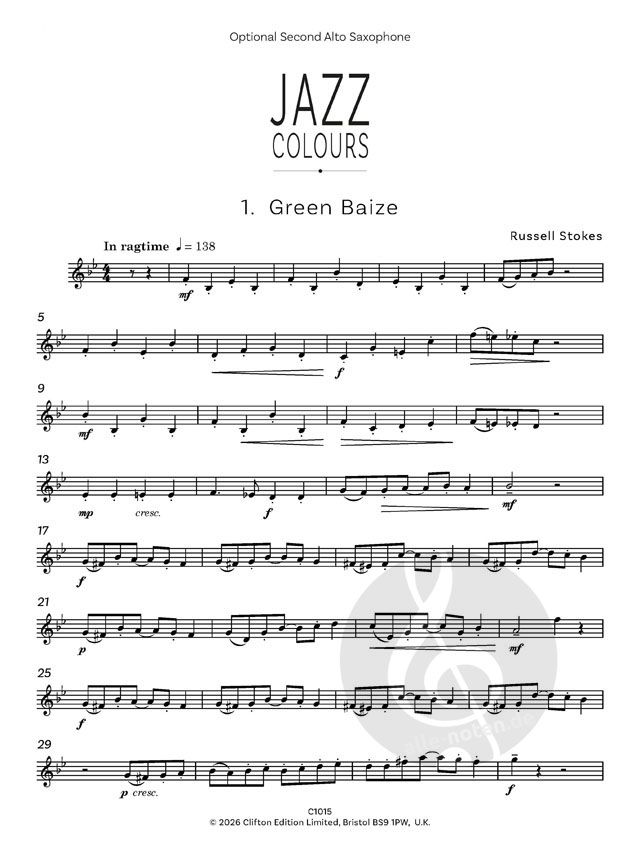
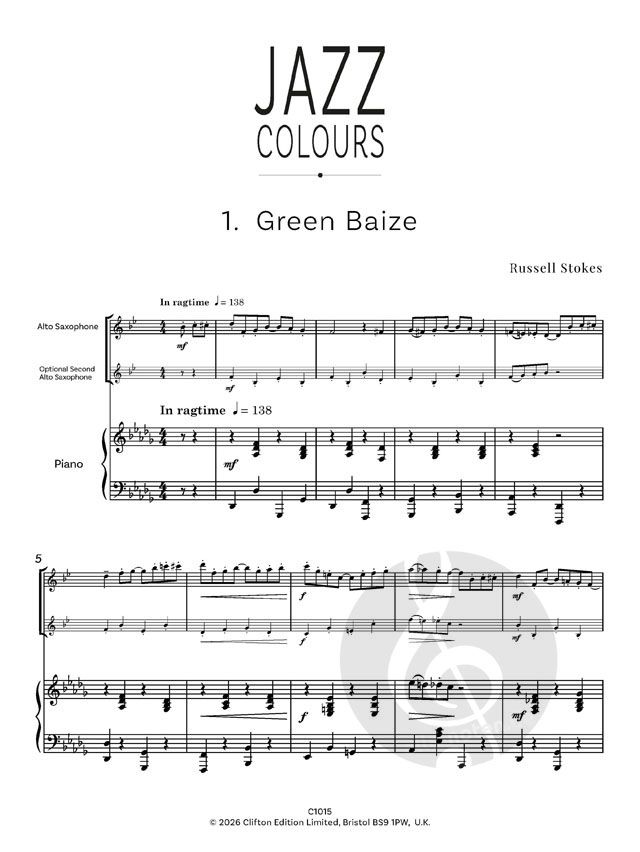
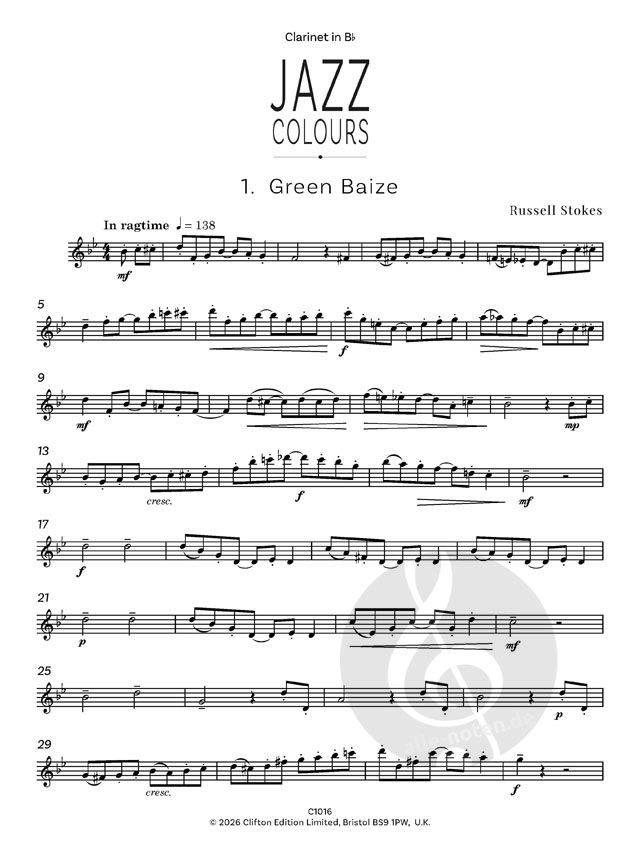
Green Baize
-
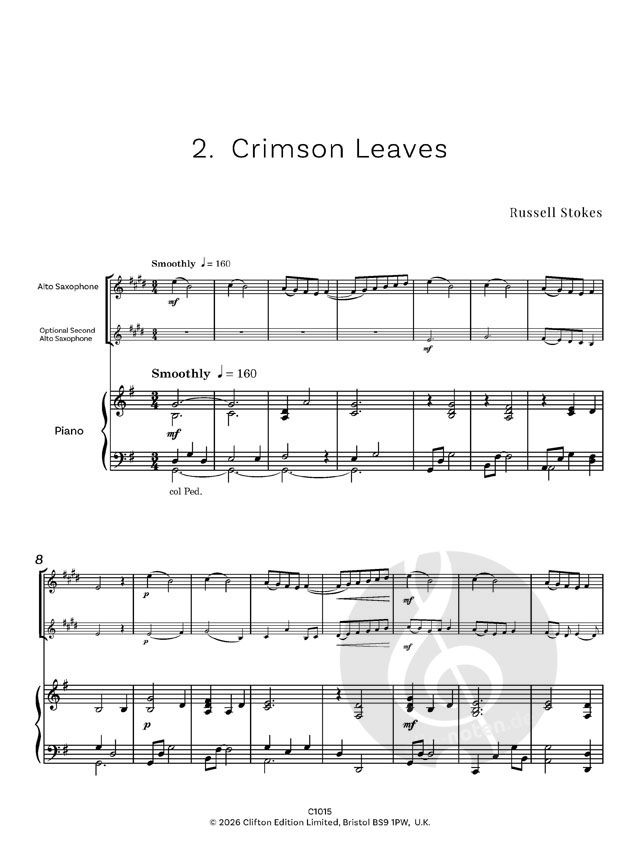
Crimson Leaves
-
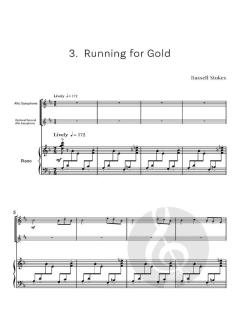
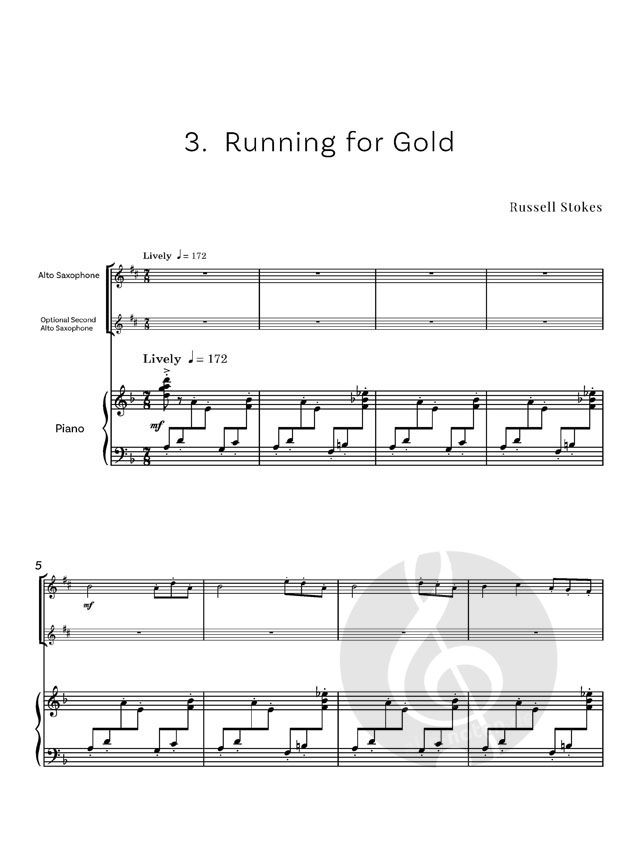
Running for Gold
-
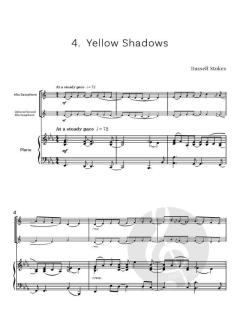
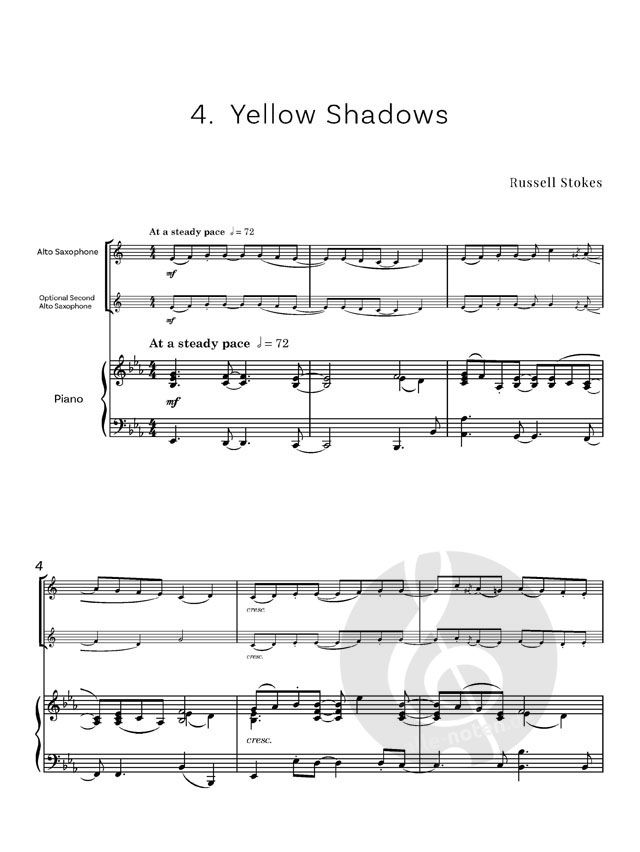
Yellow Shadows
Here is how the download works:
1 Buy download sheet music
Purchase the download score from our online store
2 Order confirmation with download link
Immediately after completing your order, you will receive an order confirmation by email listing all items. You will find the download link next to each item. You can use this link to start the download right away. Please also check your spam folder if necessary.
Customers rated this product:
Manufacturer Information:
Clifton Edition Limited
4 Sneyd Park House, Goodeve Road
BS9 1PW
Bristol
United Kingdom
Other customers also bought:

- Clarinet Quartet
- Score and Parts
- Jirka Kadlec
-
ships within 1-2 weeks
- Also available for download!


- Clarinet and Piano
- Sheet Music Download
-
immediately available
Download immediately after ordering

Gene Kelly
- Clarinet Quartet
- Score and Parts
- Eric J. Hovi
-
ships within 3-6 working days

- Alto Saxophone and Piano
- Sheet Music Download
-
immediately available
Download immediately after ordering

Valentin Hude
- Clarinet Quartet
- Score and Parts
-
in stock
ships within 1-2 working days

- Alto Saxophone and Piano
- Piano Score and Part(s)
-
ships within 2-4 weeks