
Nicola Termöhlen
Davonfliegen
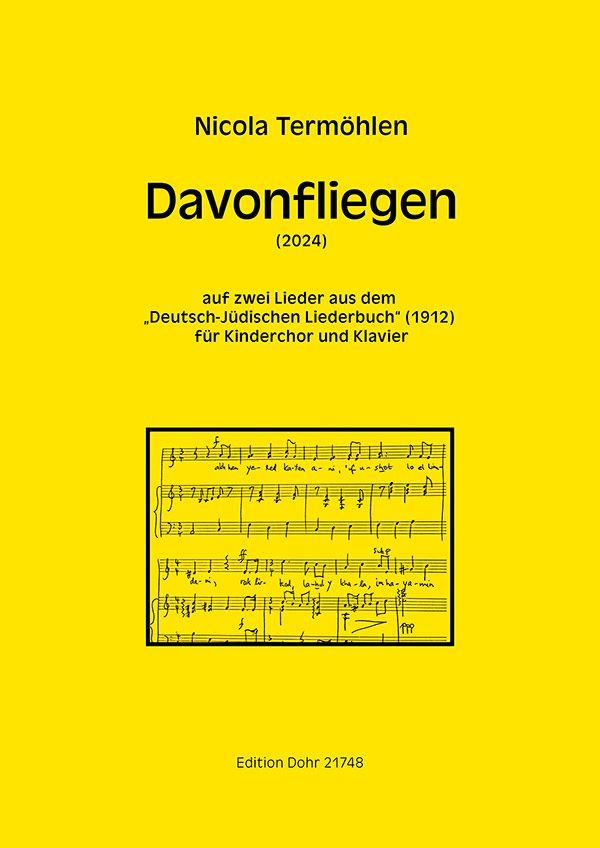
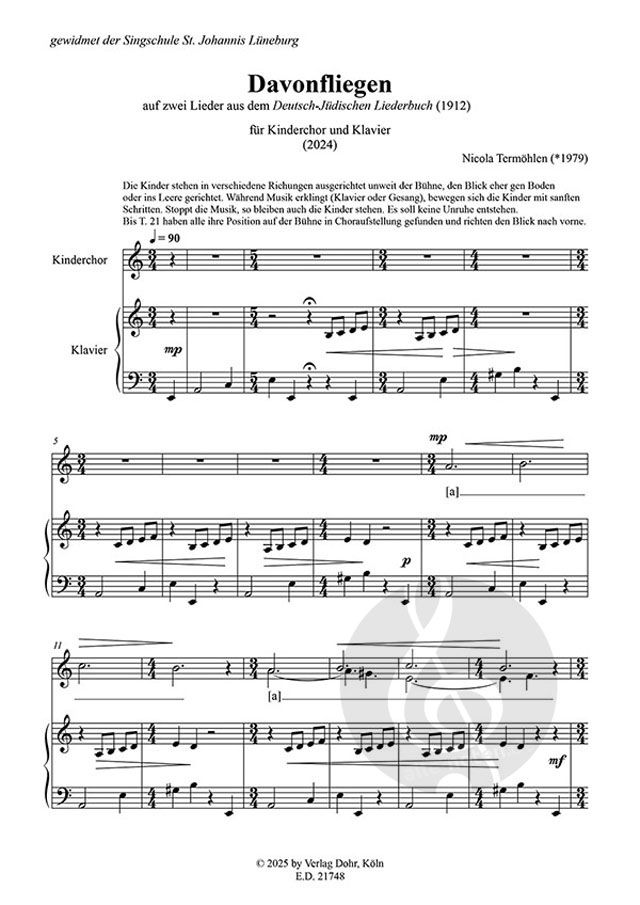
für Kinderchor und Klavier (2024) (auf zwei Lieder aus dem "Deutsch-Jüdischen Liederbuch" von 1912)
Nicola Termöhlen
Davonfliegen
für Kinderchor und Klavier (2024) (auf zwei Lieder aus dem "Deutsch-Jüdischen Liederbuch" von 1912)
- Instrumentation Children's Choir and Piano
- Composer Nicola Termöhlen
- Edition Choral Score
- Publisher Musikverlag Christoph Dohr
- Order no. DOHR21748
 ships within 2-5 working days
incl. tax,
excl. shipping costs
Not available in all countries. Learn more

Description:
Davonfliegen is based on two songs from the bilingual "Deutsch-Jüdisches Liederbuch" from 1912, which was published by Abraham Zwi Idelsohn, an important music researcher and composer, and financed by James Simon, a Berlin entrepreneur and patron. The collection comprises 45 German and 100 Hebrew songs and was conceived as a music education work for schools in Germany, Palestine and the diaspora. It served to promote cultural identity and community through music and was innovative in that it was bilingual in German and Hebrew.
I interwove the two songs (No. 29: "Das Fliegen ist doch eine Lust" and No. 50: "Lu hayiti") into his only arrangement for children's choir because they both deal thematically with the childish longing for freedom and adventure that comes to life in a child's imagination. The child dreams of being a bird, a fish, a bee or an angel in order to experience the world with all its facets. In both songs, the child recognizes its own limitations and reflects on what is given to it, such as dancing or being together lovingly with its mother. (Nicola Termöhlen)
I interwove the two songs (No. 29: "Das Fliegen ist doch eine Lust" and No. 50: "Lu hayiti") into his only arrangement for children's choir because they both deal thematically with the childish longing for freedom and adventure that comes to life in a child's imagination. The child dreams of being a bird, a fish, a bee or an angel in order to experience the world with all its facets. In both songs, the child recognizes its own limitations and reflects on what is given to it, such as dancing or being together lovingly with its mother. (Nicola Termöhlen)