
Wolfgang Amadeus Mozart
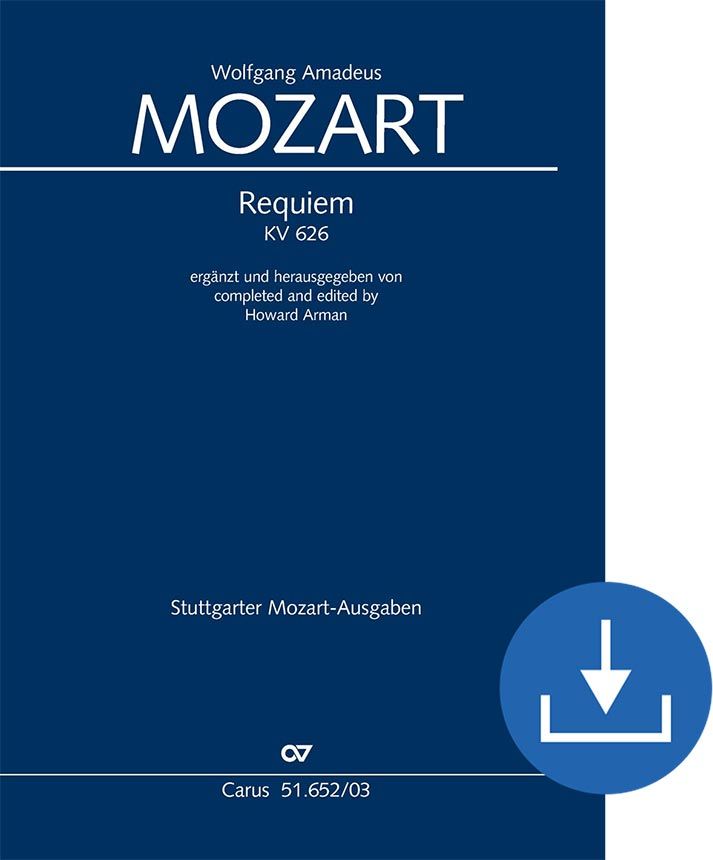
Requiem (Arman version) KV 626
Supplemented and edited by Howard Arman
Video
view
PDF
view
Wolfgang Amadeus Mozart
Requiem (Arman version) KV 626
Supplemented and edited by Howard Arman
- Instrumentation Soloists (SATB), Mixed Choir (SATB) and Orchestra
- Composer Wolfgang Amadeus Mozart
- Editor Howard Arman
- Editor Howard Arman
- Edition Piano reduction Download (Urtext)
- Publisher Carus-Verlag
- Order no. CV51652-03-DL
 immediately available
Download immediately after ordering
incl. tax,
excl. shipping costs
Not available in all countries. Learn more

Description:
The English conductor and composer Howard Arman has presented a complete version of Mozart's Requiem. "Another version?" you might think, as there are now a whole series of other versions available alongside the traditional Süßmayr version. However, Mozart's fragment has such immense potential that the challenge and appeal of completing it remain unbroken. After two decades of intensive study of the work, Howard Arman has incorporated his findings into its completion with care and respect for Mozart's great model.
Arman's approach proves to be particularly fruitful in that - always aware of the limits of his own re-creative activity - he orients himself towards typical characteristics of Mozart's ingenious compositional style: his technical perfection in terms of composition, his search for ever new ways to deal with every situation and his concise treatment of the text with extremely rich harmonies. As a result, this leads to many new listening experiences. In Tuba mirum, for example, there is a warm, cohesive ensemble sound, supported by the bassoons' detachment from the bass foundation. The Confutatis is completely different: Even the basset horns are drawn down into infernal depths here. This effect is reinforced when the trombones are not conducted parallel to the choral parts, but independently, so that their specific sound comes into its own. Arman's Lacrimosa has a lively effect in that the voices are not continued in a stereotyped manner, but with a certain freedom, thereby gaining a "Mozart-like" quality. In his Amen fugue, which concludes the movement, Arman focuses not so much on the counterpoint itself, but rather - in the spirit of Mozart - on a dramaturgy, a development in the course of which the theme is illuminated in all possible facets. Mozart's fragment ends with the Hostias, and so Arman's completion also ends here.
For the four following movements, for which we have nothing more from Mozart (Sanctus to Communio), the edition falls back on the Süßmayr version. Where Mozart is silent, Arman gives precedence to Süßmayr, who was closest to Mozart when this complete blank space was created and whose work is therefore still to be appreciated today.
Arman's version has already proven itself in practice. The world premiere with the Bavarian Radio Choir was enthusiastically received by audiences and the press - and celebrated as a scholarly, completely new take on Mozart's masterpiece.
- World premiere by the Bavarian Radio Choir
- Enthusiastically received by audiences and the press
Arman's approach proves to be particularly fruitful in that - always aware of the limits of his own re-creative activity - he orients himself towards typical characteristics of Mozart's ingenious compositional style: his technical perfection in terms of composition, his search for ever new ways to deal with every situation and his concise treatment of the text with extremely rich harmonies. As a result, this leads to many new listening experiences. In Tuba mirum, for example, there is a warm, cohesive ensemble sound, supported by the bassoons' detachment from the bass foundation. The Confutatis is completely different: Even the basset horns are drawn down into infernal depths here. This effect is reinforced when the trombones are not conducted parallel to the choral parts, but independently, so that their specific sound comes into its own. Arman's Lacrimosa has a lively effect in that the voices are not continued in a stereotyped manner, but with a certain freedom, thereby gaining a "Mozart-like" quality. In his Amen fugue, which concludes the movement, Arman focuses not so much on the counterpoint itself, but rather - in the spirit of Mozart - on a dramaturgy, a development in the course of which the theme is illuminated in all possible facets. Mozart's fragment ends with the Hostias, and so Arman's completion also ends here.
For the four following movements, for which we have nothing more from Mozart (Sanctus to Communio), the edition falls back on the Süßmayr version. Where Mozart is silent, Arman gives precedence to Süßmayr, who was closest to Mozart when this complete blank space was created and whose work is therefore still to be appreciated today.
Arman's version has already proven itself in practice. The world premiere with the Bavarian Radio Choir was enthusiastically received by audiences and the press - and celebrated as a scholarly, completely new take on Mozart's masterpiece.
- World premiere by the Bavarian Radio Choir
- Enthusiastically received by audiences and the press
Here is how the download works:
1 Buy download sheet music
Purchase the download score from our online store
2 Order confirmation with download link
Immediately after completing your order, you will receive an order confirmation by email listing all items. You will find the download link next to each item. You can use this link to start the download right away. Please also check your spam folder if necessary.
Customers rated this product:
Manufacturer Information:
Carus-Verlag GmbH & Co. KG
Sielminger Str. 51
70771
Leinfelden-Echterdingen
Deutschland
Related products:

- Solo Voices (SATB), Mixed Choir (SATB) and Orchestra
- Score (Urtext) Download
- Howard Arman
- Carus-Verlag
-
immediately available
Download immediately after ordering - Instant download

- Solo Voices (SATB), Mixed Choir (SATB) and Orchestra
- Set of Parts - Harmony (Urtext)
- Howard Arman
- Carus-Verlag
-
ships within 2-5 working days
- Solo Voices (SATB), Mixed Choir (SATB) and Orchestra
- Set of Parts
- Howard Arman
- Carus-Verlag
-
ships within 2-5 working days
- Soloists (SATB), Mixed Choir (SATB) and Orchestra
- Piano Reduction (Urtext)
- Howard Arman
- Carus-Verlag
-
in stock
ships within 1-2 working days - Also available for download!
- Soloists (SATB) and Mixed Choir (SATB)
- Choral Score (Urtext)
- Howard Arman
- Carus-Verlag
-
ships within 2-5 working days
- Solo Voices (SATB), Mixed Choir (SATB) and Orchestra
- Instrumental Part: Organ (Urtext)
- Howard Arman
- Carus-Verlag
-
ships within 2-5 working days
- Solo Voices (SATB), Mixed Choir (SATB) and Orchestra
- Instrumental Part: Violin 1 (Urtext)
- Howard Arman
- Carus-Verlag
-
ships within 2-5 working days
- Solo Voices (SATB), Mixed Choir (SATB) and Orchestra
- Instrumental Part: Violin 2 (Urtext)
- Howard Arman
- Carus-Verlag
-
ships within 2-5 working days
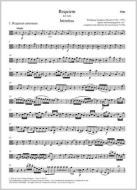
- Solo Voices (SATB), Mixed Choir (SATB) and Orchestra
- Instrumental Part: Viola (Urtext)
- Howard Arman
- Carus-Verlag
-
ships within 2-5 working days
- Solo Voices (SATB), Mixed Choir (SATB) and Orchestra
- Instrumental Part: Cello and Double Bass (Urtext)
- Howard Arman
- Carus-Verlag
-
ships within 2-5 working days
Other customers also bought:
- Soloists (SATB), Mixed Choir (SATB) and Chamber Orchestra
- Piano Reduction
- Joachim Linckelmann
-
in stock
ships within 1-2 working days - Also available for download!
- Soloists, Mixed Choir (SATB) and Chamber Orchestra
- Piano Reduction
-
ships within 2-5 working days
- Also available for download!

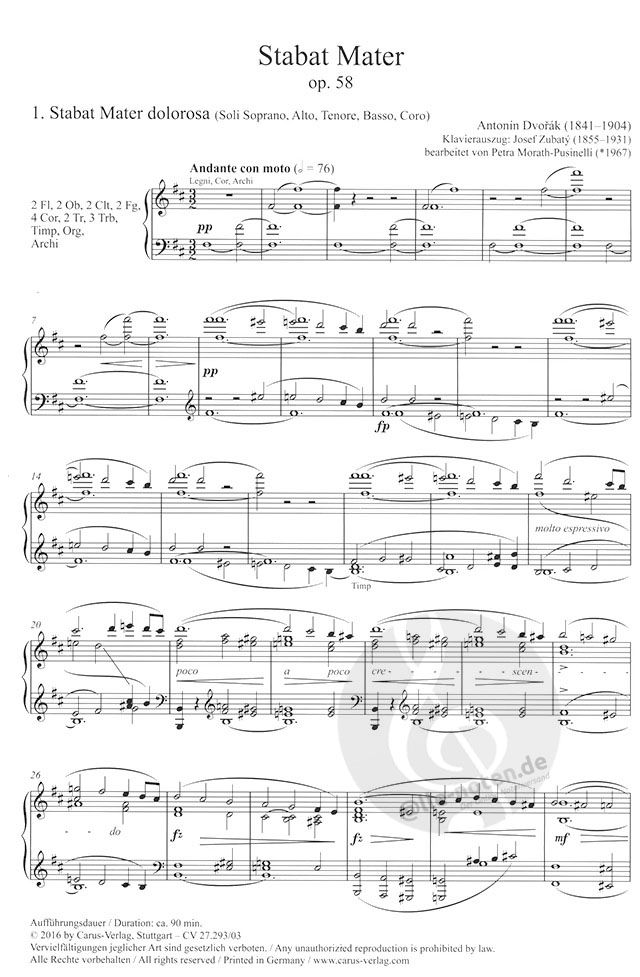

- Classical Guitar
- Sheet Music
-
in stock
ships within 1-2 working days
Carl Philipp Emanuel Bach
- 4 Soloists, Mixed Choir (SATB) and Piano
- Piano Reduction
-
ships within 2-5 working days
- Also available for download!