
Antonín Dvořák
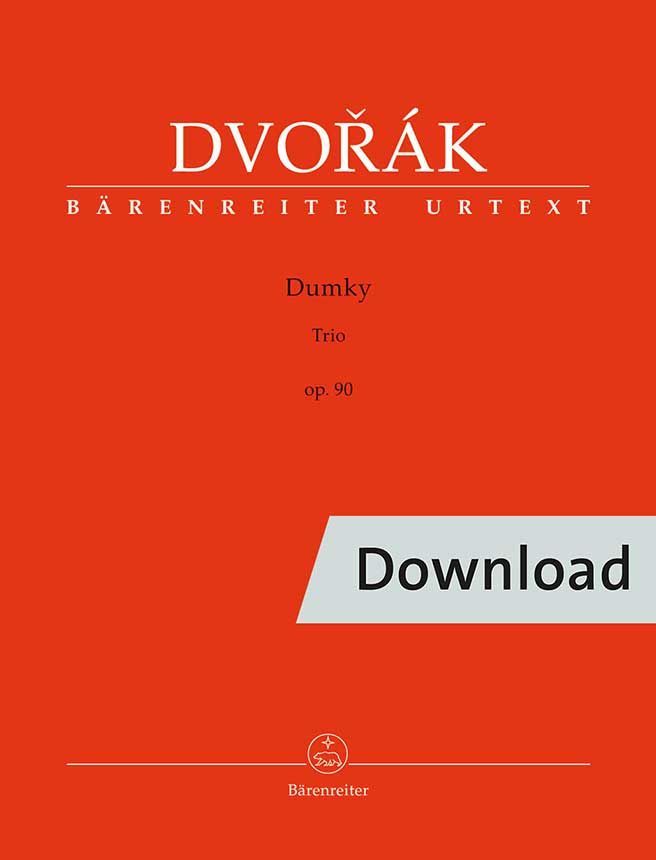
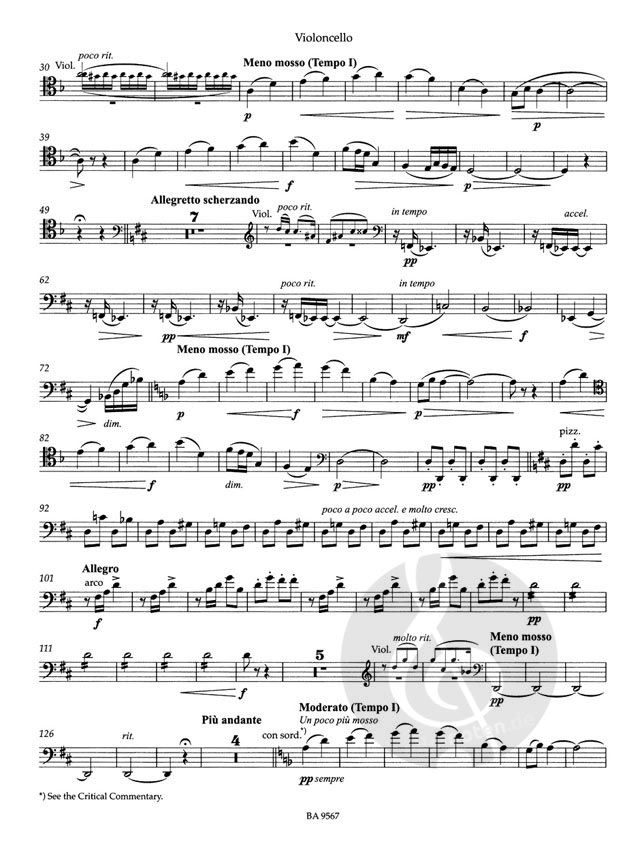
Dumky Trio op. 90
Trio
PDF
view
Antonín Dvořák
Dumky Trio op. 90
Trio
- Instrumentation Piano, Violin and Cello
- Composer Antonín Dvořák
- Series Bärenreiter Urtext
- Editor Christoph Flamm
-
Difficulty Level
- Edition Instrumental Score & Parts (Urtext) (Download)
- Publisher Bärenreiter Verlag
- Order no. BA9567-DL
 immediately available
Download immediately after ordering
incl. tax,
excl. shipping costs
Not available in all countries. Learn more
Description:
Dumky Trio now in the Bärenreiter Urtext
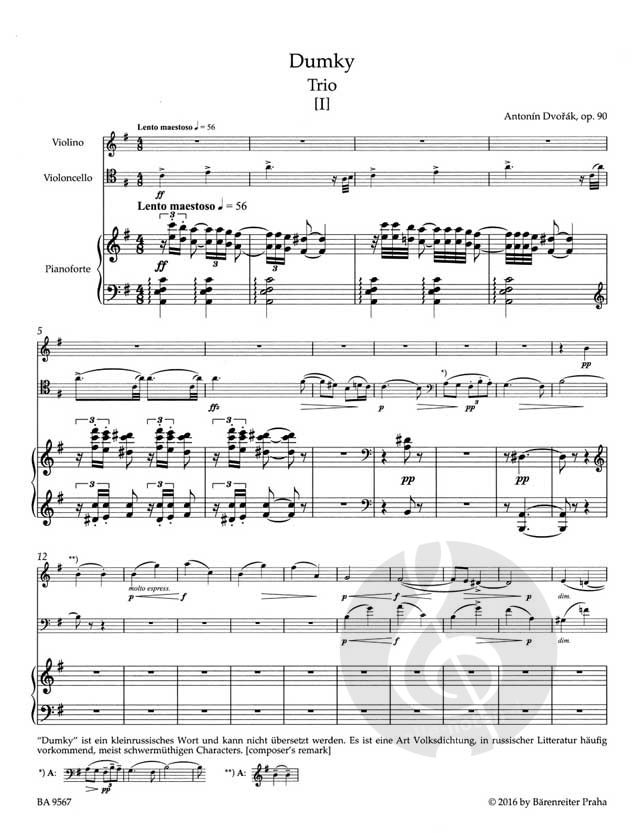
The "Dumka" is a Slavic folk song or dance with a melancholy character. Dvorák's main work in the piano trio genre is named after the "Dumka" movements it contains, which he composed in Prague between 1890 and 1891.
After some hesitation, he also produced a piano reduction in the summer of 1893 in the United States. In 1892, the composer had bid farewell to his homeland with this work on a tour of 40 concerts through Bohemia together with Ferdinand Lachner and Hans Wihan.
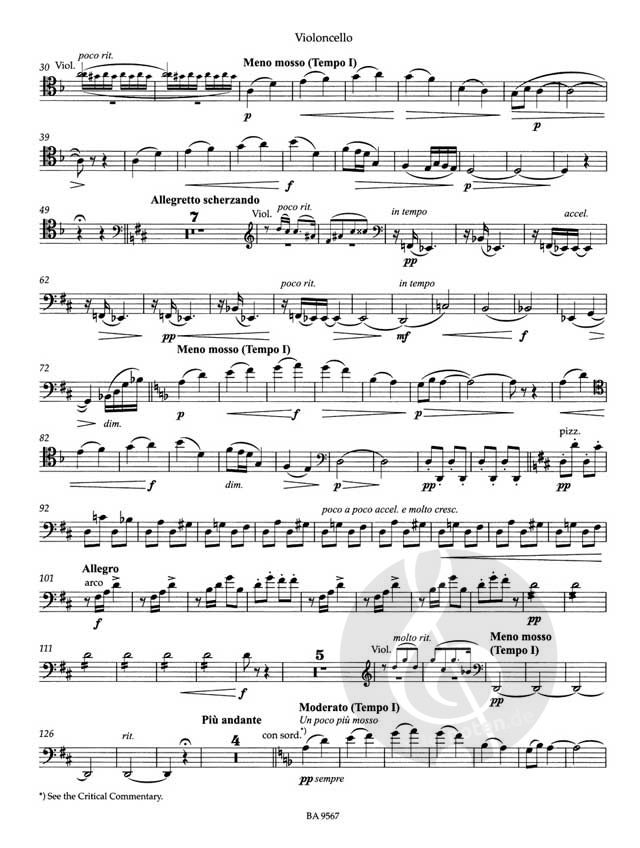
The editor of the new edition, Christoph Flamm, used Simrock's edition as a starting point; however, he carefully differentiates between the individual reprints and also takes Dvorák's sketches and piano reduction into account. He provides detailed information on the sources, tempo indications and movement divisions in the Critical Report.
The "Dumka" is a Slavic folk song or dance with a melancholy character. Dvorák's main work in the piano trio genre is named after the "Dumka" movements it contains, which he composed in Prague between 1890 and 1891.
After some hesitation, he also produced a piano reduction in the summer of 1893 in the United States. In 1892, the composer had bid farewell to his homeland with this work on a tour of 40 concerts through Bohemia together with Ferdinand Lachner and Hans Wihan.
The editor of the new edition, Christoph Flamm, used Simrock's edition as a starting point; however, he carefully differentiates between the individual reprints and also takes Dvorák's sketches and piano reduction into account. He provides detailed information on the sources, tempo indications and movement divisions in the Critical Report.
-
Lento maestoso Preface
-
Poco adagio
-
Andante
-
Andante moderato (quasi tempo di marchia)
-
Allegro
-
Lento maestoso
-
Appendix: Allegro moderato e grazioso
Related products:
Here is how the download works:
1 Buy download sheet music
Purchase the download score from our online store
2 Order confirmation with download link
Immediately after completing your order, you will receive an order confirmation by email listing all items. You will find the download link next to each item. You can use this link to start the download right away. Please also check your spam folder if necessary.
Customers rated this product:
Manufacturer Information:
Bärenreiter-Verlag Karl Vötterle GmbH & Co. KG
Heinrich-Schütz-Allee 35-37
34131
Kassel
Deutschland
Other customers also bought:
for bassoon solo cello solo
- Bassoon
- Sheet Music
-
in stock
ships within 1-2 working days
Johannes Brahms
- Violin, Viola, Cello and Piano
- Set of Parts (Urtext)
-
in stock
ships within 1-2 working days
- 3 Soloists, Mixed Choir (SATB) and Piano
- Piano Reduction (Urtext)
- Günter Raphael
-
ships within 2-4 working days
- Also available for download!
- High Voice and Continuo
- Sheet Music
- Gottfried Neubert
-
in stock
ships within 1-2 working days
Franz Schubert
- Violin, Cello and Piano
- Sheet Music
-
in stock
ships within 1-2 working days
Ludwig van Beethoven
- Violin, Cello and Piano
- Sheet Music
-
in stock
ships within 1-2 working days
Anne Terzibaschitsch
- Piano 4 Hands
- Sheet Music
-
in stock
ships within 1-2 working days
Antonín Dvořák
- String Quartet (2 Violins, Viola and Cello)
- Set of Parts (Urtext)
- Hartmut Schick
-
ships within 2-4 working days
- Also available for download!
- Piano 4 Hands
- Sheet Music
-
in stock
ships within 1-2 working days
- String Quartet (2 Violins, Viola and Cello)
- Set of Parts (Urtext)
-
in stock
ships within 1-2 working days
- Piano 4 Hands
- Sheet Music
-
in stock
ships within 1-2 working days
Joseph Haydn
- Violin, Cello and Piano
- Piano Score and Part(s)
-
in stock
ships within 1-2 working days
Wolfgang Amadeus Mozart
- Clarinet, 2 Violins, Viola and Cello
- Set of Parts (Urtext)
-
in stock
ships within 1-2 working days
Joseph Haydn
- Violin, Cello and Piano
- Piano Score and Part(s)
-
in stock
ships within 1-2 working days




- Violin, Cello and Piano
- Sheet Music
-
in stock
ships within 1-2 working days - Also available for download!