
Arnold Schönberg
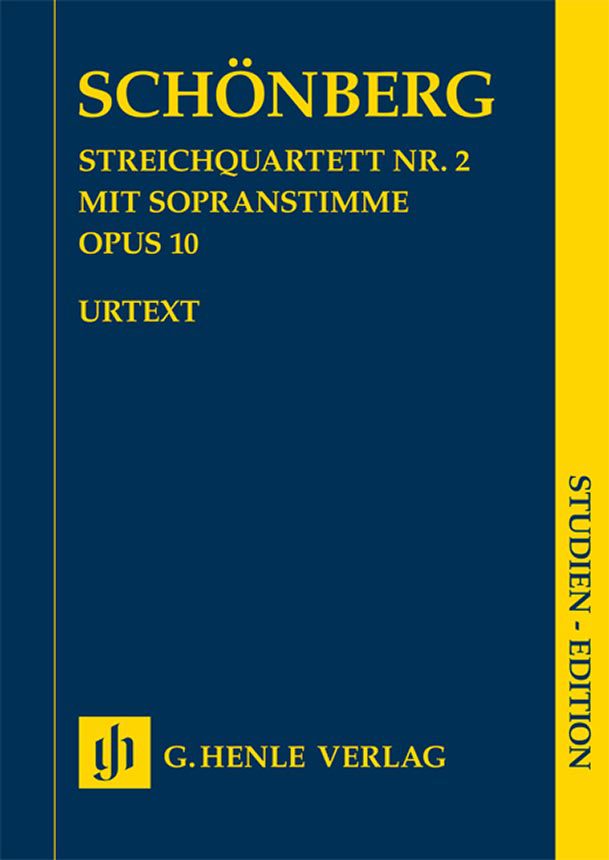
String Quartet no. 2 op. 10
with Soprano part
Arnold Schönberg
String Quartet no. 2 op. 10
with Soprano part
- Instrumentation String Quartet with Vocal(s) (High Voice, 2 Violins, Viola and Cello)
- Composer Arnold Schönberg
- Editor Ullrich Scheideler
-
Difficulty Level
- Edition Study Score (Urtext)
- Publisher G. Henle Verlag
- Order no. HN7542
 in stock
ships within 1-2 working days
incl. tax,
excl. shipping costs
Not available in all countries. Learn more

Description:
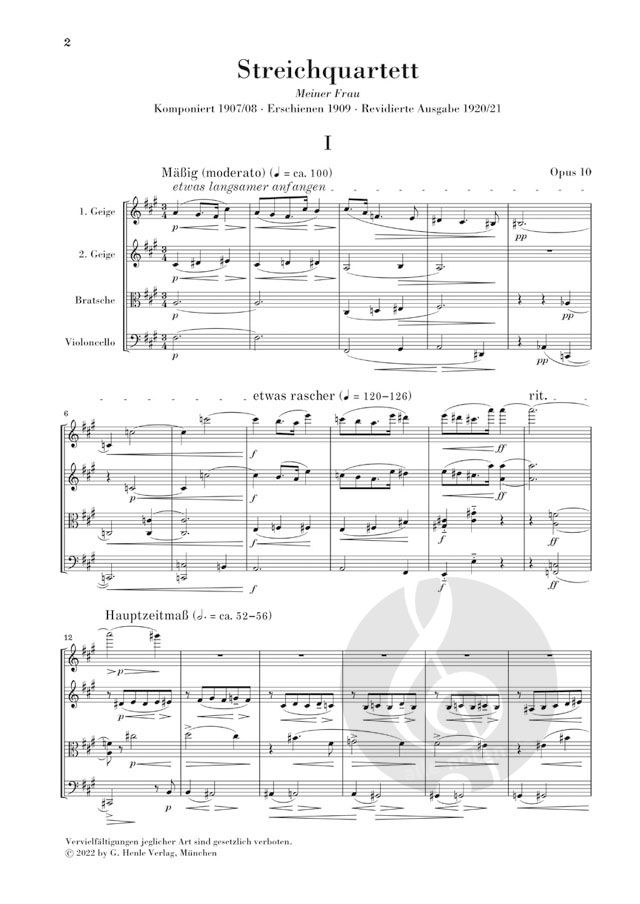
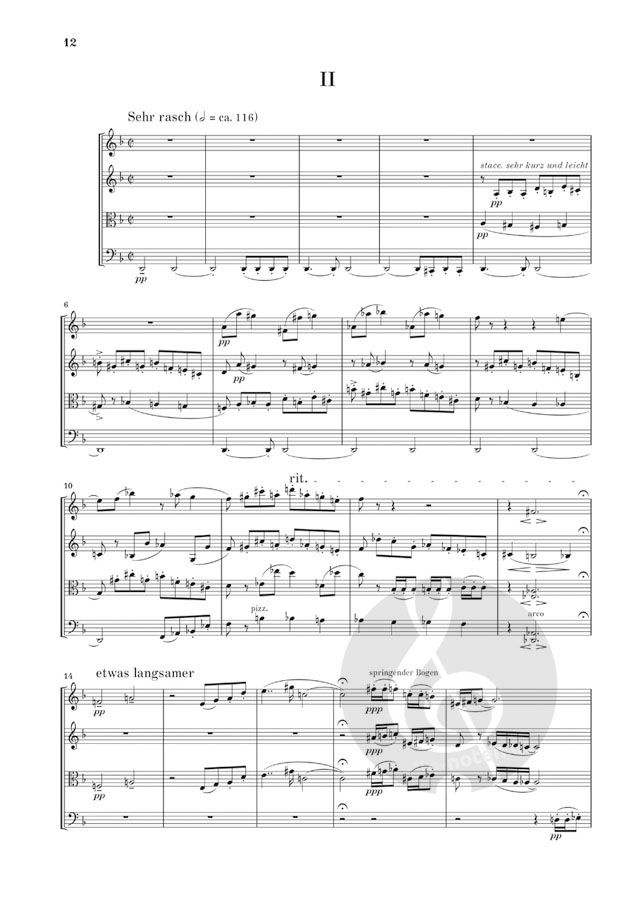
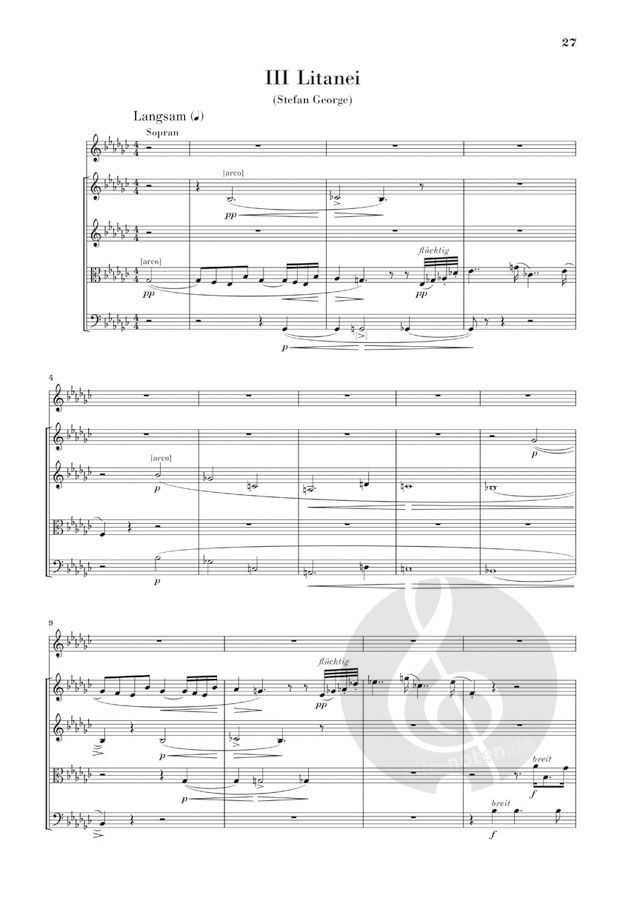
This chamber music work, composed in 1907/08, marks a turning point
not only in Schönberg's output, but also for the history of modern music in general. Major-minor tonality, obligatory for centuries, is increasingly abandoned over the four movements in favour of a free atonality. This break with music-historical tradition goes hand-in-hand with a further breach of convention; in the last two movements, Schönberg includes a solo soprano singing settings of two poems by Stefan George. With the transition to atonality, Schönberg opens the way to a new musical language which was to lead to twelve-tone music a little later. Without question, his second String Quartet represents a landmark in the history of music. The new Henle edition is edited by Schönberg specialist Ullrich Scheideler reflecting the latest state of research.
not only in Schönberg's output, but also for the history of modern music in general. Major-minor tonality, obligatory for centuries, is increasingly abandoned over the four movements in favour of a free atonality. This break with music-historical tradition goes hand-in-hand with a further breach of convention; in the last two movements, Schönberg includes a solo soprano singing settings of two poems by Stefan George. With the transition to atonality, Schönberg opens the way to a new musical language which was to lead to twelve-tone music a little later. Without question, his second String Quartet represents a landmark in the history of music. The new Henle edition is edited by Schönberg specialist Ullrich Scheideler reflecting the latest state of research.
Related products:
Customers rated this product:
Manufacturer Information:
G. Henle Verlag e.K.
Forstenrieder Allee 122
81476
München
Deutschland
Other customers also bought:

- Clarinet, Cello and Piano
- Score and Parts
-
in stock
ships within 1-2 working days - Also available for download!