
Wolfgang Amadeus Mozart
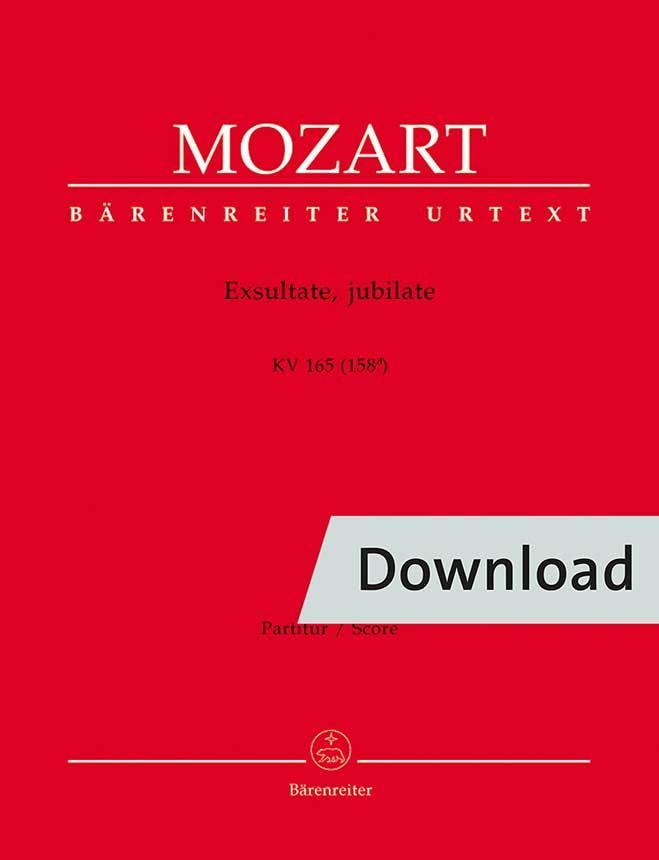
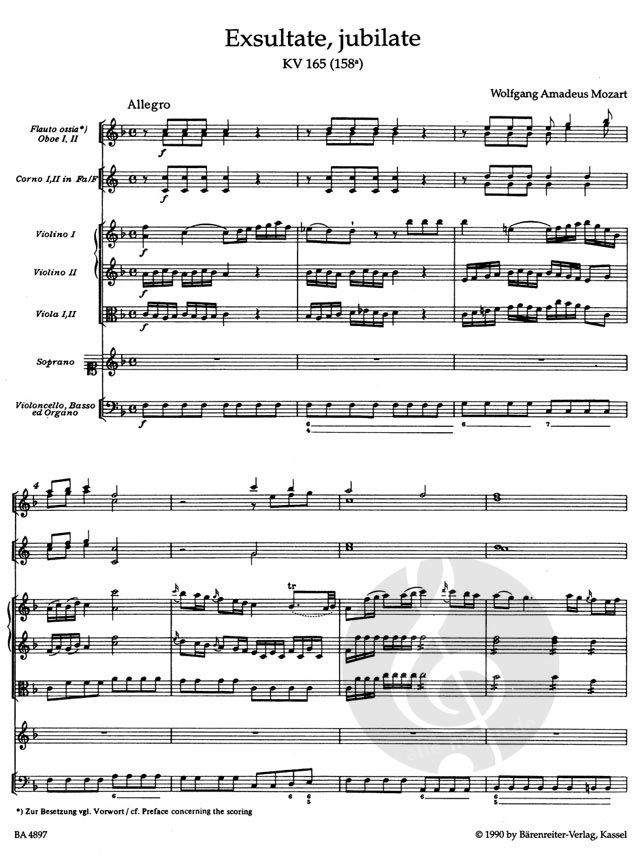
Exsultate, jubilate KV 165 (158a)
Motet
Wolfgang Amadeus Mozart
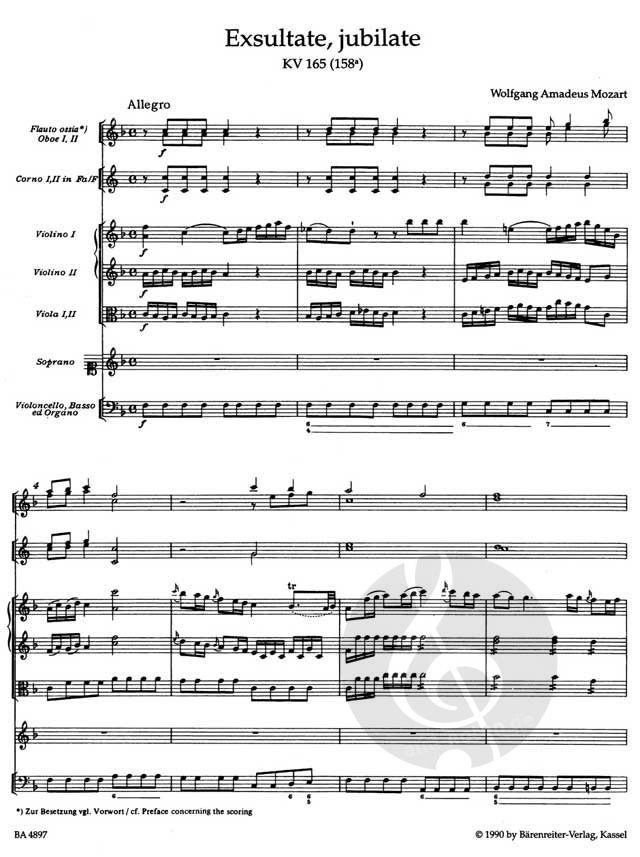
Exsultate, jubilate KV 165 (158a)
Motet
- Instrumentation High Voice, Organ and Orchestra
- Composer Wolfgang Amadeus Mozart
- Series Bärenreiter Urtext
- Editor Hellmut Federhofer Robert Münster
-
Difficulty Level
- Edition Score (Urtext) Download
- Publisher Bärenreiter Verlag
- Order no. BA4897-DL
 immediately available
Download immediately after ordering
incl. tax,
excl. shipping costs
Not available in all countries. Learn more

Description:
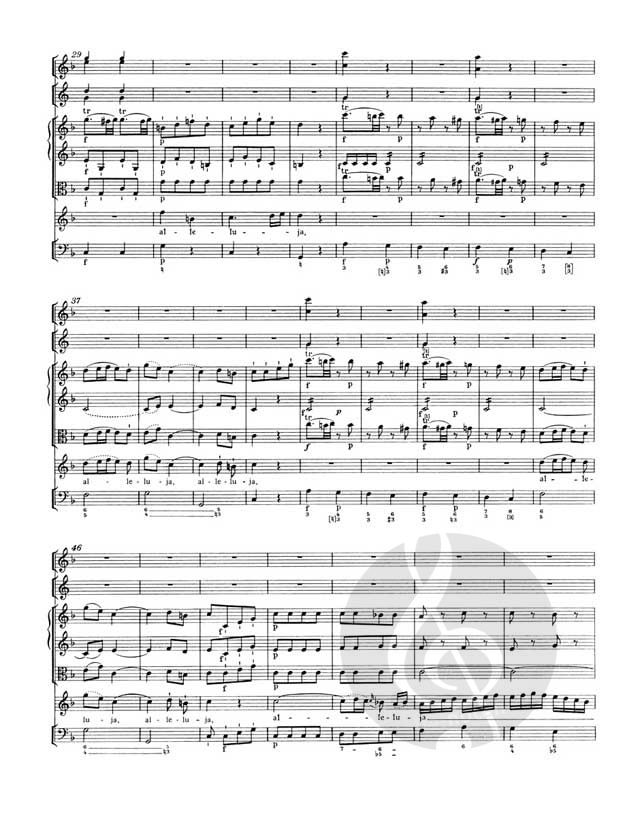
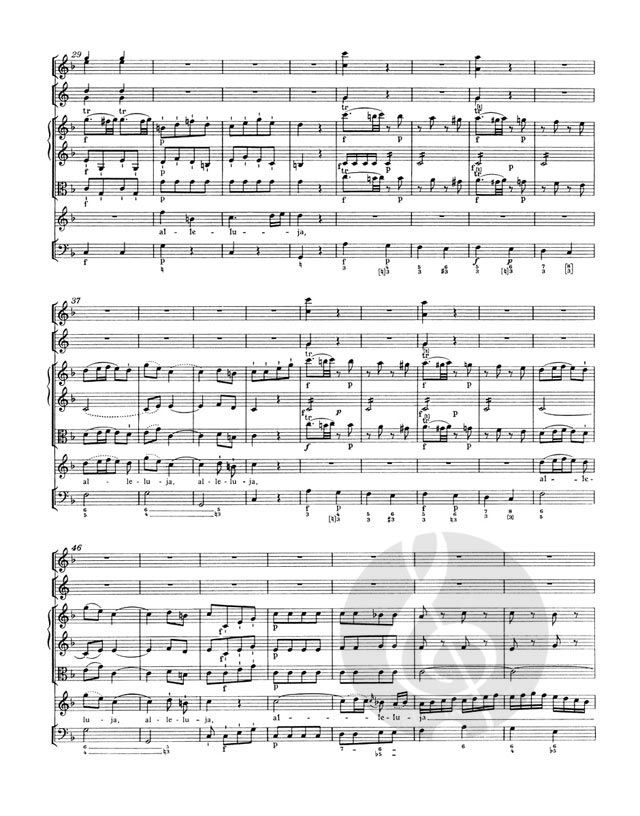
In Italy today, a Latin sacred solo cantata, which consists of two arias and two recitatives and concludes with a Hallelujah, and which is generally sung by one of the best singers after the Credo, is given this name [motet]. A composition of this kind is the solo motet Exsultate, jubilate KV 165/158a, which W. A. Mozart composed in Milan at the beginning of 1773 after the highly successful performance of his opera Lucio Silla.
During the recording and cataloging of music manuscripts in Bavaria funded by the German Research Foundation in 1978, the parts of a previously unknown second version were found in the parish church of St. Jakob in Wasserburg am Inn. The notes and text for the final Alleluia movement were written by the Salzburg court bassoonist and copyist Joseph Richard Estlinger (ca. 1720-1791), who worked extensively for Mozart's father and son. Compared to the Milan version, the vocal text of this Salzburg manuscript differs in the first aria and the recitative. It was added by another hand. The Salzburg version of the text is clearly related to the feast of the Holy Trinity. There is much to suggest that this version was first sung on May 30, 1779, on Trinity Sunday, by the Salzburg soprano castrato Francesco Ceccarelli in a service in the Holy Trinity Church mentioned by Nannerl Mozart. On this day, Leopold and Wolfgang Amadeus Mozart were invited to lunch with Ceccarelli in the priest's house of the church. The additional text version in the first aria allows the solo motet to be used for Christmas as well.
During the recording and cataloging of music manuscripts in Bavaria funded by the German Research Foundation in 1978, the parts of a previously unknown second version were found in the parish church of St. Jakob in Wasserburg am Inn. The notes and text for the final Alleluia movement were written by the Salzburg court bassoonist and copyist Joseph Richard Estlinger (ca. 1720-1791), who worked extensively for Mozart's father and son. Compared to the Milan version, the vocal text of this Salzburg manuscript differs in the first aria and the recitative. It was added by another hand. The Salzburg version of the text is clearly related to the feast of the Holy Trinity. There is much to suggest that this version was first sung on May 30, 1779, on Trinity Sunday, by the Salzburg soprano castrato Francesco Ceccarelli in a service in the Holy Trinity Church mentioned by Nannerl Mozart. On this day, Leopold and Wolfgang Amadeus Mozart were invited to lunch with Ceccarelli in the priest's house of the church. The additional text version in the first aria allows the solo motet to be used for Christmas as well.
Related products:
Here is how the download works:
1 Buy download sheet music
Purchase the download score from our online store
2 Order confirmation with download link
Immediately after completing your order, you will receive an order confirmation by email listing all items. You will find the download link next to each item. You can use this link to start the download right away. Please also check your spam folder if necessary.
Customers rated this product:
Manufacturer Information:
Bärenreiter-Verlag Karl Vötterle GmbH & Co. KG
Heinrich-Schütz-Allee 35-37
34131
Kassel
Deutschland
Other customers also bought:
- High Voice, Organ and Orchestra
- Harmony Parts (Urtext)
-
ships within 2-4 working days
- High Voice and Piano
- Piano Reduction (Urtext)
- Martin Focke
-
in stock
ships within 1-2 working days - Also available for download!
- High Voice, Organ and Orchestra
- Instrumental Parts: Cello, Double Bass and Bassoon (Urtext)
-
ships within 2-4 working days
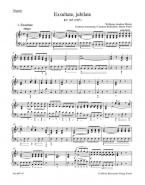
- High Voice, Organ and Orchestra
- Instrumental Part: Organ (Urtext)
-
ships within 2-4 working days
- High Voice, Organ and Orchestra
- Instrumental Part: Violin 2 (Urtext)
-
ships within 2-4 working days
- High Voice, Organ and Orchestra
- Instrumental Part: Violin 1 (Urtext)
-
ships within 2-4 working days
- High Voice, Organ and Orchestra
- Instrumental Parts: Viola 1 & Viola 2 (Urtext)
-
ships within 2-4 working days
- Soloists, Mixed Choir (SATB) and Chamber Orchestra
- Piano Reduction
-
in stock
ships within 1-2 working days - Also available for download!
Wolfgang Amadeus Mozart
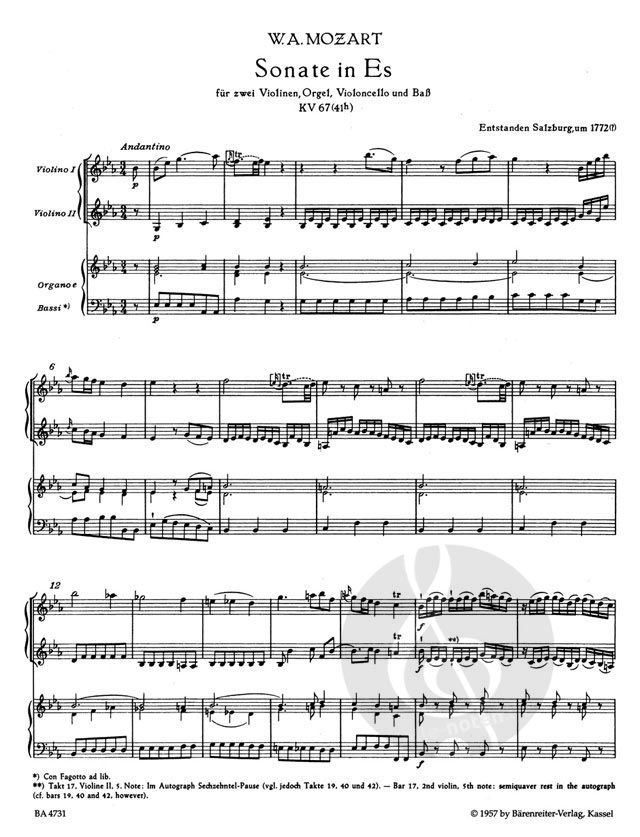
Neun Sonaten für zwei Violinen, Orgel und Violoncello/Bass
- Organ, 2 Violins, Cello and Double Bass
- Score and Parts (Urtext)
-
in stock
ships within 1-2 working days - Also available for download!
Wolfgang Amadeus Mozart
Neun Sonaten für zwei Violinen, Orgel und Violoncello/Bass
- Organ and String orchestra
- Instrumental Part: Organ Solo (Urtext)
-
ships within 2-4 working days
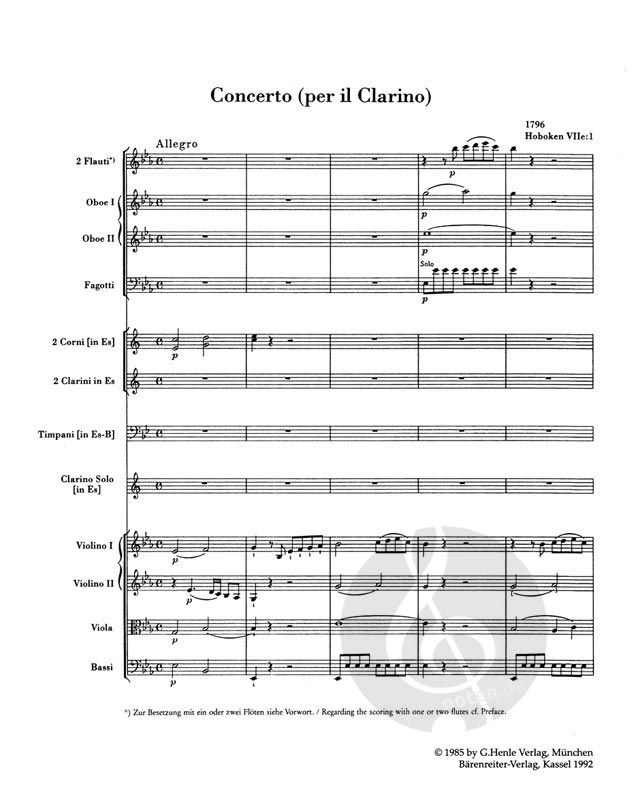
- Orchestra
- Score (Urtext)
-
in stock
ships within 1-2 working days
Joseph Haydn
- Trumpet and Orchestra
- Study Score (Urtext)
-
in stock
ships within 1-2 working days



- High Voice and Organ
- Piano Reduction
-
in stock
ships within 1-2 working days
Ernest Chausson
für Stimme und Orgel (Harmonium) op.16/3
- Piano and Voice
- Sheet Music
-
ships within 4-8 working days
Ernest Chausson
- Voice and Organ
- Sheet Music
-
ships within 3-6 working days