
Jean-Philippe Rameau
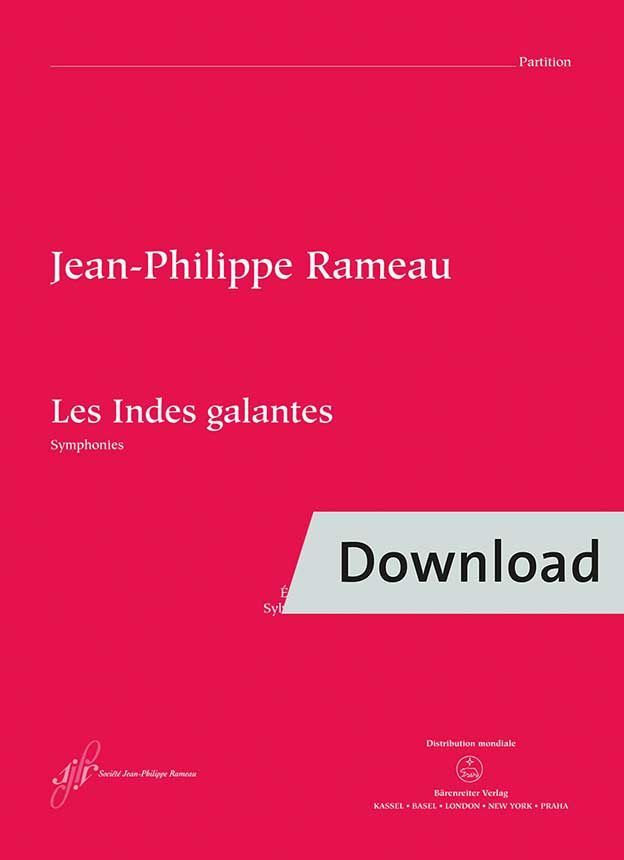
Les Indes galantes RCT 44
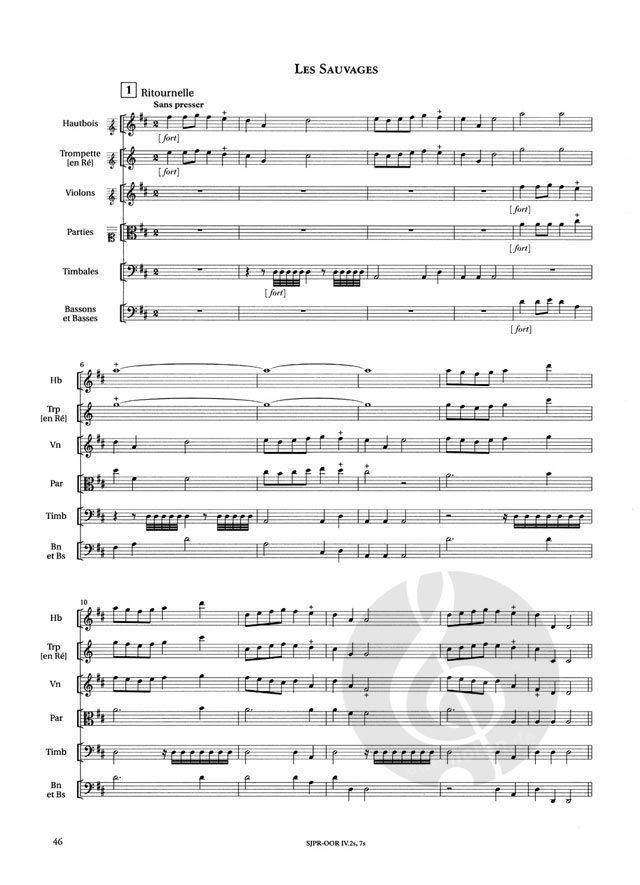
Ballet héroïque in a prologue and 4 acts - Symphonies - Version 1736
Jean-Philippe Rameau
Les Indes galantes RCT 44
Ballet héroïque in a prologue and 4 acts - Symphonies - Version 1736
- Instrumentation Orchestra
- Composer Jean-Philippe Rameau
- Editor Sylvie Bouissou
- Lyricist Louis Fuzelier
- Edition Score Download
- Publisher Bärenreiter Verlag
- Order no. BA7568-DL
 immediately available
Download immediately after ordering
incl. tax,
excl. shipping costs
Not available in all countries. Learn more

Description:
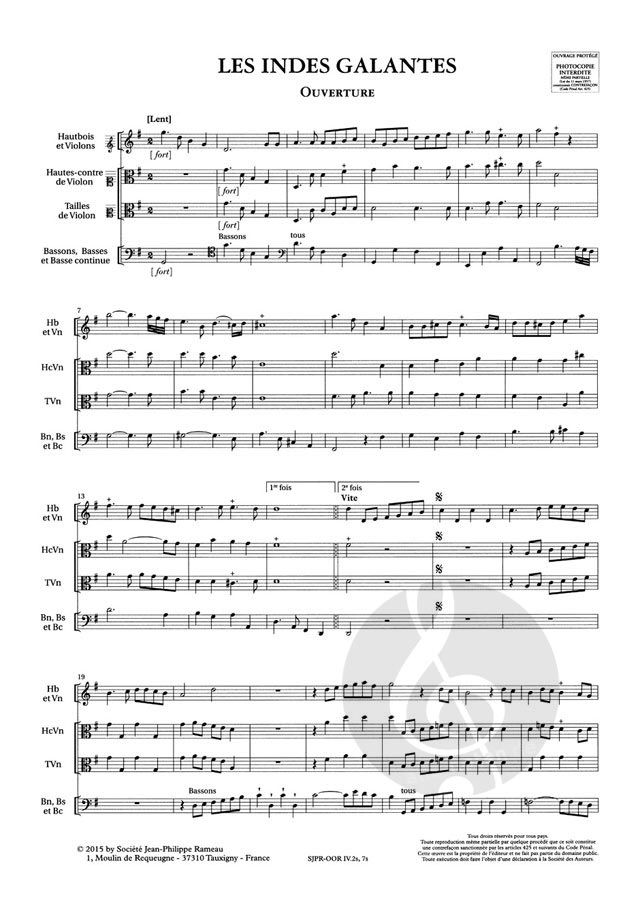
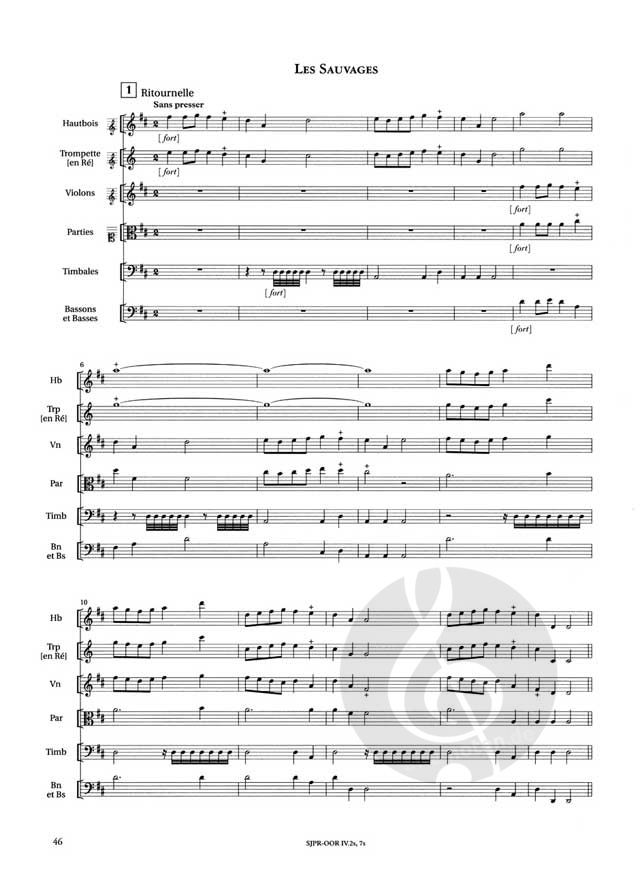
The new critical edition of the score has finally shed light on the complex history of its transmission: at its first performance on August 23, 1735, Rameau's "ballet héroïque" Les Indes galantes still consisted of a prologue and three acts: Le Turc généreux, Les Incas du Pérou and Les Fleurs. However, Les Fleurs was already controversial at the first performances and was performed in a completely new form from September 11 of the same year. For the revival on 10 March 1736, Rameau and Fuzelier added a completely new act, Les Sauvages, and in the following years the "Ballet héroïque" was performed either in its entirety (1743, 1751 and 1761) or abridged with Prologue, Les Incas du Pérou and Les Sauvages (between 1751 and 1773).
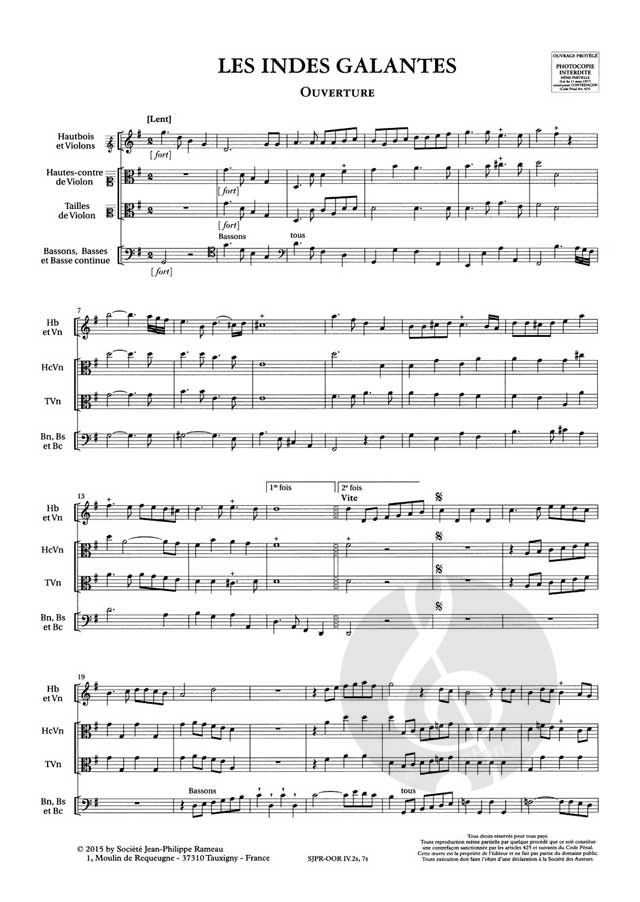
In accordance with the complete edition volume of the score, edited by Sylvie Bouissou (OOR IV 2, 7, i.V.), this volume of instrumental movements (dances and dramatic movements) includes not only the orchestral pieces from the version that Rameau considered valid in 1736 (with the second version of Les Fleurs and Les Sauvages), but also offers the instrumental movements from the first version of Les Fleurs from 1735 and the revisions from 1743 to 1773. This means that performers also have a complete selection of all orchestral movements from one of the master's central stage works for concert performances.
In accordance with the complete edition volume of the score, edited by Sylvie Bouissou (OOR IV 2, 7, i.V.), this volume of instrumental movements (dances and dramatic movements) includes not only the orchestral pieces from the version that Rameau considered valid in 1736 (with the second version of Les Fleurs and Les Sauvages), but also offers the instrumental movements from the first version of Les Fleurs from 1735 and the revisions from 1743 to 1773. This means that performers also have a complete selection of all orchestral movements from one of the master's central stage works for concert performances.
Related products:
Here is how the download works:
1 Buy download sheet music
Purchase the download score from our online store
2 Order confirmation with download link
Immediately after completing your order, you will receive an order confirmation by email listing all items. You will find the download link next to each item. You can use this link to start the download right away. Please also check your spam folder if necessary.
Customers rated this product:
Manufacturer Information:
Bärenreiter-Verlag Karl Vötterle GmbH & Co. KG
Heinrich-Schütz-Allee 35-37
34131
Kassel
Deutschland
Other customers also bought:

Antonio Vivaldi
- Orchestra
- Score and Parts (Orchestra)
- Stefan Taupe
-
ships within 2-4 working days
Libby Schenkman
- Flute
- Sheet Music
-
in stock
ships within 1-2 working days
- Piano
- Sheet Music and CD
-
in stock
ships within 1-2 working days
50 Songs Created For The Guitar
- Classical Guitar
- Sheet Music
-
in stock
ships within 1-2 working days

16 Beautiful Tunes for Tolerance and Peace
- Piano
- Sheet Music and CD
- Carsten Gerlitz
-
in stock
ships within 1-2 working days
- 1-2 Flutes and Piano
- Piano Score, Part(s) and CD
-
in stock
ships within 1-2 working days

- Songbook (Piano/Vocal/Guitar)
- Sheet Music
-
in stock
ships within 1-2 working days
- Flute Duet
- Sheet Music
-
in stock
ships within 1-2 working days

Neil Young
- Electric Guitar
- Sheet Music (Notes & Tablature)
-
ships within 3-6 working days

Anne Hoeltzenbein
Gitarrenschule für Erzieher/-innen und Eltern
- Guitar
- Sheet Music, Online Audio and Online Video
-
in stock
ships within 1-2 working days
- 1-2 Flutes and Piano
- Piano Score, Part(s) and CD
-
in stock
ships within 1-2 working days
- 1-2 Flutes and Piano
- Piano Score, Part(s) and CD
-
in stock
ships within 1-2 working days
- Orchestra
- Score
-
ships within 2-5 working days
- Clarinet and Orchestra
- Score (Urtext)
-
in stock
ships within 1-2 working days - Also available for download!

- Orchestra
- Score (Urtext)
-
in stock
ships within 1-2 working days - Also available for download!