
Jean-Philippe Rameau
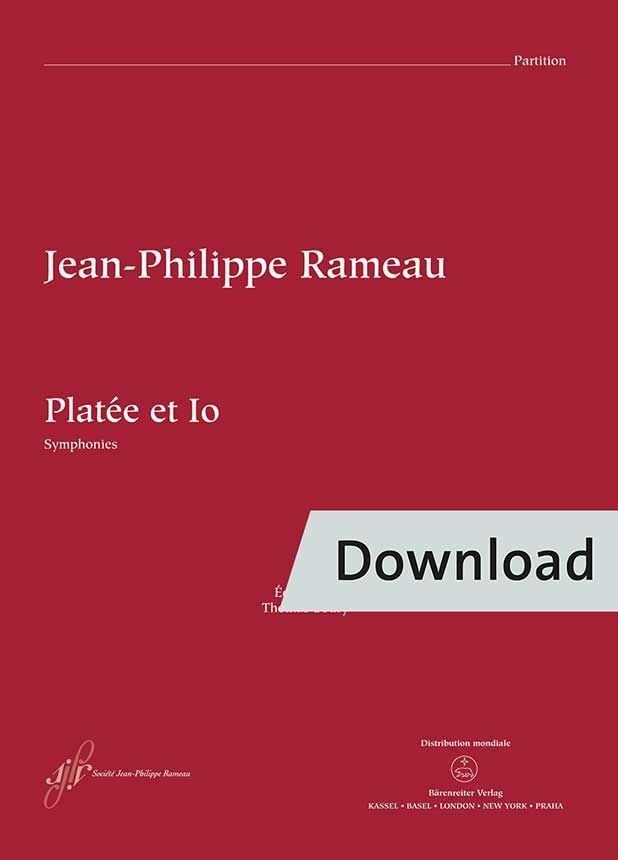
Platée, Io RCT 53 and RCT 45
Symphonies
Jean-Philippe Rameau
Platée, Io RCT 53 and RCT 45
Symphonies
- Instrumentation Orchestra
- Composer Jean-Philippe Rameau
- Editor Thomas Soury
- Edition Score Download
- Publisher Bärenreiter Verlag
- Order no. BA8895-DL
 immediately available
Download immediately after ordering
incl. tax,
excl. shipping costs
Not available in all countries. Learn more

Description:
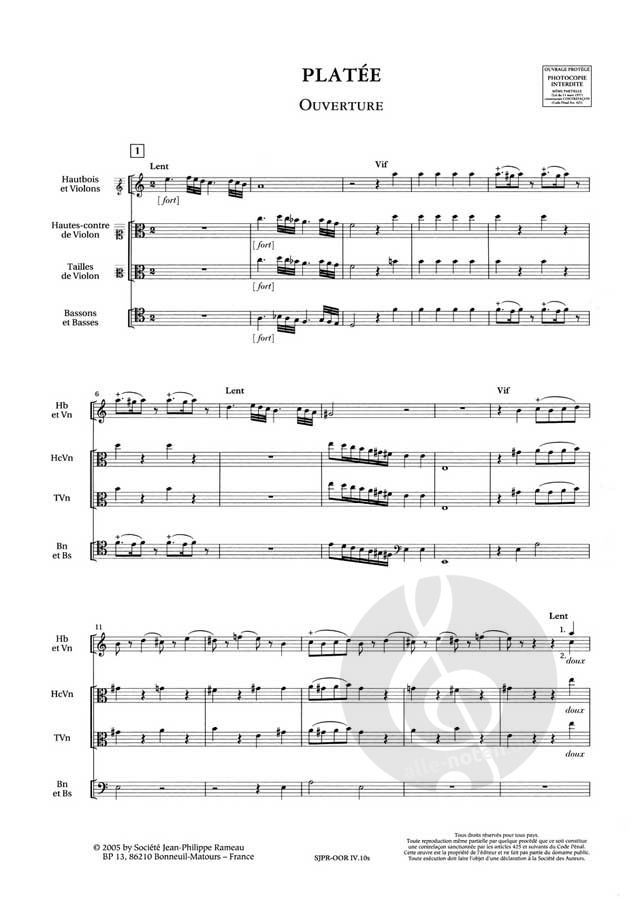
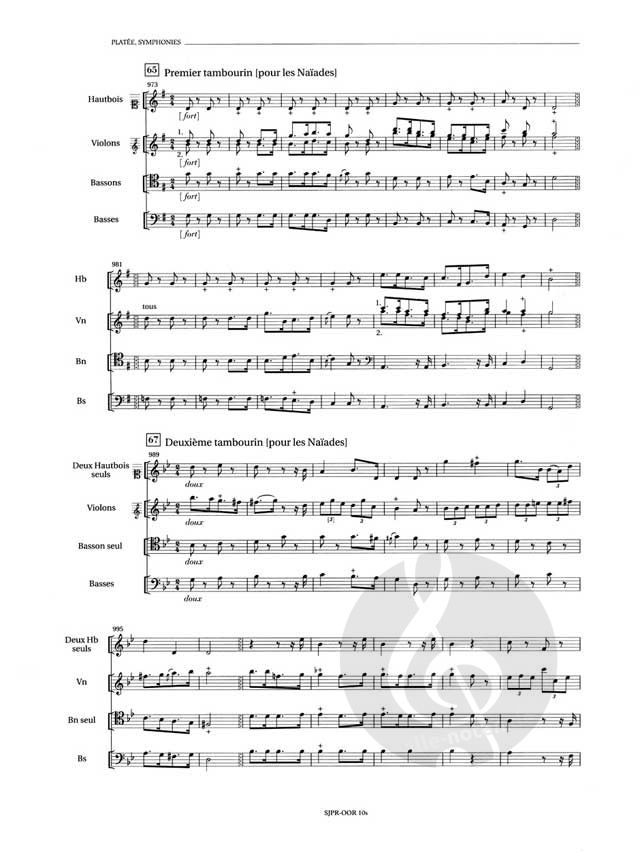
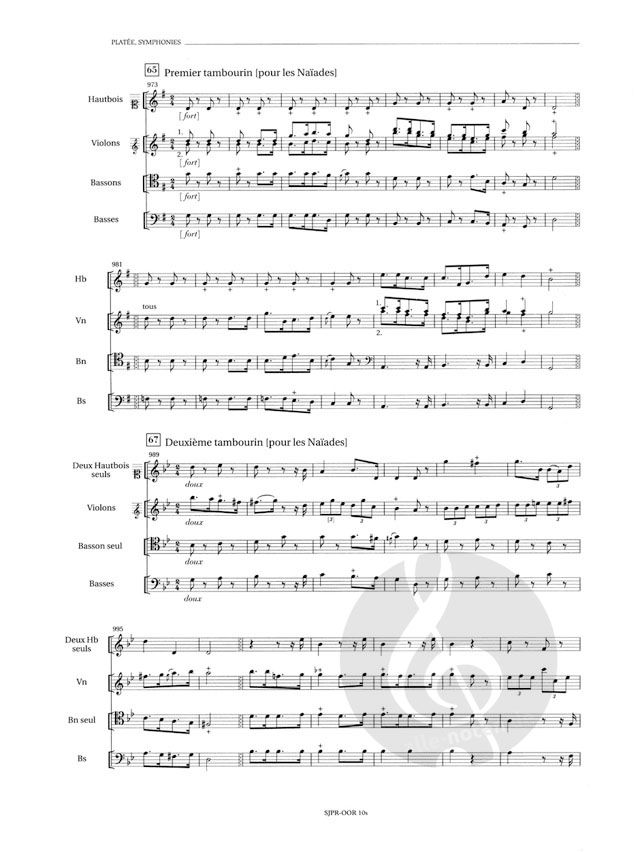
This edition brings together all the purely instrumental and danced movements of one of Rameau's most popular operas as well as those of the last and incomplete one-act opéra-ballet "Io", during the composition of which Rameau died.
"Platée" was based on a libretto by Jacques Autreau, which Rameau had adapted for his own purposes - particularly with regard to comic effects. In the form of a grotesque, it shows how Jupiter cures his wife Juno of jealousy. He celebrates a mock love wedding with the ugly swamp nymph Platée. In the face of such a ridiculous adversary, Juno is forced to realize that her suspicions were unfounded.
The occasion of the first performance in Versailles in 1745 was the wedding of the Dauphin Louis to Maria Theresa of Spain. However, this performance was a failure, as the crude comedy and bizarre characters seemed inappropriate for the wedding audience. It was not until 1749 in Paris that "Platée" achieved its breakthrough and Rameau was able to celebrate his greatest success to date; a further version, which also changed the text, was performed from 1754.
The plot of the fragment "Io" is based on the love affair between the nymph Io and Jupiter in the guise of the shepherd Hylas, who rivals Apollo in the guise of Philemon.
Now the orchestral movements of the cruelly comic purgatory of vanities, which are as imaginative as they are varied, can be used even more flexibly in concert.
"Platée" was based on a libretto by Jacques Autreau, which Rameau had adapted for his own purposes - particularly with regard to comic effects. In the form of a grotesque, it shows how Jupiter cures his wife Juno of jealousy. He celebrates a mock love wedding with the ugly swamp nymph Platée. In the face of such a ridiculous adversary, Juno is forced to realize that her suspicions were unfounded.
The occasion of the first performance in Versailles in 1745 was the wedding of the Dauphin Louis to Maria Theresa of Spain. However, this performance was a failure, as the crude comedy and bizarre characters seemed inappropriate for the wedding audience. It was not until 1749 in Paris that "Platée" achieved its breakthrough and Rameau was able to celebrate his greatest success to date; a further version, which also changed the text, was performed from 1754.
The plot of the fragment "Io" is based on the love affair between the nymph Io and Jupiter in the guise of the shepherd Hylas, who rivals Apollo in the guise of Philemon.
Now the orchestral movements of the cruelly comic purgatory of vanities, which are as imaginative as they are varied, can be used even more flexibly in concert.