
Dietrich Buxtehude
Orgelwerke Band III/1: Choralbearbeitungen A-L
Urtext - Kritische Quellenedition der freien Orgelwerke: BuxWV 177-178, 180-202, 210, 218

PDF
view
Recommend
recommend item
Dietrich Buxtehude
Orgelwerke Band III/1: Choralbearbeitungen A-L
Urtext - Kritische Quellenedition der freien Orgelwerke: BuxWV 177-178, 180-202, 210, 218
- Instrumentation Organ
- Edition Sheet Music (Urtext)
- Composer Dietrich Buxtehude
- Publisher Breitkopf & Härtel
- Editor Harald Vogel
- Order no. EB9470
incl. tax,
excl. shipping costs
 ships within 2-5 working days

Description:
The chorale-bound organ works include traditional compositional forms such as chorale variations as well as large chorale fantasias. 3 staves, easy to read)
The chorale-based organ works include traditional compositional forms such as the chorale variation and the chorale ricercar alongside the large chorale fantasias. The two compositions of the "Magnificat primi toni" belong to the chorale toccata genre, in which toccata sections and fugues alternate. The chorale preludes with the expressive figurations in the upper voice and the fugal interludes belong to the late section of Buxtehude's oeuvre.
The chorale-bound organ works are again divided into two volumes in order to achieve a manageable size. This is a source edition in which the musical text has been prepared for practical use; for example, great importance has been attached to good legibility through a flexible distribution of parts on 2 or 3 staves and good turning points. In addition to the critical report, the extensive text apparatus (in volume III/2) contains detailed information on the notation, the ornamental style and the organs at Buxtehude's places of activity in Denmark, Sweden and Lübeck.
Customers rated this product:
alle-noten.de: Sheet music shipping since 1969

Since 1969, over 500,000 customers have trusted us. With a huge selection of over 1,000,000 sheet music titles, we are one of the largest providers in Europe. Thanks to our large stock we can often ship sheet music within 24 hours. No matter what sheet music you are looking for: you are in the right place!
Yours, Stefanie Reichert
Head of Customer Service
Other customers also bought:

Samuel Scheidt, Johann Erasmus Kindermann
- Organ
- Sheet Music
-
ships within 2-4 weeks

Dietrich Buxtehude
Urtext - Kritische Quellenedition der freien Orgelwerke: BuxWV 76, 179, 203-209, 211-217, 219-224
- Organ
- Sheet Music
-
ships within 2-5 working days

David Sanger
- Organ
- Sheet Music
-
in stock
|
ships within 1-2 working days

- Organ
- Sheet Music
-
in stock
|
ships within 1-2 working days

François Couperin
- Harpsichord
- Sheet Music
-
in stock
|
ships within 1-2 working days

- Organ
- Sheet Music
-
in stock
|
ships within 1-2 working days
- Also available for download!

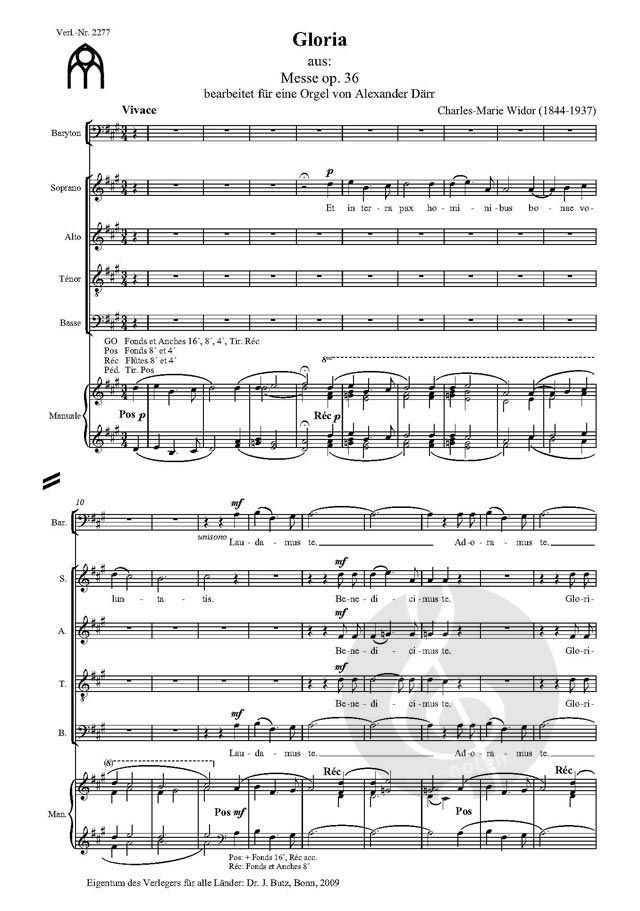
Charles-Marie Widor
- Mixed Choir (SATB), Men's Chorus (1-2 Parts) and Organ
- Score
-
ships within 3-6 working days


- Organ
- Sheet Music
-
in stock
|
ships within 1-2 working days
- Also available for download!