
Maurice Ravel
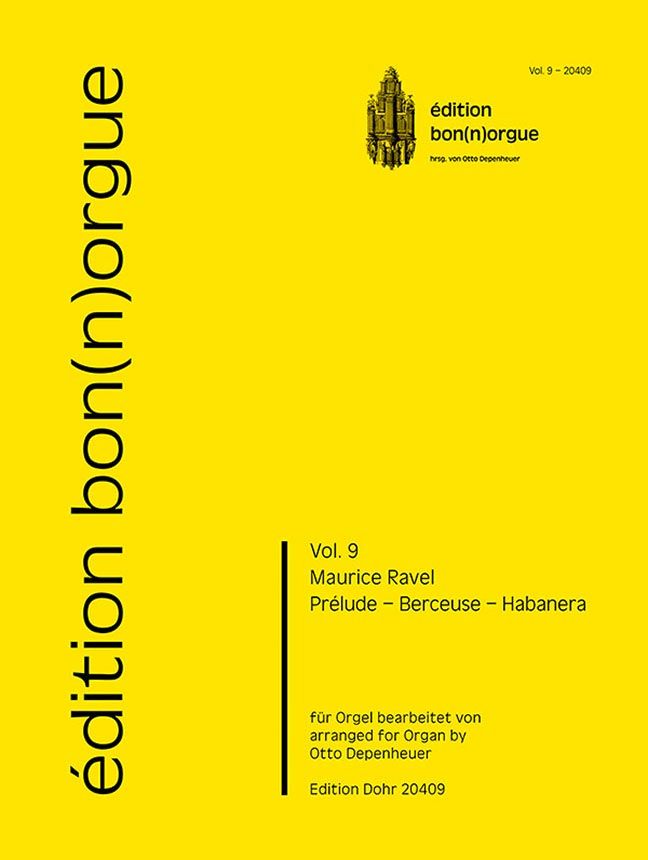
Prélude - Berceuse - Habanera
for organ - édition bon(n)orgue Vol. 9
Maurice Ravel
Prélude - Berceuse - Habanera
for organ - édition bon(n)orgue Vol. 9
- Instrumentation Organ
- Composer Maurice Ravel
- Editor Otto Depenheuer
- Edition Sheet Music
- Publisher Musikverlag Christoph Dohr
- Order no. DOHR20409
 ships within 2-5 working days
incl. tax,
excl. shipping costs
Not available in all countries. Learn more

Description:
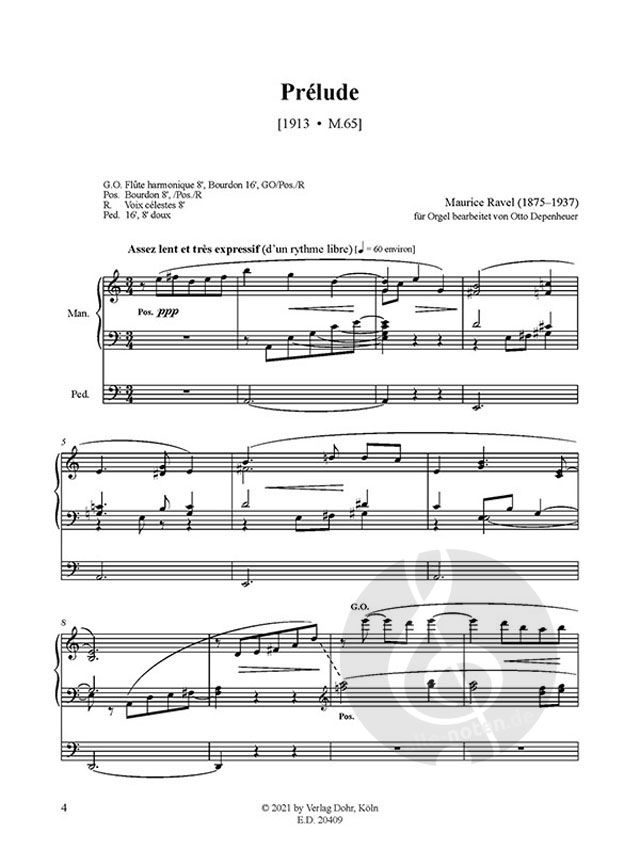
The small, simple but harmonically enchanting Prélude dates from 1913. Ravel composed it at the request of the Paris Conservatoire as a practice piece for 'sight-reading'.
In September 1922, the Revue musicale published a special issue on the occasion of Gabriel Fauré's 77th birthday. Maurice Ravel expressed his appreciation for the jubilarian with the 'Berceuse sur le nom de Gabriel Fauré' for violin and piano. The theme of the Berceuse is derived from the letters of Gabriel Fauré's name.
Like Louis Vierne (1870-1937) with his Andantino and Gabriel Fauré, Maurice Ravel also made his contribution to the 'Répertoire Moderne de Vocalises-Etudes' in 1907, which the singer, poet, music critic and singing teacher at the Paris Conservatoire Amédeée-Landély Hettich (1856-1937) published at the beginning of the 20th century. Hettich succeeded in attracting numerous renowned composers to contribute to his 'Repertoire Moderne', comprising 150 vocalises, introducing the genre of the vocalise as a veritable concert piece and making it extraordinarily popular in France. (Otto Depenheuer)
In September 1922, the Revue musicale published a special issue on the occasion of Gabriel Fauré's 77th birthday. Maurice Ravel expressed his appreciation for the jubilarian with the 'Berceuse sur le nom de Gabriel Fauré' for violin and piano. The theme of the Berceuse is derived from the letters of Gabriel Fauré's name.
Like Louis Vierne (1870-1937) with his Andantino and Gabriel Fauré, Maurice Ravel also made his contribution to the 'Répertoire Moderne de Vocalises-Etudes' in 1907, which the singer, poet, music critic and singing teacher at the Paris Conservatoire Amédeée-Landély Hettich (1856-1937) published at the beginning of the 20th century. Hettich succeeded in attracting numerous renowned composers to contribute to his 'Repertoire Moderne', comprising 150 vocalises, introducing the genre of the vocalise as a veritable concert piece and making it extraordinarily popular in France. (Otto Depenheuer)
-
Prélude [1913 - M. 65]
-
Berceuse sur le nom de Gabriel Fauré [M. 74]
-
Habanera (Vocalise-Étude) [1907]
Customers rated this product:
Manufacturer Information:
MV Christoph Dohr
Kasselberger Weg 120
50769
Köln
Deutschland
Other customers also bought:
- Organ
- Score
-
ships within 4-8 working days

Maurice Ravel
- Organ
- Sheet Music
-
ships within 3-6 working days
- Organ
- Sheet Music
-
ships within 3-6 working days
Maurice Ravel, Isaac Albéniz
- Organ
- Score
- Enrique Fernandez Arbós
-
in stock
ships within 1-2 working days
Maurice Ravel
- Organ
- Sheet Music
-
ships within 3-6 working days
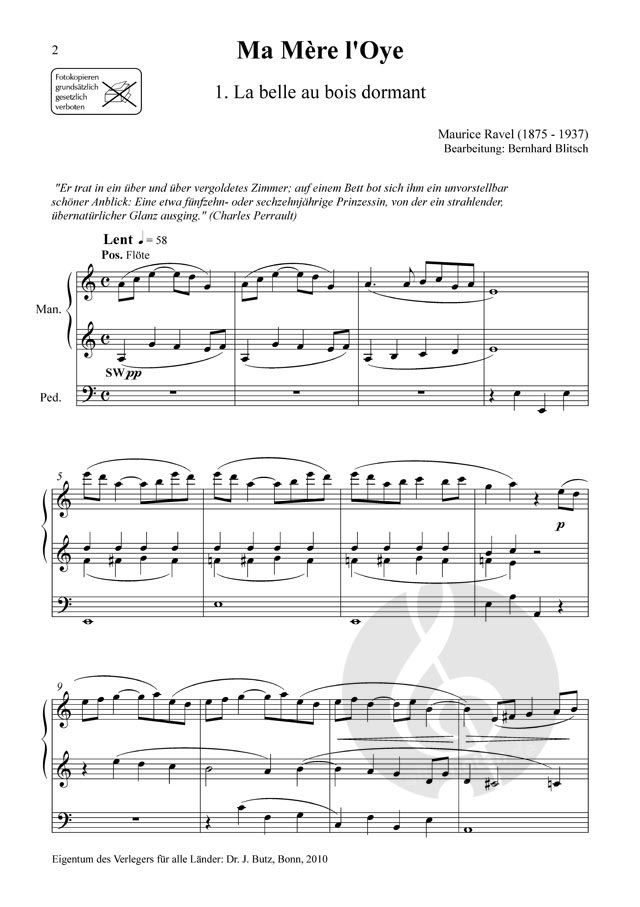
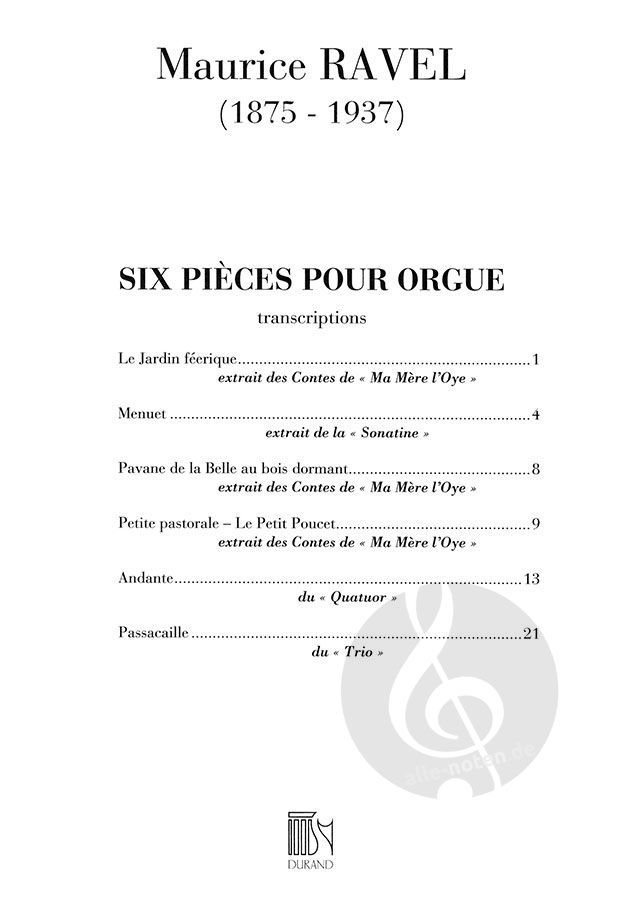

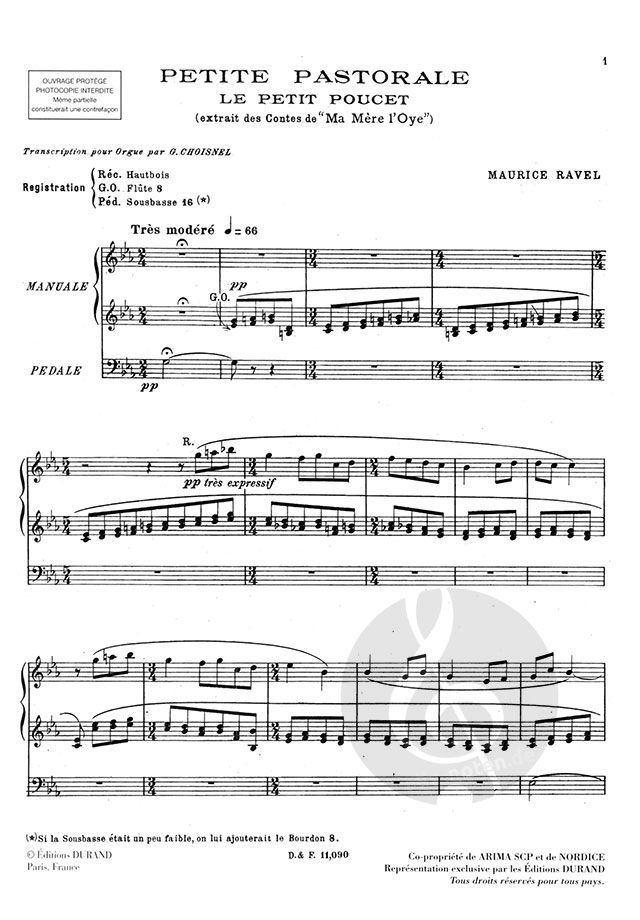
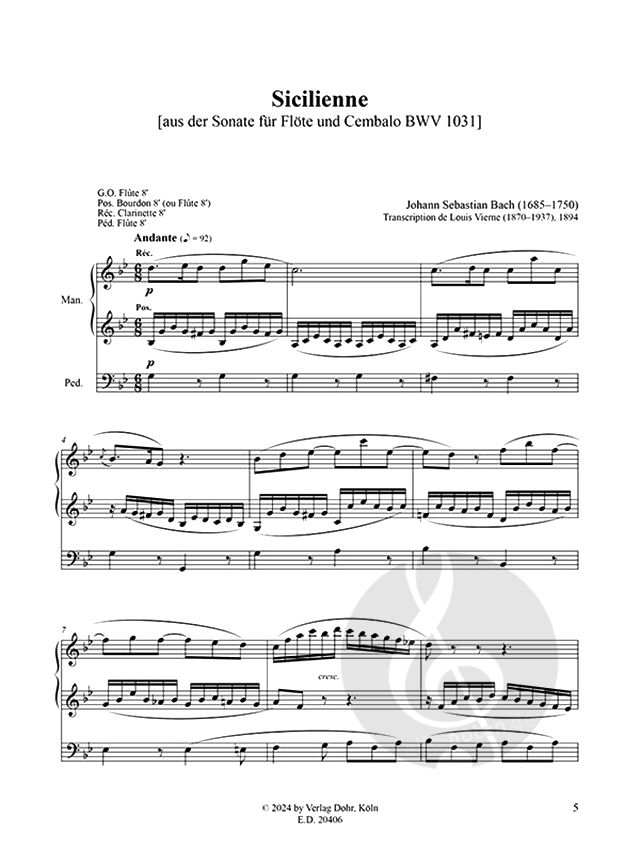
- Organ
- Sheet Music
-
ships within 2-5 working days
William Byrd
- Organ
- Sheet Music
-
ships within 4-8 working days
Johann Sebastian Bach
- Organ
- Sheet Music
-
ships within 2-4 weeks
- Organ
- Sheet Music
-
ships within 4-8 working days