
Camille Saint-Saëns
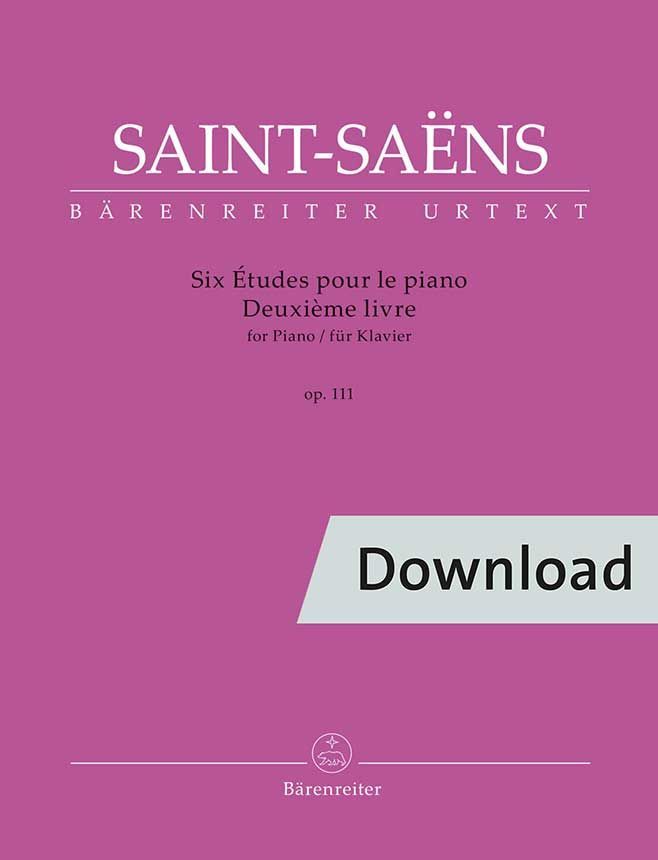
6 Études - Deuxième livre op. 111 R 49
for piano

Camille Saint-Saëns
6 Études - Deuxième livre op. 111 R 49
for piano
- Instrumentation Piano
- Composer Camille Saint-Saëns
- Series Bärenreiter Urtext
- Editor Catherine Massip
-
Difficulty Level
- Edition Sheet Music Download (Urtext)
- Publisher Bärenreiter Verlag
- Order no. BA11855-DL
 immediately available
Download immediately after ordering
incl. tax,
excl. shipping costs
Not available in all countries. Learn more
Description:
More than 20 years after op. 52, Saint-Saëns returned to the concert étude genre. In 1892, he wrote an etude initially intended for publication in a magazine, the later No. 1. However, on the advice of his publisher Durand, the composer refrained from a single publication and wrote a further five etudes to complete a new collection by 1898. The dedications are mainly addressed as thanks to pianists who supported the performance of his piano music, including Arthur De Greef, Raoul Pugno and Édouard Risler. Shortly after the publication of the 1899 edition, Pablo Sarasate arranged the impressionistic-sounding etude "Les Cloches de Las Palmas" for solo violin and Risler arranged the last two pieces (Tierces majeures chromatiques, Toccata) for two pianos.
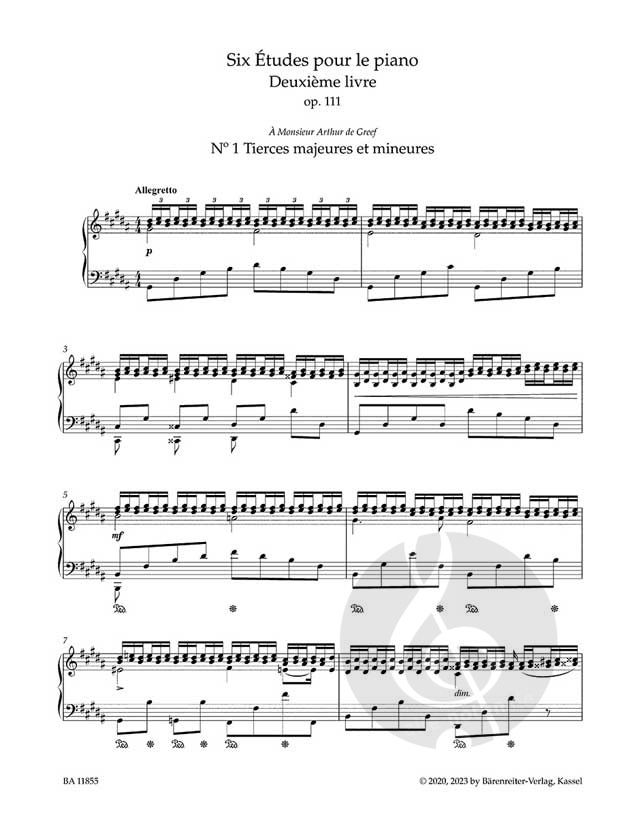
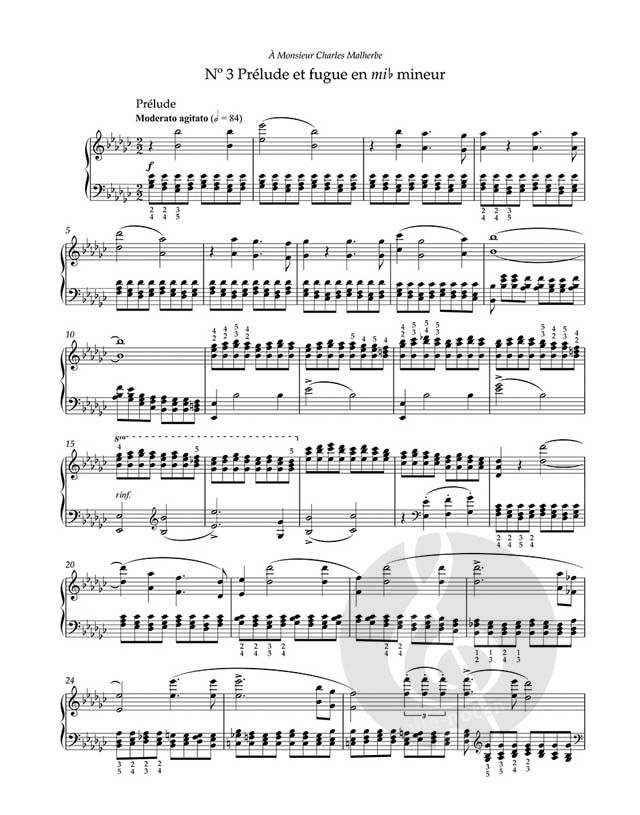
The new Urtext editions are based on the standard-setting musical text of Camille Saint-Saëns' "OEuvres instrumentales complètes", for which the editor has conscientiously evaluated all known sources. A detailed preface introduces the genesis and significance of the etudes. Readings and variants are precisely documented in the Critical Commentary. Notes on interpretation (French/English/German) and an elegant engraving offer the pianist optimal conditions for studying these virtuoso etudes.
The new Urtext editions are based on the standard-setting musical text of Camille Saint-Saëns' "OEuvres instrumentales complètes", for which the editor has conscientiously evaluated all known sources. A detailed preface introduces the genesis and significance of the etudes. Readings and variants are precisely documented in the Critical Commentary. Notes on interpretation (French/English/German) and an elegant engraving offer the pianist optimal conditions for studying these virtuoso etudes.
-
Introduction Massip, Catherine
-
Introduction Massip, Catherine
-
Einleitung Massip, Catherine
-
Six Études pour le piano. Deuxième livre op. 111
-
N o 1 Tierces majeures et mineures
-
N o 2 Traits chromatiques
-
N o 3 Prélude et fugue en mi! mineur
-
N o 4 Les Cloches de Las Palmas""
-
N o 5 Tierces majeures chromatiques
-
N o 6 Toccata
Here is how the download works:
1 Buy download sheet music
Purchase the download score from our online store
2 Order confirmation with download link
Immediately after completing your order, you will receive an order confirmation by email listing all items. You will find the download link next to each item. You can use this link to start the download right away. Please also check your spam folder if necessary.
Customers rated this product:
Manufacturer Information:
Bärenreiter-Verlag Karl Vötterle GmbH & Co. KG
Heinrich-Schütz-Allee 35-37
34131
Kassel
Deutschland
Related products:
- Piano
- Sheet Music (Urtext)
- Bärenreiter Verlag
-
-
in stock
ships within 1-2 working days - Also available for download!
Other customers also bought:

- Piano
- Sheet Music
-
in stock
ships within 1-2 working days - Also available for download!